Explore our export-grade protective coveralls, ergonomic welding accessories, and field-tested leather equipment certified to international EN and ANSI safety benchmarks.
Comprehensive overview of high-risk commercial procurement, technical standards transitions, and multi-hazard textile architecture.
The global protective work coverall market has evolved far beyond standard cotton drill boilersuits. Multi-hazard environments require single-suit compliance balancing flame resistance (FR), antistatic dissipation (EN 1149), arc-flash defense (NFPA 70E), and high-visibility contrast. While regional buyers evaluate nearshoring, the specialized nature of treated flame-retardant chemistry and precision heavy-gauge leather hybrid integration keeps large-scale, integrated production clustered in technically fortified facilities.
Specifiers must understand the trade-offs between inherently flame-resistant fibers (such as Nomex® or aramid blends) and long-staple treated cottons (such as 7 oz to 9 oz heavy drill treated with Proban® or Pyrovatex® formulations). Inherently flame-resistant fibers offer eternal FR lifespans, while treated 100% cotton garments offer vastly superior molten spatter shedding, greater breathable vapor transfer index, and optimal anti-static comfort in oil, gas, and structural hot-work sectors.
Procurement directors face stringent requirements: EN ISO 11611 (Classes 1 & 2) for welding processes and NFPA 2112 / NFPA 70E in North American utility sectors. Ming Shun maintains end-to-end batch identification on every work coverall model, ensuring that every bolt of fabric, FR aramid sewing thread, heavy-duty brass YKK zipper, and retro-reflective trim passes certified tensile and char-length criteria before roll-out.
Specific field configurations designed to address unique mechanical stresses, radiant thermal loads, and petrochemical splash risks.
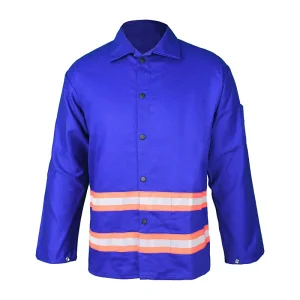
Requires 7 oz to 9 oz inherent antistatic FR coveralls. Salt spray, high humidity, and hydrocarbon flash fires dictate non-corrosive, covered brass zippers, double-needle aramid chain stitching, and micro-prismatic EN 20471 reflective strips configured for low-visibility, maritime environments.
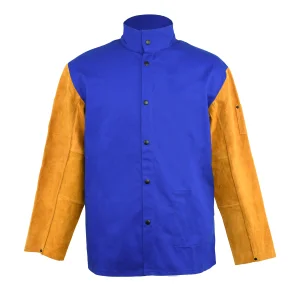
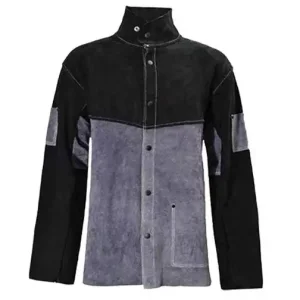
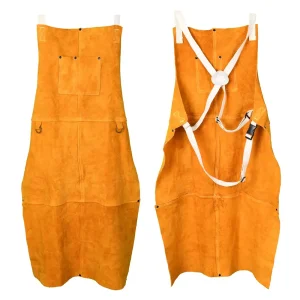
Demands hybrid cotton-leather coveralls or full split-cowhide overalls. Direct molten slag bounce-back degrades pure fabric; localized reinforced pigskin or split cowhide front chest panels, extended sleeves, and thigh protectors prevent thermal penetration and structural wear.
Demands zero scratch (scratch-free) work coveralls with concealed buttons, flaps over hardware, and mechanical stretch gussets at the underarm and crotch. Ensures high flexibility for assembly operators while eliminating paint-finish abrasions.
Configured for NFPA 70E Arc Flash Hazard Category 2 (ATPV > 8 cal/cm²). 100% flame-resistant cotton workwear treated to resist open arc ignition, designed with high-stand collar storm closures and snap cuffs to seal off unexpected electrical arc blasts.
Why Guangdong Ming Shun's vertical integration creates an unassailable efficiency barrier for international brands and wholesale distributors.
Unlike assembly-only contractors, Ming Shun operates in Gaozhou—the leather capital of South China. We control raw hide sorting, vegetable and chrome tanning, split thickness calibrating (1.1mm to 1.4mm), and in-house pigment drum-dyeing. Combined with direct mill-level flame-retardant cotton sourcing, we ensure identical hand-feel, flame retarding indices, and tear resistance across consecutive production seasons.
Manual die cutting induces dimensional variances across sizes S through 5XL. Our shop floor utilizes multi-ply automated CNC spreading tables and high-velocity laser cutting gantries. Every pattern piece maintains zero-distortion edge alignment, optimizing tensile seam strength at the crotch and shoulder yoke where structural failures typically occur.
Distributors need swift responses to corporate bid tenders. Our on-site pattern engineering workshop converts physical reference samples or PDF tech packs into graded production-ready patterns within 72 hours. Prototype sampling ships in under 7 days, fully accompanied by chemical lot sheets and mechanical stress reports.
| Evaluation Parameter | Ming Shun Factory Standard | Generic Commodity Supplier | Procurement Value Advantage |
|---|---|---|---|
| Primary Fabric Composition | 100% Long-Staple FR Cotton (7.5oz / 9oz / 11oz) | Recycled Short-Fiber Cotton Blend | Zero molten melting; 50+ industrial washes retention |
| Stitching & Reinforcement | 100% Meta-Aramid (Nomex) Thread, Triple-Felled | Standard Polyester / Core-Spun Threads | Seams will not pop or burn open when exposed to direct flames |
| Hardware & Fasteners | FR Brass YKK Zippers with Double Protective Flaps | Unbranded Plastic or Low-Alloy Metals | Instant emergency escape; non-jamming under heavy dirt |
| Leather Integration Zones | A-Grade Cowhide Split, In-House Tanned & Scoured | Third-party purchased uneven leather off-cuts | Uniform flexibility, oil resistance, and slag deflecting life |
| Lead Times (FCL Orders) | 35–45 Days with Reserved Loom Allocation | 60–90 Days due to Outsourced Sub-contracting | Predictable container scheduling and reduced inventory holding |
How smart textiles, sustainable circular chemistries, and ergonomic biomechanics are shaping our production lines through 2026–2030.
Phasing out legacy C8 fluorocarbons in favor of bio-based, fluorine-free dendrimer chemistry. Provides superior hydro-oleophobic barrier efficiency while meeting stringent EU REACH updates and North American environmental rules.
Redesigning work coverall armholes, lumbar tension panels, and thigh clearance zones to seamlessly integrate with passive lifting exoskeletons now commonly deployed in automotive and heavy logistics.
Embedding flexible conductive thread buses and clip-ready sealed sensor pockets. Allows enterprise safety teams to monitor real-time core temp, hazardous VOC exposure, and man-down alarms in confined spaces.
Collaborating with global spinning leaders to re-engineer post-industrial aramid and FR cotton cuttings into high-tenacity second-generation spun yarns, systematically reducing carbon footprint per coverall by 38%.
We provide full laboratory documentation, batch test certificates, and accredited third-party validation to streamline customs release and field audits.
Work coveralls engineered for complex, life-threatening risks comply with Regulation (EU) 2016/425 Module B (EU type-examination) and Module D (production quality assurance). Our products undergo regular audits by notified bodies like SATRA and BTTG.
Our workwear is built to protect against industrial flash fires and electric arcs. Garments undergo instrumented thermal manikin testing (ASTM F1930) to prove predicted second- and third-degree body burn percentages remain well beneath the strict 50% regulatory threshold.
Skin-contact textiles used in our work coveralls are certified skin-neutral, non-allergenic, and free from banned azo dyes, formaldehyde, or heavy-metal residues, meeting strict European and US safety requirements.
Direct answers from our chief engineers on production tolerances, minimum order requirements, testing certifications, and material capabilities.
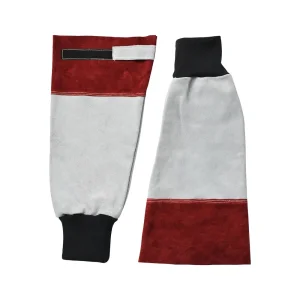
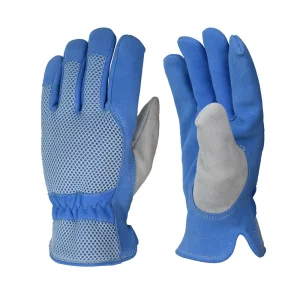
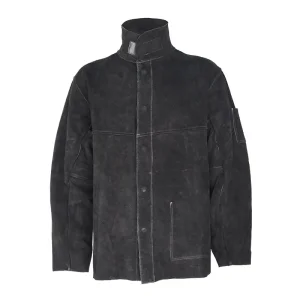
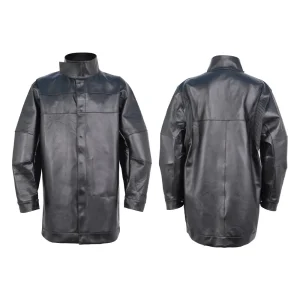
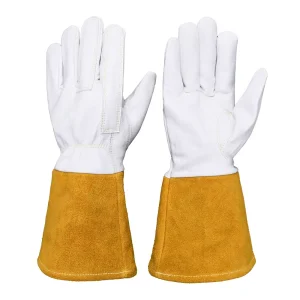
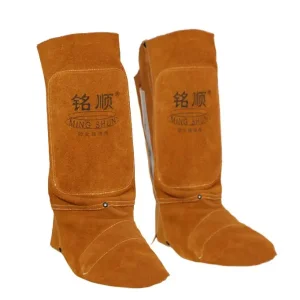
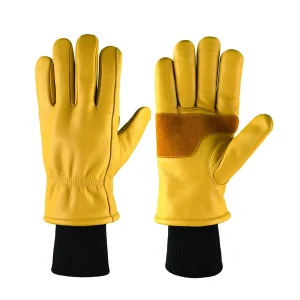
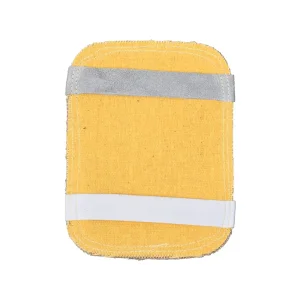
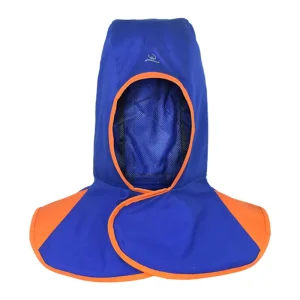
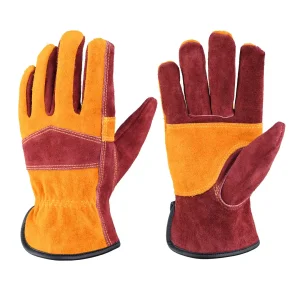
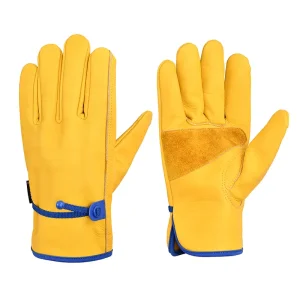
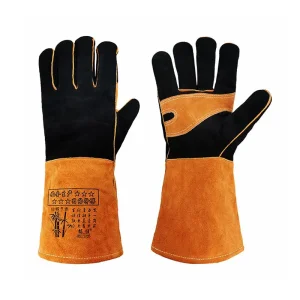
Complete your supply chain with our field-proven jackets, sleeves, protective accessories, and heavy-duty fabrication gloves.