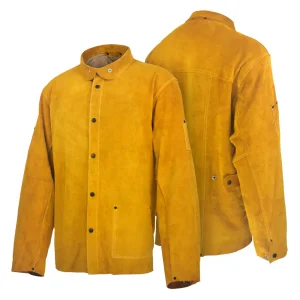
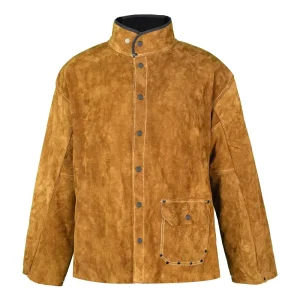
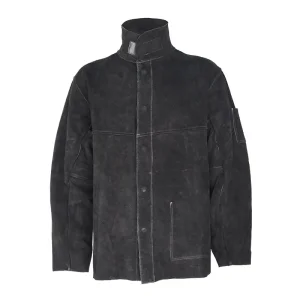
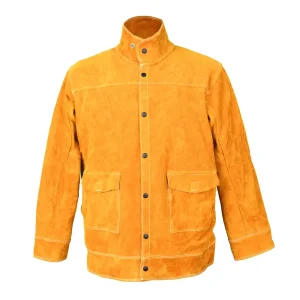
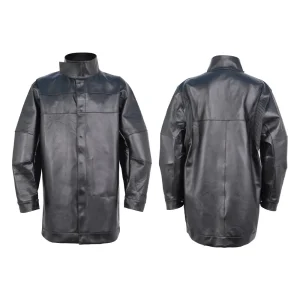
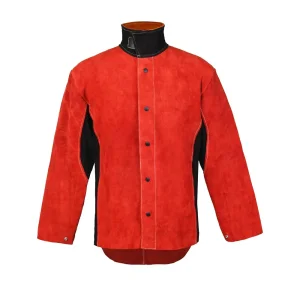
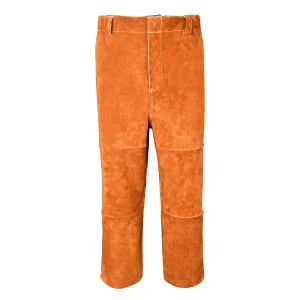
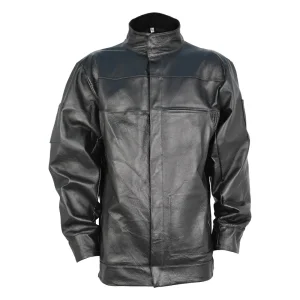
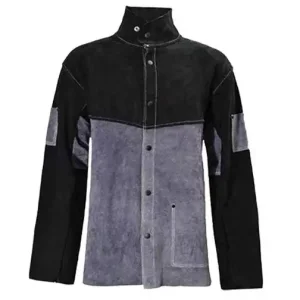
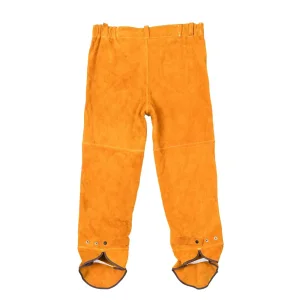
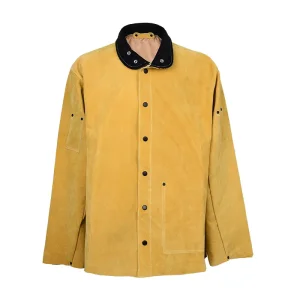
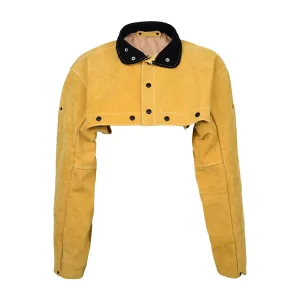
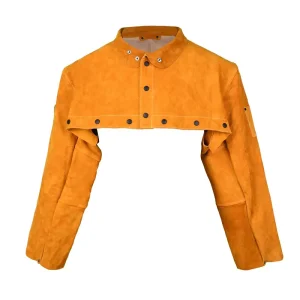
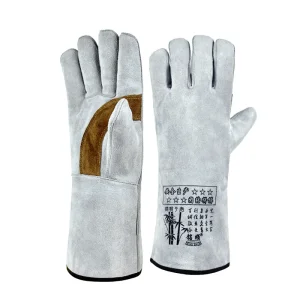
Precision stitched with Dupont™ Kevlar® threading, constructed from Grade-A selected split cowhide, grain pigskin, and engineered ergonomics for extreme industrial welding environments.
Gaozhou in Guangdong Province represents the epicenter of global leather PPE tanning and crafting. Discover how Ming Shun’s direct vertical integration translates into measurable commercial and structural advantages.
Unlike assembly shops dependent on outsourced tanneries, Ming Shun commands internal raw hide selection, mechanical splitting, chrome or vegetable retanning, and custom pigmentation. This cuts multi-tier markups and guarantees consistent tensile strength, softness, and heat retention across every batch.
Occupying multi-hectare production floors in Pukang Industrial Park, our plant houses over 1,000 experienced PPE craftsmen. With specialized stitching cells, automatic laser pattern cutting, and pneumatic buttoning machines, we output in excess of 500,000 glove units and 80,000 specialized jackets monthly.
Our dedicated CAD engineering pattern room converts sketches or customer physical benchmarks into fully graded prototypes within 5 to 7 business days. We engineer custom armhole gussets, tailored stand-up collars, inner utility pockets, and reinforced rivets adapted to regional operator builds.
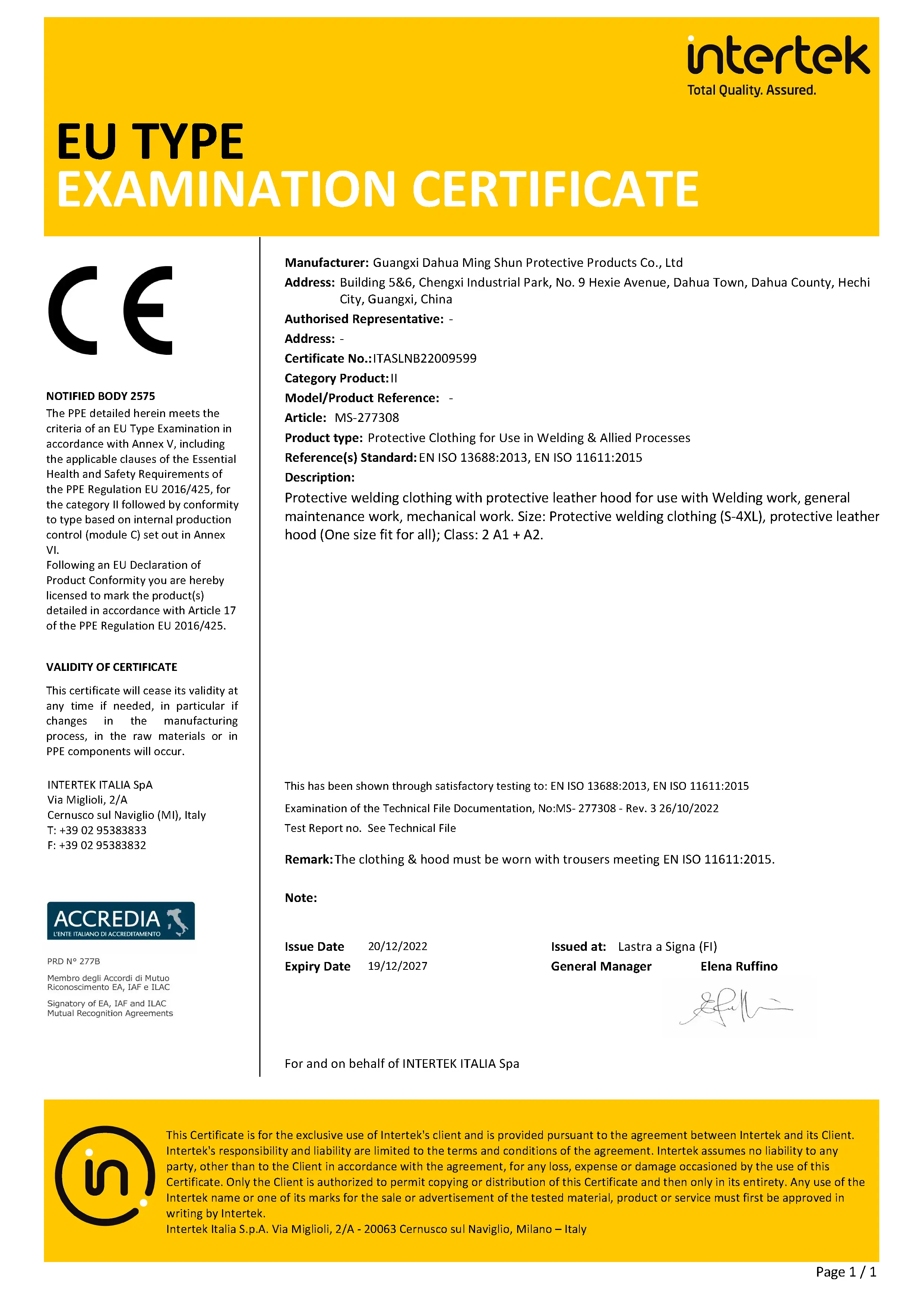
All leather hides and flame-retardant textiles are rigorously monitored for banned azo dyes, pentachlorophenol (PCP), and Hexavalent Chromium (Cr VI < 3 ppm) to comply directly with EU REACH protocols, EN ISO 11611 welding clothing standards, and North American OSHA mandates.
Comparing the metallurgical and physical protection attributes of primary materials utilized in industrial welding apparel manufacturing.
| Substrate Material | Typical Thickness | Spatter & Slag Resistance | Dexterity & Ergonomics | Thermal Transfer Limit | Ideal Industrial Applications |
|---|---|---|---|---|---|
| Heavy Split Cowhide (Side Split) | 1.2 mm – 1.4 mm | Maximum (Class 2) | Moderate (Structured) | Up to 450°C contact sparks | Heavy MMAW/Stick, Flux-Core Arc Welding, Overhead Gouging |
| Premium Grain Cowhide | 1.1 mm – 1.3 mm | Superior Oil/Spark Repel | High Flexibility | Up to 380°C contact sparks | Heavy GMAW/MIG, Structural Erection, Pipe Laying |
| Top Grain Pigskin | 0.9 mm – 1.1 mm | Porous / Oil Tolerant | Excellent Softness | Up to 320°C contact sparks | Wet conditions, Shipyard Fabrication, General Shop Duty |
| Hybrid FR Cotton (9oz / 12oz) + Leather | Engineered Blend | Targeted (Chest/Arms) | Maximum Operator Breathability | Arm protection 400°C / Body 260°C | High-ambient temperature workshops, Production Assembly, TIG/MIG |
| Dupont™ Kevlar® Seam Construction | Tex 60 - Tex 80 | Non-Melting Structural Seam | Continuous Double-Locked | Chars at 427°C (No melting) | Universal reinforcement for all safety-critical PPE joining points |
As robotic welding, automated beam lines, and high-frequency pulsed power sources proliferate, the demands on welder protective gear continue to undergo fundamental shifts.
Heavy split cowhide traditionally caused operator fatigue during 8-hour shifts. Modern international procurement programs now demand hybrid garments: breathable, flame-retardant treated 9oz or 12oz cotton torso panels paired with Grade-A split cowhide on high-exposure zones like sleeves, collar, and abdominal plates.
Global regulations (especially EU REACH Annex XVII) enforce non-detectable Hexavalent Chromium (<3mg/kg). Ming Shun employs advanced organic and modified vegetable tanning processes, safeguarding welders from contact dermatitis while ensuring zero hazardous effluent release.
Civil infrastructure and offshore platforms mandate workers wear EN ISO 20471 high-visibility gear simultaneously with welding PPE. Our engineering team integrates flame-retardant prismatic reflective tape directly into leather apparel seams without compromising structural weld spatter integrity.
How tier-one distributors, EPC contractors, and defense shipbuilders configure Ming Shun leather welding jackets across varied working conditions.
Confined double-bottom hulls create massive radiant heat, tight clearances, and spatter bounce. We supply 30" split cowhide with full stand-up roll collars, non-conductive snaps, and anti-tear underarm gussets allowing full upward torch elevation.
Welding API 5L line pipes requires outdoor all-weather endurance. Pipeline welders favor our grain pigskin extended welding coats, which naturally resist oil, water, and humidity stiffening while delivering exceptional abrasion resistance against pipe bevels.
For high-deposition flux-cored arc welding (FCAW) and automated beam line splices, our MS-386A split cowhide coats feature dielectric snap fronts reinforced with continuous velcro closures to block hot micro-slag entry completely.
Maintenance engineers working near high-speed robotic spot welding guns demand dexterity and flash heat protection. Hybrid jackets featuring breathable FR body panels and split cowhide sleeves deliver balanced comfort and safety during lengthy setup operations.
Handling molten charge pouring and high radiant ladle operations demands full-body leather protection. Our matched sets of split cowhide jackets, bib trousers (MS-270-1), spats, and cape sleeves form an impermeable barrier against molten iron drop splashing.
Authoritative insights from Ming Shun’s technical director regarding leather grade standards, compliance certifications, lead times, and custom OEM manufacturing.
Split cowhide is extracted by splitting the dense lower corium layer from top grain hide. It offers superior fibrous thermal insulation, natural spark deflecting nap, and higher resistance against hot slag burn-through at lower cost. Top grain cowhide features the intact outer epidermis, rendering it smoother, naturally water- and oil-resistant, and pliable, making it ideal for mobile field welding in wet, dirty, or oily outdoor environments.
Ming Shun manufactures welding PPE verified under EN ISO 11611 testing protocols conducted by recognized European Notified Bodies (such as SATRA or CTC). Jackets undergo ISO 15025 limited flame spread testing, ISO 9150 drop impact molten spatter evaluation (>15 drops for Class 1, >25 drops for Class 2), ISO 6942 radiant heat transfer measurements, and tear/tensile seam testing with certified batch test certificates accompanying volume export containers.
Conventional nylon or polyester sewing threads soften at 180°C and melt at 250°C, causing jacket panels to split open when in contact with airborne spatter droplets. Ming Shun exclusively utilizes 3-ply to 5-ply Para-Aramid (Kevlar®) continuous filaments that will not melt, burn, or drip up to 427°C, maintaining the structural seam integrity of stress points, armpits, and neck yokes across the working life of the PPE garment.
For standardized catalog models (such as MS-386A or MS-393 in standard leather colors), typical factory MOQ starts at 300 to 500 pieces per size range. For fully customized private-label OEM jackets featuring custom color dyeing, laser cut patterns, and heat-embossed logos, MOQ is typically 1,000 pieces. Production lead time ranges from 30 to 45 calendar days following pre-production sample sign-off.
Yes. As an OEM/ODM provider, Ming Shun accommodates direct branding requirements including: deep heat-embossed logos into leather pockets or collars, woven brand labels, multi-lingual care and safety wash tags, barcode labeling, customized presentation polybags with desiccant packs, and export-reinforced master cartons marked for automatic warehouse sorting.
Because leather is hygroscopic, inconsistent atmospheric storage causes stiffness or mildew bloom during sea freight. Ming Shun handles in-house conditioning: hides are dried in climate-regulated vacuum drying tunnels to achieve a moisture content of 12-14%, treated with non-toxic anti-fungal buffers, and packed in hermetically sealed shipping cartons with high-absorption moisture scavengers.
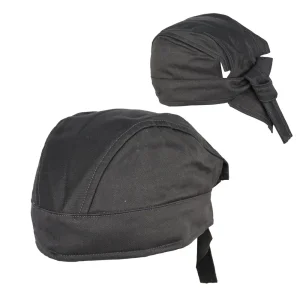
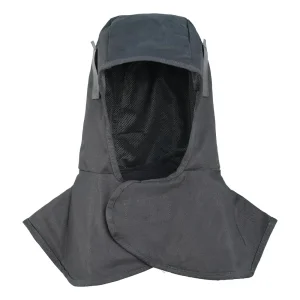
Complete your site safety catalog with ergonomic pigskin coats, modular cowhide cape sleeves, FR hoods, and heavy-duty stick welding gloves manufactured to identical strict quality benchmarks.