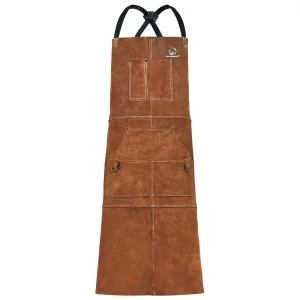
Direct-from-factory protective garments engineered with premium split cowhide, Kevlar® stitching, and rapid-release ergonomic harnesses for heavy industrial operations.
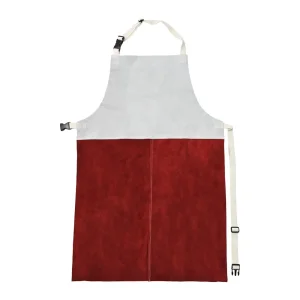
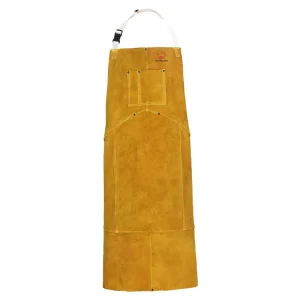
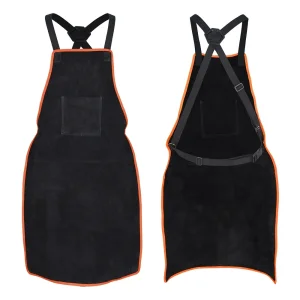
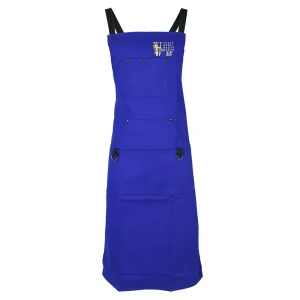
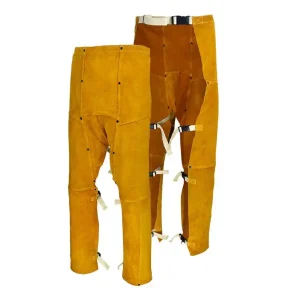
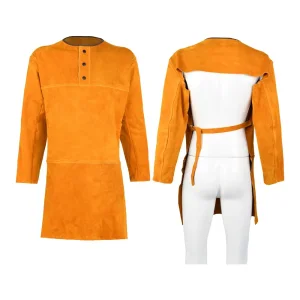
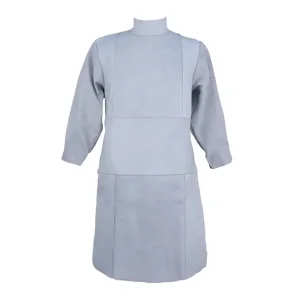
Strategic analysis of procurement frameworks across automotive assembly, shipyard naval fabrication, mining, and structural steel erectors.
In modern industrial fabrication, aprons & chaps suppliers must navigate an increasingly complex procurement ecosystem. Global enterprise buyers are moving away from piecemeal spot purchases toward audited, integrated tier-1 original equipment manufacturers. The contemporary procurement landscape is defined not merely by unit pricing, but by Total Cost of Ownership (TCO), documented tensile consistency, flame-retardant endurance over multi-shift cycles, and strict adherence to environmental chemical regulations such as REACH and RoHS.
Heavy fabrication environments—spanning automated robotic welding cells, offshore rig maintenance, petrochemical turnaround projects, and high-amperage gouging—place distinct physical stresses on secondary protective wear. Standard shop-floor aprons frequently fail at critical points: rivet shear from repeated torso flexion, thermal degradation of conventional polyester thread, and uneven hide thickness causing hot spots when exposed to continuous molten slag. As an integrated manufacturer operating out of Pukang Industrial Park, Gaozhou, Guangdong, Guangdong Ming Shun Labour Protective Products Co., Ltd. resolves these failure modes through vertically integrated hide tanning, precision mechanical split shaving, and certified Kevlar® dual-lock stitching.
Global logistics bottlenecks demand guaranteed raw material reserves. Our continuous stock of over 200 tons of raw cowhides eliminates downstream fulfillment volatility for tier-1 distributors.
Traditional leather aprons create significant cervical spine load. Our engineering incorporates engineered X-back harnesses and thoracic cross-straps, distributing weight across broad muscle groups.
Heavy leather tanning often leaves toxic hexavalent chromium (Cr VI). Ming Shun employs proprietary aldehyde and vegetable pre-tanning, guaranteeing Cr VI levels remain strictly undetectable.
With 1,000+ skilled personnel, our dedicated lines maintain standard delivery cadences of ~45 days for bespoke private-label configurations, mitigating regional manufacturing shortages.
Comprehensive technical breakdown of grain integrity, split cowhide grading, and flame-retardant hybrid textiles designed to surpass EN ISO 11611 Class 2 parameters.
When selecting protective aprons and chaps for severe hot-work zones, thermal barrier performance depends heavily on the histological density of the leather substrate. Standard commercial split leather is often obtained from excessive horizontal splitting, leaving an open, fibrous structure with poor resistance to slag burn-through. Ming Shun enforces a rigorous 1.2mm to 1.4mm uniform split calibration, utilizing only the reticular corium layer where collagen bundles remain densely intertwined. This structural density prevents the pooling and penetration of 1400°C molten weld drops during SMAW, GMAW, and heavy flux-cored arc processes.
Our hides undergo high-temperature drum conditioning with specialized fluorocarbon water-and-oil repellent agents. This alters the surface energy of the leather, causing hot metal globules to roll off instantly rather than adhering and charring through the garment core.
Thread integrity determines protective lifespan. We sew exclusively with 3-ply and 4-ply paraffin-lubricated Para-Aramid (Kevlar®) yarns. The seams resist ignition up to 425°C, preventing explosive panel separation during sudden flashover or sustained radiant exposure.
Every juncture subject to shear load—including bib strap attachments, chap belt anchor loops, and utility pockets—is reinforced with cold-drawn, dielectric-coated steel rivets backed by internal leather washers to eliminate skin galvanic shock hazards.
How Ming Shun is integrating smart connected sensors, bio-circular tanning processes, and weight-reduced hybrid textiles for Industry 4.0 shop floors.
Targeting full commercialization of zero-discharge chrome-free tanning formulations. By harnessing polyphenols derived from agricultural waste, we achieve leather yield identical in thermal stability to chrome tanning while achieving 100% compostable solid trimming waste.
Engineering cross-laminated garments that place ultra-supple split cowhide over high-impact thoracic and femoral zones, blended with 9 oz / 11 oz inherent flame-resistant (IFR) modacrylic-cotton weaves in non-exposure areas, cutting total garment weight by over 38%.
Prototype integration of passive RFID and flexible micro-sensor arrays into inner bib pockets. These track cumulative radiant heat exposure and worker core temperature spikes in real-time, alerting shop safety supervisors before thermal exhaustion occurs.
Ensuring frictionless cross-border distribution across North America, the European Union, the United Kingdom, and Asia-Pacific industrial zones.
Navigating global occupational health and safety import regimes requires rigorous third-party validation. Importers cannot afford customs seizures, product recalls, or workplace liability claims originating from substandard documentation. Guangdong Ming Shun maintains active test protocols and compliance dossiers for every protective line manufactured in our facilities:
Certified protection against small spatters of molten metal, drop tests, radiant heat transmission, and electrical resistance across both light sheet-metal work (Class 1) and heavy overhead gouging (Class 2).
Rigorous cut, puncture, and abrasion resistance testing. Split cowhide bibs and chaps are tested to guarantee workers remain shielded from razor-sharp sheared steel plate edges in structural fabrication facilities.
Ethical manufacturing transparency. Our Gaozhou facilities pass multi-tier third-party ESG audits, guaranteeing fair labor practices, safe dust/exhaust filtration systems, and full environmental wastewater neutrality.
Complete custom branding options including laser branding, high-relief leather embossing, custom strap woven logos, multilingual barcode labeling, and consolidated palletized drop-shipment directly to regional distribution centers.
Comprehensive engineering, order logistics, and quality assurance answers designed to streamline the supplier onboarding process.
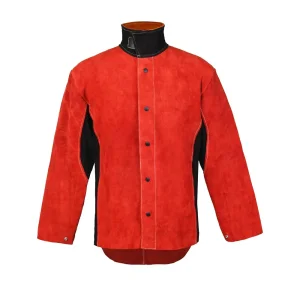
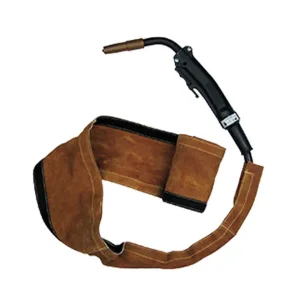
Explore our complete industrial portfolio including full-length leather welding aprons, bibs, protective chaps, thermal jackets, and premium hand protection.
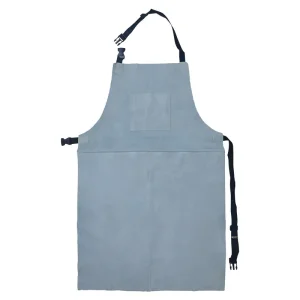
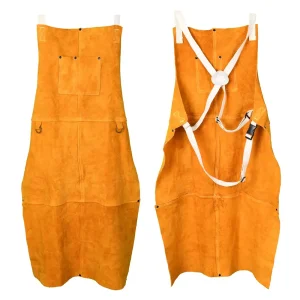
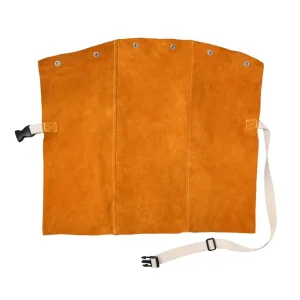
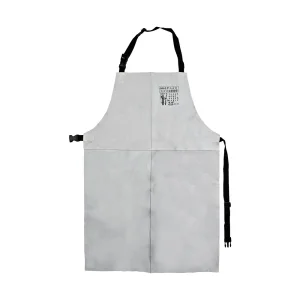
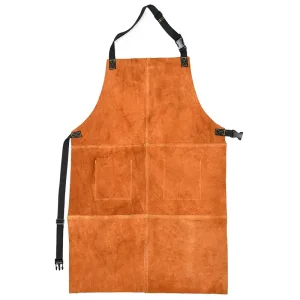
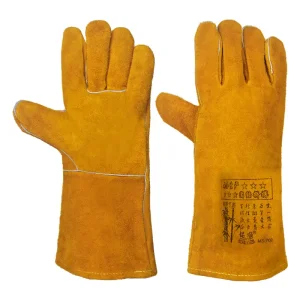
Collaborate directly with our Gaozhou engineering facility to customize leather aprons, welding chaps, and full-body protective lines aligned with your local safety standards.