1 / 1
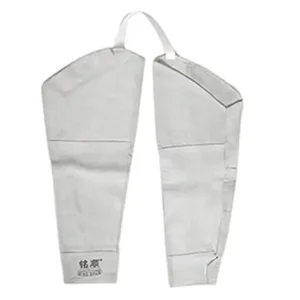
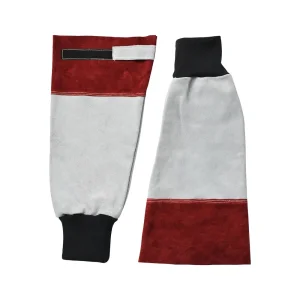
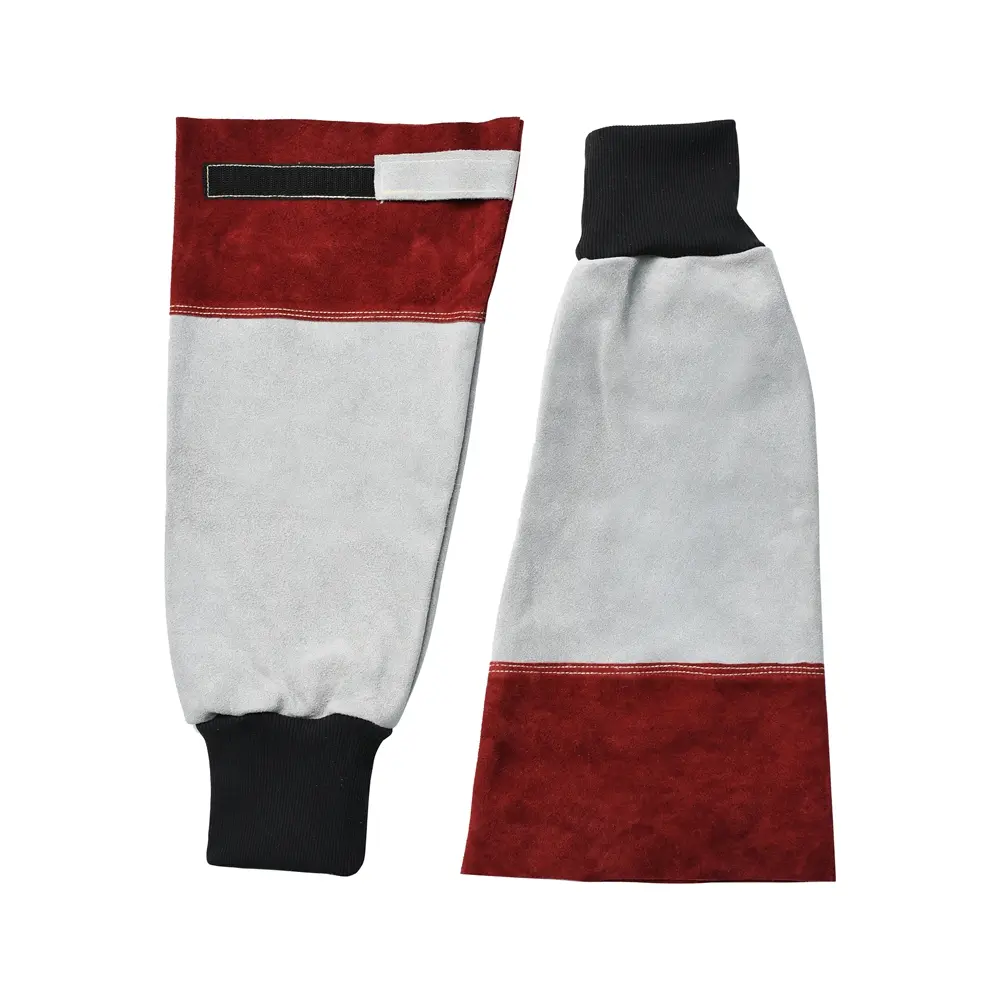
These leather welding sleeves are built for professionals who need focused arm protection during welding, cutting, grinding and metal fabrication. Instead of adding unnecessary bulk to the entire body, they protect the high-exposure area from wrist to upper arm, helping workers stay covered while maintaining better mobility than a full welding jacket.
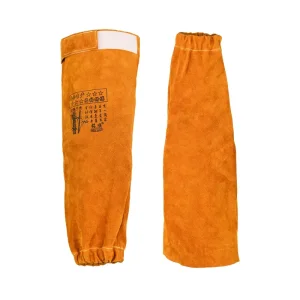
Made from selected split leather, the sleeves provide dependable resistance against sparks, light spatter, abrasion and repeated contact with rough workshop surfaces. The leather is firm enough for industrial use, yet flexible enough for bending, reaching and handling tools throughout the shift. For distributors and OEM safety brands, this makes the product a practical, fast-moving welding PPE item for both professional welders and general fabrication users.
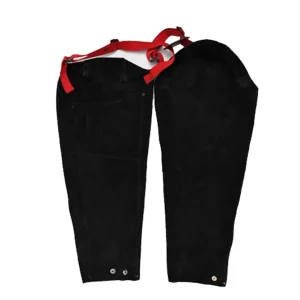
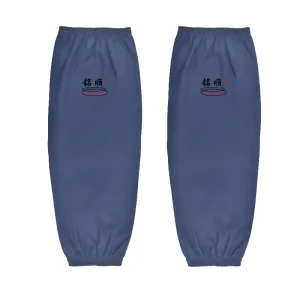
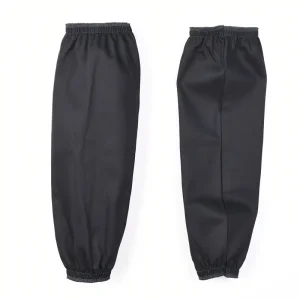
A good welding sleeve should not slide down, twist around the arm or leave gaps near the wrist. These sleeves can be produced with elastic cuffs, knitted wrists, adjustable upper-arm straps, snap closures or hook-and-loop fastening, depending on the market positioning and end-user preference. The secure upper-arm fit helps keep the sleeve in place during overhead work, bench welding and repetitive production tasks.
All major stress areas are stitched with heat-resistant aramid thread to improve seam strength under demanding use. Reinforced construction helps the sleeves hold their shape, reduce seam failure and extend product life in daily welding environments.
The sleeves are made from selected premium split leather, offering an ideal balance between rugged spark resistance and ergonomic flexibility for workshop tasks.
Welding sleeves focus specifically on protecting the high-exposure zone from wrist to upper arm, eliminating excess body heat and bulk to provide better mobility and comfort.
They can be equipped with adjustable upper-arm straps, elastic cuffs, knitted wrists, snap closures, or hook-and-loop fasteners to maintain a secure, slip-free position throughout various work angles.
All major stress zones and load-bearing seams are stitched using heat-resistant aramid thread, preventing seam failure caused by hot sparks and repeated abrasive contact.
Yes, closure mechanisms, cuff designs, and specific fit configurations can be tailored to meet market requirements and end-user positioning for distributors and brands.