1 / 1
TIG welding demands a different glove philosophy.
Heavy padding may provide more insulation, but too much bulk can reduce the fingertip control needed to position filler rod, manipulate the torch and make small adjustments during a weld.
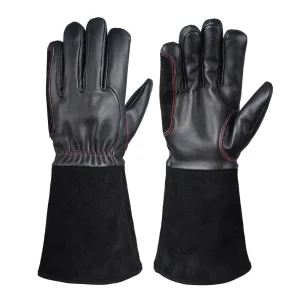
This Black TIG Welding Glove is therefore built around a simpler idea: protect the hand where necessary while keeping the glove responsive.
The unlined leather hand reduces unnecessary internal bulk, allowing the leather to conform more naturally around the fingers. Combined with a flexible grain leather construction, it provides the tactile response required for controlled TIG work.
Unlike heavily insulated welding gloves, this design uses an unlined hand construction.
The absence of a bulky liner helps preserve:
This makes the glove particularly suitable for TIG welding and other precision fabrication tasks where control matters as much as protection.
Unlined TIG gloves are widely used in the professional market specifically because they maintain a closer connection between the welder's hand and the workpiece. Premium TIG glove designs from specialist brands similarly emphasize lightweight grain leather and unlined construction for tactile control.
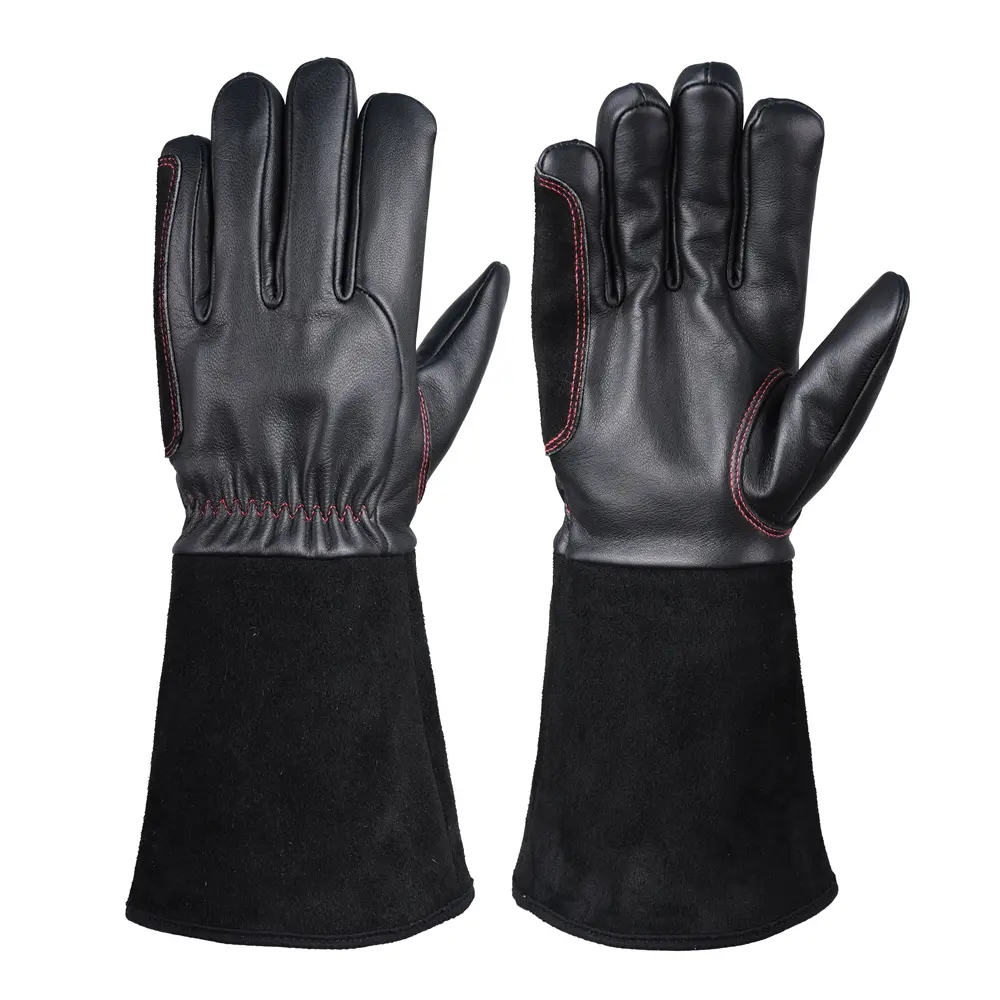
One of the most important details on this glove is the reinforcement extending along the outside of the little finger and side of the hand.
This is not decorative.
During TIG welding, welders often stabilize or slide the side of the hand across the work surface. The pinky-side area can therefore experience repeated friction, contact heat and abrasion.
The additional leather reinforcement creates an extra protective layer in this high-contact zone without adding unnecessary bulk across the entire palm.
This follows the same functional logic seen in premium TIG gloves using drag patches, side-of-hand shields or pinky-side reinforcement to improve service life in areas that actually contact the work surface.
The thumb base is another high-movement and high-stress area.
Additional leather reinforcement around this section helps improve resistance to repeated flexing and abrasion while maintaining the mobility needed for torch handling and material positioning.
Instead of overbuilding the entire glove, reinforcement is concentrated where wear is more likely to occur.
Optimal balance: Dexterity, Durability, and Glove Weight.
Every seam matters on a welding glove.
This glove is sewn throughout with heat-resistant thread, helping the seams withstand the elevated temperatures and occasional spark exposure associated with welding work.
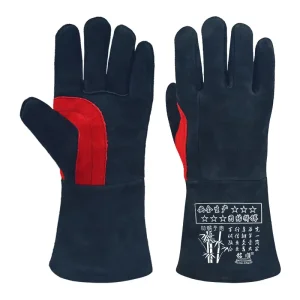
The contrasting red stitching also creates a subtle technical visual detail against the black leather, giving the glove a more distinctive industrial appearance while highlighting key reinforced zones.
For OEM development, stitching color and thread specification can be adjusted according to customer requirements.
The hand section is paired with a long split leather gauntlet cuff.
The cuff extends protection beyond the wrist and helps provide additional coverage against:
The flared gauntlet shape also allows easier donning and removal, which is important when gloves are repeatedly changed during fabrication work.
Long split leather cuffs are a well-established construction in professional TIG gloves because they combine forearm coverage with relatively low bulk.
The all-black leather construction gives this glove a distinctly different market position from conventional natural-tan TIG gloves.
For distributors and private-label welding brands, black offers several commercial advantages:
The combination of black leather, black cuff and red seam detailing creates a visually coherent product without relying on excessive styling.
Unlined construction eliminates the bulk of thick insulation, allowing maximum tactile sensitivity and dexterity. This allows welders to precisely feed filler wire, control the torch angle, and feel delicate micro-movements necessary for high-quality TIG welds.
TIG welders typically rest and drag the side of their hand along the metal table or workpiece to stabilize their pass. The pinky-side reinforcement functions as a drag shield, preventing premature abrasion and protecting the hand from contact heat without reducing palm flexibility.
Welding exposes gloves to high radiant temperatures and stray sparks that can quickly burn through standard cotton or synthetic threads. Using heat-resistant thread ensures the critical structural seams do not burst open or degrade under elevated operational temperatures.
Yes, full OEM and private-label customization options are available, including custom sizing, alternative leather grades, bespoke cuff lengths, thread colors, and embossed or printed brand logos.
These gloves are specifically engineered for precision TIG (GTAW) welding and light fabrication where dexterity is prioritized. For high-amperage MIG or stick welding involving heavy spatter and extreme radiant heat, a heavier, fully insulated welding glove is recommended.