Strategic B2B source for industrial split leather welding sleeves, flame-retardant arm protectors, and customized heavy fabrication safety gear conforming to EN ISO 11611 and IS standards.
High-Performance Welding Sleeves Engineered for India
Direct manufacturer supply designed to address high spatter levels, ambient tropical humidity, and continuous abrasion across Indian automotive and structural engineering lines.
Heavy Arc Defense
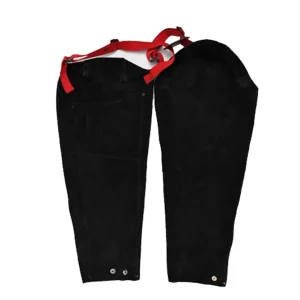
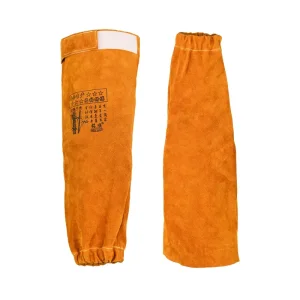
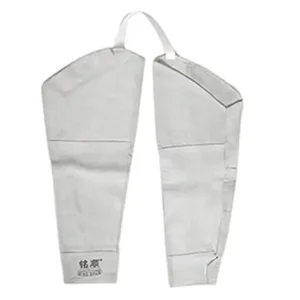
MS-342 Heavy Split Leather Welding Sleeves (India Spec)
The Expanding Industrial Landscape for Arm Protection Across India
A rigorous examination of heavy fabrication clusters, climatic working conditions, and safety compliance evolution driving protective sleeve procurement throughout the Indian subcontinent.
India is experiencing an unprecedented structural manufacturing super-cycle, accelerated by the "Make in India" initiative, capital expenditure expansions under the National Infrastructure Pipeline (NIP), and production-linked incentive (PLI) schemes. As industrial manufacturing corridors expand across Maharashtra, Tamil Nadu, Gujarat, Odisha, and Haryana, the technical requirements for personal protective equipment (PPE)—and specifically specialized forearm and bicep safety gear—have transformed fundamentally. Arm protective sleeves are no longer treated as generic secondary consumables; they are mission-critical safeguards preventing high-cost lost-time injuries (LTI) in high-amperage welding, metallurgical smelting, plasma torch cutting, and automated automotive assembly.
14.8%
India Metal Fab CAGR
Annual growth projection in industrial welding automation & safety
350°C+
Radiant Spark Deflection
Engineered limit for heavy split cowhide sleeve protection
100%
DuPont Kevlar Sewn
Reinforced structural seams preventing molten pool burnout
500K+
Monthly Factory Output
Standardized manufacturing capability supporting global distributor contracts
Thermal Stress vs. Complete Protection: The Tropical Indian Paradox
Industrial health and safety officers across Western and Southern Indian industrial belts (such as Chakan, Sriperumbudur, Sanand, and Visakhapatnam) face an intense microclimatic challenge: extreme ambient heat combined with high relative humidity. In traditional high-heat welding workshops, issuing full-body, heavyweight 1.4mm leather welding jackets frequently leads to heat-stress non-compliance. Operators take off complete jackets to mitigate heat exhaustion, leaving their radial arteries, forearms, and inner wrists dangerously exposed to spatter drops, UV radiation, and severe mechanical cuts.
This dynamic has created massive market demand for modular arm protective configurations. By deploying high-grade split cowhide welding sleeves (such as our MS-342 and MS-335 series) or lightweight flame-retardant 9 oz cotton hybrid sleeves (MS-180B), industrial plants enable operators to maintain essential torso ventilation while preserving complete, certified mechanical and thermal barriers over the upper extremities. This modular approach significantly increases safety compliance compliance audit ratings, lowers worker fatigue rates, and minimizes arm burn compensations.
Regional Industrial Hubs Driving Technical Sleeve Demand in India
Procurement preferences differ significantly across key Indian manufacturing territories, demanding customized sleeve specifications:
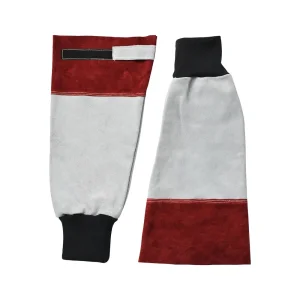
The Automotive & Transportation Corridors (Pune-Chakan, Chennai-Oragadam, Gurugram-Manesar): These Tier-1 automotive hubs prioritize robotic welding cell operation, seam manual touchups, and stamping press feeding. Here, flexible split leather sleeves with adjustable elastic cuffs and snap closures are preferred to avoid entanglement hazards with fixture clamps while delivering Class 2 spatter resistance.
Heavy Engineering & Boiler Fabrication (Tiruchirappalli, Hazira, Vadodara, Jamshedpur): Production of high-pressure boilers, thermal exchangers, and heavy mining machinery involves multi-pass Submerged Arc Welding (SAW), high-amperage Flux-Cored Arc Welding (FCAW), and heavy carbon arc gouging. Operators require heavy 1.3–1.5mm cowhide sleeves with integrated shoulder harnesses to protect against falling slag and radiant thermal back-flash.
Offshore, Marine & Shipbuilding Yards (Mumbai, Cochin Shipyard, Mazagon Dock, Goa): Marine structural engineers work in confined double-bottom tanks and overhead bulkheads. Salt mist, tight clearance friction, and overhead sparks make abrasion-resistant cowhide with dielectric brass snaps the industry standard.
Cross-Country Hydrocarbon & Gas Pipelines (GAIL, IOCL projects traversing Rajasthan, Uttar Pradesh, and Madhya Pradesh): Field welders face direct sun and desert heat. Sleeves must balance rapid don/doff capability with extreme durability against rugged pipe surfaces.
Supply Chain Supremacy
Why Indian Importers & Global EPCs Partner with Our Gaozhou Facility
Direct tannery integration, automated die-cutting precision, and consistent leather fiber density that domestic Indian sourcing clusters cannot reliably replicate at high commercial volumes.
In-House Leather Tanning Control
Situated in Gaozhou—the premier leather capital of Southern China—Guangdong Ming Shun controls the entire supply chain from raw cattle hides to drumming, chrome-free/chrome-tanning, and precision split leveling. This guarantees uniform thickness (calibrated ±0.1mm) and zero weak belly fibers.
Automated Hydraulic Die-Cutting
Unlike manual knife-cut workshops prone to irregular arm circumferences, our production lines utilize high-tonnage hydraulic clicker presses and laser-guided dies. Every sleeve panel features identical curvature, minimizing ergonomic drag and preventing seam tear-out under heavy flex.
Stringent Chemical & pH Compliance
We strictly regulate leather chromium VI content, azo dyes, and skin-neutral pH balances (between 3.5 and 5.0) in adherence with REACH and EN ISO 13688 standards. This eliminates skin dermatitis and sweat-induced chemical leaching in hot Indian factory environments.
High Scale & Fast Container Turnaround
With an expansive workforce of over 1,000 skilled craftsmen and multi-line automated sewing benches, our facility yields over 500,000 protective pairs per month. High-volume procurement runs for Indian master distributors are fulfilled in 30–45 days with strict batch uniformity.
OEM Private Branding & Packaging
We empower Indian safety brands with bespoke customization: laser debossing, thermal branding, screen-printed corporate insignias, customized barcoded hangtags, and moisture-resistant retail polybags optimized for monsoon warehousing conditions.
Established Indo-China Shipping Corridors
Seamless export workflows operating directly through Guangzhou and Shenzhen ports straight into Nhava Sheva (JNPT Mumbai), Chennai Port, and Mundra. Full support with HS code optimization (4203.29), Certificates of Origin, and export documentation.
Engineering Standards & Metallurgy
Technical Benchmark: Sleeve Material Specifications for Industrial Welding
A data-backed matrix guiding procurement managers on selecting between cow split leather, heavy grain leather, and treated flame-retardant (FR) cotton composites.
Performance Parameter
Premium Split Cowhide (MS-342/MS-332)
FR Treated Cotton 9oz (MS-180B)
Hybrid Split Leather + FR Cotton
Indian Domestic Untanned Split
Spatter Resistance (Drops)
Class 2 (>25 drops molten metal)
Class 1 (15–24 drops molten metal)
Class 2 over leather forearm zone
Inconsistent (<15 drops typically)
Radiant Heat Transfer (HTI)
High (>16 seconds at 20 kW/m²)
Medium (8–11 seconds)
High on impact areas
Low due to uncalibrated thickness
Breathability & Worker Comfort
Moderate (best with wide cut)
Superior (ideal for tropical heat)
Optimized thermal balance
Poor; heavy and stiff
Tensile Tear Resistance
>450 N (Heavy industrial abuse)
>180 N
>380 N
Variable (<200 N weak spots)
Sewing Thread Integrity
DuPont Kevlar 3-Ply Fireproof
High-tensile FR Treated Cotton/Poly
Kevlar on critical stress seams
Standard spun polyester (melts easily)
Standard Certification
EN ISO 11611:2015 Class 2, IS 11871
EN ISO 11611:2015 Class 1
EN ISO 11611:2015 Class 1 / 2
Uncertified non-compliant batch
Harmonizing Global EN Standards with Bureau of Indian Standards (BIS)
Procuring for government tenders (such as BHEL, NTPC, Larsen & Toubro, and Indian Railways) requires strict adherence to documented standards. While the international standard EN ISO 11611:2015 classifies protective garments into Class 1 (manual welding with light spatters/lower radiant heat) and Class 2 (demanding techniques including MIG/MAG, gouging, and flux core with heavy droplets), Indian operations must evaluate conformity alongside IS 11871 (methods for determination of flammability) and IS 4770 for allied leather PPE characteristics.
Our manufacturing protocols at Guangdong Ming Shun integrate multi-point quality gates ensuring that each sleeve lot meets both tensile break load limits, leather chrome stability, and zero post-flame persistence when an open spark impacts the bicep closure. Our technical documentation pack includes test certificates from accredited international labs (e.g., SGS, TUV), allowing Indian corporate procurement divisions to satisfy audits by the Directorate General of Factory Advice Service and Labour Institutes (DGFASLI).
Strategic Procurement Guidance
Total Cost of Ownership (TCO) & Import Strategy for Indian Importers
How experienced sourcing executives manage duty structures, customs classifications, and replenishment cycles for industrial leather protective gear.
Purchasing managers often fall into the trap of analyzing only the unit invoice cost when sourcing protective arm sleeves. In heavy welding workflows, cheap low-grade cowhide sleeves typically experience thread failure within 10 to 14 working days, or harden and crack under sweat salt absorption. Our Gaozhou-engineered split cowhide sleeves, stitched throughout with triple-twisted DuPont Kevlar, average 45 to 60 days of continuous multi-shift heavy shop use. The Total Cost of Ownership (TCO) formula proves that an initial 15% material premium yields a 200%+ increase in product service life while significantly mitigating costly burn-related work stoppages.
Customs Clearance, Tariff Optimization & Indian Sea Port Entry
Importing industrial protective clothing into Indian ports involves precise customs documentation under the Central Board of Indirect Taxes and Customs (CBIC). Key operational considerations include:
Accurate Harmonized System (HS) Codes: Leather protective sleeves, aprons, and spats are properly categorized under HS Code 4203.29 (Articles of apparel and clothing accessories, of leather: Other) or HS Code 6217.10 for textile/FR cotton variants. Accurate classification prevents unexpected re-assessment penalties during Indian customs clearance.
Standardized Packaging & Desiccant Protection: Given sea freight exposure across the Indian Ocean and tropical high-humidity port storage at Nhava Sheva or Chennai, every bulk carton from our plant is lined with heavy polyethylene moisture barriers and packed with high-absorption food-grade silica desiccants to eliminate mold risks during the monsoon transit season.
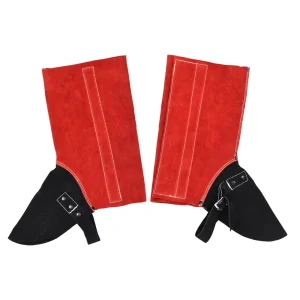
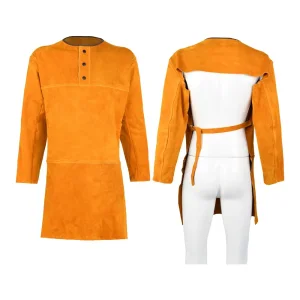
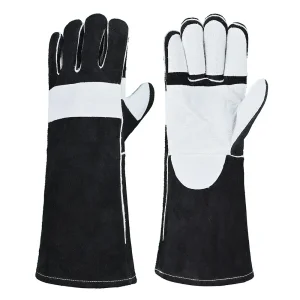
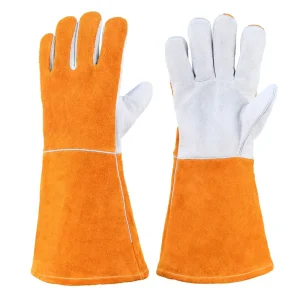
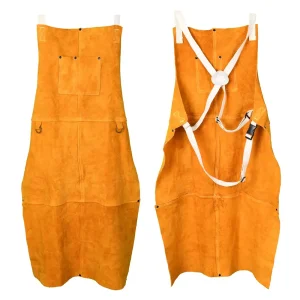
Consolidated Container Shipments (FCL/LCL): To optimize ocean freight economics, many Indian distributors consolidate split cowhide sleeves alongside complementary leather welding spats, heavy split aprons, and Kevlar-lined MIG/TIG gloves inside unified 20GP or 40HQ container shipments directly from our Guangdong factory.
Comprehensive Welding Protection Systems
Expanded Arm, Leg & Torso Protection Line for India
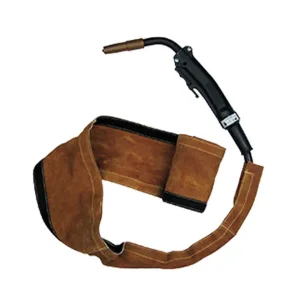
Explore our complete complementary suite of industrial protective gear, including specialized cotton sleeves, leather spats, full aprons, and cable protectors engineered for demanding welding environments.
Lightweight FR Textile
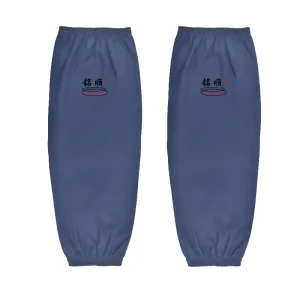
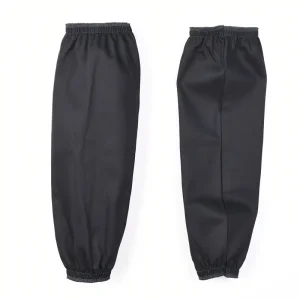
OEM MS-7071B Black FR Cotton Welding Sleeves (India Industrial)
Frequently Asked Questions: Welding Sleeves Supply to India
Expert insights covering minimum order quantities, import procedures, technical compliance, and customization for Indian commercial buyers.
Why are split leather sleeves preferred over full jackets in Indian welding workshops?
In India’s tropical climate—where shop-floor temperatures frequently surpass 40°C in industrial hubs like Gujarat, Maharashtra, and Tamil Nadu—full-coverage 1.4mm leather welding jackets induce rapid operator heat stress, dehydration, and fatigue. This often leads to workers removing protective apparel altogether. Industrial sleeves (such as our MS-342 or MS-180B) provide targeted Class 2 protection over the forearms, wrists, and biceps—the zones exposed to 90% of spatter and radiant burn hazards—while permitting convective body airflow, ensuring round-the-clock safety compliance.
What is the Minimum Order Quantity (MOQ) and sample lead time for Indian buyers?
For standard catalogue models (such as MS-342, MS-332, and MS-180B), our standard production MOQ is typically 500 pairs per specification. For bespoke OEM developments featuring customized private embossing, specialized bicep elastication, or dual-color FR fabric combinations, the standard MOQ is 1,000 pairs. Pre-production counter-samples are completed and air-expressed to your Indian address (via DHL/FedEx) within 5 to 7 business days for physical evaluation.
How do your welding sleeves conform to international and Indian safety regulations?
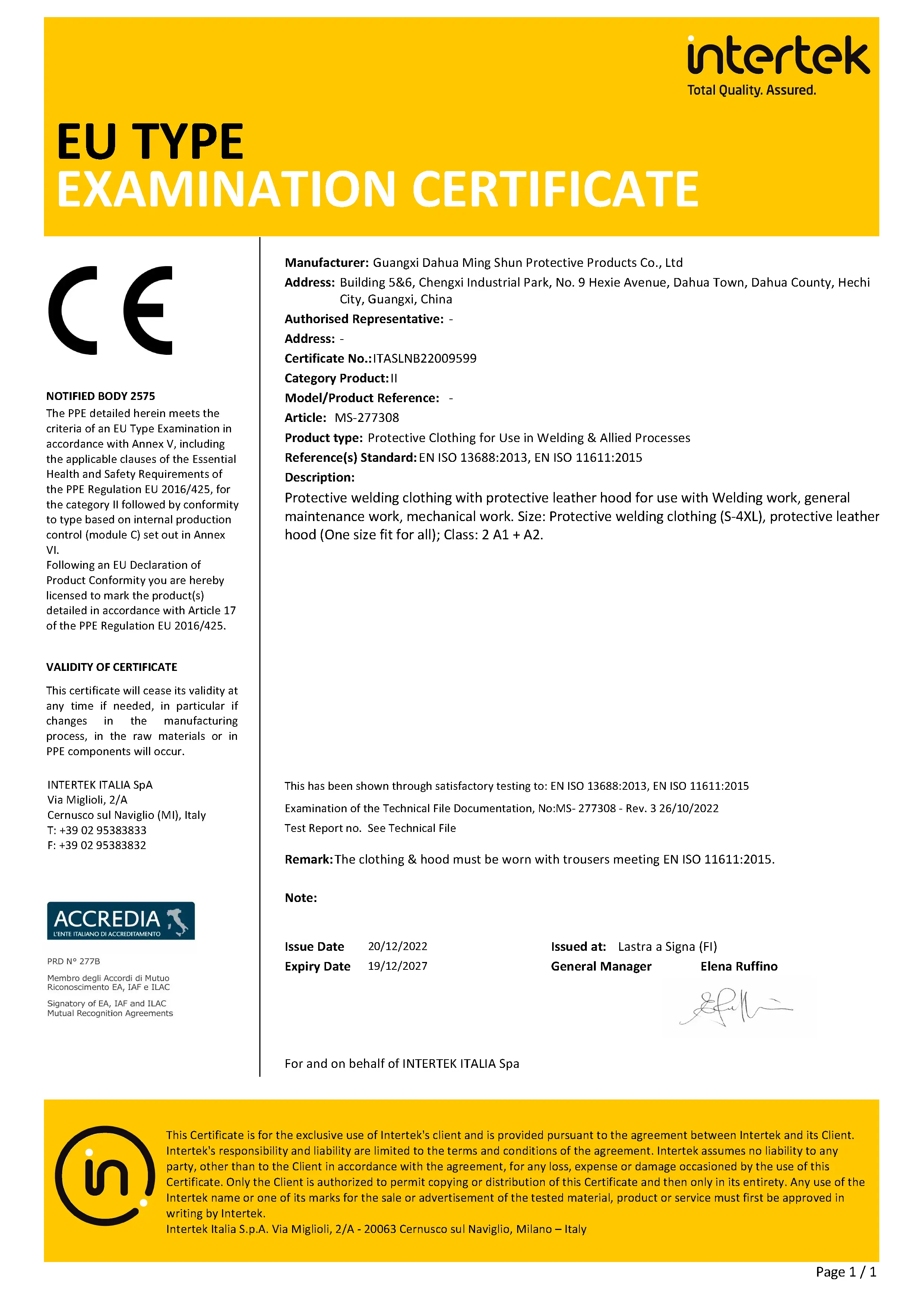
Our welding sleeves are certified against EN ISO 11611:2015 (protective clothing for use in welding and allied processes), fulfilling both Class 1 and Class 2 requirements for small molten drop resistance, radiant heat transfer, and flame spread prevention. The split leather grades conform to EN ISO 13688 for general ergonomics, harmless pH levels, and zero carcinogenic aromatic amines, ensuring smooth acceptance under Indian DGFASLI safety audits and major EPC supplier criteria.
What seam thread is utilized to prevent stitch degradation from hot slag?
All leather arm sleeves manufactured in our Gaozhou facility are sewn exclusively with 100% genuine DuPont Kevlar 3-ply or 4-ply aramid thread. Unlike conventional nylon or polyester threads commonly utilized in uncertified workshops, Kevlar thread does not melt, char, or ignite when struck by direct slag showers, ensuring the seam integrity remains uncompromised over the entire lifetime of the leather.
What is the shipping transit time from your factory to major Indian seaports?
We ship out of Shenzhen Port (Yantian/Shekou) or Guangzhou (Nansha). Direct container vessel transit times to Nhava Sheva (JNPT / Mumbai) range from 14 to 18 days. Transit times to Chennai Port on the eastern coast take approximately 12 to 16 days, and Mundra Port takes approximately 16 to 20 days. Our export documentation team manages all bill of lading forms, commercial invoices, and packing lists to facilitate expedited clearance through Indian Customs (ICEGATE).
Can you provide private label branding for established Indian safety brands?
Yes. Guangdong Ming Shun operates as an active OEM/ODM manufacturing engine for prominent PPE labels globally. For the Indian market, we provide custom steel-die heat embossing on leather, customized woven side labels, tailored bilingual instruction leaflets (English/Hindi), and customized inner boxes or bulk master cartons with client-specified barcodes and warehouse shipping marks.
How does cow split leather compare to FR cotton sleeves in longevity?
Premium 1.2–1.4mm split cowhide sleeves provide superior physical puncture, slice, and continuous spark abrasion resistance. In heavy FCAW or gouging operations, leather sleeves outlast chemically treated FR cotton by 3 to 5 times. Conversely, FR cotton sleeves (such as our MS-7071B) offer exceptional lightness, flexibility, and breathability for light TIG welding and automotive touch-up, but must be laundered according to strict thermal guidelines to preserve fire retardancy.
What precautions prevent leather mold during sea freight in the Indian monsoon?
Leather is hygroscopic and vulnerable to fungal development when exposed to prolonged maritime humidity. We employ a triple-barrier prevention protocol: (1) industrial oven moisture monitoring ensuring leather moisture remains under 14% prior to packaging; (2) insertion of pharmaceutical-grade desiccant packets in individual polybags; and (3) heavy-duty polyethylene master container liners to prevent condensation damage during equator transit.
Do you offer custom sizing suited for Indian workforce ergonomics?
Yes. Western European and American sleeve patterns often feature overly large bicep diameters that slip down on typical Indian operators, generating safety hazards. We maintain tailored ergonomic patterns specifically graded with calibrated lengths (18-inch and 23-inch models) and dual-stage brass snaps or elastic bicep bands that fit Indian operators securely without constricting circulation.
What are the accepted payment methods and trade terms for Indian transactions?
We primarily execute orders under FOB Shenzhen/Guangzhou or CIF Nhava Sheva / Chennai / Mundra terms. Standard payment arrangements include Telegraphic Transfer (T/T with 30% advance deposit and 70% upon presentation of Bill of Lading copy) or an Irrevocable Letter of Credit at Sight (L/C) issued by premier Indian schedule banks (such as State Bank of India, HDFC Bank, or ICICI Bank) for large container transactions.
Equip Your Indian Supply Chain with Factory-Direct Arm Protection
Request an immediate competitive FOB/CIF quotation, verify laboratory compliance reports, or request free physical production samples for technical qualification.