Explore engineering-grade, factory-direct hand protection solutions and body armor specifically formulated for extreme ambient temperatures and intensive spatter.
A data-backed evaluation of personal protective equipment procurement across structural metallurgy, petrochemicals, infrastructure, and heavy fabrication.
Global procurement teams in North America and Western Europe are pivoting rapidly away from transaction-based unit cost structures to Total Cost of Ownership (TCO) models. Premature glove failure triggers secondary costs in worker downtime, micro-laceration treatment, and OSHA/HSE incident reporting. Sourcing industrial hand safety requires verified tensile integrity, uniform grain splitting, and validated stitch density.
Stricter workplace health and safety compliance has reshaped demand. In the European Union, Personal Protective Equipment Regulation (EU) 2016/425 requires strict Category II and Category III traceability. Concurrently, US industrial buyers mandate comprehensive ANSI/ISEA 105 testing protocols covering cut, puncture, abrasion, and conductive heat resistance to shield enterprises from civil liability.
The explosive rise of gigafactories, electric vehicle (EV) battery assembly facilities, wind turbine production sites, and utility-scale solar farms demands non-traditional hand protection. Gloves must simultaneously deliver flame retardancy, mechanical barrier protection, and high-dexterity tactile sensitivity for fine wiring and high-amperage terminal interconnection.
Vertical engineering integration from raw bovine hide processing to high-precision computerized assembly creates decisive supply advantages.
Unlike pure contract trading companies, our centralized facility in Gaozhou, Guangdong directly controls the foundational tanning, chrome stabilization, and precision mechanical splitting processes. This direct oversight prevents variable fiber density and inconsistent tensile strength. Key capabilities include:
Backed by over 1,000 on-site personnel and a reliable local raw material ecosystem, production can easily pivot from low-run high-mix specialty TIG gloves to high-volume standard MIG/Stick cowhide lines without extensive tooling delays:
Matching specific leather tanning grades, thumb geometries, and reinforcement strategies to global field requirements.
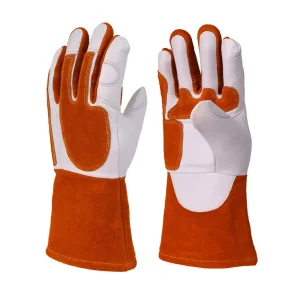
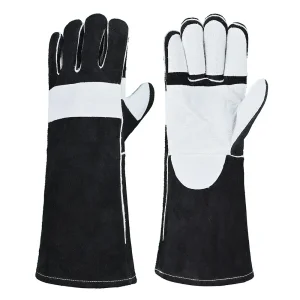
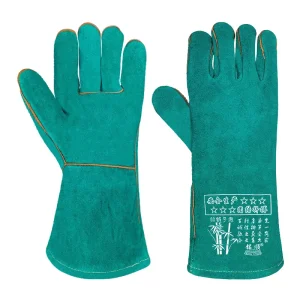
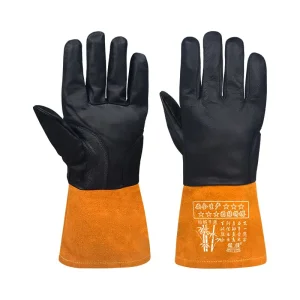
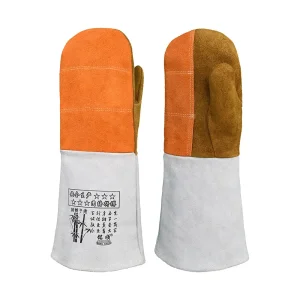
Heavy shipyard construction and structural building frames involve continuous manual metal arc (MMA) and flux-cored arc welding. These environments require heavy-gauge split cowhide (1.2mm+) reinforced with welted seams, full fleece thermal barriers, and extended split-leather cuffs to deflect falling molten slag and resist severe continuous abrasion.
Body-in-White (BIW) automotive lines require gloves that blend puncture and razor-edge cut resistance with high tactile responsiveness. Utilizing grain goatskin or specialized pigskin grain palms reinforced with internal aramid blends ensures technicians can precisely guide sheet metal stampings without restricting hand mobility.
Overland pipeline operations expose welders to both internal arc heat and harsh outdoor climates. Deploying hydrophobic and oleophobic-treated cowhide with wrapped index fingers ensures seamless wire feeding, while water-resistant grain barriers prevent the glove from becoming brittle after cyclic wetting and drying.
Bridging traditional leather craft with high-performance synthetic materials and connected factory safety ecosystems.
Comprehensive transition to advanced vegetable-synthetic hybrid tanning agents, eliminating carcinogenic Chrome VI formation even when exposed to high-amperage UV radiation.
Transitioning from traditional 2D flat cut-outs to 3D pre-curved gunn-cut engineering with articulated keystone thumbs, reducing hand muscle fatigue during long 10-hour work shifts.
Integrating continuous-filament UHMWPE and basalt fibers directly into split-leather backings to achieve Level 4 and Level E cut resistance without adding restrictive bulk.
Field-testing embedded RFID and NFC near-field asset tracking chips inside the cuff lining to help heavy construction yards and shipbuilders monitor PPE inventory in real time.
Meeting comprehensive mechanical, thermal, and chemical testing standards to ensure frictionless customs clearance and jobsite compliance.
Our welding product portfolio undergoes third-party lab certification to guarantee full alignment with EN 12477:
Each glove batch is rigorously audited across four primary mechanical vectors to verify resistance against abrasive wear and physical impact:
Protect your brand reputation with complete document traceability. Every export shipment includes verifiable quality and compliance documentation:
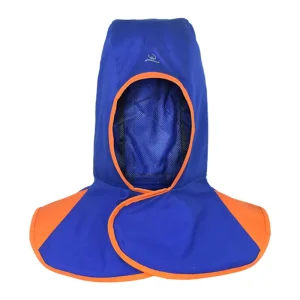
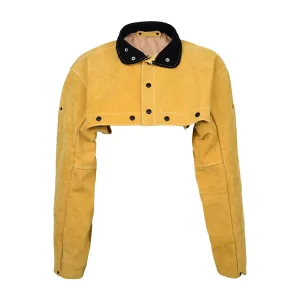
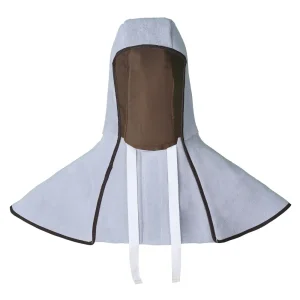
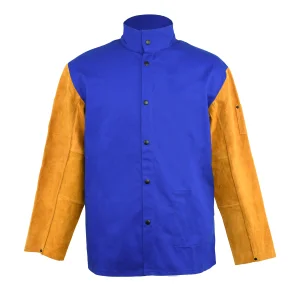
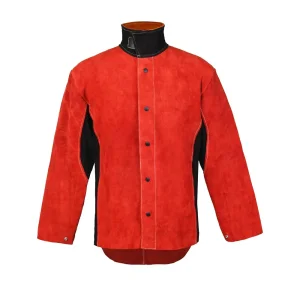
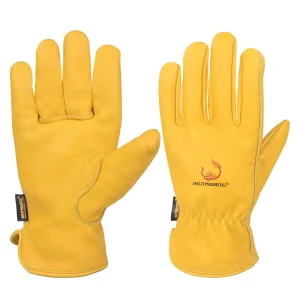
Industrial work gloves, specialized leather welding sleeves, jackets, and water-repellent safety equipment engineered for demanding jobsites.
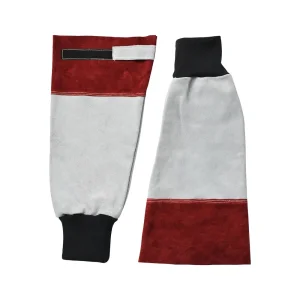
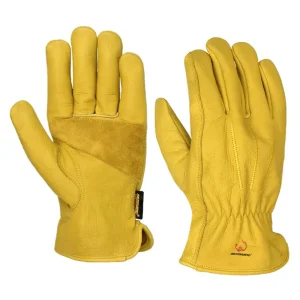
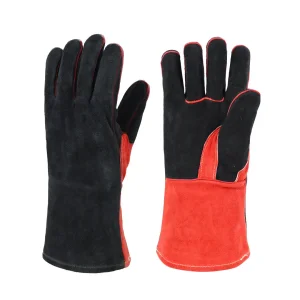
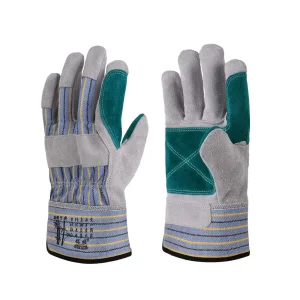
Detailed technical, regulatory, and supply chain insights addressing the common challenges faced by industrial procurement teams.
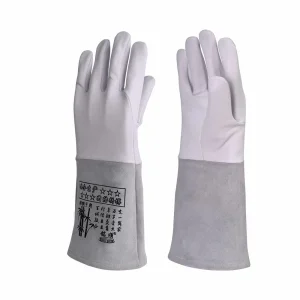
Grain Goatskin features a high natural lanolin content and dense tensile fiber structure. This allows it to be split thinner (0.7mm–0.9mm) while maintaining exceptional tensile strength and pliability, making it the industry standard for precision TIG welding. Split Cowhide (1.1mm–1.4mm) offers deep, fibrous corium layers that provide superior thermal insulation and molten spatter resistance for heavy-duty MIG and Stick welding. Pigskin features a distinct porous, open grain structure that allows high breathability and, crucially, retains its soft, pliable hand-feel without stiffening even after repeated water or oil exposure.
Trivalent Chromium (Cr III) can oxidize into toxic Hexavalent Chromium (Cr VI) when exposed to intense UV radiation, high arc heat, and shifting pH levels. Our Gaozhou wet-end tanning process actively prevents this oxidation by utilizing optimized vegetable retanning agents, specialized organic polyphenols, and antioxidant additives. Finished leather lots are regularly certified under ISO 17075 testing to ensure zero detectable levels of Cr VI (below the 3 mg/kg reporting threshold), ensuring full compliance with EU REACH annex XVII regulations.
Standard minimum order quantities (MOQs) for fully customized OEM programs—including custom pattern grading, custom leather dyeing, heat-transfer/embossed logo placement, and branded packaging—typically start at 1,200 to 2,400 pairs per style. Repeat orders for catalog specifications can be accommodated at 600 pairs. Rapid sample turnarounds are completed within 7 to 10 working days against your tech pack, while standard full-container bulk production is reliably dispatched within approximately 45 days following final sample sign-off.
Standard nylon or polyester threads begin to melt and break down at temperatures between 200°C and 260°C. In hot work environments, flying sparks and radiant heat quickly burn through these synthetic seams, causing the glove panels to burst open long before the leather itself fails. Continuous-filament DuPont™ Kevlar® para-aramid thread will not melt, decomposes only above 425°C, and offers roughly five times the tensile strength of steel on an equal weight basis. This ensures structural seam integrity when workers grip hot workpieces or handle molten spatter.
Our quality management system follows a strict five-stage gate control process: 1) Raw hide sorting for consistent substance and grain uniformity; 2) Pre-cutting thickness calibration using digital micrometers; 3) In-line sewing audits tracking stitch density (guaranteeing 8–10 stitches per inch) and welt placement; 4) 100% metal detection screening to eliminate any broken needles; and 5) Final AQL 2.5/4.0 pre-shipment inspections verifying dimensional tolerances, packaging clarity, barcode readability, and master carton drop-test resistance.

