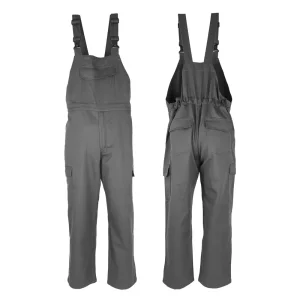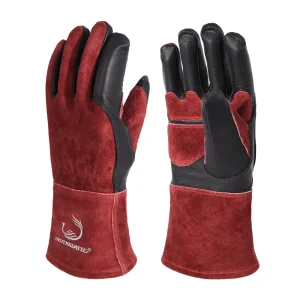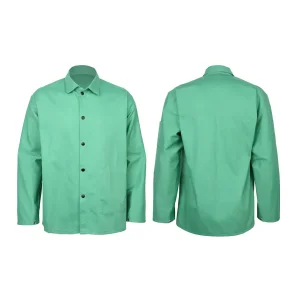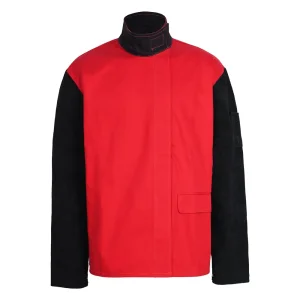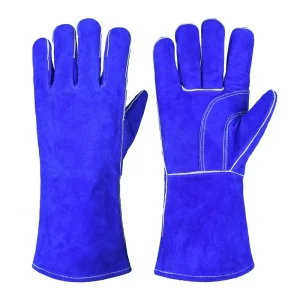
Factory-direct protective wear engineered to withstand severe radiant heat, molten spatter splashes, and intense mechanical abrasion across international job sites.
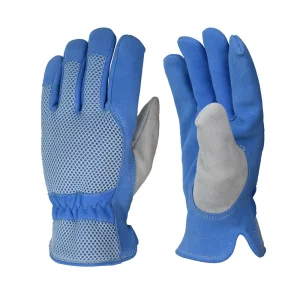
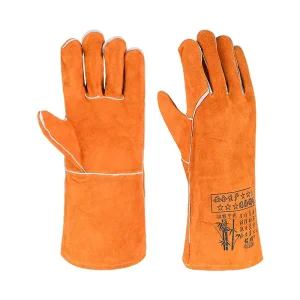
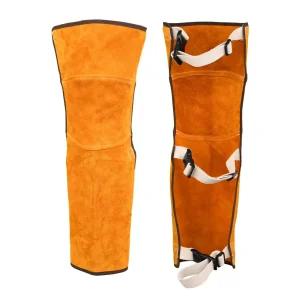
Analysis of procurement pain points, total cost of ownership (TCO), and protective performance benchmarks across high-consequence industries.
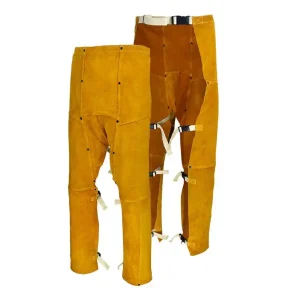
Traditional heavy cow-split work pants provide supreme spark shielding but historically suffer from extreme rigidity and thermal entrapment. Tier-1 engineering procurement teams now demand hybrid gusseted articulation and moisture-wicking FR breathable liners that curb operator fatigue during 10-hour shifts without lowering burn risk ratings.
Over 74% of premature welding trouser discards stem from melted synthetic threads rather than split leather degradation. Enterprise buyers stipulate 100% Kevlar® or Nomex® aramid stitching with welted leather cord barriers to eliminate seam rupture under repetitive molten droplet splatter and acute slag accumulation.
Managing inventory across multiple industrial shipyards, offshore platforms, and automotive body assembly cells necessitates a single direct manufacturer. Direct factory alignment mitigates lot-to-lot color shifts, stabilizes hide thickness tolerances between 1.2mm and 1.6mm, and slashes middleman markups by up to 28%.
Discover the material science powering our flame-retardant welding bottoms: from proprietary tanning techniques to anatomically engineered seam maps.
Tanned in-house to preserve tensile fibrous structures while extracting excess oils. Delivers maximum heat deflection, spark rebound, and superior rip protection in continuous sub-arc and flux-cored conditions.
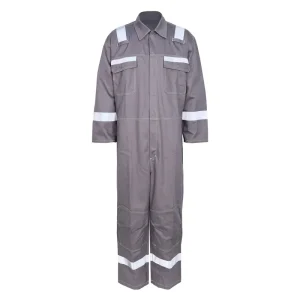
Strategically placed 9 oz or 11 oz flame-retardant sateen cotton on non-impact dorsal calf and waist zones to facilitate rapid vapor transfer and decrease total trouser weight by up to 35% compared to all-leather garments.
High-friction junctions—crotch intersections, pocket borders, and suspension loop hinges—are reinforced with corrosion-resistant dielectric covered brass rivets to counter thermal shear loads.
Integrated internal knee compartments designed to house ergonomic foam inserts. This shields fabricators during low-angle welding, reducing long-term joint injury while maintaining EN 14404 knee protection parity.
Technical parameters utilized across standard production runs and private-label contract manufacturing configurations.
| Evaluation Parameter | Industrial Cow Split Trouser | Hybrid FR Cotton / Split Trouser | Testing & Compliance Protocol |
|---|---|---|---|
| Primary Shell Material | A-Grade Cowhide Split (1.2mm – 1.4mm) | 9 oz FR Cotton + Cowhide Front Apron Panels | EN ISO 11611:2015 Clause 6.7 |
| Flame Spread Resistance | No afterflame; No afterglow; Char length < 5mm | Afterflame ≤ 2s; No molten droplet formation | ISO 15025:2016 Method A |
| Molten Splash Deflection | Class 2 (> 25 Droplets of molten metal) | Class 1 / Class 2 Hybrid Configuration | EN ISO 11611 Clause 6.8 |
| Seam Construction | 3-Ply DuPont™ Kevlar® Welted Double Stitch | Aramid Thread Interlock Double-Needle Seams | ISO 13935-2 Seam Strength > 350 N |
| Fastener Systems | Non-conductive insulated press snaps + Velcro | Heavy-duty FR brass zipper with dual storm flap | EN 1149-5 / Heat Contact Transfer |
| Size Availability | S to 5XL (Custom inseam & rise options) | S to 5XL (Extended leg sizing available) | ISO 13688 Ergonomic Sizing Scale |
How next-generation material science, circular economy protocols, and smart IoT sensors are redefining lower-body hot-work apparel.
Transitioning toward bio-based, aldehyde-free vegetable and synthetic tanning liquors. This approach eliminates hexavalent chromium (Cr VI) generation risks, satisfies strict EU REACH environmental regulations, and yields supple, non-allergenic leathers for extreme thermal applications.
Prototyping flexible thermocouple yarns woven along high-exposure trouser shins. Connected to localized micro-emitters, these alert welders before cumulative thermal radiation crosses epidermal burn thresholds inside enclosed preheated pipe corridors.
Developing field-replaceable leather front-apron covers fastened by concealed, flame-resistant magnetic interlocks. This design reduces end-user cost-per-hour by up to 40%, allowing worn high-spatter leg panels to be swapped without discarding the structural pants.
Full alignment with regulatory safety authorities across North America, the European Union, Australia, and the Middle East.
Dual certification for Class 1 (manual welding with light spatter) and Class 2 (high-amp MIG/MMA overhead work with heavy spatter hazards). Each lot is accompanied by verified Notified Body technical files.
North American compliance documentation covering flash-fire safety and arc-flash protection criteria. Third-party testing guarantees zero melt, zero drip, and low percent body burn calculations.
Complete documentation packages including Generalized System of Preferences (GSP) and RCEP Certificates of Origin, commercial HS code declarations (HS 4203.10 and 6203.42), and pallet-optimized container packing.
Every production batch carries inner tracking tags identifying specific hide lots, tanning dates, operator cell IDs, and QA sign-off stamps, satisfying ISO 9001:2015 traceability audits.
Clear answers to questions asked by safety directors, supply-chain leaders, and international distributors.
Our standard production MOQ for custom OEM welding trousers is 500 pairs per style. This supports custom leather dyeing, exact sizing gradations (EU/US sizing systems), embossed or woven private brand labels, custom packaging, and technical user instruction sheets in your target language.
Yes. All our industrial-grade protective welding garments undergo rigorous assessment by accredited international testing bodies (including SATRA, SGS, or TÜV). We provide comprehensive technical dossiers, declarations of conformity, and test reports covering radiant heat transfer, flame propagation, and molten iron drop counts.
Unlike factories sourcing market scrap, we control raw hide processing within our integrated production ecosystem in Gaozhou. Every batch is calibrated using digital thickness gauges, ensuring a controlled 1.2mm – 1.4mm profile. Fiber density is verified to prevent stretching, stiffness, or premature thin-spot burnout.
Pre-production sample runs based on your technical packs or physical samples require 7 to 10 working days. Upon final sample sign-off and PO confirmation, bulk manufacturing cycles typically range from 35 to 45 calendar days, supported by our facility's 1,000+ operator capacity.
Yes. For shipyards and construction projects in high-heat regions (such as the Middle East, Southeast Asia, or Gulf Coast operations), our hybrid lines combine full cow-split front aprons with 9 oz or 11 oz breathable, flame-retardant treated cotton rears to deliver proven protection while reducing heat stress.
Every order is inspected to AQL 2.5/4.0 standards. Technicians check dimensional tolerance curves, verify Kevlar® thread tension, perform stress-pull tests on brass rivets, and examine snap closures. Full QA inspection reports with high-resolution imagery are supplied before container loading.
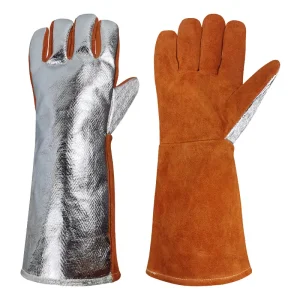
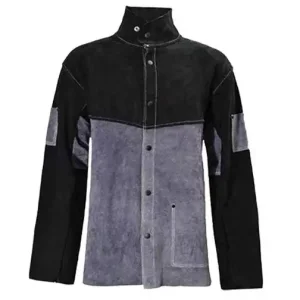
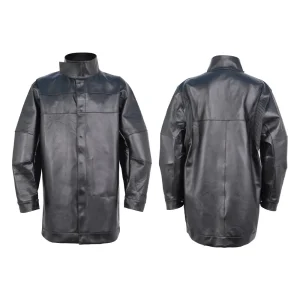
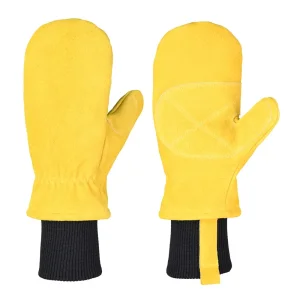
Combine custom welding trousers with matching jackets, aluminized shields, high-heat gloves, and FR accessories to form complete workwear solutions.