Explore standard, heavy-gauge, and specialized welding garments and protective gloves tested for molten spatter repulsion, radiant thermal suppression, and heavy-duty fabrication durability.
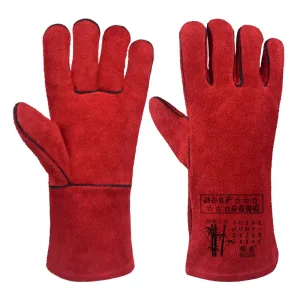
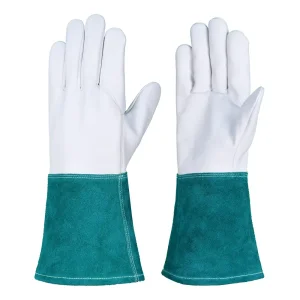
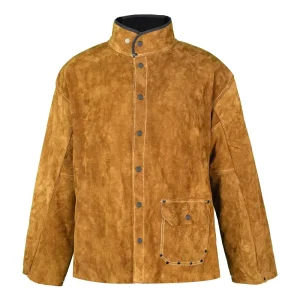
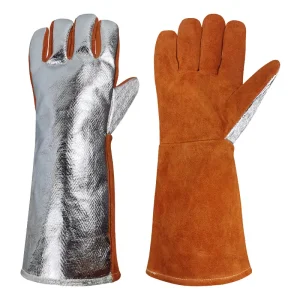
Industrialization across offshore infrastructure, gigawatt-scale energy transitions, automated shipyards, and heavy automotive production has elevated welding PPE from simple utility wear to mission-critical safety capital.
Global demand is increasingly governed by harmonized safety frameworks like EN ISO 11611:2015 (Protective clothing for use in welding and allied processes), ASTM F1506, NFPA 2112, and OSHA 1910 Subpart I. Tier-1 enterprise buyers no longer compromise on verifiable test reports for Class 1 (manual welding with light spatter) and Class 2 (heavy flux core, positional welding, gouging).
EN ISO 11611 Class 1 & Class 2Importers and high-volume brand distributors are rapidly transitioning away from fractured trading intermediaries toward integrated manufacturers capable of handling tanning, split grading, custom flame-retardant (FR) weaving, and garment sewing under one roof to suppress lead-time volatility and secure cost leadership.
Direct Source ScalabilityModern industrial yards face acute skilled welder deficits. Procurement directives prioritize jackets that reduce heat fatigue and thermal burden. This driver has created explosive demand for hybrid structures—combining heavy-duty cowhide in spatter-impact zones with 9 oz / 7 oz breathable FR cotton panels in flexion zones.
Hybrid Thermal DynamicsFrom traditional heavy hide coats to ergonomically mapped composite jackets, our engineering labs develop and calibrate fabrics tailored for high-temperature slag, radiant heat, and prolonged kinetic wear.
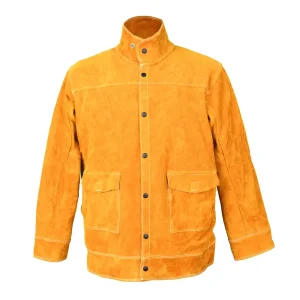
Standard select split cowhide is enhanced via mineral-chrome secondary tanning. This chemical lock prevents premature hide hardening, embrittlement, and cracking when continually scorched by spatter and ambient radiant flux exceeding 450°C.
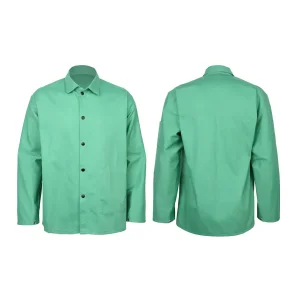
1.2mm - 1.4mm Heavy GaugeIntegration of 9 oz and 7 oz heavy-weight FR twill with polymer flame-retardant cross-linking (Proban/Pyrovatex certified equivalent chemistry). Retains self-extinguishing flame resistance properties through 50+ industrial laundering cycles.
Zero Meltdown / Zero DripEvery critical Men's Welding Jacket engineered by Ming Shun is assembled exclusively with 3-ply and 4-ply Kevlar® para-aramid thread. Bar-tacked stress anchors, double-welted seams, and insulated dielectric snap closures eliminate electrical contact transfer.
Anti-Burn Seam ArchitectureNext-generation designs blend Class 2 flame resistance with high-visibility fluorescent yellow/orange blocking and 3M™ Scotchlite™ flame-retardant reflective trim, satisfying EN ISO 20471 alongside NFPA 70E Arc Flash Hazard Category 2 specifications.
HRC 2 & Hi-Vis IntegratedMen's welding protective jackets face drastically divergent mechanical, chemical, and thermal vectors across major global sectors. Here is how our engineering profiles match specific heavy-industry workflows.
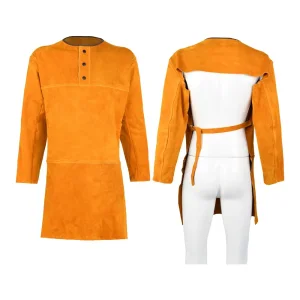
Severe overhead positional stick/SMAW and FCAW operations create torrential molten iron shower loads. Shipbuilders deploy full 30" split cowhide jackets (such as model MS-393 and MS-270) with stand-up Mandarin collars, dual storm flap button closures, and underarm rivet reinforcements to withstand enclosed hull environments.
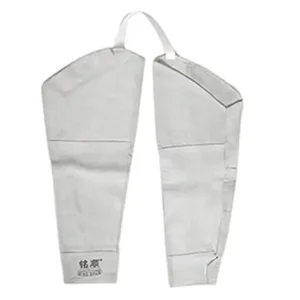
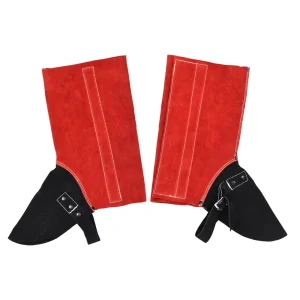
Pipeline track welding requires rapid mobility, crawl-space flexibility, and wide operating temperature swings. Field contractors deploy 9 oz FR Cotton Hybrid Welding Jackets with Leather Sleeves (MS-1260 and MS-280) alongside extended leather spats (MS-113) to protect extremities without causing heat exhaustion under extreme sunlight.
Robotic station line techs and TIG manual repair weld specialists require zero snag hazards, anti-static safety compliance, and maximum upper arm freedom. Lightweight, custom-tailored FR cotton workwear (MS-330 and MS-1215G) prevents sparks from entering shirt pockets while delivering maximum ergonomic range of motion.
A granular look at structural characteristics, thermal performance thresholds, and operational suitability across different men's welding jacket fabrications.
| Material Configuration | Thickness / Fabric Weight | Radiant Heat Resistance | Spatter & Slag Repellency | Mobility & Breathability | Primary Industrial Sector |
|---|---|---|---|---|---|
| Premium Split Cowhide (MS-393, MS-270) | 1.2 mm - 1.4 mm Chrome Split | Outstanding (> 500°C contact) | Maximum / Continuous Heavy Slag | Standard / High Mass | Shipbuilding, Heavy Forging, Structural Steel |
| Hybrid Cowhide Sleeves + FR Cotton Torso (MS-1260) | 1.3mm Split + 9 oz FR Cotton | High on Arms, Moderate on Chest | Targeted Impact Zone Shielding | High / Dynamic Air Permeability | Boilermaking, Pressure Vessels, Pipelines |
| Full FR Treated Cotton (MS-330, MS-1215G) | 9.0 oz - 11.5 oz 100% Cotton Satin/Twill | Moderate (Short contact) | Light Spatter / MIG & TIG | Superior / Maximum Comfort | Automotive Stamping, HVAC, General Maintenance |
| Grain Pigskin Leather (MS-W231) | 1.0 mm - 1.2 mm Full Grain | High Heat with Moisture Defense | Excellent Slag Shedding | Very High Flexibility | Humid & Oily Fabrication Yards, Mining Equipment |
| Aluminized Laminated Cowhide (MS-738O Series) | 1.3 mm Leather + Aluminum Foil | Extreme Radiant Suppression (>1000°C) | Repels Molten Metal Splash | Structured / Rigid Shielding | Foundries, Smelters, Blast Furnace Hot Work |
Purchasing managers and safety brand directors face four recurring risks: batch variance, shipping delays, non-compliant leather chemistry, and stitch unraveling under thermal stress. Ming Shun solves these upstream.
Unlike assembly-only cut-and-sew workshops, our Gaozhou factory operations oversee raw leather selection, chrome fixation, neutralization, and in-house dye drum cycling. This eliminates batch-to-batch stiffness variations and dye bleeding onto workers' base clothing.
Thermal jackets fail earliest at armpit junctions, cuffs, and front snap closures. We mandate bar-tacked Kevlar® thread arrays across all stress points, backed by non-conductive, dielectric insulated snap studs that will not melt or conduct high-voltage welding current to the skin.
From embossed chest logos, heat-transferred FR wash-care tags, custom Pantone fabric matching, barcode carton printing, and direct palletization for EU/US distribution hubs—we provide full turnkey contract manufacturing for private labels.
Clear, unvarnished technical answers regarding certification testing, leather durability, laundering protocols, and custom OEM order parameters.
Class 1 protective garments are designed for lower-risk manual welding techniques with minimal spatter and radiant heat generation, such as gas welding, TIG welding, and micro-plasma welding. Class 2 garments require significantly higher resistance against radiant heat (RHTI 24 ≥ 16s) and must withstand at least 25 droplets of molten metal without penetrating through the sample. Full split cowhide jackets (like MS-393) meet Class 2 requirements, making them mandatory for gouging, oxy-cutting, and vertical-up structural MMA welding.
Split cowhide has a fibrous suede texture that physically slows, catches, and sheds falling molten slag drops. Smooth top-grain leather can sometimes allow hot slag to skate across folds and lodge in creases. Furthermore, split leather tanned with chromium salts exhibits higher heat dissipation capacity and exceptional puncture resistance at a lower weight-to-thickness ratio.
Leather welding garments must never be dry cleaned or machine-washed in water, as this leaches essential tanning oils, causing irreversible hardening and shrinkage. Commercial maintenance involves brushing off slag particulate, wiping with damp cloths using neutral pH leather conditioners, and storing in ambient, ventilated lockers away from continuous UV exposure.
For standard in-line leather jackets (such as MS-393 and MS-270) and FR cotton garments, initial trial orders typically start at 500 units per style. Fully customized OEM specs (bespoke panel sizing, custom corporate dye matching, specialty pocket arrangements) require 1,000 units. Bulk maritime container orders average 40–50 days lead time following tech-pack and pre-production golden sample sign-off.
Yes. Our tanneries strictly monitor chromium VI (Cr VI) generation, azo dyes, formaldehydes, and heavy metal concentrations. All leather batches intended for EU export comply with REACH Annex XVII regulations, preventing skin sensitization issues and simplifying customs clearance for European importers.
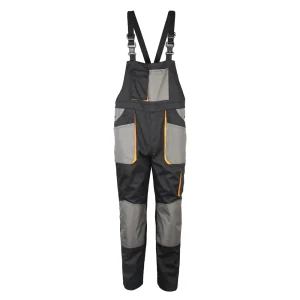
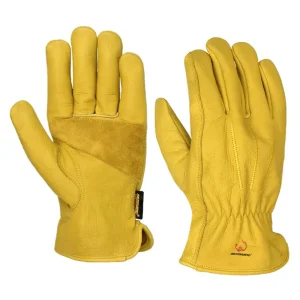
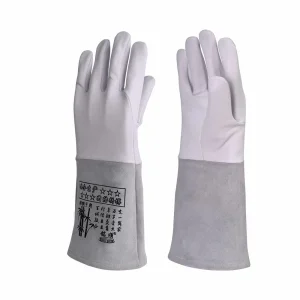
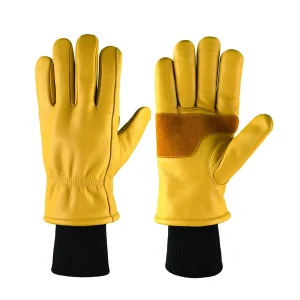
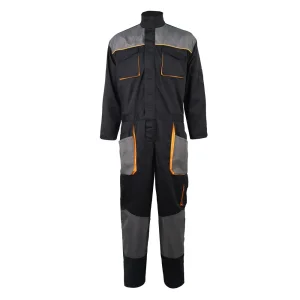
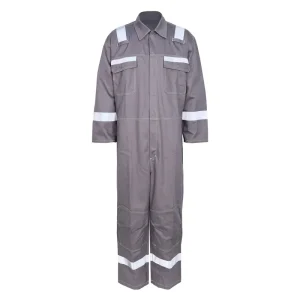
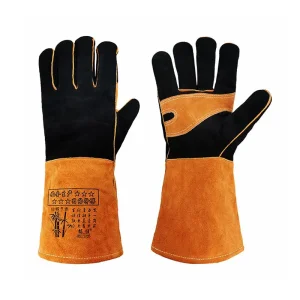
Complete the welder's protective envelope. Explore our auxiliary product lines: leather spats, bib aprons, ergonomic heavy-duty work overalls, high-performance TIG/MIG gloves, and winter cold-weather PPE.