
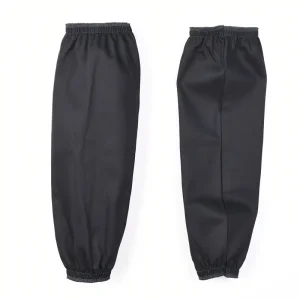
Direct factory engineered solutions built to exceed ASTM F1506, NFPA 2112, and EN ISO 11611 Level 2 standards. Every garment features zero-compromise thread selection and anatomical load-balancing.
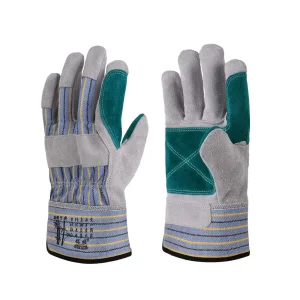
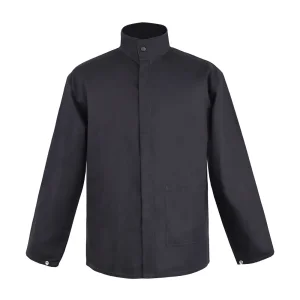
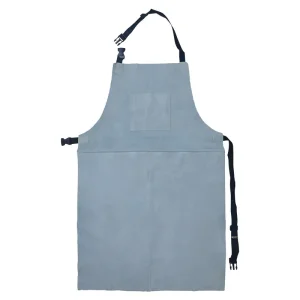
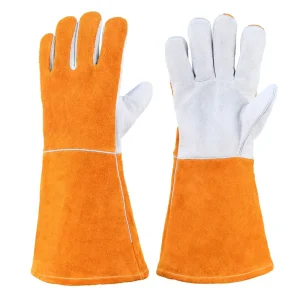
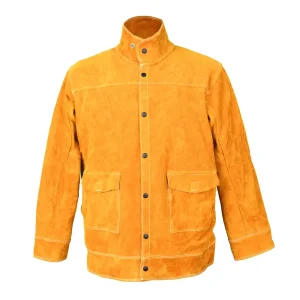
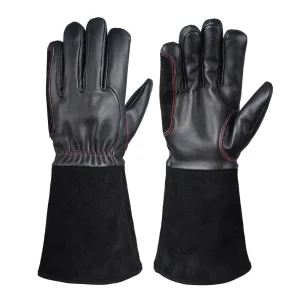
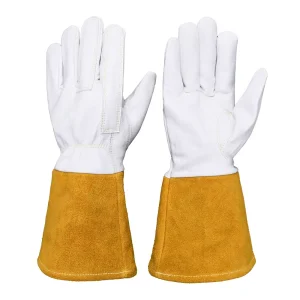
The operational divide between basic treated fabrics and high-performance Men's FR Workwear hinges on endothermic thermal management, non-melting char structural integrity, and convective heat shielding.
We deploy dual-tier textile configurations: Inherent Aramid/Modacrylic blends where flame resistance cannot wash out, and specialized Tetrakis (hydroxymethyl) phosphonium chloride (THPC) molecularly bound cotton for cost-effective mass enterprise deployments.
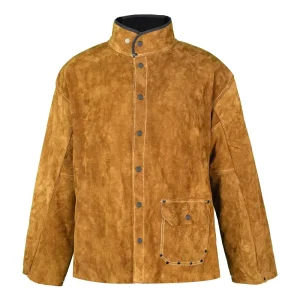
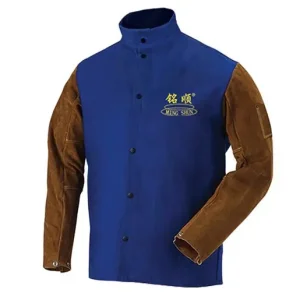
Heavy fabrication environments require differentiated mechanical shielding. Our hybrid jackets incorporate vegetable-tanned split cowhide across high-spatter thoracic and brachial zones, paired with breathable 9 oz FR cotton on dorsal panels to alleviate heat fatigue.
Conventional polyester threads combust under molten metal droplets, precipitating rapid structural failure. We mandate exclusively certified triple-ply DuPont™ Kevlar® continuous filaments across every primary stress point, dart, and closure flap.
Off-the-shelf workwear fails when exposed to multi-vector hazards. Our OEM design protocols isolate specific industry threat profiles—from electrical arc flash to catastrophic hydrocarbons.
Engineered for flash fire flash survival (NFPA 2112) with static dissipative matrix threading to prevent vapor ignition in explosive ATEX zones.
Calibrated Arc Thermal Performance Values (ATPV) exceeding 8.6 to 40 cal/cm² (CAT 2 to CAT 4), protecting against blast overpressure and thermal flux.
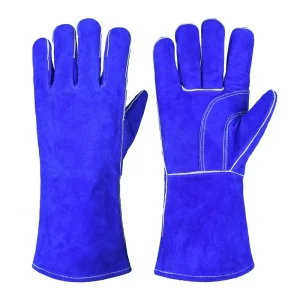
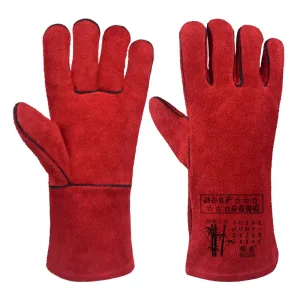
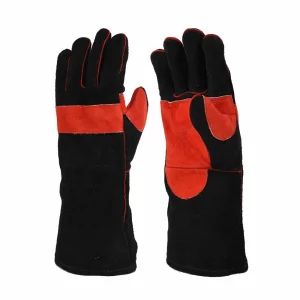
Rugged, slag-repellent hybrid cowhide garments built for continuous overhead stick, flux-core, and submerged arc welding in confined marine compartments.
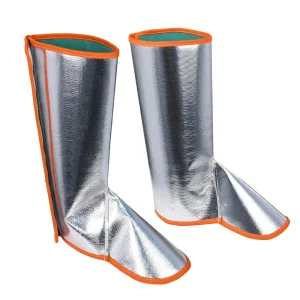
Aluminized rayon/para-aramid backings paired with heavy steerhide, engineered to reflect up to 95% of radiant heat while repelling 1500°C molten splashes.
Operating out of our 25-year manufacturing hub in Gaozhou, Guangdong, we control every node from raw hide tanning and chemical impregnation to CAD computerized cutting and robotic stitch alignment.
Unlike assembly-only contractors, Ming Shun operates in-house leather processing. We select premium raw steerhide, split bovine hides to within ±0.05mm tolerances, and perform chrome-free eco-tanning to eliminate carcinogenic Hexavalent Chromium (Cr VI) risks.
Digitally mapped tech packs ensure nesting efficiency exceeding 91%, directly reducing fabric waste and guaranteeing micron-level pattern accuracy across repeat production runs over hundreds of thousands of pieces.
Every bolt of FR textile and every lot of tanned leather receives a digital production passport. Physical testing reports for char length, tear resistance, and tensile modulus are permanently archived and accessible per batch number.
Enterprise procurement teams cannot risk customs seizures or OSHA/CE liabilities. We provide authenticated, accredited test documentation for all primary jurisdictional standards.
| Regulatory Standard | Jurisdiction | Core Performance Metric | Factory Testing Verification |
|---|---|---|---|
| NFPA 2112 / ASTM F1930 | North America | Max ≤50% Total Body Burn at 3-second flash fire test (2 cal/cm²/sec) | ASTM D6413 Vertical Flame Char < 100mm |
| NFPA 70E / ASTM F1506 | North America (OSHA) | Arc Rating (ATPV / Ebt) classification from HRC/CAT 1 to CAT 4 | ASTM F1959 Arc Thermal Testing Validated |
| EN ISO 11611 (Class 1 & 2) | European Union / UK | Protection against small/large molten splashes and radiant heat | CE Module B + D Notified Body Certification |
| EN ISO 11612 (A1, B1, C1...) | Global / International | Limited flame spread, convective heat, radiant heat, molten aluminum/iron | ISO 17025 Accredited Laboratory Audits |
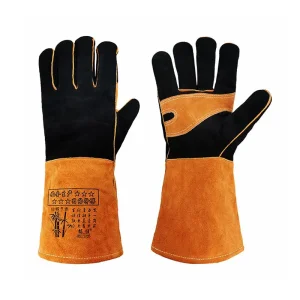
| EN 12477 (Type A & B) | European Union | Welder protective gloves: Type A (Heavy stick/MIG), Type B (Dexterous TIG) | EN 388: 4244X Mechanical & Thermal Calibrated |
Experienced CPOs know that cheap FR garments with high shrinkage and low seam integrity cost 2.4x more over a 24-month horizon due to frequent replacements, worker discomfort downtime, and failure citations.
Inferior chemically-treated cotton shrinks up to 8% after 5 washes, rendering cuffs short and exposing vulnerable skin to ultraviolet rays and sparks. Our pre-sanforized fabrics maintain dimensional shrinkage below 2.5% across 50 industrial cycles.
Restricted arm movement causes seam strain and worker fatigue. We implement bi-swing action backs, ergonomic sleeve curves, and frictionless interior lining in our hybrid and pure leather models, boosting worker shift stamina.
By eliminating trading intermediaries, our partners obtain OEM tier-one unit costs. Bulk buyers capture immediate working capital advantages alongside direct access to pattern-makers for rapid market customization.
Ming Shun’s R&D division is actively collaborating with academic polymer laboratories to integrate next-generation materials into industrial production lines.
We are prototyping graphene-treated FR inner linings that diffuse body heat across cooler textile zones, reducing heat stroke incidents in deep-mine and Middle East pipeline construction operations.
Engineering post-industrial aramid scrap shredding and re-spinning into secondary thermal barrier non-wovens, targeting a 30% reduction in Scope 3 carbon emissions for ESG-mandated corporate accounts.
Integrating heat-resistant UHF RFID tags into hem seams, enabling automated industrial laundry sorting, cycle logging, and end-of-life retirement warnings to eliminate non-compliant worn-out gear.
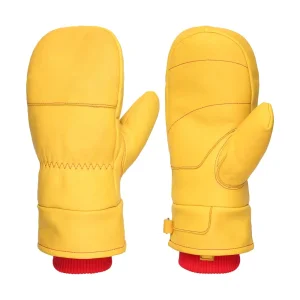
Engineered for high-amperage stick welding, sub-zero winter job sites, and maximum molten splash deflections. Fully available for private-label white-labeling and bespoke corporate sizing.
Clear, unvarnished operational and compliance answers for supply chain directors, safety officers, and private label brand developers.
Every textile dye and chemical impregnation run undergoes internal ASTM D6413 vertical flammability testing before cutting. We test char length, after-flame time, and melt drip behavior across both warp and weft directions. Certificate of Analysis (COA) documents are indexed to individual rolls and provided with every commercial invoice.
We perform raw hide grading, sorting, and chemical processing in-house at our Gaozhou facility. We use exclusively tight-grained shoulder and side splits with uniform thickness (1.2mm–1.4mm), rejecting loose belly leather that weakens under abrasion and thermal shock. Our hides are tanned with stabilized fatliquoring oils that prevent leather hardening after exposure to heat.
Yes. Over 65% of our export volume is custom private-label manufacturing. Our pattern engineering team works directly from your CAD files, sketches, or physical reference garments. We accommodate complete Western and Scandinavian sizing charts, incorporating graded shoulder, sleeve, and inseam modifications without distorting ergonomic balance.
Standard OEM garment runs start at 500 units per style (mixed sizes allowed), while glove lines require 1,200 pairs. For established distributor programs utilizing standard factory stock materials (e.g., 9 oz navy FR cotton or split cowhide), baseline orders can be consolidated at lower thresholds. Production lead times average 35 to 45 calendar days following sign-off on pre-production golden samples.
We provide full third-party test verification from accredited testing bodies (SGS, TÜV, Intertek, or SATRA) corresponding to your region (CE Type Examination Certificates, Declaration of Conformity under EU PPE Regulation 2016/425, or North American UL/NFPA certification logs). Full container packing lists, GSP origin certifications, and MSDS sheets for chemical finishes accompany every Bill of Lading.
Full leather jackets provide unmatched spatter shielding but can lead to worker heat exhaustion in warm environments. Our hybrid models (such as MS-287 and MS-1260) strategically apply heavy split cowhide only to the arms, shoulders, and chest bib—the primary targets of falling molten slag—while employing breathable 9 oz or 7 oz treated FR cotton across the back. This cut garment weight by 38% and promotes passive convective airflow without sacrificing Level 2 protection.
