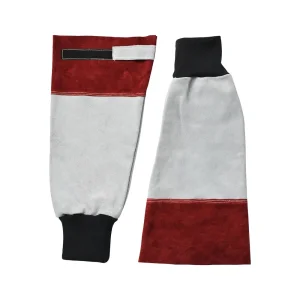
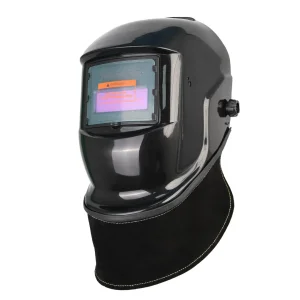
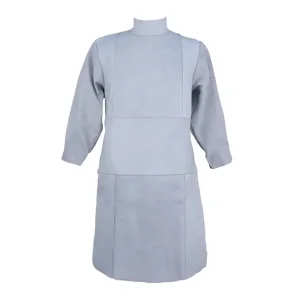
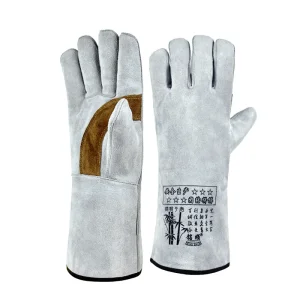
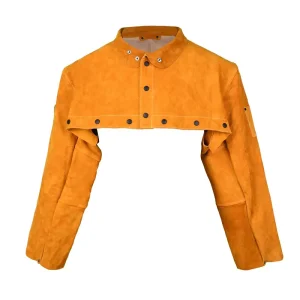
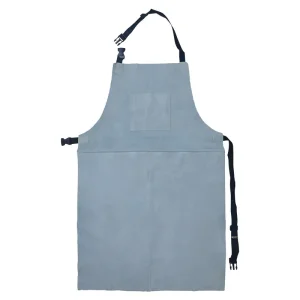
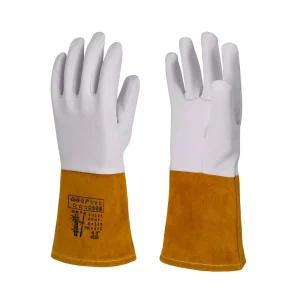
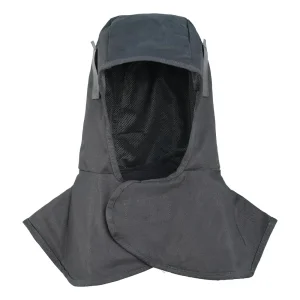
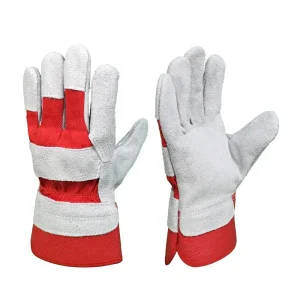
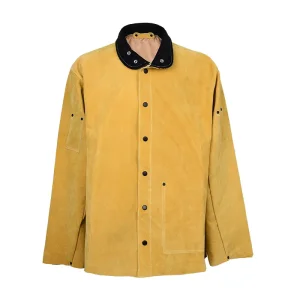
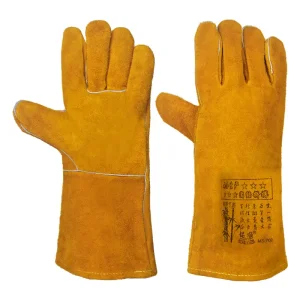
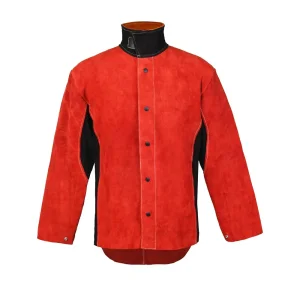
Direct supply from our certified plant in Gaozhou, Guangdong. Engineered for heat resistance, spatter deflection, and arc-flash attenuation.
Analyzing structural transitions across metallurgy, high-voltage utility grids, and cryogenic processing from raw split hides to multilayer polymeric-leather composites.
Modern electrical transmission and extreme hot-work fabrication demand dual-hazard compliance. We laminate premium split cowhide with inherent FR linings like Para-aramid fleece, generating high ATPV (Arc Thermal Performance Value) ratings to prevent second-degree flash burn propagation while maintaining mechanical puncture resistance.
LNG marine terminals and liquid nitrogen industrial transfer require gloves that resist extreme embrittlement. Ming Shun utilizes silicone-impregnated grain cowhide coupled with microporous polyolefin moisture barriers that remain ductile down to -196°C, preventing rapid frostbite during cryogen valve actuation.
Used as protective outer shells over Class 00 to Class 4 dielectric rubber insulating gloves according to ASTM F696 & EN 60903. Our specialized goatskin and cowhide protector gloves prevent sharp metal cuts, wire snags, and hydraulic oil contamination from compromising the underlying electrical insulating core.
Balancing total cost of ownership (TCO), material sustainability, and regulatory certainty across diversified multi-continental distribution chains.
Unlike assembly-only contractors, Ming Shun operates in-house leather processing in Gaozhou. Controlling beamhouse liming, chrome-free retanning, and precision fatliquoring allows us to fix tensile strength, chromium VI compliance (under 3 mg/kg), and exact hide calipers across multi-container purchase orders.
Global logistics volatile periods require plannable lead times. With over 500,000 monthly glove capacity and standardized leather stock buffers, our typical bulk lead time holds reliably at ~45 days, insulating international master distributors from seasonal stockouts.
Our engineering division converts CAD tech packs into production patterns within 5 working days. From ergonomic gunn-cut patterns with keystone thumbs to heat-embossed private brand signatures, double Kevlar stitching, and custom barcode packaging, OEM workflows are fully documented and revision-tracked.
| Insulation Engineering Category | Outer Hide Matrix | Core Barrier / Lining Layer | Thermal / Arc Limits | Primary Target Industry |
|---|---|---|---|---|
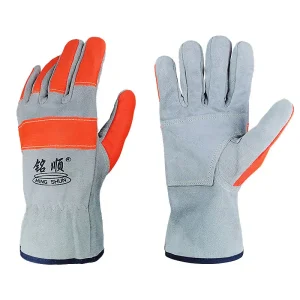
| Arc-Flash Dielectric Protector | Top-Grain Goatskin (0.8 - 1.0mm) | Unlined / Kevlar Hem Elasticated | NFPA 70E Arc Level 2-4 Compatible | High-Voltage Substation Maintenance & Grid Utilities |
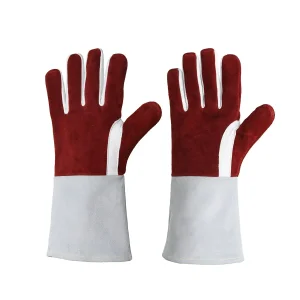
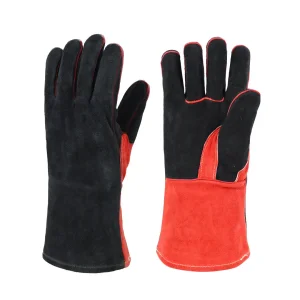
| Heavy Thermal Slag & Spatter | A-Grade Shoulder Split Cowhide (1.2 - 1.4mm) | Laminated Flame Retardant Cotton + Aluminum Foil | Contact Heat up to 350°C (EN 407 Level 3) | Continuous Casting, Smelting & Heavy Pipe Welding |
| Cryogenic Sub-Zero Transfer | Treated Grain Cowhide (Water/Oil Repellent) | Multi-layer PTFE Membrane + 3M Thinsulate | Operating Range -196°C to +100°C | LNG Tanker Terminals, Dry Ice Production & Bio-Gas |
| Foundry Radiant Shield Gauntlet | Aluminized Para-Aramid / Split Cowhide Hybrid | Wool Felt Interlining + Kevlar Structural Seams | Radiant Heat flux up to 1000°C short-term | Foundry Pouring, Forge Operations & Glassworks |
Rigorous test protocols validated by ISO 17025 accredited laboratories ensuring friction-free customs clearance and end-user workplace safety.
Certified CE compliance under Module B and Module C2/D for Category II and Category III personal protective gear. Fully audited for EN 388 (Mechanical Resistance: Abrasion, Blade Cut, Tear, Puncture), EN 407 (Thermal Hazards), and EN 12477 Type A/B classification.
Stringent compliance with ANSI/ISEA 105 for hand protection classification, featuring verifiable third-party test data for conductive heat resistance, hypodermic puncture resistance, and ASTM F1506 flame-resistance criteria for electric utility applications.
Every hide batch conforms strictly to EU REACH Annex XVII regarding azo dyes, pentachlorophenol (PCP), and short-chain chlorinated paraffins (SCCP). Chromium VI levels are routinely validated below detection thresholds via ISO 17075 analytical methods.
Our R&D pipeline integrates bio-based tanning chemistry, smart thermal indicators, and ergonomic biomechanics.
Eliminating heavy-metal residue through synthetic vegetable-tanned cowhide composites, lowering water footprint while retaining extreme heat resistance.
Embedding microencapsulated paraffin PCM within the interior fleece liner to dynamically absorb excess skin heat and prevent operator hand perspiration.
Developing reversible color-shifting leather pigments that visibly warn welders and metal handlers when the outer glove exceeds safe touch thresholds (>60°C).
Pre-curved 3D anatomical digital patterns engineered specifically to reduce flex-fatigue during prolonged gripping of MIG guns and heavy cutting torches.
Engineered for maximum lifecycle durability in structural steelworks, industrial fabrication, and foundry plants.
Essential technical and logistical answers regarding wholesale leather insulated gloves and welding safety PPE orders.
Leather insulated gloves incorporate specialized thermal or dielectric barrier sandwiches (such as multilayer aramid fleeces, cryogenic aerogel membranes, or foam-laminated cotton) beneath an abrasion-resistant leather shell. While standard welding gloves offer basic radiant protection, true insulated models are calibrated against specific temperature gradients (up to 350°C contact heat or -196°C cryogenic thresholds) and arc flash exposure (ASTM F2675).
Leather protectors (manufactured to ASTM F696 / EN 60903 standards) are worn directly over rubber insulating gloves. They have no dielectric value themselves; instead, their function is purely mechanical shielding—protecting the fragile dielectric latex from punctures, abrasions, chemical oils, and metal burrs that could compromise electrical insulation integrity.
Our standard production MOQ starts at 1,200 pairs per custom style or 600 pairs for existing factory patterns. Counter-samples are generated within 5 to 7 business days from tech pack approval. With 1,000+ employees and dedicated lines, our monthly glove volume exceeds 500,000 pairs, maintaining a stable 40 to 45-day container load turnaround.
Third-party leather sourcing often suffers from variable hide thickness, inconsistent chrome levels, and uneven fatliquor content, which directly impacts thermal insulation and flexibility. Because Guangdong Ming Shun handles beamhouse processing and dyeing on-site in Gaozhou, we assure consistent caliper, pH neutrality, zero Chromium VI, and unvarying batch-to-batch tactile softness.