Engineered for high-spatter, heavy-slag environments. Each unit is constructed under unified ISO-9001 certified batch controls to guarantee zero-defect delivery across global supply contracts.
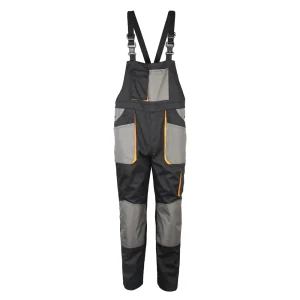
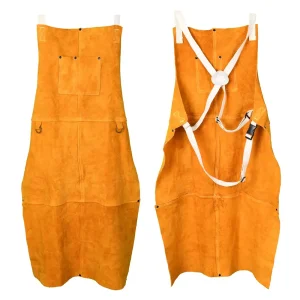
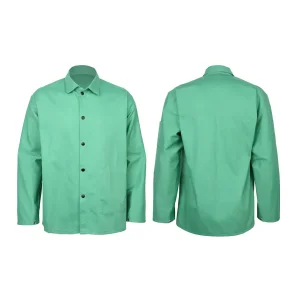
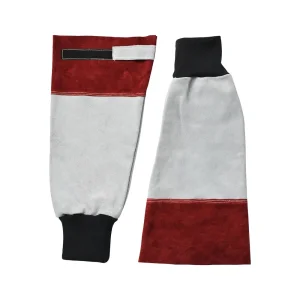
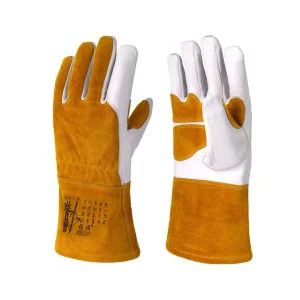
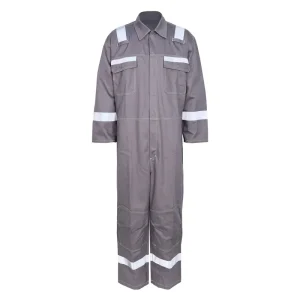
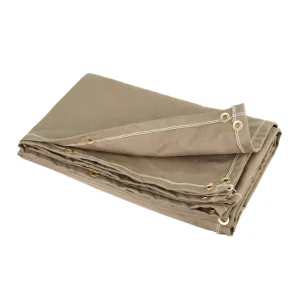
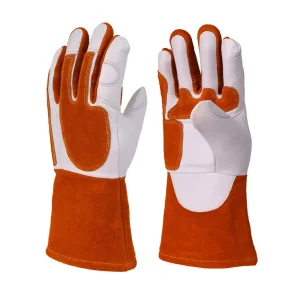
A rigorous review of how metallurgical spatter dynamics, radiant flux thresholds, and mechanical friction demand superior leather morphology and reinforced stitching in heavy fabrication PPE.
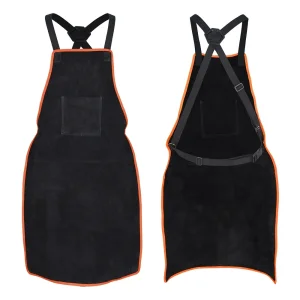
Electric arc welding operations generate molten slag and iron globules projecting at temperatures from 1,200°C to 1,600°C. An industrial heavy duty welding apron acts as the primary barrier against irreversible subcutaneous burns. Dense fibrous cowhide split leather displays natural flame retardancy, forming an instantaneous protective char layer that prevents molten breakthrough without brittle matrix failure.
High-amperage MIG (GMAW), flux-cored arc welding (FCAW), and submerged arc installations produce radiant heat flux exceeding 40 kW/m². Synthetic or sub-gauge fabrics experience structural degradation under continuous ultraviolet (UV) and infrared (IR) radiative exposure. Heavy-duty cowhide retains dimensional stability, low thermal conductance, and high tensile recovery during long continuous passes.
Structural fitters, boilermakers, and heavy shipwrights work alongside sharp structural beams, burred pipe edges, and abrasive grinding wheels. Standard lightweight aprons fail prematurely at structural seam lines. Heavy-duty split leather calibrated between 1.2mm and 1.6mm thickness delivers mechanical cut, puncture, and abrasion resistance conforming to EN 388 Level 4 performance.
For manual welding techniques with heavy spatter and droplet formation (e.g., MMAW with basic or cellulose-covered electrodes, MIG welding with high currents, plasma cutting, air carbon arc gouging), procurement teams must specify Class 2 protective garments. Class 2 requires protection against at least 25 drops of molten metal and radiant heat resistance of RHTI 24 ≥ 16 seconds.
From hide corium density to continuous Kevlar filament stitching, technical breakdown of how factory-direct manufacturing ensures structural integrity under severe industrial use.
| Component Specification | Commercial Grade Standard | Heavy-Duty Industrial Grade (Ming Shun) | Performance & Compliance Advantage |
|---|---|---|---|
| Raw Material Substrate | Mixed belly split or reconstituted scrap | Selected shoulder and side cowhide split (1.3mm - 1.5mm) | High collagen fiber density prevents burn-through and curling |
| Thread Composition | Standard polyester or bonded nylon | 100% DuPont™ Kevlar® 3-ply / 4-ply aramid thread | Zero melting point up to 425°C; resistance to abrasive slag shear |
| Stress-Point Reinforcement | Single-needle backstitch | Solid brass/copper rivets + dual-layer leather gussets | Eliminates pocket and strap tear-out during heavy tool loading |
| Harness & Suspension | Simple around-the-neck webbing ribbon | Ergonomic cross-back (X-harness) self-balancing straps | Disperses gravitational load away from cervical vertebrae to shoulders |
| Chemical Safety & Tannery | Unregulated chromium residual salts | Eco-compliant trivalent chromium tanning, pH balanced (3.5 - 5.0) | REACH Annex XVII compliant; zero skin irritation or hexavalent Cr(VI) |
Leveraging 25+ years of production experience in Gaozhou, Guangdong, combining integrated leather processing with automated nesting, strict in-line QA, and rapid OEM/ODM engineering.
Unlike trading intermediaries that rely on volatile third-party hide jobbers, Ming Shun controls tanning, de-fatting, split calibration, and dyeing under unified facility governance. This vertical integration buffers our global partners against raw commodity fluctuations while ensuring uniform hand-feel, elongation modulus, and dye retention batch after batch.
Our hybrid production floor pairs computer-aided digital laser nesting machines with master artisanal leathercutters. Automated nesting yields optimal hide utilization with zero edge defects, while our dedicated workforce ensures consistent double-stitched assembly across high-volume production cycles.
By operating multi-stage buffer warehouses for raw rawhide inputs and maintaining direct arterial freight links to Pearl River Delta shipping hubs (Shenzhen/Guangzhou), we maintain 45-day lead times for full 40-foot container orders, shielding overseas supply chains from regional disruptions.
How our heavy duty welding aprons, bib aprons, split-leg chaps, and hybrid apparel solve distinct workplace hazards across major global heavy industries.
Confined double-bottom ship tanks demand flame-retardant split cowhide aprons fitted with quick-release dielectric side buckles and reinforced thoracic bibs. Our aprons withstand sharp steel deck friction, wet marine conditions, and continuous positional stick welding without premature seam delamination.
Rotational pipeline spool welding generates continuous directional sparks and heated flux chips. We engineer extended split-leg leather aprons that safeguard the femoral artery and groin zones while preserving 360-degree mobility during crouched, seated, and out-of-position pipeline welds.
In automated welding lines requiring human tool setups, operators face high-frequency resistance spatter and flash burns. We manufacture hybrid leather-cotton aprons that integrate breathable 9 oz flame-retardant twill backing with sacrificial cowhide chest/belly front aprons to keep workers cool during long summer shifts.
Why Tier-1 industrial buyers transition from cheap low-gauge workwear to factory-direct engineered heavy duty welding aprons: evaluating product lifecycle, worker uptime, and risk liability.
Procuring low-cost economy welding aprons constructed with inferior belly leather and standard nylon thread typically results in seam failure within 10 to 14 production shifts. Thread embrittlement under continuous UV flux causes pocket detachment and strap failure. When evaluating cost-per-welder-shift, heavy-duty Kevlar-stitched cowhide extends service life from 2 weeks to 6-9 months, reducing recurring procurement spend by up to 58%.
A single lost-time burn injury in Western Europe or North America can cost between $15,000 and $45,000 in direct healthcare, replacement labor, and insurance premium escalation. By deploying third-party certified heavy duty welding aprons complying with ANSI/ISEA 105 and EN ISO 11611, safety compliance directors establish clear institutional due diligence while protecting plant workers.
Ensuring complete documentation traceability for North American (OSHA/ANSI), European Union (CE/PPE Regulation 2016/425), and Australasian workplace health frameworks.
Every batch of our leather welding protective apparel is tested in accredited notified body laboratories. Garments are audited for flame spread (A1/A2), impact of spatter droplets (Class 1 ≥ 15 drops; Class 2 ≥ 25 drops), radiant heat transfer index (RHTI 24), electrical resistance, and dimensional stability upon exposure.
European chemical regulations mandate strict controls on extractable hexavalent chromium (Cr VI), banned azo colorants, organotins, and short-chain chlorinated paraffins (SCCP). Ming Shun guarantees complete chemical testing under EN ISO 17075, maintaining zero-detectable hexavalent chromium across our entire leather line.
We provide localized regulatory support for multinational safety brands, including country-of-origin labeling (COO), dual-language instruction manuals (IFU), EAN-13 / UPC barcoding, carton palletization specs, and verified Taric/HS-code classifications for frictionless customs processing.
Straightforward answers for safety engineers, PPE brand managers, category buyers, and supply chain directors sourcing wholesale welding protection.
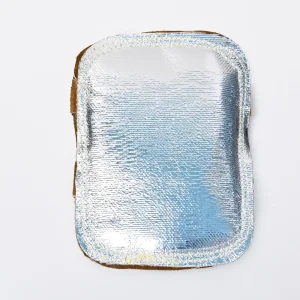
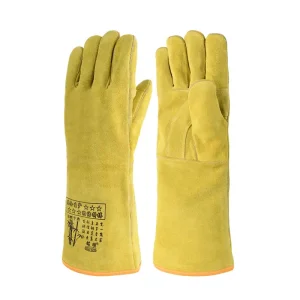
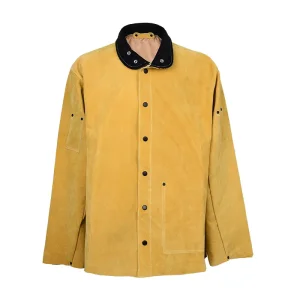
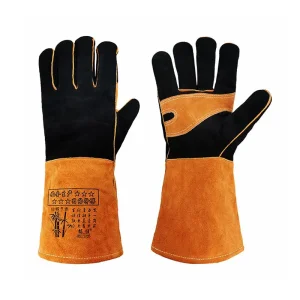
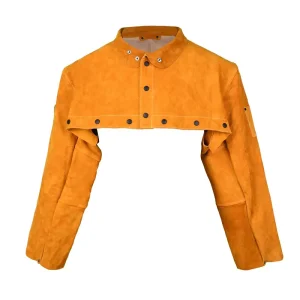
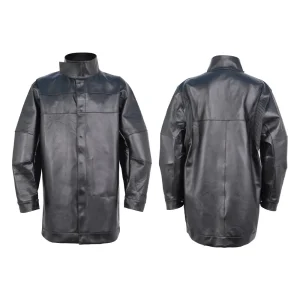
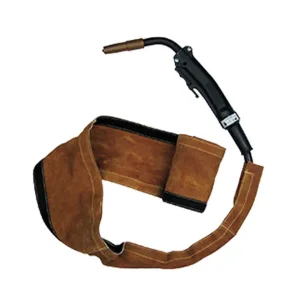
Complete your industrial protective clothing matrix. Direct container sourcing across gloves, modular cape sleeves, back hand heat pads, and specialized workshop protective wear.
Send your tech pack, physical reference sample, or required certification framework to our Gaozhou engineering facility. Connect with an English-fluent technical sales engineer within one business day.
Request Technical Spec Sheet & Factory Quote
