Immediate wholesale line item availability for distributors, safety stockists, and enterprise procurement partners. Fully auditable production lots manufactured in our Pukang Industrial Park facilities.
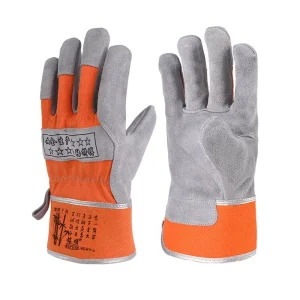
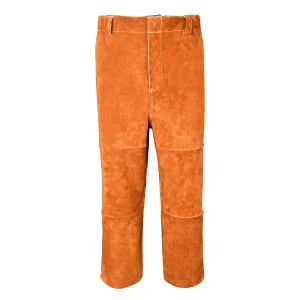
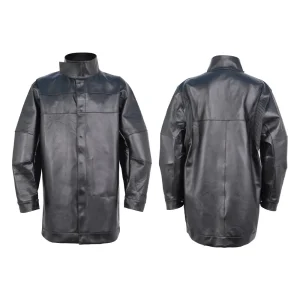
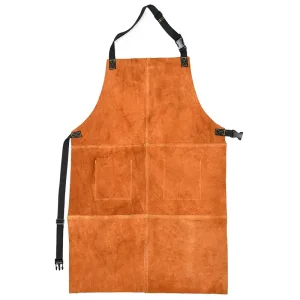
The global commercial market for flame-retardant industrial PPE is witnessing an unprecedented paradigm shift driven by enhanced workplace litigation, revised OSHA standards, and expanding heavy infrastructure.
Across North America, the European Union, the GCC countries, and the Asia-Pacific regional corridors, enterprise procurement leaders no longer view Flame Retardant (FR) hand protection as an interchangeable consumable. The catastrophic corporate costs linked to arc-flash events, structural flash fires, and molten weld spatter injuries have catalyzed institutional insistence on stringent regulatory traceability. Modern industrial environments—including ultra-high-amperage sub-arc installations, cryogenic gas transport line repairs, robotic welding cell oversight, and continuous metallurgical blast furnaces—demand multi-hazard hand protection engineered to withstand contact temperatures surpassing 500°C without structural matrix collapse, seam ignition, or heat-induced leather embrittlement.
Furthermore, regulatory harmonization between ANSI/ISEA 105 (North America) and EN 12477 / EN 407 (European Normative standards) has forced safety managers to re-evaluate their entire distributor vendor rosters. Historically, global supply chains tolerated generic split-leather handwear with unstable tensile ratings and unregulated chemical tanning residues. However, contemporary enterprise ESG frameworks and mandatory workplace health audits mandate documented non-carcinogenic compliance (such as strict REACH Annex XVII thresholds for Hexavalent Chromium VI) coupled with verifiable burst pressure, puncture resistance, and convective flame mitigation capabilities. Consequently, OEM direct partnerships with vertically integrated manufacturing centers have transitioned from a cost-saving preference to an operational necessity.
In parallel, the resurgence of heavy engineering in naval drydocks, green hydrogen high-pressure pipe routing, off-shore drilling rigs, and electric vehicle battery casing fabrication has introduced complex combined risks. Fabricators are regularly exposed not merely to open flame and radiant thermals, but simultaneous mechanical abrasion, mechanical shear, and sharp-edge sheet metal slicing. High-volume procurement operations are consequently consolidating inventory: selecting advanced hybrid compositions that blend fire-resistant grain leather shells, seamless high-gauge Kevlar® woven substrates, and aluminized thermal reflection barriers into unified, certified high-durability protection units.
Zero after-flame and zero after-glow ratings under direct 15-second burner exposures, stopping catastrophic thermal transfers to deep dermis tissues.
Strict eco-friendly aqueous tanning formulations conforming to EU REACH mandates, preventing contact dermatitis under long-shift perspiration.
Exclusive integration of DuPont™ Kevlar® 4-ply structural threading that preserves seam integrity when subjected to direct 420°C radiant heat fronts.
Laser-etched QA barcodes and continuous batch testing logs ensuring frictionless compliance across tier-1 multi-national safety audits.
How Guangdong Ming Shun Labour Protective Products Co., Ltd. eliminates middleman price distortion and volatility through on-site raw hide dressing, proprietary dye houses, and Industry 4.0 sewing assembly.
In the global PPE production landscape, geography dictates quality stability and cost efficiency. Operating from the Pukang Industrial Park in Gaozhou City, Guangdong Province, Ming Shun leverages the deep regional infrastructure of China’s preeminent leather production and safety gear manufacturing nexus. Unlike trading brokers or fragmented conversion workshops that purchase pre-split skins from third parties, our 25-year operational footprint is anchored upon complete upstream-to-downstream vertical control. We manage hide selection, mechanical defatting, aqueous chrome and vegetable tanning, precision splitting, color formulation dyeing, die-press cutting, and robotic-assisted Kevlar lock-stitching under a unified corporate infrastructure.
This closed-loop manufacturing matrix translates into definitive competitive assets for wholesale importers and private-label brand holders:
By bypassing third-party hide processors and outsourced conversion tanneries, raw input margins are protected, delivering a predictable 18% to 27% landed-cost advantage to contracted international distributors.
In-house chemical milling and automated computer-calibrated mechanical splitting ensure consistent hide tensile thickness (exact 1.2mm - 1.4mm tolerances) from sample run to 40-foot full container deliveries.
Direct supply line links to specialized pigskin, goatskin, and heavy split-cowhide stock enables a standard bulk turnaround of ~45 days for 500,000 pairs, insulating supply chains from dock delays.
Systematic technical evaluation criteria applied during QA batch release across Ming Shun manufacturing centers.
| Performance Dimension | Test Standard / Protocol | EN 12477 Type A (Heavy Hot-Work) | EN 12477 Type B (High-Dexterity TIG) | ANSI/ISEA 105 Scale |
|---|---|---|---|---|
| Burning Behavior (Flame Exposure) | EN ISO 6941 / ASTM F1358 | After-flame ≤ 2s; After-glow ≤ 2s | After-flame ≤ 3s; After-glow ≤ 3s | Level 3 - Level 4 Verification |
| Contact Heat Mitigation | EN 407 (Clause 5.2) | Threshold ≥ 15s at 250°C (Level 2) | Threshold ≥ 15s at 100°C (Level 1) | Conductive Level 2 to 4 (>100°C to 260°C) |
| Convective Heat Resistance | EN 407 (Clause 5.3) | Heat Transfer Index HTI ≥ 7 (Level 2) | No mandatory minimum specified | Exceeds 10-second thermal deflection |
| Small Molten Metal Drops | EN 407 (Clause 5.5) | Drop count ≥ 25 Droplets (Level 3) | No mandatory minimum specified | Direct Slag Deflection Verified |
| Abrasion & Mechanical Shear | EN 388 (Cyclic Sandpaper) | Level 2 minimum (> 500 Cycles) | Level 1 minimum (> 100 Cycles) | Cycles > 1,000 (Classified Level 2-3) |
| Dexterity Rating (Fingertip Gauge) | EN 420 Pin Diameter Test | Level 1 (Passes 11mm Pin test) | Level 4 (Passes 6.5mm Pin test) | Ergonomic Dexterity Class 4-5 |
Engineered protection topologies calibrated to extreme working zones, molten spatter frequencies, and dexterity necessities.
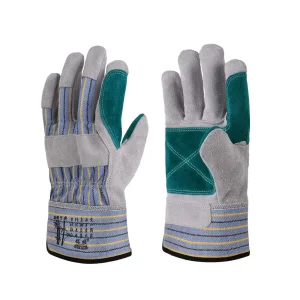
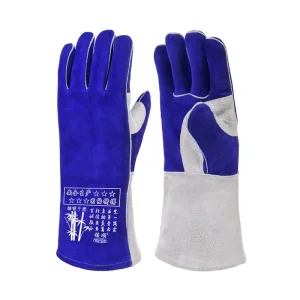
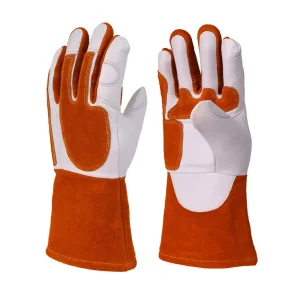
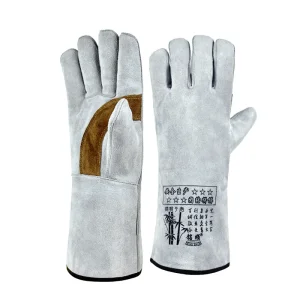
Heavy split-cowhide with winged thumb geometry and palm reinforcement designed for relentless SMAW (Stick) spatter, heavy iron handling, and prolonged gouging arcs.
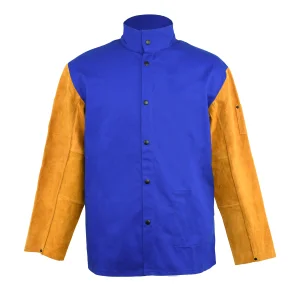
Multi-layered fire-resistant construction incorporating arc-rated FR cotton and oil-repellent treated leather for flare stack servicing, valve turnaround, and cracking line maintenance.
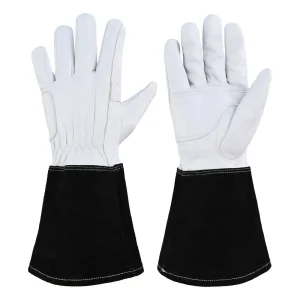
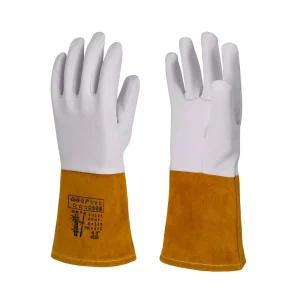
Ultra-supple top-grain goatskin palms combined with seamless ergonomic keystone thumbs, granting microscopic tungsten filler-rod manipulation without heat burn-through.
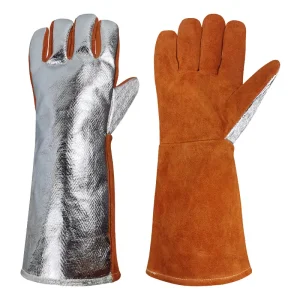
Aluminized back-of-hand radiant deflector plates reflecting up to 95% of radiant heat waves generated during molten aluminum skimming and blast furnace continuous tapping.
Specialized fleece-insulated split leather welding handwear protecting maintenance technicians during active pipeline pre-heating and circumferential sleeve arc joining.
Critical engineering guidelines for global safety managers, military supply boards, and industrial hardware distribution franchises structuring long-term flame retardant glove contracts.
Enterprise procurement departments operating across Europe, Australasia, and the Americas face acute challenges when orchestrating large-scale PPE acquisition. The marketplace is saturated with sub-standard protective handwear manufactured from low-density split belly leather that fails abruptly when exposed to intense weld splatter. To maintain high workplace safety scores and shield corporate buyers from product liability claims, institutional RFP tenders must incorporate strict metallurgical, thermal, and material test criteria.
When structuring procurement specifications for flame-retardant industrial gloves, sourcing teams should enforce five mandatory audit thresholds:
Procurement documents should strictly prohibit the utilization of irregular belly or shoulder scrap leather. Ming Shun enforces Grade-A Side-Split Cowhide selections (consistently split between 1.2mm and 1.4mm). Side-split fibers possess the dense structural collagen networks necessary to stop convective flame penetrations, offering three times the tensile shear resistance of inferior belly cuts while maintaining dimensional stability after intense heat cooling cycles.
A primary point of failure in commercial welding gloves is seam disintegration. Standard polyester or cotton thread chars at temperatures under 220°C, causing glove fingers to splay open in the presence of continuous arc-flash. Sourcing criteria must stipulate genuine 100% spun DuPont™ Kevlar® or equivalent para-aramid thread with a documented thermal decomposition point exceeding 425°C. Seams across high-spatter zones must further incorporate full leather welting to shield the stitch line from direct molten droplet shearing.
During mineral chrome tanning, improper oxidation can generate Hexavalent Chromium [Cr(VI)], a potent occupational carcinogen and skin allergen. Modern international compliance benchmarks, exemplified by EN ISO 17075-1, mandate Cr(VI) thresholds below 3 mg/kg (ppm). Ming Shun conducts in-house spectrophotometric and chromatographic testing on every dye lot, providing buyers with batch-specific laboratory test reports that ensure swift clearance through international customs and labor safety verifications.
The interior architecture of an FR glove determines both its thermal deflection capabilities and operator ergonomics. Low-cost handwear often relies on combustible synthetic sponge liners that can melt onto skin under extreme heat spikes. Ming Shun utilizes flame-retardant brushed cotton fleeces, needle-punched non-woven aramid barriers, or moisture-wicking circular-knit fabrics. These assemblies guarantee an uninterrupted thermal barrier while swiftly evacuating sweat to reduce interior moisture, preventing scald burns caused by super-heated steam.
Mass-market suppliers often evaluate quality merely through visual spot checks prior to pallet wrapping. In contrast, Ming Shun implements a rigorous military-grade Acceptable Quality Limit (AQL) 1.5 standard for critical safety defects (such as seam skips, leather thickness irregularities, or broken stitching) and AQL 2.5 for minor cosmetic variations. Our on-site testing facility confirms tear resistance, seam burst pressure, and flame resistance before stamping final export authorization seals.
Complete custom branding execution: high-tonnage blind heat embossing, woven damask seam labels, full Pantone-matched cuff leather trim, and customized multi-language retail packaging.
Our manufacturing base operates in strict alignment with international labor ethics: clean living quarters, fair wage structures, zero child or bonded labor, and proactive environmental air filtration systems.
Direct logistical access to major deep-water ports (Guangzhou, Shenzhen, and Hong Kong) offering smooth container consolidation, customs clearance documentation, and real-time shipment milestone monitoring.
Anticipating the technological curve: Emerging manufacturing techniques, sustainable materials, and smart protective interfaces transforming industrial workshops.
Researching bio-based, circular-tanned leather hides treated with non-toxic silane polymer cross-linkers, enhancing spatter deflection while reducing water and chrome footprints.
Moving away from legacy planar glove patterns toward digit-articulated 3D tailoring, mimicking natural palm repose and reducing grip muscle exertion by up to 34%.
Integrating passive heat-reactive pigment coatings into backhand leather zones that alter shade at 60°C, providing clear visual warnings before thermal limits are crossed.
18-gauge micro-knit Kevlar® liners engineered to deliver ANSI A4 cut defense along with flame arrestance, answering the demand for high cut protection on sharp plate steel.
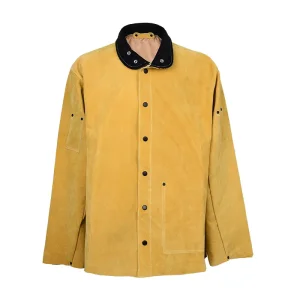
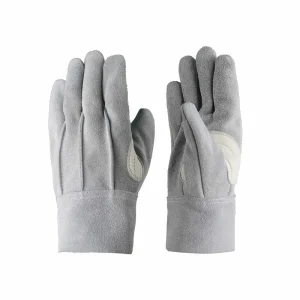
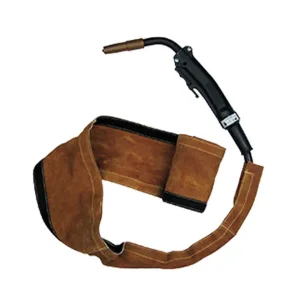
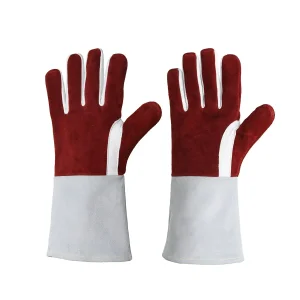
Complementing our handwear with specialized extended gauntlets, split cowhide sleeves, heavy-duty MIG gloves, and aluminized thermal reflection models.
Detailed responses to critical engineering, manufacturing qualification, and international supply chain questions commonly raised by B2B buyers.

