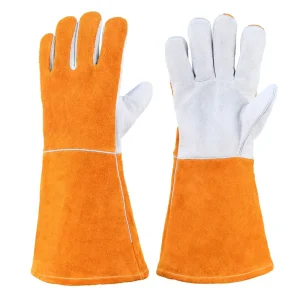
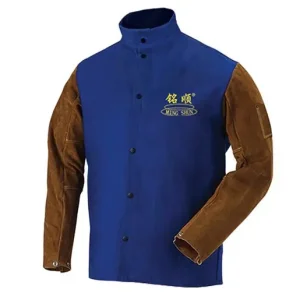
Manufactured in our Gaozhou production hub under strict ISO 9001 and EN compliance frameworks. Discover precision-crafted protective apparel designed for extreme spatter resistance, thermal insulation, and uncompromised operator comfort.
Bridging the critical gap between heavy rigid helmets and operator dexterity, cloth welding masks and flame-resistant (FR) hoods have transitioned from auxiliary protective covers into mission-critical primary PPE across global fabrication and construction supply chains.
Traditional rigid thermoplastic welding helmets impose severe cervical spine strain during prolonged 8-to-12-hour shifts. Industrial fabric welding hoods—engineered from lightweight FR cotton, aramid, and split cowhide hybrid configurations—reduce head and neck mechanical payload by up to 58%, drastically mitigating occupational musculoskeletal disorders while maintaining complete arc flash shielding.
Regulatory authorities including OSHA, the European Chemical Agency (ECHA), and ISO committees have tightened thresholds for secondary flash burns around the clavicle, jugular, and scalp. Procurement directives in North America and Western Europe now mandate full 360-degree drape coverage, driving exponential compound annual growth rates (CAGR > 6.4%) for hybrid cloth-leather welding masks.
Global procurement teams at Tier-1 EPC contractors and safety equipment wholesalers are actively consolidating supplier portfolios. By shifting away from multi-tiered brokerage houses toward vertically integrated Chinese original equipment manufacturers, global buyers compress procurement lead cycles from 90 days down to 45 days while securing batch-to-batch textile tensile consistency.
A high-performance cloth welding mask must fulfill two mutually antagonistic physical criteria: total resistance to incandescent liquid droplet penetration (up to 1,450°C iron slag spatter) and maximum atmospheric vapor transmission to eliminate thermal exhaustion.
| Material Configuration | Areal Density (Weight) | Flame Spread Resistance | Tensile / Tear Strength | Optimal Industrial Deployment |
|---|---|---|---|---|
| Proban® Treated FR Cotton (9 oz / 11 oz) | 305 – 375 g/m² | EN ISO 11611 Class 1 (Afterflame < 2s, Char length < 100mm) | High flexural breathability; 450N warp tensile load | TIG welding, light MIG, high-ambient temperature maintenance |
| Top-Grain / Split Cowhide Hybrid Layer | 1.1 mm – 1.4 mm thickness | EN ISO 11611 Class 2 (Zero ignition, zero droplet melt-through) | Superior puncture resistance (>120N); Abrasion Level 4 | Overhead stick welding, structural beam jointing, heavy gouging |
| Nomex® / Kevlar® Meta-Para Aramid Weave | 220 – 260 g/m² | Inherent flame retardancy (LOI > 29%); No chemical decay over wash cycles | Extreme tensile (>1200N); Cut level A3/C resistance | Automotive robotic line manual intervention, defense aerospace |
| Dual-Layer FR Sateen with Inner Moisture Mesh | Compound 420 g/m² | Passes ASTM F1506 & NFPA 70E Arc Thermal Performance (ATPV > 12 cal/cm²) | Anti-snagging outer finish with antimicrobial wicking interior | Confined vessel entry, mining infrastructure, pipeline trench hot-tie-ins |
Rather than relying on superficial chemical spray coatings that wash out after 20 commercial laundering cycles, our textile partners utilize reactive organophosphorus bath polymerization. The flame-retardant compound forms covalent bonds with the cellulose polymer chains, ensuring flame arrest capabilities persist throughout the product's entire operational lifecycle.
Standard synthetic threads disintegrate rapidly when exposed to slag at temperatures exceeding 250°C, causing catastrophic panel rupture. Every cloth welding mask produced in our plant is stitched exclusively with genuine 3-ply or 4-ply Kevlar aramid threads, engineered to maintain 85% tensile retention even under sustained direct exposure up to 425°C.
Cloth hoods require rigid yet pliable retainers for filter plates (standard 2" x 4.25" or wide-view 4.5" x 5.25" cartridges). Our engineering team designs lightweight composite retention rings that absorb thermal expansion without distorting optical clarity, guaranteeing zero peripheral light leakage during high-amperage pulse arcs.
Cloth welding masks serve specialized technical niches where bulkier polycarbonate helmets physically prohibit welder mobility, compromise air quality, or risk acute physical impingement.
Welding cross-country API 5L steel pipe in tight excavation trenches requires pipe welders to squeeze beneath bell-holes. Rigid helmets collide with pipe walls, restricting line-of-sight. Pliable cloth hoods conform perfectly against pipe curvatures, enabling millimeter-precise root pass execution.
Shipbuilding yards deploy welders inside cramped ballast tanks, void spaces, and cofferdams. Ambient humidity frequently exceeds 85%. Breathable FR cotton masks with integrated leather bibs prevent optical fogging while shielding the head from ricocheting ceramic backing tiles.
In high-rise civil construction, stick and flux-cored arc welding (FCAW) generate substantial molten rain. Traditional masks channel burning slag directly onto the nape and ears. Extended split-leather draped cloth masks seal over jacket collars, eliminating burn hazards entirely.
Petrochemical cracking towers and boiler re-tubing projects demand protective headwear compatible with hard hats and respirators. Modular cloth welding balaclavas integrate seamlessly under existing industrial safety helmets without breaking the dielectric seal.
Headquartered in Gaozhou, Guangdong—the historic global nexus of industrial protective leather and technical textile fabrication—Guangdong Ming Shun Labour Protective Products Co., Ltd. harnesses complete vertical integration to insulate wholesale partners from global supply shocks.
Unlike trading assemblers who purchase open-market scraps, Ming Shun manages hide inspection, de-greasing, chromium/vegetable stabilization, and split-thickness calibration in-house. This guarantees uniform 1.2mm hide density across production runs, preventing localized burn-through points.
Our workshop utilizes computer-guided multi-layer CAD laser cutters. This eliminates dimensional drift in fabric draping, delivers sealed edge fray resistance for FR cotton fibers, and maximizes hide yield efficiency—enabling us to pass a 12-18% direct unit cost advantage directly to wholesale importers.
Situated within rapid transit reach of Shenzhen, Guangzhou, and Hong Kong deepwater container ports, Ming Shun maintains a strategic 60-day buffer inventory of certified FR cotton fabrics and aramid components. We routinely fulfill 40ft High-Cube container orders on tight 35-to-45-day shipping schedules.
Navigating cross-border customs regulations and occupational health standards demands documented proof of compliance. Ming Shun provides complete auditing portfolios to protect our distributors from legal liability.
Our cloth welding hoods and protective apparel are independently evaluated by accredited notified bodies (including SATRA and TÜV Rheinland). We furnish validated test certificates proving compliance with Class 1 (manual welding with light spatter) and Class 2 (demanding techniques with heavy drops).
For our North American partners, our production lines conform to ANSI/ISEA standards for abrasion, puncture, and flame resistance. In addition, our electrical utility line welding hoods conform to NFPA 70E standards, delivering rated thermal protection against sudden arc blast incidents.
We transform your proprietary sketches and specifications into shelf-ready retail and industrial merchandise. From customized heat-transfer silicone brand logos, embroidered flame-retardant brand badges, and multi-language care instructions to custom barcode packaging, we manage the complete lifecycle.
The next decade of industrial safety will witness the convergence of smart micro-sensors, active thermoregulation, and non-toxic ecological chemistry. Ming Shun is driving R&D across three transformative vectors:
Integrating paraffin-based micro-encapsulated phase change materials (PCMs) within the inner crown mesh of cloth welding masks. These microscopic capsules absorb latent thermal energy as ambient temperatures spike above 32°C, continuously buffering the welder's forehead and scalp to preserve physiological cognitive alertness.
In response to international PFAS restrictions, our chemical engineering laboratory is actively transitioning all auxiliary oil- and water-repellent fabric finishes to bio-based dendritic polyurethane coatings. This delivers zero persistent environmental bio-accumulation without compromising resistance against greasy fabrication fluids.
Next-generation cloth mask revisions feature standardized quick-lock interfaces compatible with mainstream Powered Air-Purifying Respirator (PAPR) blower breathing tubes. Welder operators achieve certified NIOSH HEPA respiratory filtration inside ultra-lightweight cloth headgear envelopes without needing heavy, bulky helmet shells.
Essential technical, logistical, and commercial inquiries clarified by our senior engineering and export accounts management team.
For fully customized private-label production runs—incorporating custom dyed fabric hues, specific pattern geometry, and customized logo badges—our standard MOQ is 1,000 units. For catalog-standard styles utilizing stocked high-grade 9 oz FR cotton or standard cowhide splits, trial sample orders starting from 300 to 500 units can be accommodated to facilitate market acceptance evaluations.
Our FR cotton materials undergo certified pre-production laundering validation per ISO 15797 (commercial laundry testing procedures up to 50 wash-and-dry cycles). Following multi-cycle washing, specimens are subjected to vertical flammability testing in accordance with ISO 15025. Products must exhibit zero afterflame exceeding 2.0 seconds and zero flaming molten debris.
Yes. We supply comprehensive technical documentation packs including raw fiber traceability, mill test certificates (MTC), dimensional stability analysis reports, thread burn test documentation, and full Declarations of Conformity (DoC). We actively support our distributor partners during their local CE Module B/C2 certification audits.
Physical pre-production countersamples are prepared and dispatched via DHL within 5 to 7 business days from receipt of client tech pack or reference sample. Following written sign-off and lab dip approval, standard bulk manufacturing of a 20ft/40ft container is completed in 35 to 45 calendar days at our Gaozhou facility.
While all-cotton 9 oz or 11 oz FR hoods excel in TIG welding and warm ambient settings, heavy carbon-arc gouging generates molten steel droplets exceeding 1,300°C. For these high-risk applications, we manufacture hybrid hoods featuring 1.2mm split cowhide across the crown, nape, and chest bib, supported by a ventilated FR cotton rear drape for moisture escape.
Yes. Our precision-molded retainers and soft-housing cloth hoods are engineered to accommodate universal 2" x 4.25" and 4.5" x 5.25" passive glass filters, as well as electronic auto-darkening cassettes from industry-standard brands. Retaining clips maintain secure optical position under heavy head motion.
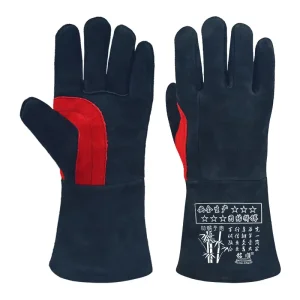
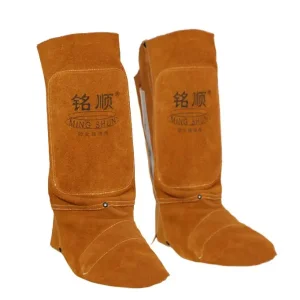
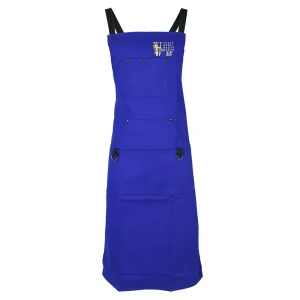
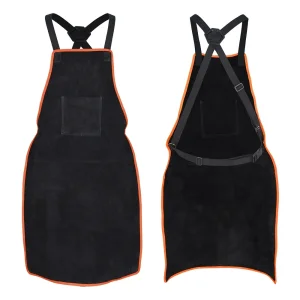
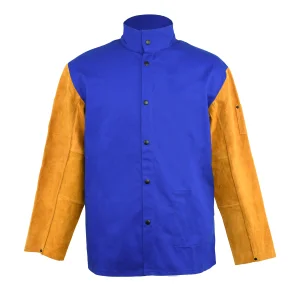
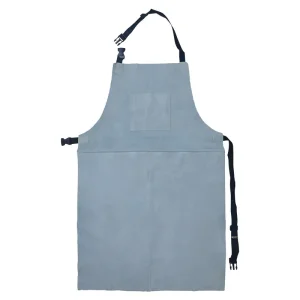
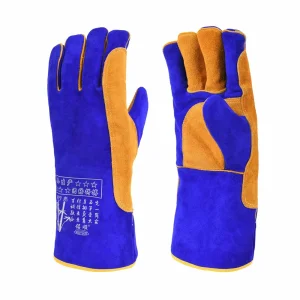
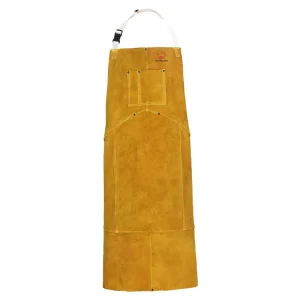
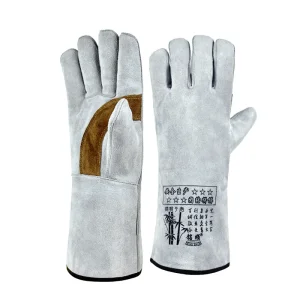
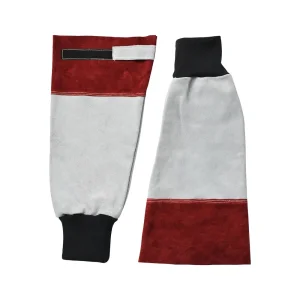
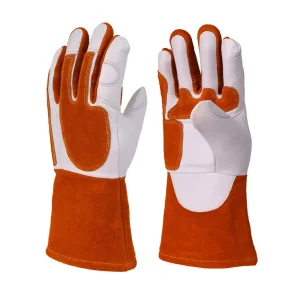
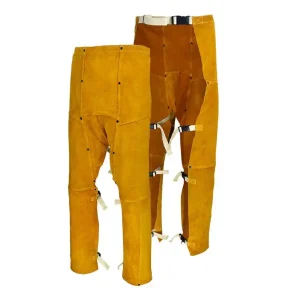
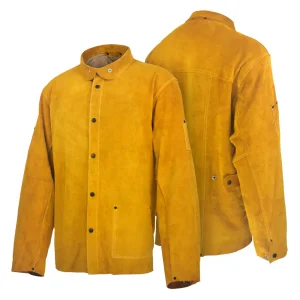
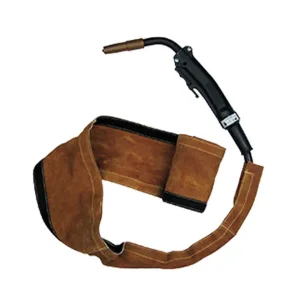
Complementing our cloth welding masks, our integrated factory production lines supply full-body PPE. Review our selection of Kevlar-sewn leather jackets, heavy gauntlet gloves, protective sleeves, and cable preservation jackets for wholesale export.