
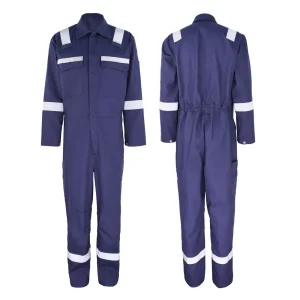
Direct manufacturer solutions engineered with select A/AB split cowhide, top-grain goatskin, and flame-retardant threads.
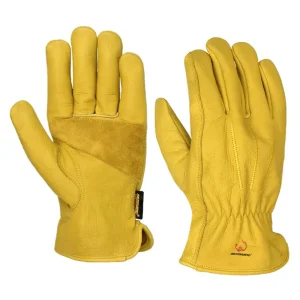
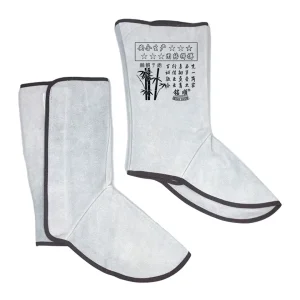
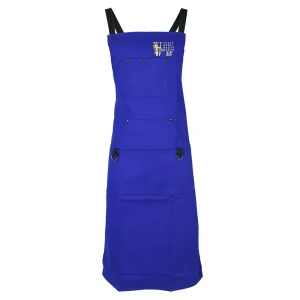
Modern welding demands have transitioned far beyond standard heat resistance into complex mechanical endurance, micro-dexterity, and digital compliance tracing.
Traditional rigid leather mitts contribute significantly to long-term carpal tunnel syndrome and operator fatigue. Emerging manufacturing trends leverage 3D pre-curved finger geometry and articulated Keystone thumbs, allowing natural hand relaxation during heavy Stick and multi-pass MIG cycles without compromising tensile strength.
Tannery integration allows specialized water-repellent, oil-resistant, and high-heat coatings infused directly at the collagen level of the hide. This prevents leather fiber shrinkage and carbonization during continuous exposure to molten spatter and slag up to 500°C contact thresholds.
Modern procurement requires multi-hazard mitigation. Industrial fabrications combine split leather exteriors with para-aramid (DuPont Kevlar®) linings to supply simultaneous cut resistance (ANSI Cut A4-A6 / ISO Level D) alongside high convective heat resistance specified in EN 12477 Type A & Type B categorizations.
Global distributors, EPC contractors, and tier-1 OEM safety brands require systemic supply reliability that withstands regulatory scrutiny and harsh field realities.
Variations in hide thickness or tensile grain create safety liabilities. Guangdong Ming Shun guarantees raw skin standardization through automated thickness profiling, maintaining 1.2mm - 1.4mm tolerances across million-unit purchase agreements.
Traceability from hide origins to chemical management. We uphold chromium VI non-detectable thresholds, zero azo dyes, and low-VOC finishing compliant with strict European REACH directives and North American Prop 65 enforcement.
Industrial supply disruptions halt production facilities. Our high-throughput facility in Gaozhou delivers steady monthly glove production surpassing 500,000 pairs with routine 45-day container schedules and buffer stock programs.
Comprehensive personalization including silicone embossing, laser-etched cuffs, thermo-printed branding, customized barcodes, and retail-ready biodegradable packaging tailored to national hardware retail specifications.
From animal selection in Gaozhou to container dispatch, our vertically integrated infrastructure eradicates third-party markups and quality anomalies.
Direct classification of raw bovine and caprine pelts. Strict grading filters remove structural micro-fissures and excessive fat creases before tannery entry.
Closed-loop mineral tanning and vat dyeing ensure batch color continuity across thousands of units, completely preventing color bleed upon heavy perspiration.
High-precision hydraulic and laser-guided clicker dies eliminate seam displacement. Consistent cut sizing ensures identical glove anatomy and seam tolerances.
Gloves are sewn using 3-ply to 5-ply Para-Aramid flame-proof thread protected with welted seam construction to shield vulnerable threads from molten burn-through.
Reinforcing high-abrasion stress nodes—such as the thumb-crotch junction and lower palm pad—with dual-split leather patches and flush-mounted anti-spark rivets.
Gloves undergo heated iron blocking over anatomical aluminum hand forms, conditioning the leather fibers to memory-retain functional shape and optimal grip tension.
100% individual checking for seam depth, absence of needle break fragments via automated magnetic detection, thickness gauge checks, and stitch-count adherence.
Desiccant-infused master cartons with reinforced five-layer corrugated protection shield your inventory from ocean humidity and fungal spoilage during transit.
Importing PPE requires flawless legal and technical documentation. We de-risk supply chains through verified certifications and responsive cross-border service teams.
Full conformance to EN 12477:2001+A1:2005 (Type A & B), supported by comprehensive EN 388:2016+A1:2018 mechanical scoring (abrasion, blade cut, tear, puncture) and EN 407:2020 thermal resistance certification backed by accredited notified body dossiers.
Tested under ASTM F2992-15 guidelines for cut resistance and ASTM F1060-08 for conductive heat transfer resistance up to Level 3 and 4, ensuring compliance for deployment in US shipyards, oil refineries, and pipeline projects.
Bilingual account executives eliminate technical translation mistakes. We provide customs HS tariff classification advice, Certificate of Origin paperwork, and FOB, CIF, or DDP direct-to-warehouse logistics management.
Strategic roadmap outlining the next decade of intelligent, lightweight, and low-carbon hand protection engineering.
Transitioning primary split leather tannery stages toward 100% bio-syntan aldehyde-free tanning chemistry, eliminating heavy metal wastewater discharges while enhancing thermal shrinkage resistance.
Integrating ultra-thin graphene-infused aramid interior knit liners. This innovation dissipates localized contact spikes evenly across the glove surface, dramatically increasing wearer comfort without adding palm bulk.
Incorporating flexible, heat-resistant UHF passive RFID sensor tags within the gauntlet cuff. This supports automated inventory reconciliation, laundering cycle tracing, and structural shelf-life tracking for industrial plant safety databases.
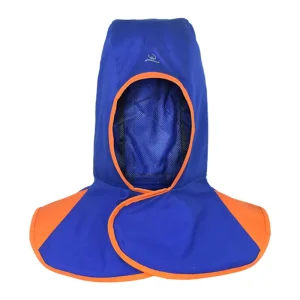
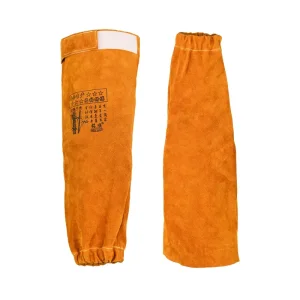
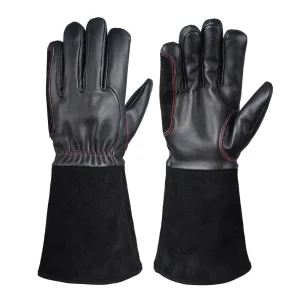
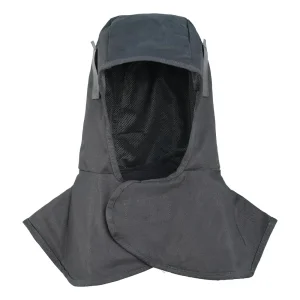
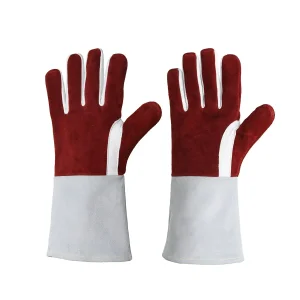
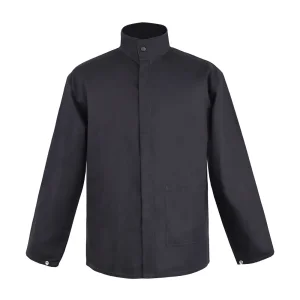
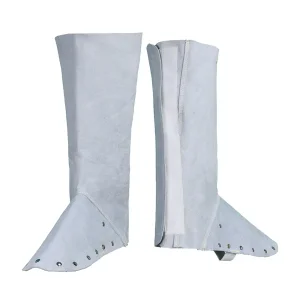
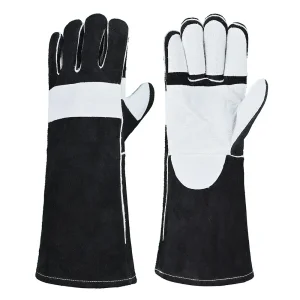
Explore specialized welder gloves, split leather spats, cowhide sleeves, and protective headgear ready for customization.
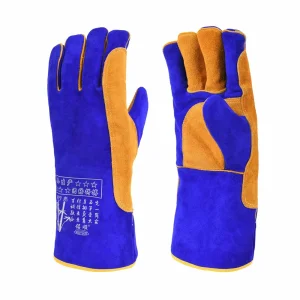
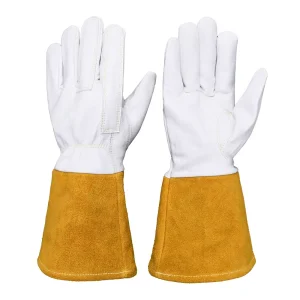
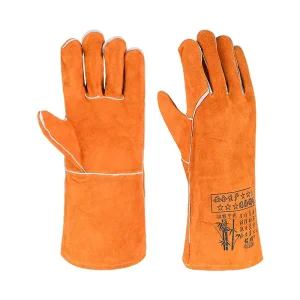
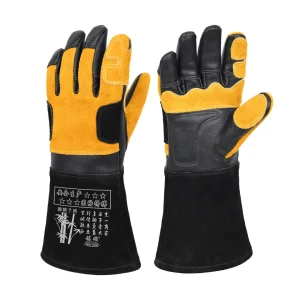
Clear, uncompromised answers covering standards, material selection, customization, and factory-direct ordering.
Under EN 12477, Type A gloves provide higher thermal and mechanical protection but lower flexibility, ideal for heavy MIG, Stick (SMAW), and plasma cutting. Type B gloves emphasize high dexterity and tactile touch with lower thermal thresholds, specifically engineered for precision TIG (GTAW) applications.
Independent tanneries often introduce batch variance in moisture, chrome levels, and hide thickness. Guangdong Ming Shun's in-house Gaozhou facility exercises total control from raw rawhide to finishing, guaranteeing uniform tensile elasticity, flame resistance, and identical color-matching across repeat production runs.
Standard catalog glove configurations require an MOQ of 1,200 pairs per size/model. Custom-dyed leathers, dedicated ergonomic patterns, and private-label packaging generally begin at 2,400 to 3,600 pairs, fully offset by our competitive factory-direct pricing tiers.
Standard synthetic or nylon threads melt at roughly 160°C–200°C, causing seams to unravel under hot spatter. Genuine Para-Aramid (Kevlar®) thread decomposes only above 450°C and does not melt, retaining glove structural integrity during sustained high-amperage welding cycles.
