Explore our export-grade protective solutions engineered for multi-process metal fabrication, arc welding, and foundry operations. Fully customizable for OEM & private-label bulk procurement.
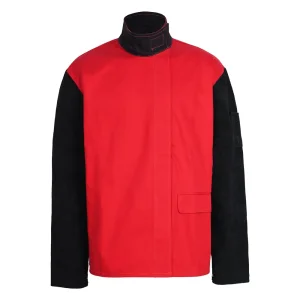
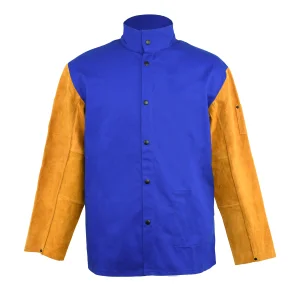
The global shift toward high-contrast, dirt-concealing black protective apparel is redefining comfort, heat attenuation, and durability in modern robotic and manual welding facilities.
In demanding industrial fabrication environments—ranging from offshore oil platforms and naval dry docks to automotive chassis assembly plants—the black welding jacket has transcended conventional utilitarian workwear to become a sophisticated composite safety system. Historically, welders relied on thick, untreated russet or tan cowhide split jackets. While providing brute thermal barrier protection, traditional garments suffered from acute operational drawbacks: excessive weight (frequently exceeding 2.2 kg), severe stiffness that accelerated physical fatigue, and rapid visual degradation through carbon grease, oil splatter, and soot accumulation.
As industrial manufacturing embraces lean operational workflows and strict occupational health audits, top-tier B2B procurement managers and safety engineers increasingly specify specialized black leather and hybrid FR black textile configurations. The selection of black pigmented or deep drum-dyed leather is not aesthetic vanity; it serves tangible operational imperatives:
Analyzing raw hide selection, chemical tanning protocols, and ergonomic pattern architecture designed to withstand 1,400°C molten steel slag.
We source heavy-weight bovine shoulder and side cuts (1.2mm – 1.4mm thickness). In-house chrome tanning and proprietary oil re-tanning impart heat resistance while retaining natural pliability, preventing brittle carbonization when bombarded with molten slag.
Ordinary cotton or nylon threads melt at 200°C–250°C, causing catastrophic seam rupture under thermal spatter. Every black welding jacket manufactured in our factory is sewn exclusively with 3-ply to 5-ply Para-Aramid (DuPont™ Kevlar®) heat-resistant threads.
For operations demanding rapid arm mobilization, our hybrid series combines breathable 9oz or 12oz Black FR sateen cotton on the torso with full-grain or side-split cowhide across the chest, shoulders, and forearms to achieve optimal thermal balance.
| Material Configuration | Tensile Strength (N) | Continuous Heat Limit | Spatter Resistance Index | Target Welding Processes | Primary Industrial Sector |
|---|---|---|---|---|---|
| Full Side-Split Cowhide (Black) | > 450 N | 350°C (Radiant: 500°C) | Class 2 (EN ISO 11611) | Heavy MMA, Flux-Core, Arc Gouging | Shipbuilding, Heavy Structural Steel |
| Hybrid FR Cotton / Black Leather | > 320 N | 260°C (Torso) / 350°C (Arms) | Class 1 / Class 2 Hybrid | MIG/GMAW, Pipe Welding | Automotive Tier-1, Petrochem Pipeline |
| Top-Grain Goatskin / Black FR | > 280 N | 220°C (Direct Contact) | Class 1 (Precision Focused) | GTAW / Precision TIG, Micro-Plasma | Aerospace, Nuclear Reactor Vessels |
| Aluminized Core Black Cowhide | > 520 N | Up to 1,000°C Radiant | Extreme Foundry Rating | Submerged Arc, Induction Smelting | Blast Furnace, Steel Mill Foundries |
Addressing supply vulnerabilities, strict compliance protocols, and total-cost-of-ownership (TCO) benchmarks for multi-national safety distributors and procurement consortiums.
Fluctuating hide markets disrupt pricing stability. Guangdong Ming Shun maintains raw wet-blue hide stockpiles exceeding 300,000 sq.ft., shielding our OEM contract partners from spot-market spikes and ensuring fixed price integrity over annual supply agreements.
Every roll of flame-retardant fabric and lot of finished black cowhide is matched to batch-specific lab certification dossiers. Buyers receive comprehensive test certificates covering tear resistance, flame spread index, pH balance, and chromium VI compliance.
Substandard safety apparel incurs covert costs via premature garment replacement, worker burn claims, and heat exhaustion downtime. Our black welding jackets integrate tailored underarm gussets, standing Mandarin collars, and reinforced dielectric snap buttons to optimize service life.
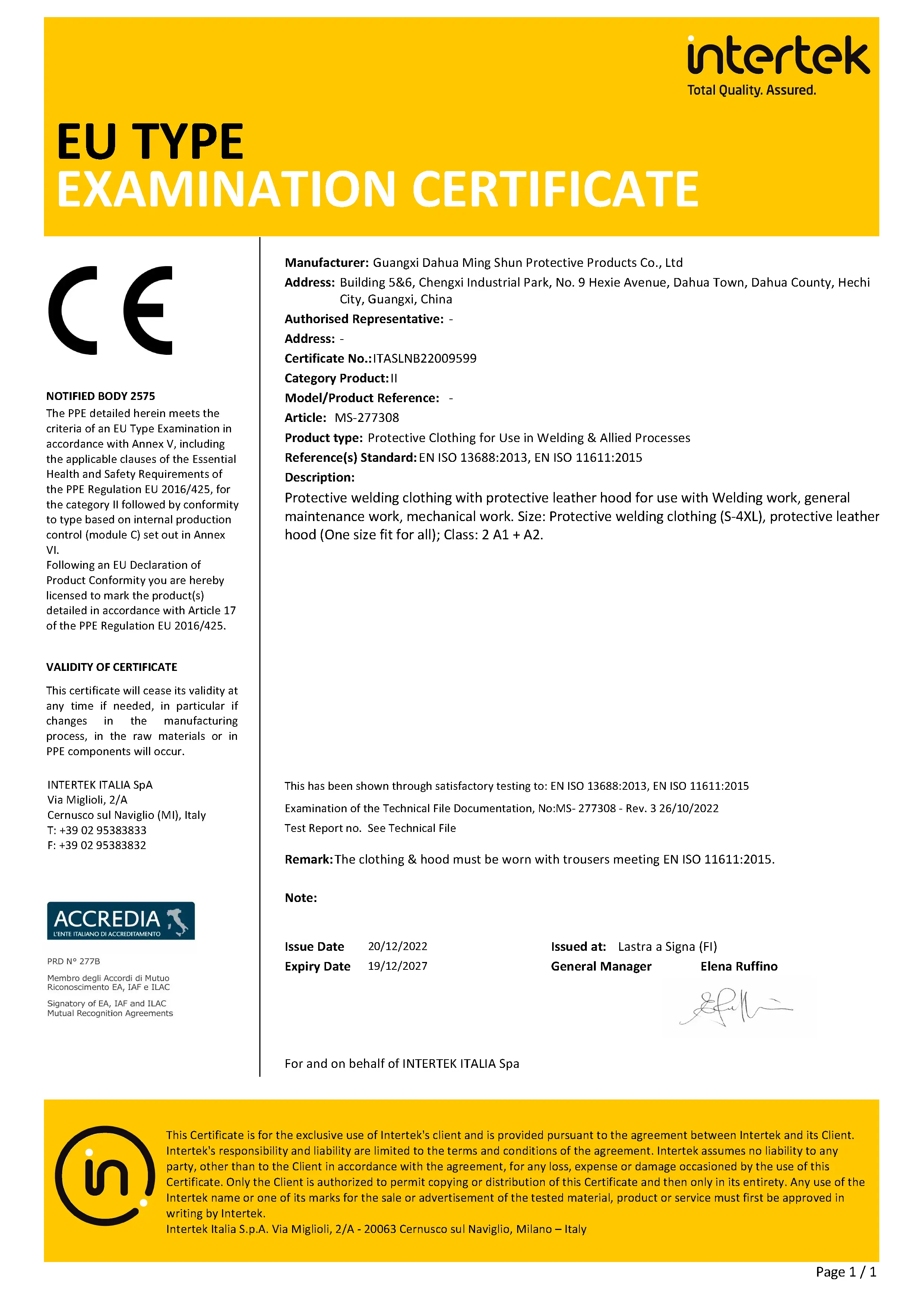
Rigorous third-party verification ensuring your OEM brand adheres seamlessly to North American OSHA, European Union CE, and global industrial safety mandates.
Entering multi-regional safety markets demands rigorous alignment with governing PPE directives. As an accredited manufacturer operating under ISO 9001 certified quality control, Guangdong Ming Shun produces black welding jackets and auxiliary PPE conforming to key global safety standards:
Tested for European PPE Category II requirements. Class 2 garments safeguard against severe spatter hazards and high radiant heat exposure, requiring over 25 drops of molten metal before raising internal temperature by 24°C.
For oil & gas and petrochemical utility environments where flash-fire hazards coincide with hot work. Cotton components are treated to meet char length thresholds (< 100mm) with zero melt/drip after-flame behavior.
EU REACH compliance requires strict control over leather tanning chemistries. Our specialized drumming protocol ensures Chromium VI content remains strictly non-detectable (<3 ppm), preventing worker contact dermatitis.
Accelerating material science through phase-change microclimates, ultra-light aramid skins, and modular industrial connectivity.
Reducing garment deadweight by 35% through engineered anatomical patterning, placing split cowhide exclusively in high-trajectory strike paths while using 10oz FR sateen in torso flex points.
Integrating Phase Change Materials (PCM) into internal shoulder yokes to absorb peak body heat during sustained 200A+ welding sequences, maintaining internal comfort temperatures below 28°C.
Transitioning toward sustainable, chrome-free bio-leather treated with carbon-nanotube crosslinkers, achieving Class 2 spatter resistance with 50% less environmental carbon footprint.
Prototyping flexible thermocouple arrays embedded in the inner thoracic lining to notify facility safety managers of heat stress onset in confined shipbuilding compartments.
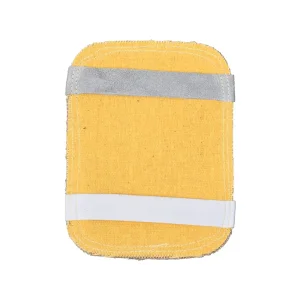
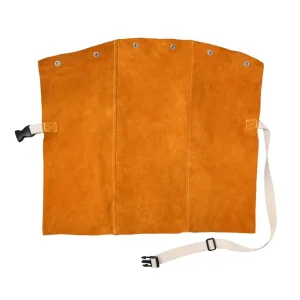
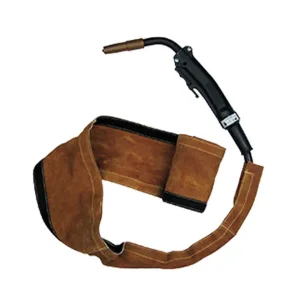
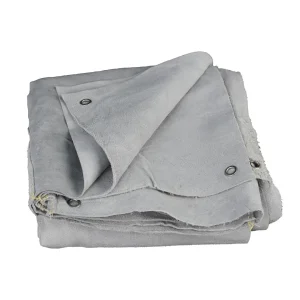
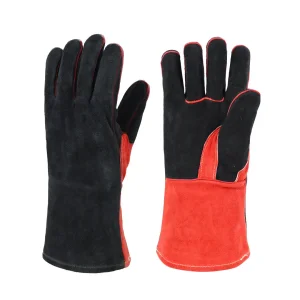
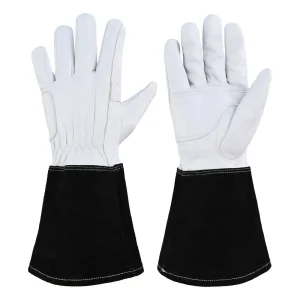
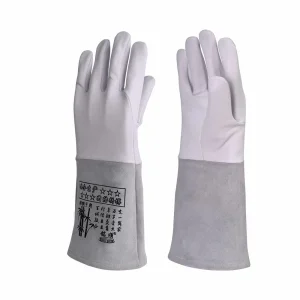
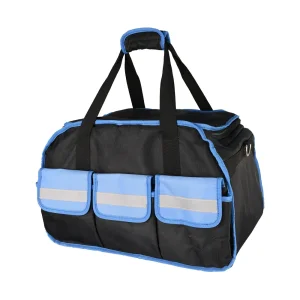
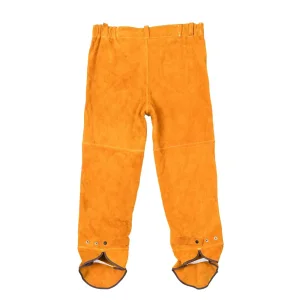
Complementary OEM protective solutions: spats, arm sleeves, high-dexterity gloves, and FR trousers engineered for seamless modular compatibility.
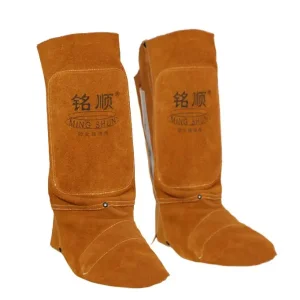
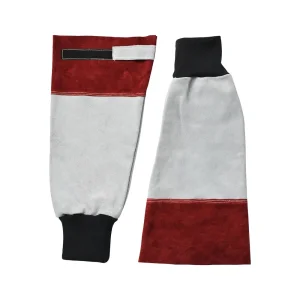
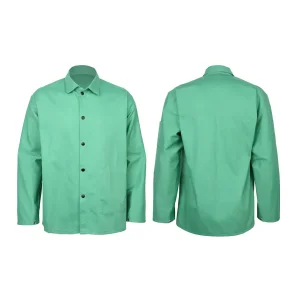
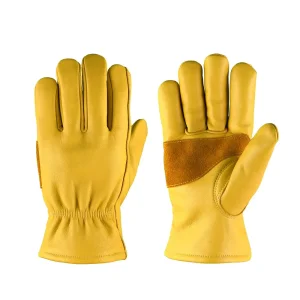
In-depth responses to critical engineering, manufacturing compliance, and wholesale ordering inquiries posed by safety equipment directors.
Black welding jackets offer dual mechanical and optical advantages: the deep-dyed finish absorbs peripheral ultraviolet and high-intensity infrared reflection in high-amperage welding cells, protecting the operator's peripheral vision. Furthermore, black leather conceals pervasive industrial carbon residue, flux splatter, and hydraulic oils, maintaining enterprise aesthetic standards and prolonging operational lifespan.
We employ a pressurized, deep-penetration drum dyeing protocol utilizing reactive metal-free aniline dyestuffs, followed by a double poly-acrylic sealing bath. Our leathers undergo strict Crockmeter rubbing fastness testing (both dry and wet conditions meeting ISO 105-X12 standards with minimum Grade 4 rating) ensuring zero pigment migration under intense sweat or heat conditions.
Every structural seam is constructed using genuine Para-Aramid (Kevlar®) 3-ply thread, rated for continuous temperatures exceeding 425°C. Critical spatter zones—such as shoulder yokes, elbow caps, and the front snap placket—utilize double-stitched felled seams protected by an integrated leather welt that prevents hot slag from resting directly on the thread fiber.
Our standard OEM production run starts at 300 to 500 units per jacket style across assorted sizing (S to 5XL). Full customization includes high-definition laser debossing on chest leather badges, woven neck labels, custom hangtags, fire-retardant heat transfer enterprise logos, and barcoded retail carton packaging for distributors.
Our on-site QA laboratory and partnered notified testing bodies (TÜV Rheinland, SATRA) evaluate sample lots according to ISO 9150 (behavior of materials on impact of small splashes of molten metal). Our Class 2 rated side-split cowhide jackets consistently exceed the 25-drop threshold, preventing molten metal adhesion while ensuring zero burn-through to the interior lining.