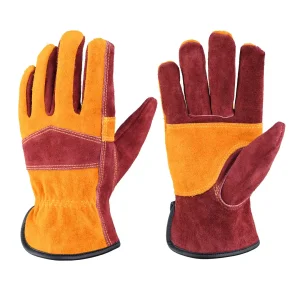
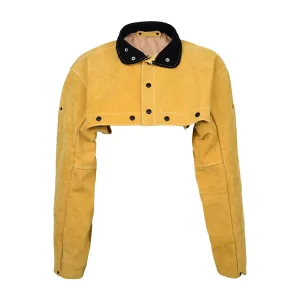
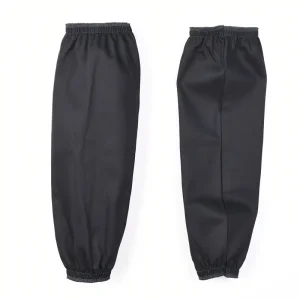
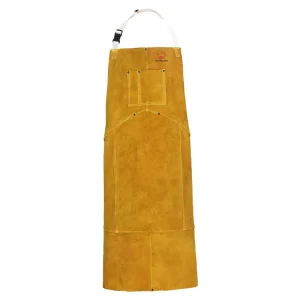
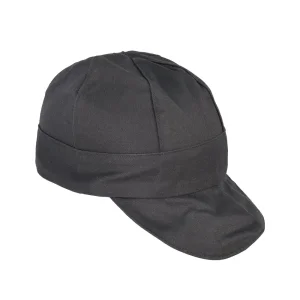
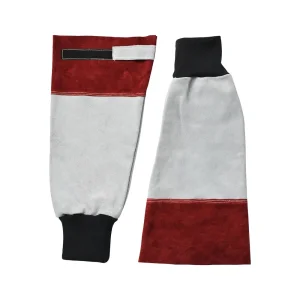
Direct manufacturer supply for high-risk welding sectors: heavy-duty leather garments, high-dexterity hand protection, and modular personal safety gear.
Why Tier-1 industrial buyers, defense contractors, and shipbuilders prioritize engineered lower-body PPE.
Heavy-duty welding trousers operate under stringent global mandates like EN ISO 11611 (Class 1 & Class 2) and ASTM F1506. High-amperage stick, flux-core arc welding (FCAW), and plasma cutting project intense radiant heat and heavy molten spatter directly onto an operator's thighs and shins. Standard workwear fails instantly; specialized split-cowhide garments prevent catastrophic second- and third-degree burn injuries while mitigating regulatory liability.
Industrial welders work in contorted postures: kneeling on slag-covered grating, crouching inside pipe assemblies, or operating overhead. Historical leather pants suffered from extreme stiffness and heat retention. Modern heavy fabrication demands ergonomic articulated knees, breathable flame-retardant (FR) stretch cotton gussets, and moisture-wicking linings that maintain worker endurance across 12-hour shifts.
Procurement directors in multinational infrastructure projects no longer purchase disposable gear. Quality split-cowhide trousers with reinforced DuPont Kevlar aramid stitching deliver up to 5x the working lifecycle of conventional 100% cotton FR pants, lowering per-hour operating costs across capital-intensive engineering programs.
How fully integrated Chinese manufacturing delivers scalable customisation, rapid turnaround, and unmatched quality control.
Operating in Gaozhou, Guangdong—the recognized core of global leather protective manufacturing—gives direct control over tanning, leather splitting, and chemical treatments. Cowhides are hand-selected for uniform 1.2mm–1.4mm thickness, low fat liquor levels to maximize flame self-extinguishing traits, and consistent chrome-tanned tensile endurance, preventing the delamination and premature cracking seen in outsourced batches.
By housing automated laser nesting cutters, computerized pattern stitchers, and skilled assembly teams under one roof, our production eliminates intermediary markups. This vertical agility reduces OEM sample-to-approval times to 7–10 days and maintains stable lead times across 50,000+ unit bulk contracts.
Global brands demand differentiation. We adapt pocket depths, dielectric fastener layouts, high-visibility reflective striping to ISO 20471 specifications, and internal knee pad pockets tailored to distinct regional markets across North America, Europe, Australia, and the Middle East.
From dockside slipways to automated production cells, real-world work environments dictate precise garment specifications.
Salt mist, damp steel plates, and tight double-hull compartments demand heavy split cowhide trousers lined with breathable mesh. Welders spend hours kneeling on cold metal while executing high-amperage FCAW passes; protective knee reinforcements and spark-deflecting seams are non-negotiable.
Field ironworkers face fall hazards combined with hot cutting torches and SMAW sparks. Trousers must feature integrated harness accessibility, tool loops, reinforced crotches, and flame-retardant stretch panels to permit unrestricted climbing and balancing across steel beams.
Foundries expose workers to radiant thermal spikes exceeding 1000°C alongside splashes of liquid metal slag. Heavy cowhide trousers paired with aluminized shields or hybrid leather-cotton profiles deflect molten droplets without burn-through, satisfying EN ISO 11611 Class 2 criteria.
Anticipating next-generation safety standards, sustainability requirements, and material science breakthroughs.
The traditional all-leather trouser is rapidly giving way to hybrid architectures. By positioning premium split cowhide strategically across high-exposure zones (front thighs, shins, groin) and 9 oz / 11 oz breathable inherently flame-retardant (IFR) fabric across the rear waist and calves, overall garment weight drops by up to 35% without compromising Class 2 protection.
European and US regulatory trends (such as REACH compliance and corporate ESG scorecards) are driving demand for ecologically responsible leather tanning. Ming Shun continues developing wet-white and vegetable-oil pre-treatments that lower environmental impact while maintaining high flashpoint resistance and tensile durability.
As factories transition toward Industry 4.0 monitoring, industrial apparel is being engineered to accommodate non-conductive pockets for gas monitors, RFID traceability tags for industrial laundries, and telemetry sensor harnesses that monitor heat stress and fatigue in real time.
Critical procurement intelligence for international safety brand managers, importers, and EPC supply chain executives.
We specify a consistent 1.2mm to 1.4mm premium split cowhide. This thickness provides an optimal balance between reliable molten slag deflection, abrasion resistance, and operator mobility without excessive garment weight.
Every structural seam in our welding trousers is assembled using 100% DuPont Kevlar or aramid core-spun flame-resistant thread. Critical stress points feature bar-tacking and welted seams to prevent spatter from melting through seam edges.
Our models comply with EN ISO 11611 (Class 1 & Class 2 for welding clothing), EN ISO 11612 (protective clothing against heat and flame), and ASTM F1506 / NFPA 70E standards. Verified testing reports from notified bodies can be supplied per order.
For custom OEM tech-pack designs, our typical production MOQ is 300 to 500 units per colorway. Functional prototype samples are produced and dispatched for fit/field testing within 7 to 10 working days.
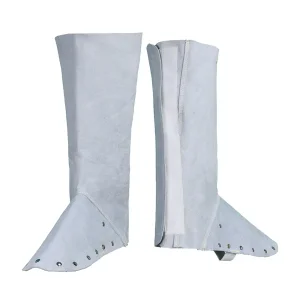
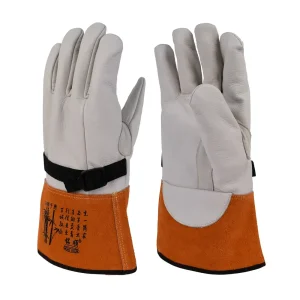
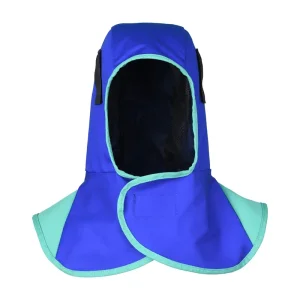
Complete safety suites engineered to work seamlessly with heavy-duty welding trousers for 360-degree protection.