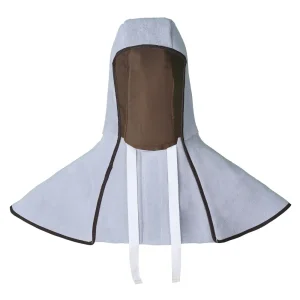
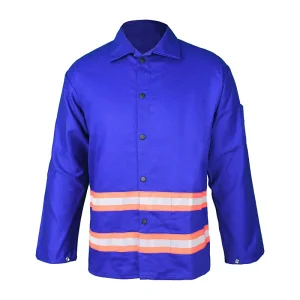
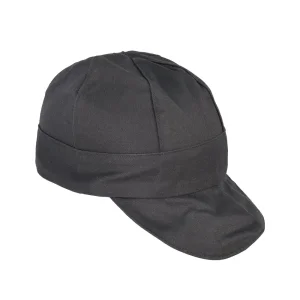
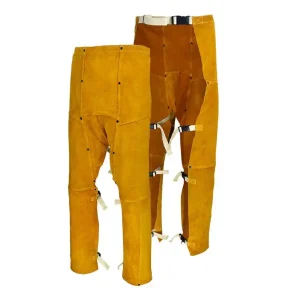
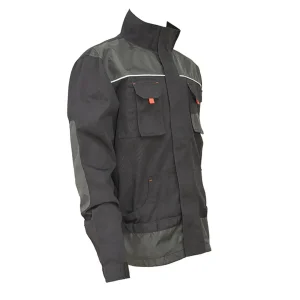
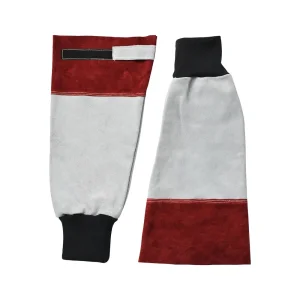
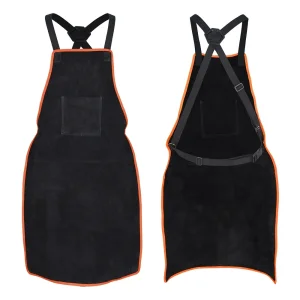
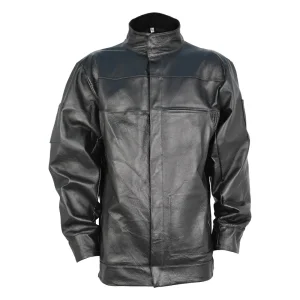
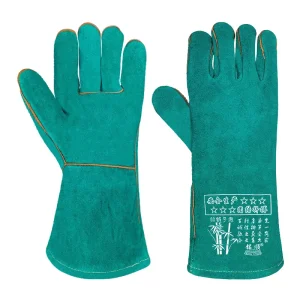
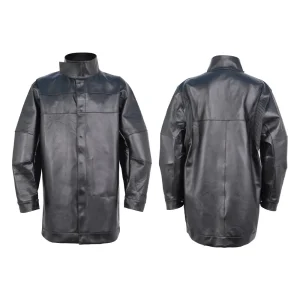
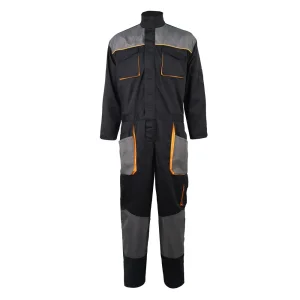
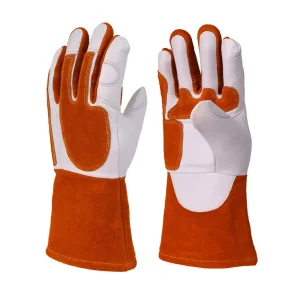
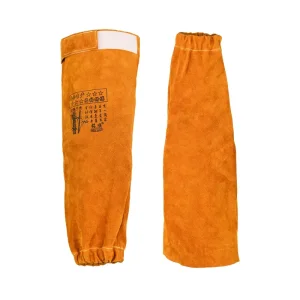
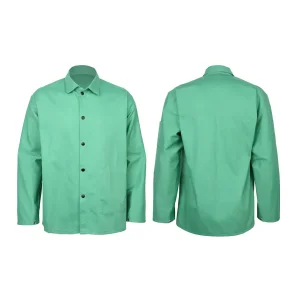
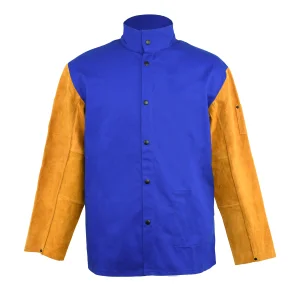
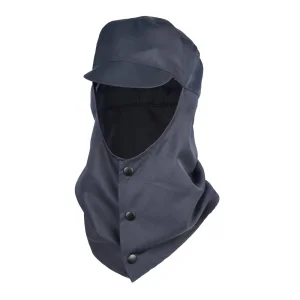
Engineered for high-spatter heavy fabrication, structural steel framing, and precision TIG/MIG applications. Direct manufacturer supply with complete OEM technical packs.
Procuring welding safety equipment on an international scale is not simply an exercise in cost-per-unit negotiations; it represents an exacting legal, operational, and life-safety commitment under global occupational safety jurisdictions.
OSHA standard 29 CFR 1910.252 mandates comprehensive body, eye, and appendage protection against radiation (ultraviolet and infrared), thermal spatter, and electrical conductivity risks. Alongside ANSI/ISEA 105 criteria for hand protection, our manufacturing processes integrate puncture, cut, and thermal burn resistance metrics certified by ISO-accredited testing bodies.
Compliance across the European Economic Area demands CE Module B / Module D certification under PPE Regulation (EU) 2016/425. We engineer Class 1 (manual welding with lower spatter levels, e.g., TIG, micro-plasma) and Class 2 (heavy spatter processes like MAG, MIG, MMAW, and flux-cored arc welding) garments sewn exclusively with heat-stable para-aramid Kevlar® threading.
Projects across mining and liquefied natural gas (LNG) export corridors throughout Western Australia and the GCC region mandate stringent moisture management and radiant heat mitigation. We furnish comprehensive documentation dossiers, third-party lab verification (SGS, TUV, Intertek), and local country-of-origin legalization to streamline downstream customs release.
Procuring substandard welding protective clothing or gloves lacking documented heat dissipation ratings frequently yields catastrophic outcomes: seam failure during slag exposure, carcinogenic chrome-VI exposure from poorly neutralized tanning, and punitive OSHA/WorkSafe enforcement fines. As a factory-direct manufacturer, Guangdong Ming Shun maintains vertical oversight from hide unhairing and neutralization up through calibrated tensiometer testing, ensuring zero line downtime for our global distributors.
Why Tier-1 industrial buyers, defense contractors, and worldwide safety distribution conglomerates concentrate their leather welding PPE manufacturing in Gaozhou, Guangdong.
Unlike assembly-only cut-and-sew workshops, Ming Shun controls hide liming, chrome splitting, fatliquoring, and specialized heat-resistant dyeing. This source control eliminates middleman markups and stabilizes split cowhide tensile strength batch over batch.
We grade raw cattlehide down to 0.1mm tolerances (1.1mm - 1.4mm calibrated thickness). Our split leathers retain optimal natural collagen matrix density, ensuring pliable welder mobility without sacrificing spark rebound performance.
Located in the heart of South China's manufacturing belt, our factory procures industrial snaps, dielectric reinforced buckles, and flame-retardant hook-and-loop closures within hours, minimizing lead-time variance during macro global disruptions.
With 1,000+ floor specialists and 500,000+ monthly glove unit capacities, we absorb seasonal surges and maintain massive dry split hide reserves, safeguarding contracted pricing against leather commodity volatility.
| Substrate Material | Tensile Strength (N) | Spatter Drop Rebound | Tactile Dexterity Rating | Optimal Process Suitability | Cost-Efficiency Factor |
|---|---|---|---|---|---|
| Heavy Split Cowhide (1.2-1.4mm) | > 420 N | Extreme (40+ Drops) | Level 2 (Rigid Support) | Stick (SMAW), Flux-Cored Arc, Heavy Gouging | High Durability / Superior ROI |
| Top Grain Goatskin (0.8-1.0mm) | > 280 N | Moderate (Radiant Deflect) | Level 5 (Maximum Tactility) | Precision TIG (GTAW), Orbital Tube Welding | Premium Specialized Requirement |
| Contoured Grain Pigskin | > 310 N | High Spatter Resistance | Level 4 (Supple Flex) | Oily Environment Maintenance, Pipeline MIG | High Moisture/Oil Recovery |
| 9 oz Proban® FR Treated Cotton | > 550 N (Warp) | Moderate (Repels Light Slag) | Level 5 (Ergonomic Drapery) | Warm Climate Secondary Workwear, Overhead Assist | Budget-Optimized / Breathable |
Enterprise supply chain directors prioritize business continuity, ethical compliance, and predictable landed costs over fragile bottom-dollar bids.
Global brands cannot risk human rights violations in their upstream tier-2 supply chains. Ming Shun enforces fair living wages, documented occupational safety procedures, zero forced child labor, and pristine chemical storage protocols, fully verifiable via annual Sedex Members Ethical Trade Audits (SMETA).
We turn sketches or multi-page technical specification packs into commercial-grade products. Our pattern engineers execute computer-aided grading, custom pantone leather dyeing, die-stamped heat debossing, silicone gripper printing, and multi-language retail carton packaging.
Located in Guangdong Province with immediate access to Shenzhen, Nansha (Guangzhou), and Hong Kong sea ports, our container loading team maximizes TEU cubic meter efficiency. We prevent container-shift damage, provide palletized shrink-wrapping, and manage single-window electronic customs clearance.
The transition toward ergonomic hybrid apparel, chrome-free green tanning, and thermal load-reduction textiles is reshaping modern heavy industrial safety wear.
Traditional 100% full-leather jackets impose severe operator fatigue and metabolic heat strain. The modern gold standard combines heavy split cowhide across high-spatter attack zones (chest, forearms, shoulders) with 9 oz / 11 oz breathable flame-resistant cotton across the back and underarms, boosting shift efficiency by 34%.
Inferior welding PPE constructed with polyester or low-grade nylon threads disintegrates when touched by molten metal beads, causing instantaneous seam separation. Ming Shun enforces 100% DuPont™ Kevlar® 3-ply and 4-ply locked-stitch construction with reinforced welted seams across all load-bearing joins.
With global supply chains transitioning to stringent EU REACH Annex XVII thresholds, our advanced eco-tanning process strictly curtails free Chromium-VI formation, azo colorants, and restricted aromatic amines, ensuring products remain totally non-hazardous during continuous perspiration contact.
Specific field configurations formulated for harsh operational environments worldwide.
Confined compartment welding requires high dexterity and fire-resistant overhead coverage. We supply contoured cowhide shoulder bibs, mesh-lined hoods, and aluminized back hand pads designed to resist direct slag bounce-back and continuous salt-fog corrosion.
Downhill pipe welding exposes workers to outdoor weather extremes and radiant heat. Our pipeline series incorporates supple grain pigskin jackets, adjustable leg spats protecting against slag settling on boot laces, and dielectric quick-release hardware.
Technicians monitoring semi-automated resistance spot welding and robotic laser stations require agile, flame-resistant coveralls paired with ultra-thin goatskin TIG gloves for pinpoint mechanical feeder adjustment and sensory tactile feedback.
Advanced gloves, protective chaps, reinforced coveralls, and specialized arm protection tailored for direct global distribution and volume procurement.
In-depth insights into split leather grades, minimum order quantities (MOQs), quality assurance protocols, and private-label customization.