Precision Industrial Hand Protection, Technical FR Workwear, and High-Performance Leather PPE Engineered for Rigorous Global Safety Standards and Multi-Hazard Industrial Operational Resilience.
Explore our premium factory-direct solutions engineered for extreme heat, spatter, mechanical abrasion, and heavy industrial dexterity demands.
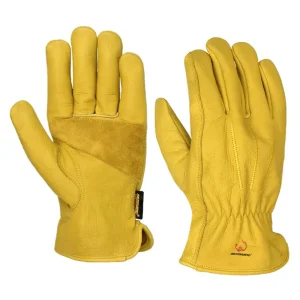
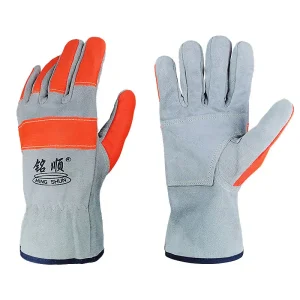
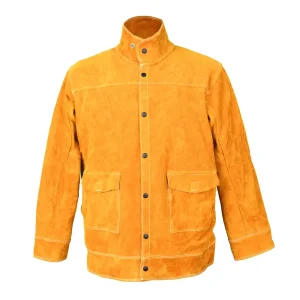
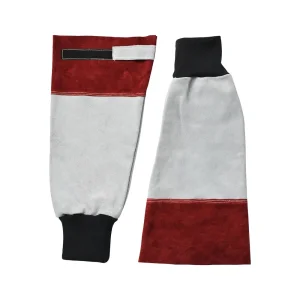
A systematic breakdown of material engineering transformations, thermal shielding innovations, and ergonomic standards driving modern industrial hand protection.
For over half a century, the global industrial landscape relied strictly on conventional chrome-tanned cattle split leather to mitigate severe thermal and abrasion risks. While bovine split leather maintains exceptional resistance to spatter, spark impingement, and puncture stresses, modern fast-paced manufacturing requires unprecedented levels of tactility, tactile feedback, and weight minimization. As a high-tier custom safety work gloves supplier and factory, Guangdong Ming Shun Labour Protective Products Co., Ltd. (formerly Gaozhou Mingshun Labor Protection Products Co., Ltd.) has engineered hybrid matrices that merge micro-split grain cowhide, high-tensile goatskin, and flame-retardant engineered knit substrates.
Contemporary workplace hazards rarely occur in isolation. A metal fabricator or pipe fitter operates within an intersection of extreme thermal radiation, sharp plasma-cut edges, and heavy mechanical shear forces. To resolve this, our in-house tannery processes integrate specialized chrome-free or modified basic chromium sulfate tanning protocols alongside silicone fluid emulsification. This molecular stabilization prevents the leather from stiffening, cracking, or desiccating after continuous exposure to cyclical flash temperatures exceeding 450°C. Concurrently, engineered liners woven from Ultra-High Molecular Weight Polyethylene (UHMWPE), DuPont™ Kevlar® aramid yarns, and continuous conductive carbon filaments ensure simultaneous mechanical cut defense (EN 388 Level D/F) without diminishing tactile sensation during intricate TIG welding or heavy machinery calibration.
Our vertical integration at the Pukang Industrial Park facility spans 25+ years of institutional leathercraft, pairing age-old hide grading mastery with modern computerized laser cutting. By analyzing grain orientation across split cowhide and goatskin hides, our engineering teams ensure that tensile stress along the glove finger walls matches the natural flex patterns of the human metacarpophalangeal joints, mitigating user fatigue over 10-to-12-hour shifts while maintaining uncompromising puncture resistance.
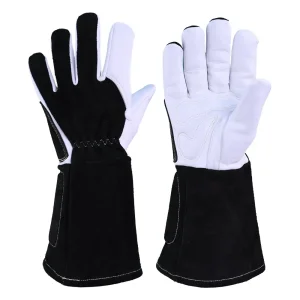
Fusing supple grain goatskin with ballistic aramid stitching and silicone impact ridges creates an ergonomic outer barrier that repels oils while isolating contact heat up to 350°C.
Eliminating hazardous hexavalent chromium (Cr VI) through eco-conscious vegetable and synthetic retanning ensures strict adherence to EU REACH and zero skin dermatitis for workforces.
Integrating capacitive polyurethane coating directly into goatskin index fingers enables industrial operators to interface with digital PLC touchscreens without removing PPE barriers.
How Tier-1 procurement directors, safety distributors, and global import groups evaluate industrial glove manufacturers for scale, compliance, and total cost of ownership (TCO).
Corporate safety procurement has moved past superficial FOB price-per-pair metrics. When managing safety protocols across multi-site shipyards, heavy stamping lines, or petrochemical refineries, the true financial driver is Duty-Cycle Longevity versus Injury Incidence Ratios. A low-cost split leather glove that fails after 3 work shifts or exhibits inconsistent seam strength introduces catastrophic legal liabilities, employee turnover, and operational downtime. In contrast, precision-engineered work gloves produced under strict ISO 9001:2015 controls deliver repeatable structural integrity across 15 to 20 heavy-abrasion cycles.
At Guangdong Ming Shun Labour Protective Products Co., Ltd., our 1,000+ member manufacturing ecosystem eliminates intermediary trading margin erosion. Because we manage the complete lifecycle—raw hide procurement, in-house tannery splitting, precision drum dyeing, automated pattern press cutting, multi-needle lockstitch assembly using 3-ply Kevlar® threads, and individual post-production dimensional inspection—our partners achieve up to a 28% reduction in annual PPE expenditure through lower glove replacement frequency.
| Evaluation Parameter | Trading Firm / Intermediary Risks | Ming Shun Factory-Direct Standard | Strategic Enterprise Benefit |
|---|---|---|---|
| Raw Material Traceability | Unverified secondary markets, seasonal hide variations, unpredictable leather tensile thresholds. | In-house beamhouse & tannery; 100% batch-controlled split cowhide and graded goatskin. | Uniform hand feel, consistent heat shrinkage thresholds, guaranteed zero batch anomalies. |
| Seam Strength & Thread Spec | Substituted polyester threads that burn out under hot spatter within hours of operation. | 100% genuine continuous filament DuPont™ Kevlar® or high-grade aramid heat-resistant thread. | Elimination of seam blowouts during high-amperage MIG/MMA welding and heavy metal handling. |
| Production Scalability | Outsourced contract workshops; erratic output; bottlenecks during peak seasonal demand. | 500,000+ pairs per month capacity across dedicated, automated production workshops. | Contractual delivery certainty, predictable 45-day cycle times, seamless container logistics. |
| Audit Documentation | Generic, third-party expired certificates without traceable batch test records. | Direct CE EN 388, EN 407, EN 12477, and ANSI/ISEA 105 certified laboratory test documentation. | Total regulatory immunity during OSHA, HSE, and national labor safety field inspections. |
| Custom OEM / ODM Support | Restricted to static catalog items; inability to adjust cuff geometry or reinforcing zones. | Full in-house pattern-making studio, customized leather thickness (0.8mm–1.6mm), branded packaging. | Competitive market positioning via differentiated, proprietary distributor private labels. |
Engineering domain-specific protection packages across automotive assembly, heavy marine shipbuilding, structural fabrication, and metallurgical facilities.
Combines high-dexterity goatskin drivers gloves with cut-resistant aramid liners to protect robotic cell operators from razor-sharp stamped automotive sheet metals and spot-weld spatter.
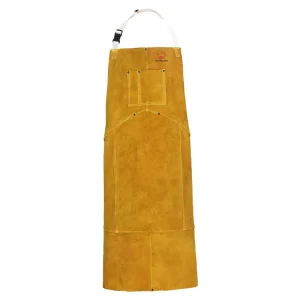
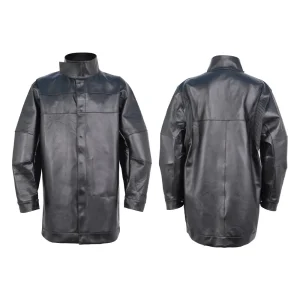
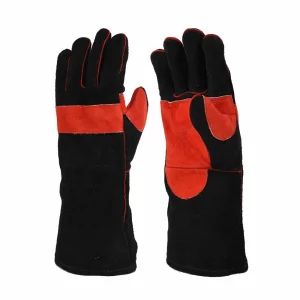
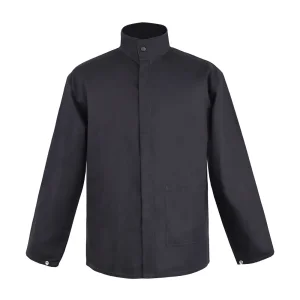
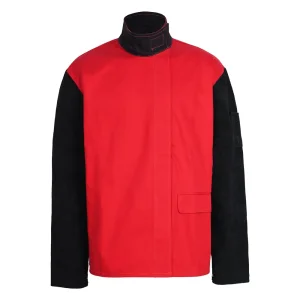
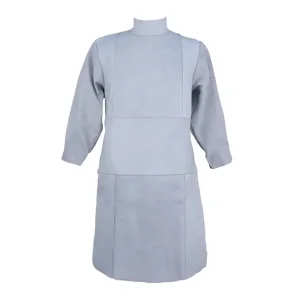
Deploying heavy split cowhide work gloves (such as MS-566 and MS-937) paired with flame-retardant welding bibs and cowhide jackets to endure multi-pass flux-cored arc welding in confined hull compartments.
Specifying water-repellent, oil-resistant treated leather gloves with heavy palm reinforcements to maintain mechanical friction grip on slick offshore drill rigs and pipeline maintenance corridors.
Utilizing high-density insulating wool and fleece linings encapsulated in Grade-A split cowhide to provide radiant thermal shielding against slag, radiant heat, and molten aluminum splashes.
Comprehensive technical alignment with international safety directives ensuring verified worker protection and seamless customs import clearance.
Navigating international safety glove compliance requires rigorous empirical testing across recognized mechanical and thermal vectors. In the European Union, Personal Protective Equipment Regulation (EU) 2016/425 designates industrial work gloves as Category II (intermediate risks) or Category III (complex irreversible hazards). Under EN 388:2016+A1:2018, mechanical safety is codified via four primary performance levels (Abrasion: 1–4, Coup Cut: 1–5, Tear: 1–4, Puncture: 1–4) plus the modern TDM-100 Cut Test (A through F) under ISO 13997.
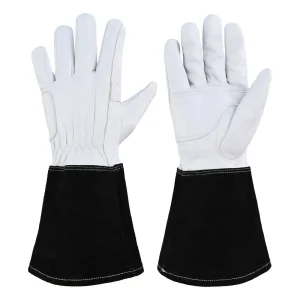
For thermal environments, EN 407:2020 benchmarks performance across burning behavior, contact heat resistance (tested up to 500°C), convective heat, radiant heat, and molten metal splatter droplets. In parallel, welders' gloves are formally governed by EN 12477:2001+A1:2005, which bifurcates products into Type A (lower dexterity, superior thermal defense for heavy MIG/MMA welding) and Type B (maximum finger dexterity with moderate thermal protection for precision TIG welding). Across North American jurisdictions, the corresponding benchmark is ANSI/ISEA 105-2024, prioritizing gram-weight cut thresholds (A1 to A9) and hypodermic needle puncture standards.
Every shipment leaving our Gaozhou production facility carries traceable certificate documentation verified by accredited test bodies (such as SATRA, SGS, or TÜV Rheinland). Beyond mechanical testing, our ethical manufacturing framework aligns with strict Environmental, Social, and Governance (ESG) guidelines. Our facility maintains advanced wastewater neutralization plants to process tannery effluents, adheres to ISO 14001 environmental management protocols, and guarantees zero child, forced, or under-compensated labor, safeguarding brand reputation for multinational safety brands.
Formal analytical testing confirms non-detectable levels of Pentachlorophenol (PCP), Azo colorants, dimethylformamide (DMFu), and Chromium (VI) under EN ISO 17075-1 testing frameworks.
Raw material arrival testing, in-process tensile seam checks, dimensional verification against CE sizing guidelines (EN ISO 21420), and AQL 1.5 final container pre-shipment inspections.
Implementing rooftop solar panel arrays across our manufacturing workshops, closed-loop water treatment recycling, and sustainably sourced bovine and caprine byproducts from agricultural supply networks.
A strategic engineering projection detailing the intersection of high-modulus polymers, micro-encapsulated thermal phase-change materials, and automated robotic manufacturing.
Integrating micro-encapsulated Phase Change Materials (PCMs) within the internal fleece linings of welding gloves to absorb excessive body heat, maintain skin comfort, and prevent sweat build-up during long cycles.
Advancing from conventional manual sewing machines to multi-axis computerized ultrasonic joining and automated CNC welt application, achieving 0.1mm stitch consistency and zero thread-fraying risk.
Pioneering natural mineral and circular biological tanning agents that provide the identical physical toughness of bovine split leather while allowing 100% circular biodegradability at end-of-life disposal.
Detailed technical, compliance, logistical, and customization responses addressing the precise requirements of enterprise procurement officers.
Grain Cowhide represents the smooth, dense outer epidermal layer of the hide, delivering superior tensile strength, natural moisture/oil resistance, and high abrasion resistance. Split Cowhide is the fibrous corium layer derived from the splitting process; its suede-like surface offers exceptional thermal insulation, radiant heat dissipation, and superior friction grip, making it the industry benchmark for heavy-duty MIG/MMA welding gloves and aprons. Goatskin features a high natural lanolin content and tighter interlaced dermal fiber matrix, yielding unmatched tensile tear resistance at lower thicknesses (0.8mm–1.0mm) for high-dexterity TIG welding and mechanical assembly.
Hexavalent Chromium (Cr VI) is a carcinogenic oxidation byproduct of trivalent chromium (Cr III) that can trigger contact dermatitis. We eliminate this risk directly within our in-house tannery via controlled beamhouse chemistry: maintaining acidic bath conditions during neutralization, using low-iodine unsaturated vegetable fatliquors, adding organic phenolic antioxidants during fatliquoring, and storing leather in climate-controlled warehouses. Every production batch is certified under EN ISO 17075-1 with Cr VI levels strictly below the limit of quantification (3.0 mg/kg), fully compliant with EU REACH Annex XVII.
For standard baseline styles, our typical minimum production run is 1,200 to 2,400 pairs per SKU, depending on leather specification. For complete custom OEM/ODM development—including proprietary leather dyeing, branded heat-embossed logos, custom TPR impact armor moldings, or unique cuff geometries—the typical initial run is 3,000 to 5,000 pairs. Bulk container orders generally run on a reliable 40 to 45-day production cycle post-sample approval, backed by our monthly facility throughput exceeding 500,000 pairs.
Yes. A large share of our custom enterprise manufacturing involves hybrid architectures. We seamlessly knit seamless 13-gauge or 18-gauge inner shells from DuPont™ Kevlar® or engineered UHMWPE/basalt blends, insert them into pre-tailored grain goatskin or cow split outer leather shells, and anchor them using continuous welted aramid seams. This achieves certified EN 388:2016 Cut Level D or ANSI Cut A4 performance while providing EN 407 Level 2 or Level 3 Contact Heat protection (up to 350°C).
Conventional cotton or polyester sewing threads burn through upon exposure to welding spatter or sustained sparks, causing instant structural glove seam failure. We exclusively use certified 3-ply and 4-ply aramid (Kevlar®) threads engineered for flame and cut resistance. Furthermore, critical wear points—including the thumb-crotch junction, base of the fingers, and palm transitions—incorporate full split cowhide welting that physically shields thread lines from direct spatter exposure and mechanical shear wear.
Enterprise buyers can provide their comprehensive technical specifications, CAD drawings, physical benchmark reference samples, or performance requirement sheets. Our engineering sample center crafts an exact physical prototype within 5 to 7 business days, accompanied by complete bill-of-materials (BOM) documentation, leather caliper measurements, stitch-per-inch (SPI) tallies, and estimated certification pass indices. Revisions are logged digitally until sign-off, ensuring bulk production mirrors your approved sample.
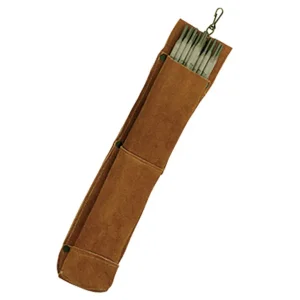
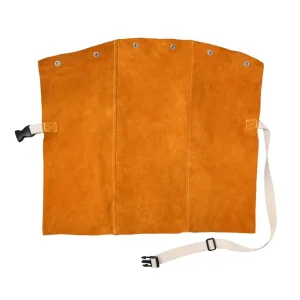
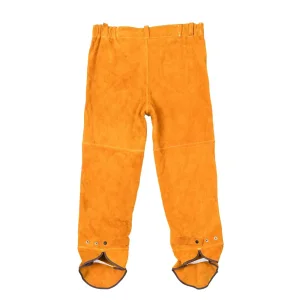
Complete your operational safety envelope with our direct factory catalog of specialized welding trousers, split cowhide aprons, rod holders, and precision TIG gear.