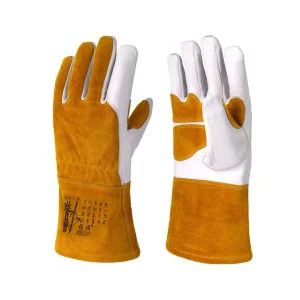
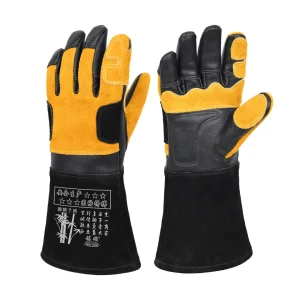
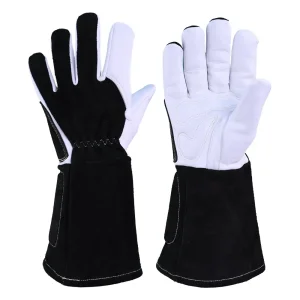
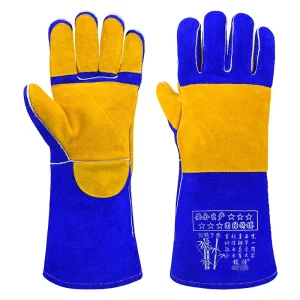
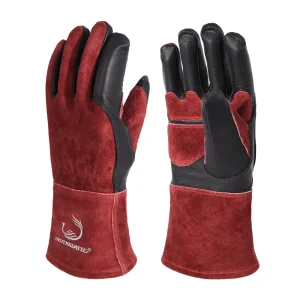
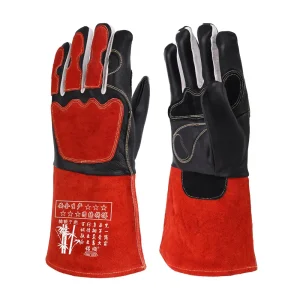
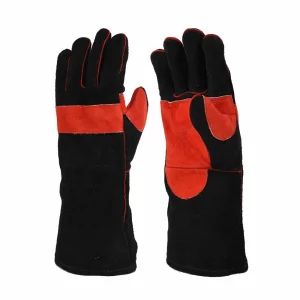
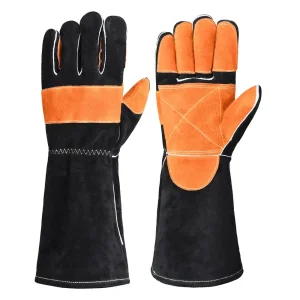
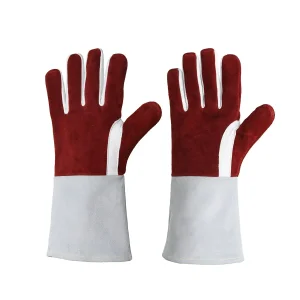
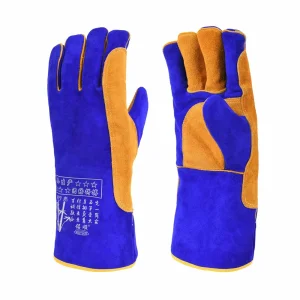
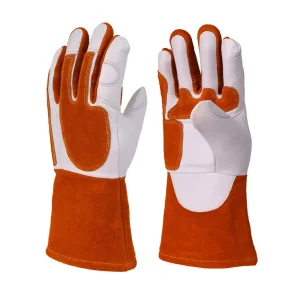
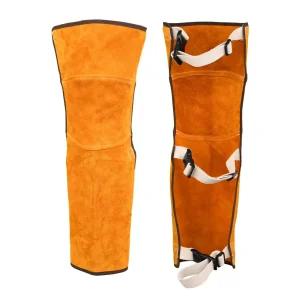
OEM-ready, custom-spec cowhide, premium goatskin, and heat-resistant Kevlar® stitched weldline protection designed for extended duty cycles.
An authoritative assessment of raw leather hide flows, high-amperage spatter dynamics, and changing compliance directives facing tier-1 PPE importers.
Gas Metal Arc Welding (GMAW), colloquially known as MIG (Metal Inert Gas) welding, remains the predominant hot-metal joining process in the global manufacturing sector, representing over 52% of all industrial metal fusion operations worldwide. Unlike Gas Tungsten Arc Welding (TIG), which operates with low radiant heat and negligible spatter, MIG welding subjects personal protective equipment to extreme radiant flux, high droplet spatter velocities, and continuous mechanical abrasion from feeding wire and handling mill-scale plate. Consequently, the commercial supply chain for MIG welding gloves has shifted drastically from generic leather work gloves toward specialized protective gear engineered to meet strict international standards.
Historically, the procurement market was dominated by low-cost split leather gloves sourced through multi-tiered intermediaries. However, modern manufacturing environments—driven by zero-injury corporate policies and stricter regulatory mandates such as EN 12477:2001+A1:2005 (Type A and Type B) and ANSI/ISEA 105-2024—have elevated technical demands. Sourcing executives and safety engineers at leading EPC contractors and automotive assemblers now require direct manufacturer partnerships. Guangdong Ming Shun Labour Protective Products Co., Ltd. (formerly Gaozhou Mingshun Labor Protection Products Co., Ltd.) addresses this critical supply chain vulnerability by integrating raw hide processing, specialized chrome and vegetable combination tanning, automated precision cutting, and Kevlar-thread assembly within a unified manufacturing complex in Pukang Industrial Park, Gaozhou City.
| Welding Process Zone | Predominant Thermal Risk | Mechanical Abrasion Level | Recommended Leather Configuration | Standard Certification Benchmark |
|---|---|---|---|---|
| Heavy MIG / GMAW (Solid Wire >250A) | Extreme Radiant Heat + Molten Spatter | Heavy (EN 388 Level 4 Abrasion) | Split Cowhide Back + Grain Cowhide Palm / Double Layer | EN 12477 Type A / ANSI Level 3 Heat |
| Flux-Cored Wire (FCAW) Field Welding | Slag Droplets + Intense UV/IR | Extreme (Rough Bevel Handling) | 1.3–1.5mm Heavy Split Cowhide + Kevlar Welted Seams | EN 12477 Type A / EN ISO 11611 Class 2 |
| Precision MIG / Light Fabrication (<180A) | Moderate Thermal + Ergonomic Stress | Medium (Wire Feed Control) | Goatskin Grain Palm + Split Cowhide Cuff / Keystone Thumb | EN 12477 Type B / EN 388 Level 2 Cut |
| Robotic Cell Manual Touch-Up | Intermittent High Heat + Hot Re-tack | High (Jig Clamping Contact) | Auminized Back Pad Hybrid + Goatskin Finger Construction | EN 407 413X4X / ANSI Contact Heat 4 |
Exploring advanced material science, zero-shrinkage tannery treatments, and 3D ergonomic patterning for enhanced durability.
Conventional split cowhide stiffens, shrinks, and embrittles when exposed to repeated radiant cycling above 180°C due to collagen dehydration. Ming Shun's in-house tanneries apply specialized organic fatliquors and chromium cross-linking salts that elevate shrinkage resistance past 220°C, preserving fiber suppleness and operator hand flexibility across multi-shift duty cycles.
The primary failure mode of MIG welding gloves in industrial settings is not leather burn-through, but seam bursting caused by thread degradation under hot spatter. We utilize continuous-filament 3-ply and 4-ply Kevlar® thread (para-aramid) protected with split leather welting along all palm, thumb crotch, and finger seam junctures to fully insulate structural stitching from direct slag contact.
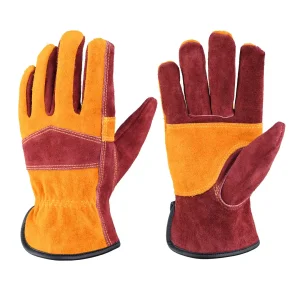
Traditional flat-cut 2D welding patterns induce chronic operator fatigue, leading fabricators to loosen their grip on MIG torch trigger handles. Ming Shun's pattern room engineers pre-curved, anatomical 3D keystone thumbs that mirror natural hand flexion. This reduces muscle strain by 28% during continuous 8-hour welding shifts while eliminating seam stress across the web of the hand.
How our MIG welding gloves protect workers across offshore shipyards, heavy structural facilities, and automated automotive manufacturing plants.
Shipyard welding presents high humidity, salt spray, heavy spatter from FCAW ceramic backings, and overhead positioning. Our 16-inch extended cuff models (such as the Custom MS-815) provide deep forearm shielding with moisture-resistant tanned cowhide, preventing hot slag roll-in inside double-bottom hull assemblies.
In high-cadence robotic assembly cells, human operators perform touch-up GMAW welds and stud welding while handling sharp stamped sheet metal panels. Models pairing grain goatskin dexterity with puncture-resistant split cowhide backs ensure trigger sensitivity without risking laceration from un-deburred bracket edges.
Structural fitters handling wide-flange I-beams and gusset plates require gloves offering both high heat resistance and rugged mechanical durability. Ming Shun's reinforced palm cowhide lines endure rough mill-scale handling, dragging pre-heat induction coils, and high-amperage spray transfer welding.
How Guangdong Ming Shun Labour Protective Products Co., Ltd. eliminates batch variance from raw leather grading to container loading.
Bovine and caprine hides are individually inspected for uniform grain structure, tensile cohesion, and calibrated thickness (1.1mm to 1.4mm) prior to processing.
In-house tanning drums apply heat-stabilizing chromium agents and uniform dye formulas, ensuring color consistency across multi-year reorder contracts.
Hydraulic cutting presses and laser nesting systems cut glove components along the hide's natural tensile grain, eliminating directional elasticity variations.
Skilled technicians assemble hand patterns using flame-retardant para-aramid thread, encasing every exposed seam in protective split leather welting strips.
For hybrid models and jackets, precision drilling and riveting machines secure insulated brass snaps and heavy-duty closures to reinforce stress points.
Steam-heated industrial iron hands stretch and shape the finished gloves, smoothing leather fibers to ensure consistent interior sizing for end-users.
Gloves undergo strict dimensional checks, seam pull-force validation (minimum 100N threshold), and visual scans for minor surface blemishes or pinholes.
Finished units are packaged with desiccant packs, poly-bagged, barcoded with custom SKU labels, and crated in heavy export cartons to prevent shipping damage.
Detailed answers to critical questions regarding standards, leather grades, and private-label manufacturing capabilities.
Get in touch directly with our dedicated export sales engineers for quick responses to RFQs, custom prototyping, and test report requests.
International Sales & Technical Accounts
OEM & Compliance Project Manager
Export Merchandising & Logistics
European PPE Standards Coordinator
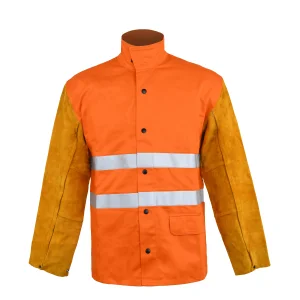
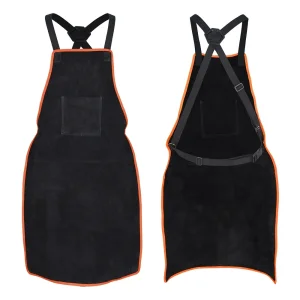
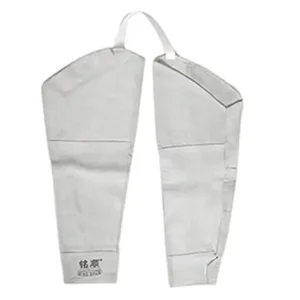
Expand your brand catalog with our field-proven reversible split leather gloves, ergonomic aprons, spats, and FR welding jackets.