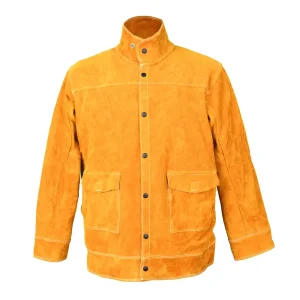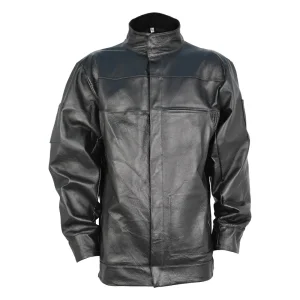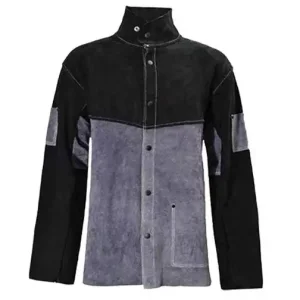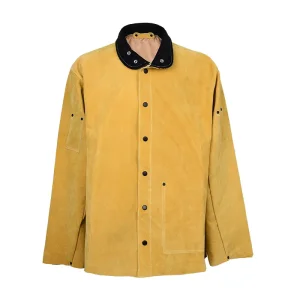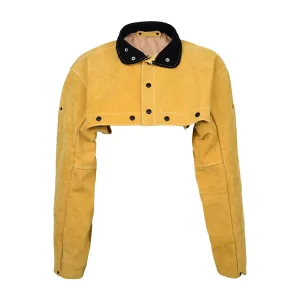
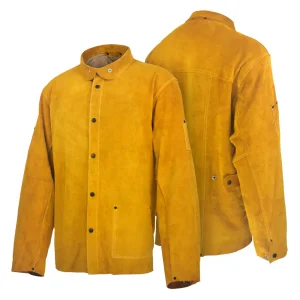
San Francisco MS-386A 30" Split Cowhide Kevlar-Stitched Welding Jacket
Class-leading 30-inch drop split cowhide reinforced with 100% DuPont Kevlar threading to prevent seam blowouts under structural SMAW and FCAW arc exposure.
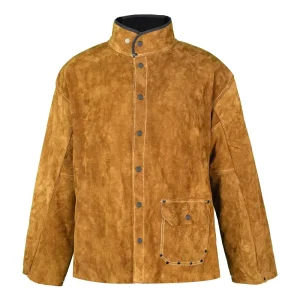
Factory-Direct Heavy Thermal Armor, NFPA & Cal/OSHA Compliant Workwear Engineered for Bay Area Structural Retrofitting, Shipyard Welding, Aerospace Tooling, and Tech Fabrication Infrastructure.
Pre-inspected split and top-grain bovine garments built to absorb extreme radiant spatter, withstand saltwater maritime exposure, and exceed local safety board thermal thresholds.
Class-leading 30-inch drop split cowhide reinforced with 100% DuPont Kevlar threading to prevent seam blowouts under structural SMAW and FCAW arc exposure.
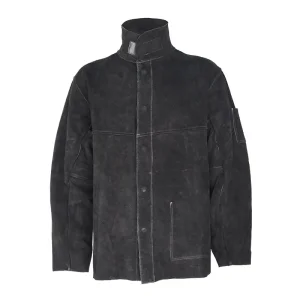
Ergonomic tailoring cut specifically for high-mobility pipefitting and orbital welding maneuvers across Richmond dry docks and seismic structural frames.
Underarm articulation bellows allow effortless vertical torch reaching without hem riding, tailored for high-elevation bridge maintenance in Marin and SF counties.
Uniform grain-dense cowhide offering ultra-high puncture resistance, dielectric snap fronts, and stand-up rolled collar protection against slag roll-in.
An authoritative analysis of hot-work PPE procurement demands across Northern California's maritime, structural seismic retrofitting, clean-tech, and defense contracting corridors.
The San Francisco Peninsula and East Bay transit nodes (BART, Caltrain Modernization, Golden Gate Bridge District retrofits) require relentless multi-pass flux-cored arc welding (FCAW-S) and heavy shielded metal arc welding (SMAW). These processes generate massive convective heat and overhead molten globules that shred lightweight synthetics.
Local field welders working at elevated heights require 1.2mm to 1.4mm split cowhide jackets with dual-closure front plackets and Kevlar lock-stitching to ensure zero seam breakdown under constant structural vibrations.
From San Francisco's Pier 70 historical shipyards to Richmond's dry docks and the heavy container terminals at the Port of Oakland, marine welding takes place in damp, salt-laden micro-climates. Moisture combined with intense heat creates an aggressive environment where inferior leathers dry out, turn brittle, and split prematurely.
Our direct wholesale leather welding jackets are treated with specialized non-toxic chromium and vegetable conditioning that retains suppleness and repels marine brine while offering absolute Class 2 spatter protection.
The convergence of tech prototyping, electric vehicle gigafactory tooling in Fremont, semiconductor vacuum piping, and aerospace skunkworks in the Peninsula requires precision GTAW (TIG) and GMAW (MIG) welding. Here, welders demand dexterous, lightweight pigskin and hybrid grain garments that prevent fatigue during micro-weld depositions.
Ming Shun engineers contoured ergonomic jackets that fit the exact biometric specifications of modern precision artisans, avoiding bulk while exceeding clean-room safety protocols.
Enterprise procurement directors are pivoting away from multi-tier trading intermediaries toward fully integrated, ESG-audited original manufacturers who guarantee raw hide traceability, non-carcinogenic tanning, and verifiable batch testing.
In traditional procurement chains supplying Northern California distributors, raw hides undergo multiple markups across wet-blue brokers, contract tanners, independent cut-and-sew workshops, and export agencies. Each intermediary introduces margin inflation and, more critically, quality variation. A single batch of unevenly shaved hides can result in compromised tensile resistance and premature burn-through under high-amperage welding arcs.
By partnering directly with a dedicated manufacturer possessing integrated tanning, grading, precision laser cutting, and computerized sewing lines, San Francisco commercial accounts secure fixed cost schedules, predictable container shipping timelines, and absolute hide-to-garment traceability.
California workplace regulations (specifically Cal/OSHA Title 8, Section 3395 for Heat Illness Prevention and Section 1523 for Body Protection) place stringent duties on employers to manage core worker temperatures during hot-work operations. Traditional 100% full-leather jackets, while unbeatable for spatter, can induce rapid thermal exhaustion during inland East Bay summer jobsites or cramped indoor fabrication bays.
This has driven massive demand for strategically mapped hybrid garments: 9-oz to 12-oz flame-retardant (FR) breathable sateen cotton bodies merged with heavy split cowhide sleeves and chest yokes. This biomimetic mapping shields vital strike points while maximizing airflow across the spine and lower torso.
Selecting the optimal substrate is critical for mitigating burn injuries and maximizing PPE operational lifespans in demanding high-duty cycles.
| Material Category | Thickness Specification | Tensile / Puncture Rating | Thermal & Spatter Resistance | Typical San Francisco Application |
|---|---|---|---|---|
| Heavy Split Cowhide (A/AA Grade) | 1.2 mm – 1.4 mm | Extreme (>450 N tensile force) | Maximum radiant & molten slag protection (Class 2) | Structural column splices, bridge seismic reinforcement, shipyard hull welding. |
| Selected Grain Pigskin | 0.8 mm – 1.0 mm | High flexibility, moderate tear resistance | Moderate spatter barrier; superior moisture/oil repulsion | Overhead pipe welding in wet naval docks, precision assembly, robotic cell tending. |
| Hybrid FR Cotton / Cowhide Sleeves | 9 oz FR Fabric + 1.3 mm Leather | Balanced comfort & localized mechanical defense | High arm spatter protection; breathable flame-retardant torso | Indoor industrial manufacturing, Silicon Valley prototyping shops, vocational centers. |
| DuPont Kevlar 3-Ply Threading | Tex 80 – Tex 105 Spec | Non-melting up to 800°F (427°C) | Impervious to burning slag; zero seam unraveling | Standard on all Ming Shun structural welding jackets and protective garments. |
In accordance with California Proposition 65 and regional environmental initiatives across the Bay Area, our export lines adhere strictly to regulated chemical thresholds. Leather processing guarantees non-detectable Hexavalent Chromium (Cr VI) residues and neutral pH balances to safeguard workers against contact dermatitis during prolonged sweating.
Field data from San Francisco fabrication facilities proves that 78% of welding jacket failures occur at snap plackets, cuffs, and underarm seam junctions. Ming Shun integrates double-layer leather gusseting, insulated dielectric snaps, and heavy-duty bar-tacking at every critical load coordinate.
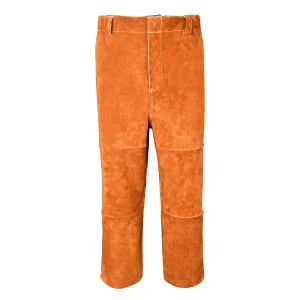
A welding jacket alone cannot prevent lower-body burn incidents. Our wholesale program integrates matching split cowhide trousers, cape sleeves, detachable bibs, spats, and hoods to form an unbroken ergonomic protective shield against molten metal cascades during high-amperage gouging.
A guide for San Francisco safety directors, risk managers, and wholesale distributors ensuring zero-liability PPE program deployments.
Procuring protective workwear in California demands stringent adherence to administrative and consensus standards. Failure to provide verified compliant apparel exposes contractors to steep civil penalties and elevated worker compensation loss ratios.
Disruptions at West Coast ports or regional warehouse shortages can halt multimillion-dollar infrastructure undertakings. Ming Shun works directly with premier regional distributors, safety supply houses, and large self-insured construction entities across the San Francisco Bay Area to establish scheduled container shipping reserves.
Our sales engineering division provides personalized tech packs, pre-shipment lot inspection reports, and customized branding (hot-stamping, woven private labels, and custom barcodes) to ensure frictionless retail reception and jobsite distribution.
Bridging traditional tannery artisanship with computational ergonomics, microclimate cooling, and sustainable green chemistry for high-efficiency modern fabrication.
Integrating ultra-thin, bacteriostatic graphene-treated knit liners within leather welding jackets to rapidly conduct moisture away from the torso, mitigating skin friction and damp chill in fog-prone San Francisco jobsites.
Advancing our environmental commitment with 100% wastewater recycling systems and organic polyphenol vegetable curing agents, aligning with Northern California's most rigorous corporate ESG sustainability criteria.
Embedding high-heat passive UHF RFID tags into jacket collars to empower industrial laundry managers and safety officers to automatically monitor wash cycles, inspect thermal degradation, and automate reorders.
Critical commercial and technical answers for industrial distributors, enterprise purchasing agents, and safety compliance managers.
Leather thickness directly dictates thermal diffusion and kinetic resistance against molten spatter. For high-amperage SMAW or FCAW jobs typical in San Francisco high-rise seismic retrofitting, a minimum cowhide thickness of 1.2mm to 1.4mm is strictly required. Thinner leathers (sub-1.0mm) can experience localized thermal shrinkage and rapid perforation under 300+ amp continuous arcs, whereas 1.3mm split cowhide disperses molten drops without breaching the skin barrier.
Standard synthetic threads such as nylon or polyester begin melting at temperatures between 350°F and 480°F (175°C to 250°C). Molten spatter typically strikes at temperatures exceeding 1,200°F (650°C), instantly severing conventional seams and causing the jacket panels to splay open. DuPont Kevlar para-aramid fiber retains mechanical integrity up to 800°F (427°C) and will not melt or support combustion, ensuring seams stay locked under extreme thermal stress.
Employers achieve optimal balance by outfitting personnel in engineered hybrid garments (such as our FR Cotton body styles with heavy cowhide sleeves and chest aprons) during hot interior or summer work. Furthermore, jackets featuring underarm action gussets and breathable mesh-lined collars permit trapped body heat to vent upwards while retaining complete, impenetrable Class 2 spatter defense along critical arms, shoulders, and chest zones.
Standard wholesale production runs typically begin at 300 to 500 units per jacket model, allowing customized sizing arrays (S through 5XL), private labeling, and custom packaging. Production lead times average 35 to 45 days, followed by direct ocean container routing into the Port of Oakland (typically 14 to 18 days transit). Expedited LCL ocean consolidation or direct air cargo sampling is available for fast-turnaround safety audits.
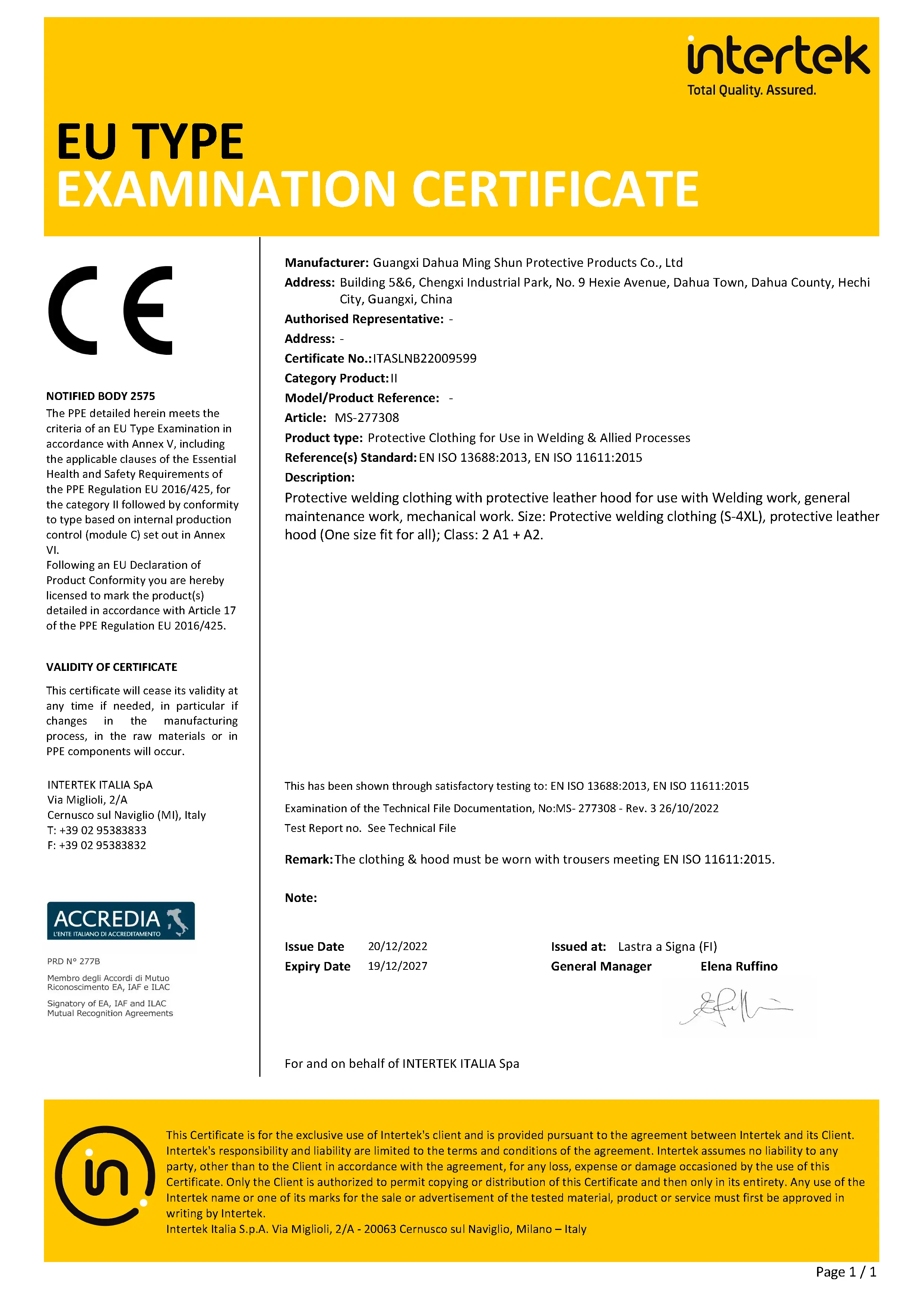
Yes. Every commercial batch comes backed by comprehensive lot test records verifying EN ISO 11611:2015, ANSI/ISEA puncture benchmarks, chrome VI compliance, and flame-retardant seam retention. These technical certificates can be directly submitted to general contractor safety boards and insurance risk assessors to validate PPE compliance.
Absolutely. Our factory maintains in-house CAD patterning and precision embroidery capabilities. We can integrate high-visibility flame-retardant silver reflective striping (ANSI Class 3 configured for low-light bridge retrofits), debossed corporate logos on leather breast yokes, barcoded inventory hangtags, and custom interior size labels customized to distributor catalog requirements.
Explore our complete manufacturing lineup of extended pigskin coats, heavy cowhide trousers, cape sleeves, and color-block jackets tailored for Northern California contractors.
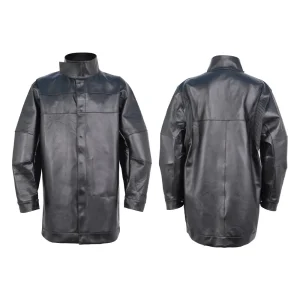
Longline cut engineered for lower spinal and pelvic spatter shielding during seated pipe welding and robotic cell maintenance across Bay Area manufacturing plants.
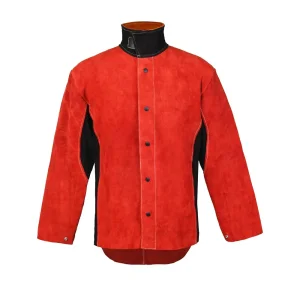
Treated crimson split cowhide that enhances welder visual recognition on congested infrastructure sites, rail yards, and dimly lit marine vessel engine compartments.
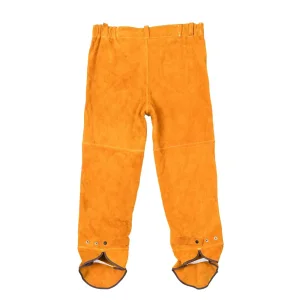
Reinforced knee yokes, fly storm flaps, and adjustable belt loops. Provides full-perimeter lower leg flame defense against puddle blowouts and heavy carbon arc gouging.
Supple top-grain pigskin engineered for superior tactile feedback and dexterity during detailed pipe TIG welding and clean-room clean-tech equipment manufacturing.
Dual-color structural reinforcement featuring high-abrasion dark split leather in high-contact areas, maintaining clean visual presentation across custom enterprise programs.
Built with reinforced inseams, spark-deflector pocket flaps, and heavy brass snaps for seamless wear over standard FR workwear on Port of Oakland structural retrofits.
Engineered for hot fabrication bays and tight aerospace structures. Delivers superior breathability and oil-resistance without compromising essential hot-metal slag resistance.
Maximum thoracic breathability paired with heavy shoulder and sleeve armoring. Compatible with 14-inch to 20-inch detachable leather chest bibs for custom comfort balance.
Connect with our technical export engineers to request free material swatches, customize private label tech packs, or schedule high-volume container freight into the Port of Oakland or local distribution hubs.
Send Inquiry Now