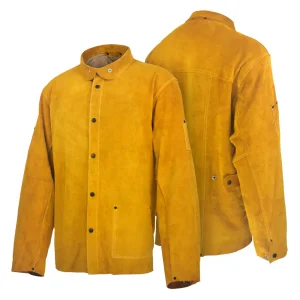
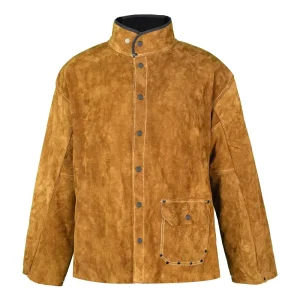
Premium welding jackets manufactured with precision hide grading, aramid seam stabilization, and dielectric closures for primary Belgian industrial sectors.
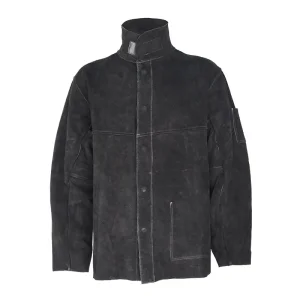
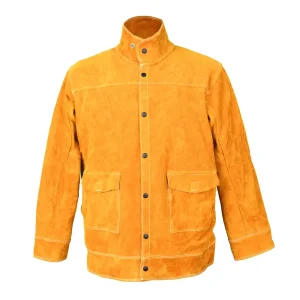
Belgium occupies a central geopolitical and infrastructural nexus in Western Europe's industrial framework. Centered on the Port of Antwerp-Bruges—the second largest petrochemical complex in the world and Europe’s foremost integrated chemical hub—alongside the North Sea Port maritime cluster (Ghent) and the heavy metallurgy of the Meuse Valley in Wallonia (Liège and Charleroi), the requirements for personal protective equipment (PPE) deviate markedly from generic safety garments. In these high-intensity fabrication environments, welding safety apparel is not merely an operational accessory; it functions as a primary life-safety shield engineered against radiant heat flux, high-temperature thermal spatter, toxic slag ejection, and accidental electrical arc exposure.
Across Flanders and Wallonia, industrial operations face aggressive regulatory enforcement governed by the Belgian Federal Public Service Employment, Labour and Social Dialogue (FPS ETCS / FOD WASO) under the Codex on Well-being at Work (Codex over het welzijn op het werk / Code du bien-être au travail). This regulatory framework aligns strictly with European Regulation (EU) 2016/425 for Category II PPE. Employers and occupational health directors are held legally accountable for thermal degradation failures, toxic leaching (e.g., restricted aromatic amines or Hexavalent Chromium Cr VI), and non-compliance with EN ISO 11611:2015.
Procurement profiles across Belgian enterprises divide into specific operational zones, each presenting distinct mechanical and thermal risks:
Continuous hot-work maintenance on cryogenic storage vessels, ethylene cracking columns, and hull retrofits. Demands Class 2 heavy cowhide jackets resistant to both 1400°C steel slag and ambient chemical exposure.
Blast furnace auxiliary operations, heavy plate fabrication, and rail component renewal. Exposure to extreme conductive heat loads necessitates dense, double-split cowhide with internal thermal mesh liners.
Fabrication and maintenance of monopile jackets, transition pieces, and offshore substations. High humidity, salt spray, and confined space welding mandate supple grain leather with anti-corrosive brass snap closures.
For large-scale European industrial supply distributors (such as technical wholesalers serving the Benelux union), reliance on multi-tiered trading brokers creates major vulnerabilities: inconsistent hide grading between production runs, opaque sub-tier manufacturing, and unverified batch certificates. Modern procurement leaders are executing vendor-consolidation strategies, pivoting toward direct Tier-1 manufacturing relationships that deliver transparency from the raw hide tanning stage to containerized dispatch.
Enterprise procurement decisions are guided by three core criteria:
The following engineering data table highlights structural differences between leather varieties used in our manufacturing facility:
| Material Category | Caliper / Thickness | Tensile Strength (ISO 3376) | Tear Resistance (ISO 13937-2) | EN ISO 11611 Classification | Optimal Industrial Application |
|---|---|---|---|---|---|
| Heavy Split Cowhide (A-Grade) | 1.2 mm – 1.4 mm | ≥ 22 N/mm² | > 110 N | Class 2 (A1+A2) | Heavy MMAW / SMAW, FCAW, Shipyard Structural Welding |
| Premium Grain Cowhide | 1.1 mm – 1.3 mm | ≥ 28 N/mm² | > 95 N | Class 1 & 2 | High-Spatter MIG/MAG, Automated Cell Overseeing |
| Contoured Grain Pigskin | 0.9 mm – 1.1 mm | ≥ 19 N/mm² | > 75 N | Class 1 | TIG Precision Welding, Overhead Crane Pipe Alignment |
| Hybrid FR Cotton / Cowhide Sleeves | 9 oz FR + 1.3 mm Cowhide | Hybrid Composite | > 80 N (Sleeves) | Class 1 / Class 2 Mix | Summer Turnarounds, High-Ventilation Sheet Metal Fabrication |
Backing our European supply partners with vertically integrated leather preparation, pattern grading, and automated sewing workshops.
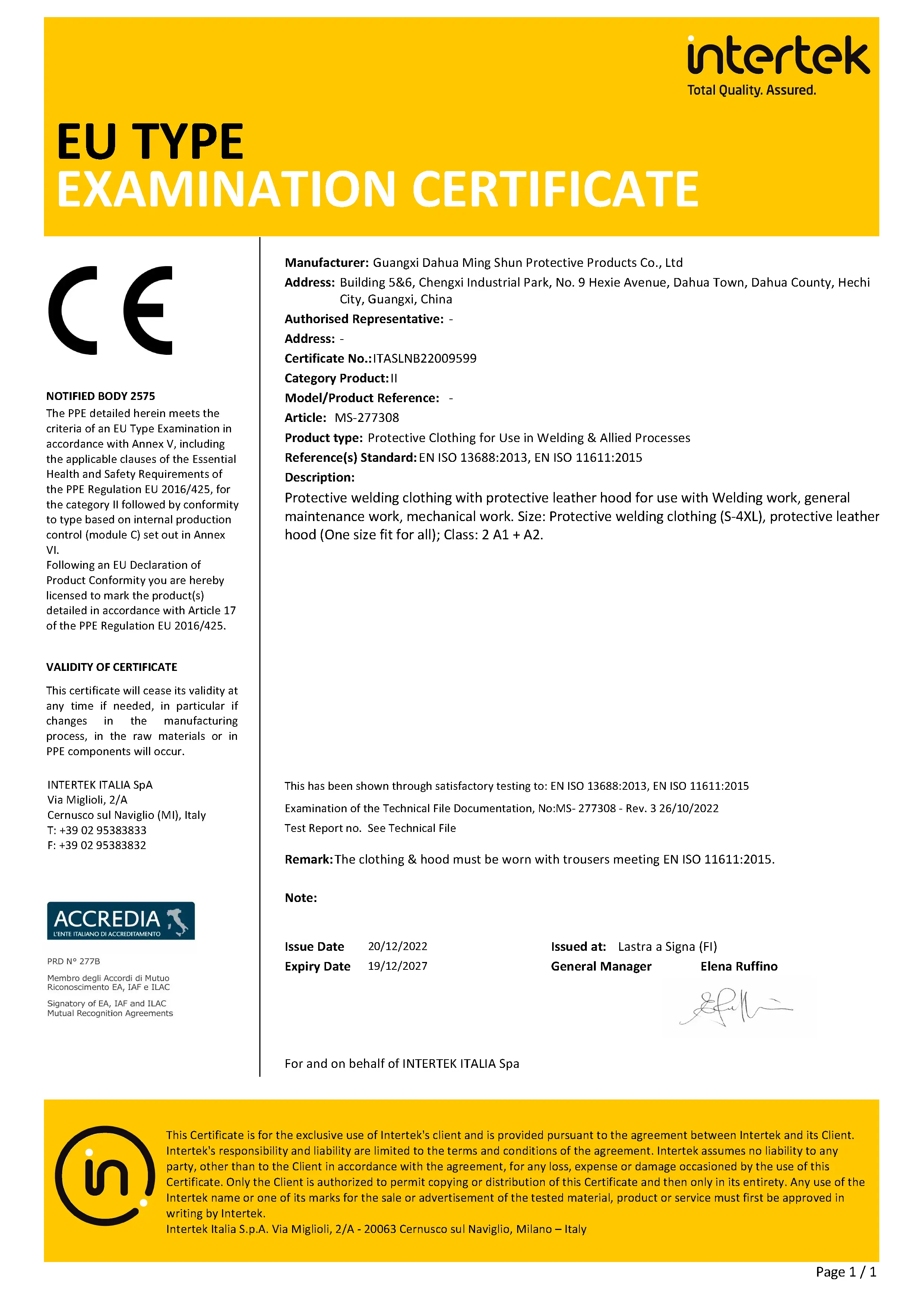
Exporting personal protective equipment to Belgium requires navigating strict conformity assessment procedures. Compliance shortcuts frequently lead to border holds by Belgian Customs (Algemene Administratie van de Douane en Accijnzen) or workplace bans following on-site labor inspections. Our operational model integrates compliance directly into each production run.
Leather items in prolonged contact with skin must satisfy the most stringent chemical safety profiles. We enforce third-party testing protocols (via SATRA, SGS, or TÜV Rheinland) verifying that:
Our leather welding jackets are engineered and documented to meet both Class 1 and Class 2 thresholds:
Designed for lighter welding techniques and configurations resulting in lower spatter and drop counts (e.g., TIG welding, micro-plasma welding). Requires resistance to at least 15 drops of molten metal and radiant heat transfer (RHTI 24 ≥ 7 seconds).
Required across Belgian dry docks and heavy structural fabrication. Must withstand ≥ 25 drops of molten metal without penetration, maintain RHTI 24 ≥ 16 seconds under high radiant heat flux (20 kW/m²), and provide dielectric insulation against electrical shock up to 100 V DC.
As Belgium leads European industry toward carbon neutrality, green hydrogen infrastructure, and automated robotic fabrication cells, PPE requirements are shifting rapidly. Tomorrow’s protective gear must accommodate higher electrical currents, maintain ergonomic comfort during 10-hour maintenance turnarounds, and support transparent circular-economy verification.
Developing bio-based and synthetic tanning protocols that eliminate chrome minerals entirely, cutting aquatic environmental footprints while exceeding EN ISO 11611 thermal shrinkage resistance thresholds.
Infusing outer leather grain matrices with micro-ceramic polymer suspensions. This engineering breakthrough deflects continuous spatter beads from automated laser-hybrid welding lines without embrittling the leather structure.
Integrating heat-shielded passive RFID/NFC chips into jacket lapels. This allows Belgian industrial tool cribs and laundry services to track active wash cycles, inspection dates, and EN standard compliance history automatically.
Essential guidance for purchasing managers, safety directors, and wholesale importers regarding regulatory and manufacturing parameters.
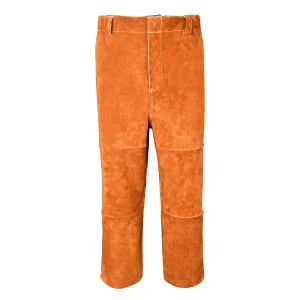
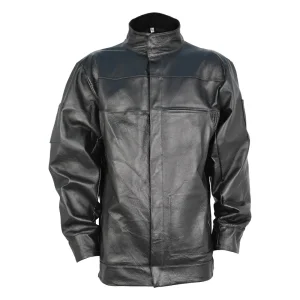
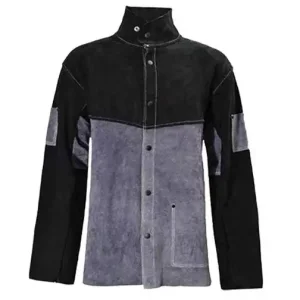
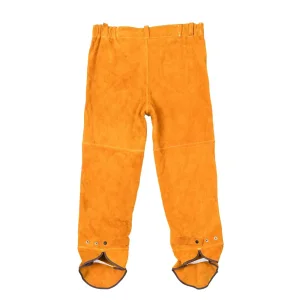
Explore our extended series of split cowhide trousers, pigskin high-mobility jackets, and hybrid cape-sleeve systems designed for full-body industrial protection.
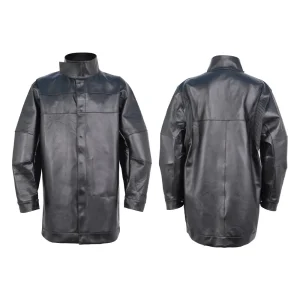
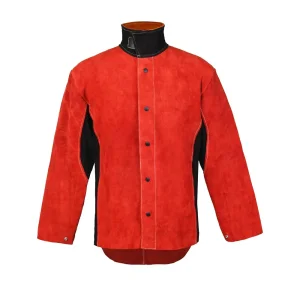
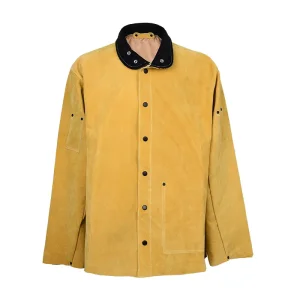
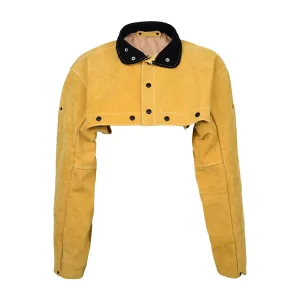
Connect directly with our engineering and international export team. We provide complete technical data packages, pre-production evaluation samples, and transparent factory-direct pricing for Belgian distributors and global industrial buyers.