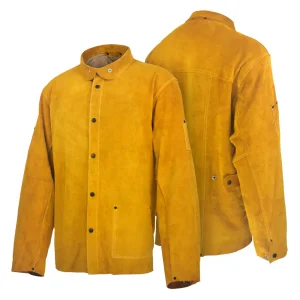
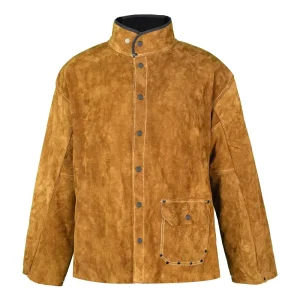
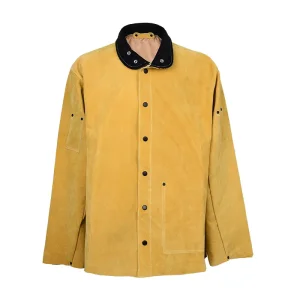
MS-386A 30" Split Cowhide Leather Welding Jacket, Kevlar Sewn (Kuwait Heavy Industry Edition)
Technical Specs
Direct-factory specification products built to endure severe ambient spatter, continuous multi-pass heat, and chemical-laden Gulf marine atmospheres.
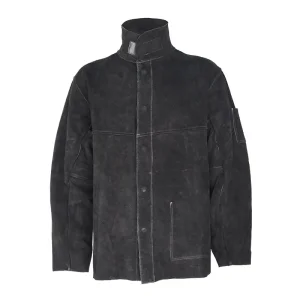
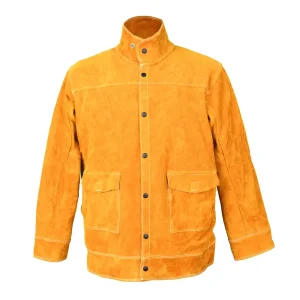
Navigating the intersection of Kuwait Petroleum Corporation (KPC) mandatory safety protocols, hyper-arid desert ambient conditions, and heavy mechanical abrasion.
Operating within the State of Kuwait presents an unparalleled challenge for welding PPE procurement directors. Unlike temperate Western industrial hubs, Kuwait's industrial cluster—spanning Mina Al-Ahmadi, Mina Abdullah, the Shuaiba Industrial Area, and the gigantic downstream complex at Al-Zour—imposes a twin-vector threat: internal heat entrapment and external radiant thermal assault.
During peak summer operational shifts, ambient mercury routinely breaches 50°C, amplified by high humidity near coastal desalinization and marine transfer terminals. When boilermakers, pipefitters, and coded welders perform continuous manual metal arc (SMAW) or flux-cored arc welding (FCAW) on thick-wall duplex stainless steel or heavy alloy cracking tubes, localized radiant temperatures easily surge past 180°C. Standard off-the-shelf cowhide jackets quickly turn brittle, accumulate saline sweat rot, and induce dangerous thermal exhaustion.
Kuwait Oil Company (KOC) and Kuwait National Petroleum Company (KNPC) enforce stringent occupational safety frameworks governed by KOC-G-002 and KNPC Corporate Health, Safety, and Environment Management Systems (HSE-MS). Procurement tenders strictly disqualify low-density, uncertified split leathers that shed fibrous lint or contain unbonded chrome salts that emit toxic off-gassing when subjected to open welding arcs.
Our manufacturing matrix addresses this by employing specialized, chrome-tanned, deep-degreased split cowhide and top-grain pigskin. Each raw hide undergoes specialized saline washouts and tensile stabilization to maintain suppleness and tear strength, ensuring that global engineering, procurement, and construction (EPC) contractors—such as Petrofac, TechnipFMC, and local Kuwaiti fabricators—meet compliance audits on day one.
| Operational Parameter | Standard Commercial Grade | Ming Shun Kuwait Heavy Industry Grade | Engineering Advantage in Gulf Field Deployments |
|---|---|---|---|
| Leather Substrate Density | 0.8 – 1.0 mm Commercial Split | 1.2 – 1.4 mm Selected Shoulder Split Cowhide | Guarantees 40+ drops of molten splash resistance (EN ISO 11611 Cl. 6.8). |
| Thread Seam Architecture | Polyester or Polyamide Blend | 100% 4-ply Kevlar® Continuous Filament | Zero structural burn-through under intense gouging and cutting sparks. |
| Thermal Heat Shrinkage | > 12% at 180°C Exposure | < 3.2% at 180°C Tested Exposure | Prevents severe garment constriction around welder's joints during hot work. |
| Closure Hardware | Exposed Steel Press Snaps | Dielectric Insulated Snaps with Dual Flap Shield | Eliminates secondary electrical arc risk and heat conduction to undergarments. |
Eliminating recurring supply-chain bottlenecks through precision leather chemistry, ergonomic movement patterns, and compliant private-label options.
Engineered with high-tensile, uniform-grain cowhide that causes molten spatter from 6G pipe welds to instantly bounce off rather than stick and carbonize the outer shell matrix.
Designed specifically for positional overhead welds inside confined vessel internals, our deep underarm gussets prevent garment ride-up and safeguard against wrist and torso exposure.
Treated with proprietary non-toxic hydrophobic conditioning oils that repel worker sweat absorption and prevent the leather from hardening and cracking when stored in coastal warehouses.
Kuwait's fabrication workforce originates from diverse global regions. Our customized sizing grades guarantee correct proportional arm lengths and chest cuts without cumbersome bulkiness.
Every production run leaves our factory floor with documented EN ISO 11611 laboratory test reports, lot-numbered raw hide sourcing tags, and comprehensive Declarations of Conformity.
Optimized packaging engineered for containerized maritime shipments. Fumigated, vacuum-stabilized inner poly-packs eliminate mildew risk during transit across the Indian Ocean to Kuwait ports.
As global energy corporations operating in the Middle East transition toward stricter ESG indices, protective garment procurement must evolve beyond brute thickness. Ming Shun’s technological roadmap for the GCC industrial market focuses on three specific innovations:
1. Hybrid Thermal-Venting Ergonomics: Strategic integration of inherently flame-resistant (IFR) breathable back panels in non-spatter strike zones, reducing internal body core temperatures by up to 3.8°C during prolonged summer preheating and post-weld heat treatment (PWHT) monitoring.
2. Heavy-Metal-Free Tanning Formulations: Pioneering aldehyde-based and bio-synthesized vegetable retanning agents that minimize free chrome (VI) residues to undetectable levels, guaranteeing absolute skin neutrality for welders working in high-perspiration environments.
3. Dielectric Non-Arc Fastener Systems: Incorporating reinforced aramid-sheathed closures to eliminate any possibility of galvanic transfer when welders position themselves on grounded steel decks, live piping spools, or offshore drilling platforms in the Neutral Zone.
Definitive answers covering EN standards, KOC tender criteria, material performance, and logistics for Kuwait distribution networks.
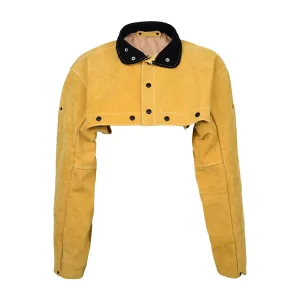
Split cowhide provides superior natural fiber density and thermal mass (averaging 1.2–1.4 mm in our industrial styles), which is mandatory for Class 2 heavy welding where heavy slag, multi-arc SMAW, and gouging spatter are prevalent. Pigskin offers exceptional flexibility and tensile breathability, making it ideal for lighter MIG/TIG work or as cape sleeves, but cowhide remains the standard for continuous structural and high-amperage pipeline hot work across Kuwait refineries.
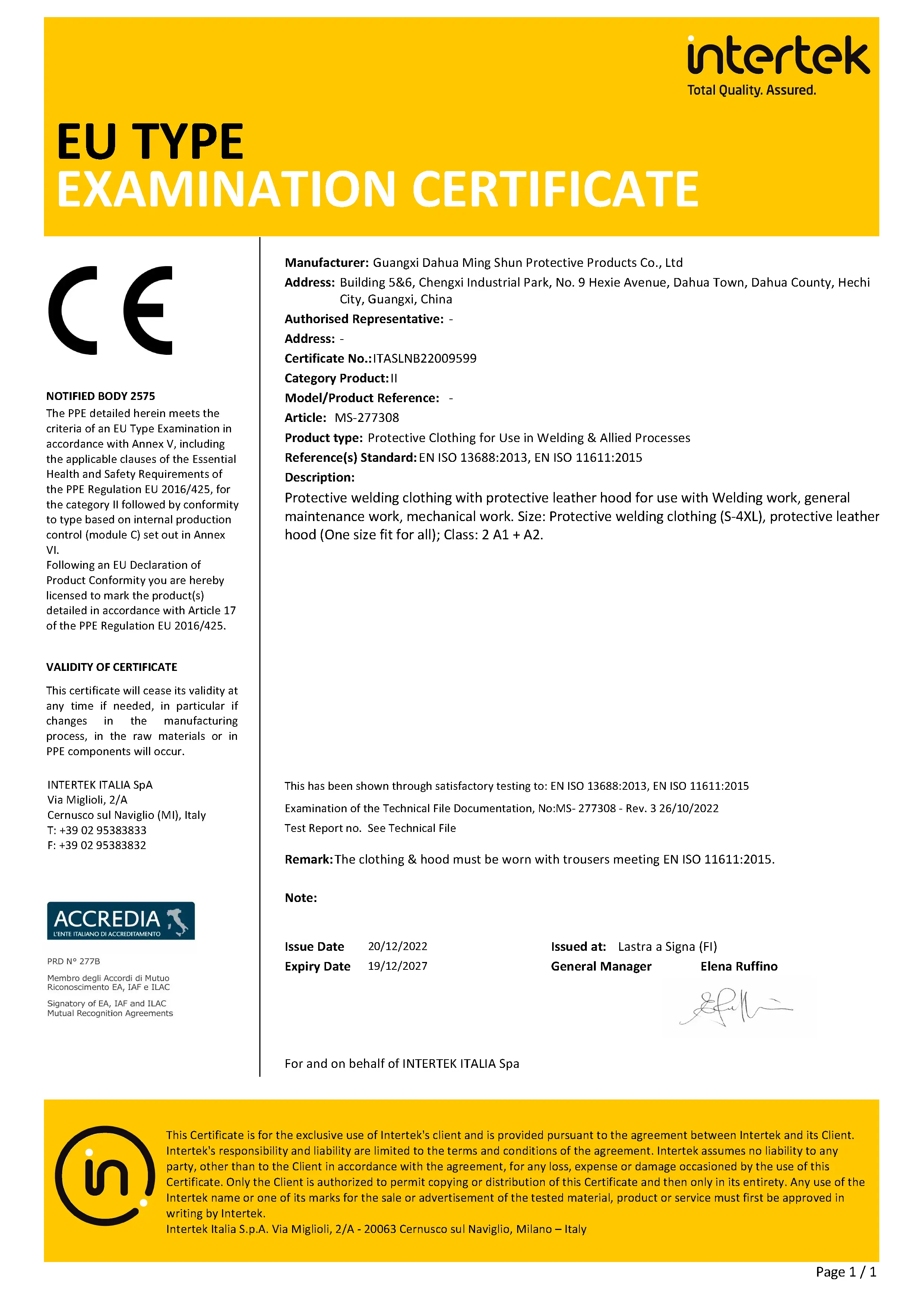
Our heavy-duty welding jackets are built in full compliance with EN ISO 11611:2015 (Class 2, A1+A2) requirements. They feature zero exposed metal rivets or snaps, use 100% Kevlar® flame-resistant multi-filament thread, and provide verified protection against radiant heat (RHTI 24 ≥ 16 s) and impact of molten metal drops (> 25 drops). Third-party test certificates and CE documentation are provided with shipment documentation for immediate approval by refinery HSE officers.
Yes. We specialize in OEM and ODM partnerships. We can deboss or embroider your corporate brand, integrate custom-printed care labels, add high-visibility FR reflective bands, and adapt garment patterns to suit your regional worker anthropometrics. Our technical team works directly from your tech pack or develops samples from reference garments.
Untreated leather degrades rapidly in humid marine climates due to mold development and fiber crystallization. We apply a specialized bactericidal and anti-fungal finishing wash during drum dyeing and package finished garments inside moisture-impermeable inner liners with industrial desiccant packets, ensuring that stock arriving at Shuwaikh Port remains fresh and shelf-ready for over 18 months.
Standard prototypes or sample modifications are produced within 7 to 10 working days. Bulk production for standard 20-foot and 40-foot HQ maritime containers typically runs on a 35 to 45-day manufacturing cycle. We maintain massive raw hide reserves in our Gaozhou tannery to avoid material price shocks and lead-time delays.
Comprehensive protective apparel configurations: extended cuts, specialized lightweight pigskin jackets, cape sleeves, and matching heavy-duty welding trousers.
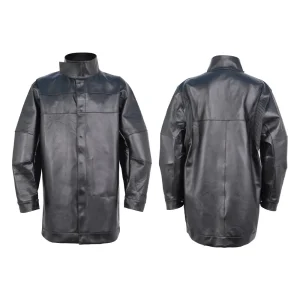
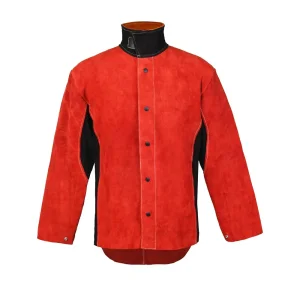
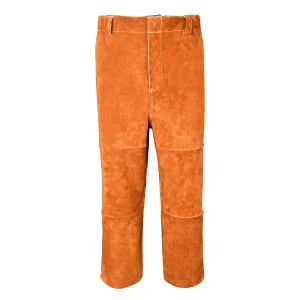
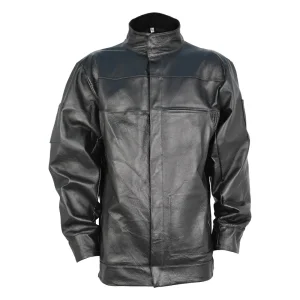
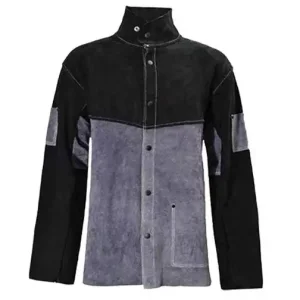
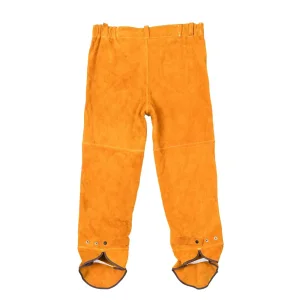
Cut out trading intermediaries. Gain control over raw hide specifications, achieve strict KOC/KNPC audit compliance, and secure reliable container scheduling direct from our 1,000+ staff factory floor.
Send Inquiry Now