
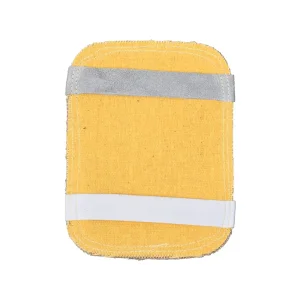
Top-tier radiant heat mitigation and welding equipment calibrated for Panama's deep-water terminals and dry docks.
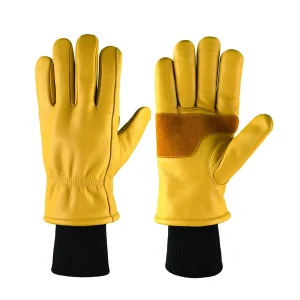
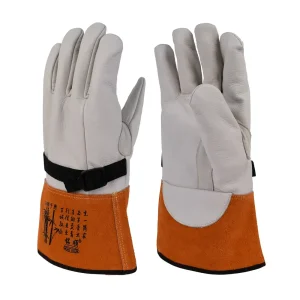
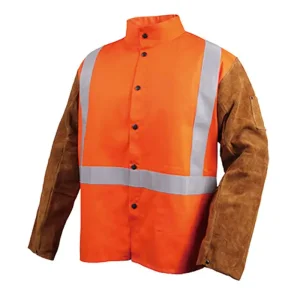
Analyzing thermal exposure, extreme humidity variables, and high-duty welding workflows across Central America's focal logistics corridor.
The Panama Canal Authority (ACP) and private dry docks (such as Balboa and Cristobal Shipyards) manage non-stop maintenance of Post-Panamax container vessels. Intense structural steel welding inside ballast tanks requires localized, high-reflection back hand pads to protect operators from convective and radiant heat traps exceeding 500°C.
Panama's tropical maritime climate maintains average relative humidity levels above 80%. When welders don heavy full-leather protective gear, heat exhaustion risks escalate drastically. Aluminized back hand pads create a thermal deflection barrier without adding excessive weight or trapping wrist sweat, significantly lowering occupational downtime.
Panama acts as the financial and logistical distribution gateway for Latin America. Safety equipment distributors located in the Colon Free Zone import standardized shipping containers of certified PPE to re-export across Colombia, Costa Rica, and Ecuador, requiring dependable OEM supply channels with scalable Chinese factory partners.
Combining 25+ years of specialized leather tanning, automated laser cutting, and certified flame-retardant tailoring.
We exercise complete upstream control over hide grading, split-cowhide splitting, chrome-free options, and specialized heat-resistant tanning. This eliminates quality variances and chemical odors common in contract trading agency batches.
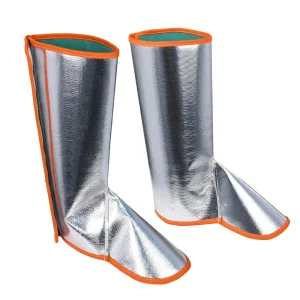
Our back hand pads leverage a dual-shield architecture: an outer layer of woven fiberglass coated with reflective aluminum foils (capable of blocking 95% of radiant heat), fused to an insulating split cowhide substrate with Kevlar® double stitching.
From customizable strap configurations (elastic bands, split leather straps, or hook-and-loop closures) to custom brand hot-stamping and multilingual hangtags (Spanish/English), we streamline market entry for regional distributors.
Welding in maritime repair and civil infrastructure maintenance across tropical Latin America introduces exceptional operational hazards. In operations such as flux-cored arc welding (FCAW) and submerged arc welding (SAW) utilized along the Panama Canal locks, continuous currents ranging between 250A and 450A generate intense radiative energy. The back of the non-dominant guidance hand is exposed to elevated thermal concentrations, leading to rapid glove degradation and operator fatigue.
Independent heat-attenuation tests confirm that an aluminized back hand pad deflects up to 95% of radiant heat waves. By positioning the pad over standard MIG or stick welding gloves, the surface contact temperature on the glove exterior drops by up to 68%, extending glove operating lifespans from 3–5 days to over 3 weeks.
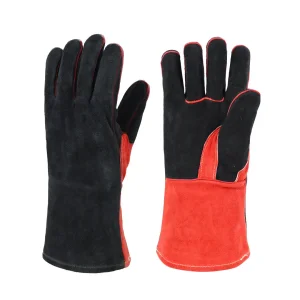
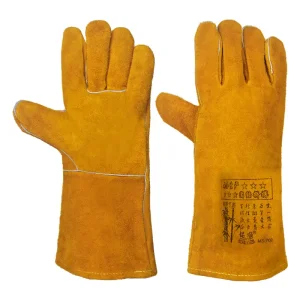
While heavyweight cowhide welding gloves provide mechanical durability and fundamental spark protection, their organic fibrous matrix absorbs radiant thermal energy over sustained shifts. In humid environments, leather absorbs ambient moisture and sweat. Once saturated, moisture accelerates thermal conductivity (steam scald hazards) while degrading leather flexibility, leaving the hide stiff, brittle, and cracked upon drying.
Our OEM MS-106T Aluminized Welding Back Hand Pads resolve this issue through a dual-barrier approach:
Procurement directors serving the Minera Panama copper complex, Panama City Metro extensions, and the Pacific/Atlantic port complexes must evaluate three central parameters when ordering volume consignments from China:
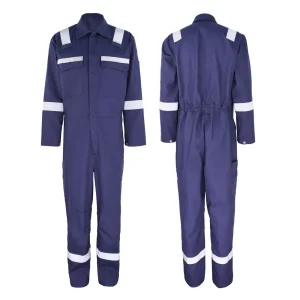
Comprehensive catalog of heavy-duty personal protective gear engineered for global importers, safety distributors, and enterprise users.
Critical commercial and technical guidance for Latin American procurement managers, trade partners, and safety distributors.
