Direct-from-factory protective apparel configured for high thermal dissipation and rugged structural durability across Muscat, Duqm, and Sohar heavy industries.
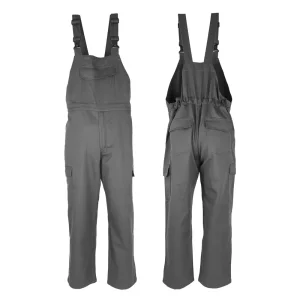
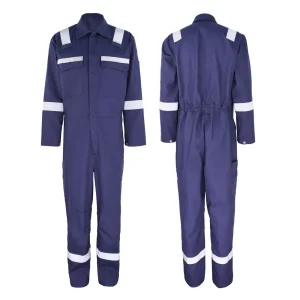
Oman represents one of the Middle East’s most rigorous operational environments for personal protective equipment (PPE). Under the strategic direction of Oman Vision 2040, the nation has accelerated industrial diversification, massive capital projects in the Special Economic Zone at Duqm (SEZAD), heavy refinery expansion across Sohar Port and Freezone, and extensive extraction infrastructure spearheaded by Petroleum Development Oman (PDO) and OQ Group.
Unlike standard fabrication shops, Omani industrial settings pose a dual existential challenge to protective apparel: maintaining uncompromised flame-retardant (FR) shielding against welding arcs (SMAW, GTAW, GMAW) while sustaining ergonomic breathability under extreme environmental heat loads where daytime ambient temperatures routinely surpass 50°C (122°F) with relative coastal humidity reaching 90%.
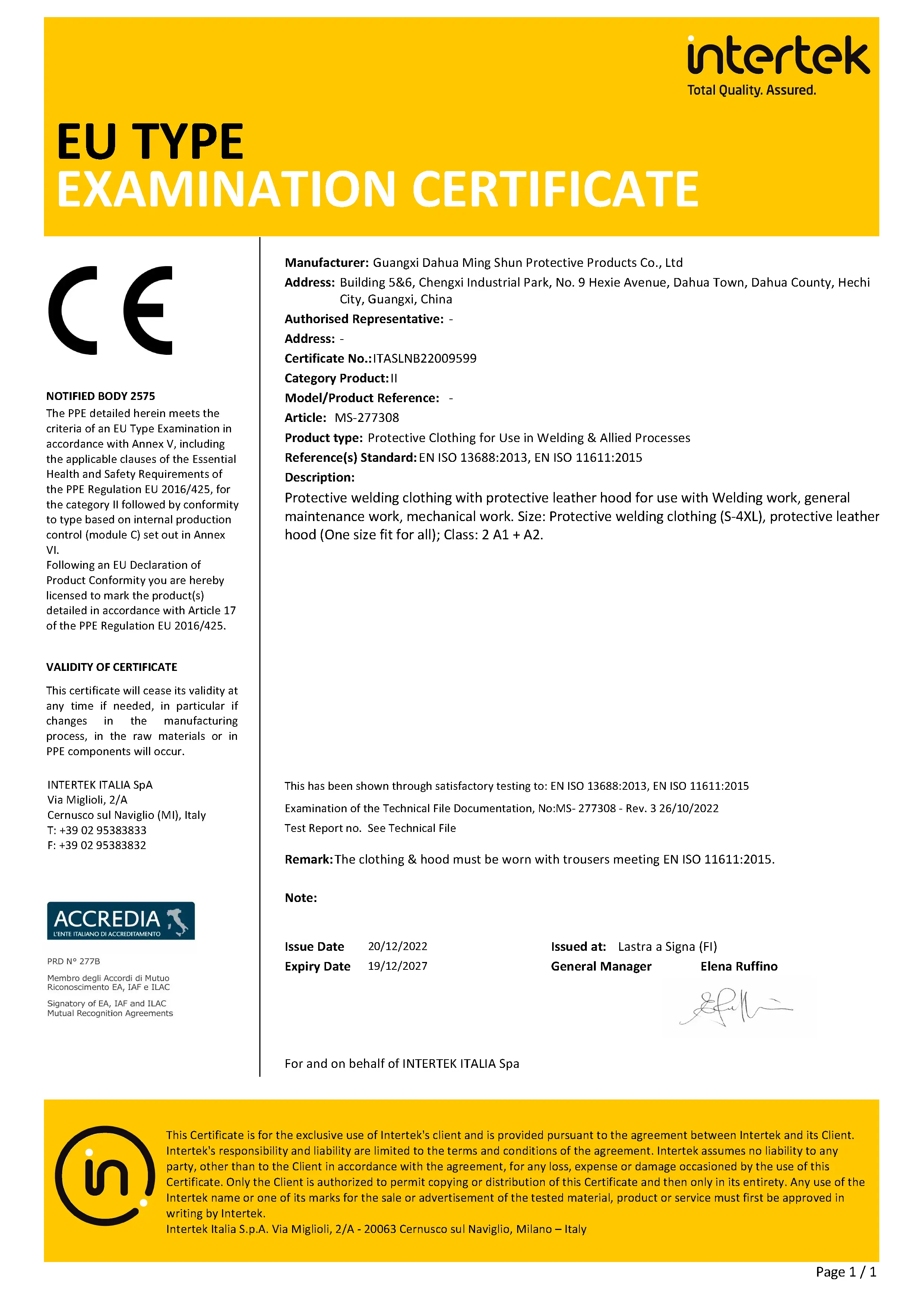
Procurement officers and HSE directors operating within the Sultanate are moving away from untraceable intermediary stockists. The priority has shifted toward direct OEM/ODM factory partnerships capable of certifying compliance with EN ISO 11611 (Class 1 & Class 2), EN ISO 11612, and NFPA 2112.
A primary bottleneck in Omani supply chains has historically been batch inconsistency—where sample fabrics comply with flame tests, but mass consignments experience tensile breakdown, dye leaching under heavy perspiration, and seam combustion from inferior polyester threads. Ming Shun counters this through closed-loop manufacturing, supplying verified batch testing documentation with every shipping container.
International EPC contractors are discarding generic single-hazard workwear in favor of multi-norm, performance-engineered technical fabrics.
Global procurement directives now mandate that welding jackets deliver dual-norm protection: satisfying both EN ISO 11611 (protective clothing for use in welding and allied processes) and EN ISO 11612 (protection against heat and flame), combined with NFPA 70E Arc Flash Class 2 ratings for oil refinery substations.
Traditional 100% split leather jackets cause excessive physiological stress in GCC ambient climates. The dominant global trend leverages hybrid architecture: utilizing 9 oz high-permeability FR cotton across torso and back regions, married with premium split cowhide sleeves and chest panels to block directional slag impact without trapping core body heat.
Molten spatter naturally settles into structural seams. Global leaders specify pure aramid/Kevlar® 3-ply core threads that will not carbonize, accompanied by insulated, non-conductive snaps and heavy-duty brass zippers shielded behind hook-and-loop storm flaps to prevent electrical arc pathing.
For large-scale Omani contracts, supply chain failure is not an option. Guangdong Ming Shun Labour Protective Products Co., Ltd. operates from Gaozhou, Guangdong—the global ground-zero for heavy-duty protective leather processing and industrial garment manufacture.
With an active workforce surpassing 1,000 skilled craftsmen and automated production technicians, Ming Shun eliminates intermediary commercial markups by operating completely integrated supply loops: from raw hide sorting, automated drum tanning, and precision laser cutting to computerized seam tensioning and automated button riveting.
By leveraging Industry 4.0 automated digital patterning systems, custom sizing requirements for diverse multinational workforces in Oman (accommodating Asian, Middle Eastern, and Western anthropometric profiles) are converted from engineering CAD drawings to finalized bulk production in days rather than months.
Evaluating vendor stability for Omani engineering procurement:
Tailored technical workwear solutions mapped to distinct regional zones across the Sultanate.
Continuous pipeline fabrication and cross-country crude distribution lines demand high-amperage SMAW stick welding protection. Welders face high ambient radiant heat mixed with airborne abrasive sand. Our MS-330 and MS-1215 series deliver tear-resistant FR cotton shells that prevent sand ingress while deflecting high-heat hot weld beads.
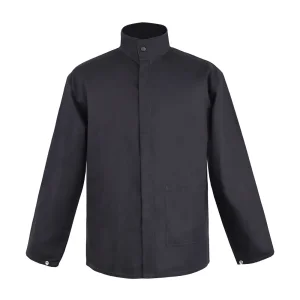
Operating inside ship cargo holds, ballast tanks, and structural hulls at the Oman Drydock Company (ODC) involves confined-space welding characterized by intense ambient reflection, high salt humidity, and overhead spatter. Ming Shun’s hybrid leather/cotton jackets prevent neck burning via integrated stand-up welder collars.
Hot metal maintenance, potline welding, and high-temperature smelting at Sohar Aluminium require protection against molten non-ferrous metal splash. Our Class 2 split cowhide aprons, spats, and heavy cowhide jackets shield against high thermal transfer and electrical arc discharge hazards.
Direct answers for procurement heads, safety engineers, and supply chain analysts sourcing flame-retardant industrial apparel for Middle Eastern operations.
Petroleum Development Oman (PDO) enforces rigorous standards under SP-1231 and SP-1232 for protective clothing, requiring certified flame retardancy (EN ISO 11612 / NFPA 2112), anti-static behavior (EN 1149), and non-melting structural fastenings. Ming Shun manufactures jackets with treated 100% cotton twill (minimum 9 oz) or hybrid cowhide configurations that exceed Class 1/Class 2 spatter resistance, utilizing Dupont Kevlar® aramid stitching to guarantee no seam failure during thermal incidents.
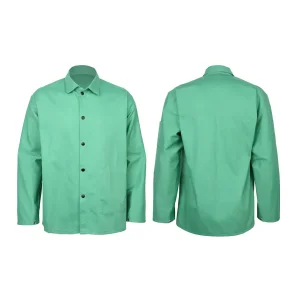
In environments such as the Fahud desert or coastal Duqm where ambient temperatures exceed 45°C–50°C, full 1.2mm cowhide jackets induce rapid heat stroke. For general TIG and light-to-medium MIG welding, we recommend our 7 oz to 9 oz chemically-treated FR cotton welding jackets (such as model MS-330). For heavy stick welding and gouging, we recommend our hybrid models (such as MS-324), which feature split leather on the sleeves and front chest where spatter hits, paired with breathable, ventilated FR cotton across the back.
Worker accommodation camps in Oman use aggressive commercial laundering to remove oil, greases, and mud. Our FR cotton materials undergo molecular-level polymer cross-linking (similar to Proban/Pyrovatex chemistry), retaining flammability compliance according to ASTM D6413 and EN ISO 15025 even after 50 to 100 industrial wash cycles when maintained according to care labels (avoiding chlorine bleach and high-alkali soaps).
From our Gaozhou manufacturing facility, standard bulk OEM orders are completed in 30 to 45 days. Ocean freight dispatched from Shenzhen or Nansha port to the Port of Sohar or Port of Salalah typically requires 14 to 18 transit days. We also offer streamlined air-freight corridors to Muscat International Airport for urgent turnaround and shutdown maintenance schedules.
Yes. As a true factory direct manufacturer, we offer comprehensive OEM and ODM capabilities. We can apply heat-sealed FR company logos, custom embroidery, flame-retardant 50mm silver/high-vis reflective tapes positioned according to your site safety standards, gas detector loops, pen pockets, and specialized sizing ranges tailored for multinational workforces.
Explore our full line of FR coveralls, hybrid cowhide jackets, heavy split leather aprons, and Kevlar-stitched gloves.
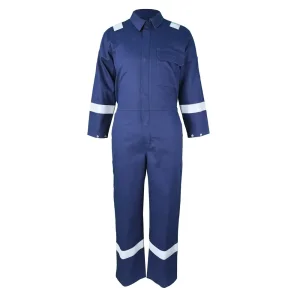
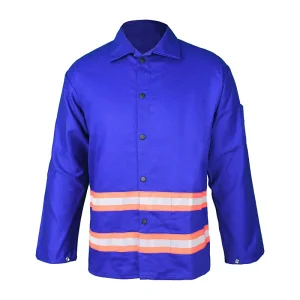
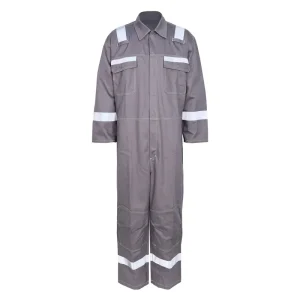
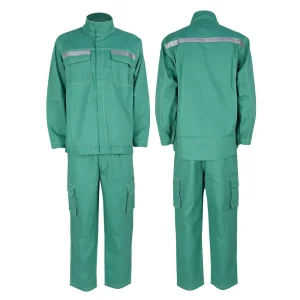
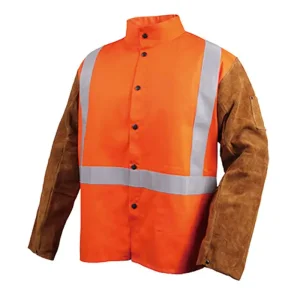
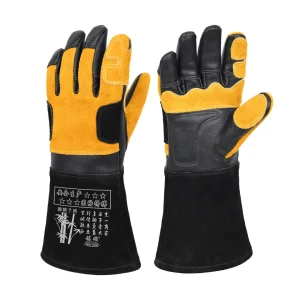
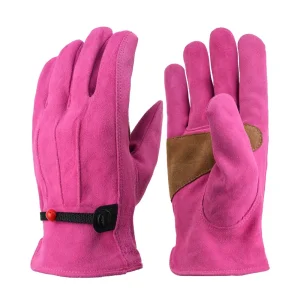
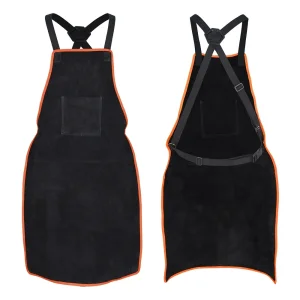
Bypass intermediary brokerage margins. Source certified, high-durability FR welding jackets, leather protective workwear, and specialized gloves direct from China’s leading industrial PPE manufacturer.
Send Inquiry Now