
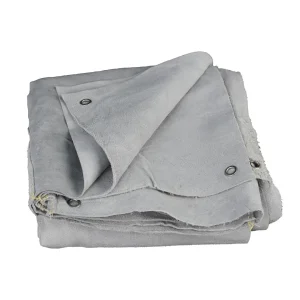
Factory-direct industrial supplies certified to international heat containment and spark retention standards for Thailand manufacturing facilities.
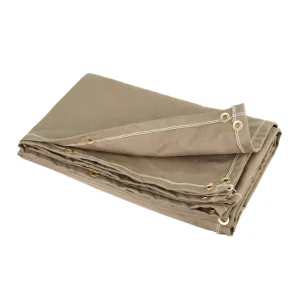
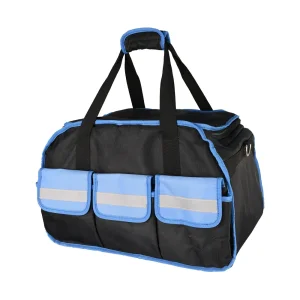
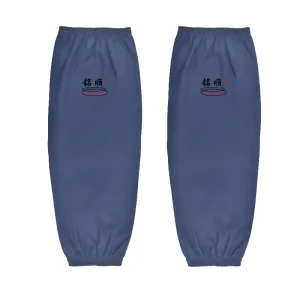
As Southeast Asia's powerhouse automotive hub and expanding EPC industrial center, Thailand demands uncompromising thermal isolation blankets and welding spark containment infrastructure.
Thailand’s ambitious development under the Eastern Economic Corridor (EEC) initiative encompassing Rayong, Chonburi, and Chachoengsao provinces has radically accelerated the modernization of fabrication facilities, automated automotive assembly lines, and high-pressure chemical installations. Hot work—ranging from robotic MIG/TIG welding on electric vehicle (EV) battery trays to complex offshore manifold welding at deep-water shipping terminals—represents an environment fraught with intense thermal hazards.
Under Thailand's Department of Disaster Prevention and Mitigation (DDPM) and the Occupational Safety and Health Act (B.E. 2554), manufacturing facilities and contractors are subjected to strict safety audits. High-heat spatter, radiant infrared emissions, and combustible flying slags require certified welding blankets and fire containment curtains. Traditional canvas or low-grade fiberglass sheets no longer satisfy Tier-1 automotive integrators or multinational oil and gas conglomerates operating out of Map Ta Phut.
Thailand’s maritime tropical climate features ambient relative humidity frequently exceeding 80% to 90% combined with sustained temperatures above 35°C. Conventional silica or basic fiberglass fabrics with untreated sizing agents suffer from severe moisture absorption, resulting in:
Thailand produces over 1.8 million vehicles annually. Transitioning to EV battery packs requires vermiculite-coated silica blankets for localized thermal run-away testing barriers and spark containment curtains around automated spot-welding robotic cells.
Continuous thermal stress cracking maintenance and hot-tapping pipe welding require high-silica fabrics rated to 1100°C. Blankets serve as pre-weld stress-relieving jackets and safety drop blankets to prevent ignition of hydrocarbon vapors.
Confined-space welding on hull plates and marine vessels demands zero-halogen, non-toxic fire retardant blankets. High-density vermiculite fiberglass maintains integrity during vertical gouging and oxy-fuel cutting sparks.
A comparative analysis of metallurgical barriers engineered to replace legacy asbestos and low-grade basalt across global safety architectures.
| Material Classification | Continuous Operating Temp | Peak Melting Threshold | Surface Coating Polymer | Recommended Thai Industrial Application | Compliance Standards |
|---|---|---|---|---|---|
| C-Glass Filament Fiberglass | 550°C (1022°F) | 750°C (1382°F) | Silicone Elastomer / PU Impregnated | Light spark barriers, HVAC duct wrap, Rayong auto repair shops | ANSI/FM 4950, EN 13501-1 Class A2 |
| Vermiculite-Treated E-Glass | 750°C (1382°F) | 1000°C (1832°F) | Expanded Vermiculite Micro-Flake | Heavy structural steel welding, slag drops, shipyards at Chonburi | NFPA 701, BS 476 Part 20 |
| High-Purity Amorphous Silica | 1000°C (1832°F) | 1650°C (3002°F) | Inorganic Silane & Hydrophobic Finish | Map Ta Phut hot-pipe post-weld heat treatment (PWHT), gas turbines | MIL-C-20079H, ASTM E84 Class A |
| Chrome-Tanned Split Cowhide | 260°C (500°F) Contact | 350°C Char Point | Natural Kevlar® Thread Bound | Drop curtains, automated cable trays, mechanical abrasion shielding | ISO 11611 Class 2, EN 388 Level 4 Abrasion |
In enclosed or semi-confined fabrication yards across Bangkok and the EEC corridor, worker respiratory welfare has become a focal point of ISO 45001 audits. Traditional polyurethane coatings emit irritating acrid plumes when subjected to immediate spark impingement. Modern formulations developed by advanced Chinese manufacturing entities incorporate water-based, solvent-free silicone resins and nano-ceramic dispersions that undergo controlled endothermic decomposition without producing dense black smoke or hazardous volatile organic compounds (VOCs).
Integrating automated weaving looms, continuous chemical coating lines, and integrated leather processing in Gaozhou, Guangdong to deliver speed, scale, and uncompromising consistency.
Thermal protection blankets are only as strong as their weakest yarn intersection. Ming Shun’s Guangdong manufacturing operations deploy advanced computerized rapier looms with automated yarn tension sensors. This guarantees uniform tensile density across rolls spanning 1.0m to 2.0m wide, eradicating structural pinholes where liquid molten metal could penetrate.
Integrated computer-vision camera arrays monitor every linear meter of continuous vermiculite and silicone coating, flagging inconsistencies in dry film thickness (DFT). The result is zero batch-to-batch variation—a vital metric for EPC procurement teams managing Tier-1 infrastructure contracts in Southeast Asia.
Operating out of Gaozhou with immediate access to deepwater container terminals at Nansha (Guangzhou) and Yantian (Shenzhen), our logistics architecture bypasses global transshipment bottlenecks. Standard 20ft and 40ft HQ containers reach Laem Chabang Port or Bangkok Klong Toey Port within 5 to 7 days port-to-port.
This geographic proximity allows Thai distributors and EPC consortiums to implement Just-In-Time (JIT) stock holding, minimizing costly warehouse footprint in Chonburi while retaining full capability to scale blanket and PPE supply during planned refinery shutdown turnarounds.
Real-world configurations tailored to thermal load, spatial layout, and environmental parameters in local industrial parks.
Within high-cadence automotive assembly lines, robotic arms continuously weld unibody frames at speeds generating intermittent spark showers at 1200°C. Standard PVC partition strips can burn through and expose sensitive robotics wiring harnesses.
Configured Solution: Heavy-duty, double-side silicone-coated fiberglass curtains hung on motorized brass-grommeted trolley tracks. The slick polymer surface repels molten slag immediately, preventing buildup and offering an electrical arc barrier of 5,000 volts dielectric insulation.
High-pressure steam pipes and hydrocracking reactor headers require gradual preheating to 250°C and stress-relieving holding cycles reaching 650°C to prevent hydrogen-induced micro-fissuring in chromium-molybdenum alloy steels.
Configured Solution: Multi-layer ceramic fiber needle blankets encapsulated inside high-silica fabric sleeves. These serve as thermal soak blankets wrapped around induction heating bands, reducing thermal dissipation into humid ambient air and cutting energy usage by up to 35%.
A rigorous checklist ensuring seamless customs clearance at Thai ports and audit-readiness for multinational safety assessors.
We supply welding pads, blankets, and curtains tested against ANSI/FM 4950 criteria, categorizing materials explicitly into Light Duty (sparks), Medium Duty (general welding spatter), and Heavy Duty (molten slag drop from flame cutting).
By issuing authentic Form E Certificates, Thai importers benefit from 0% preferential import tariffs under the ASEAN-China Free Trade Area, dramatically slashing landed landed procurement costs compared to Western imports.
Complete private-label services including heat-transfer brand logos on blanket surfaces, custom roll dimensions (e.g., 1.5m × 50m master rolls), customized grommet intervals, and bilingual (English/Thai) warning safety instruction tags.
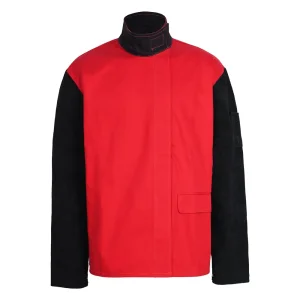
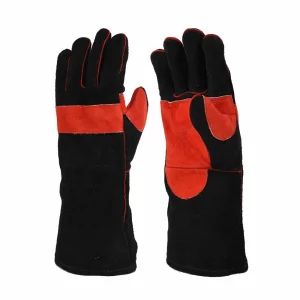
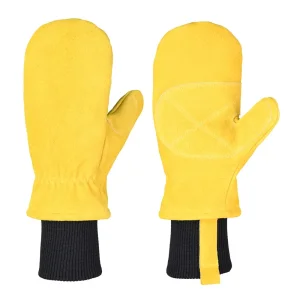
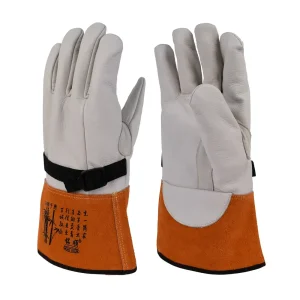
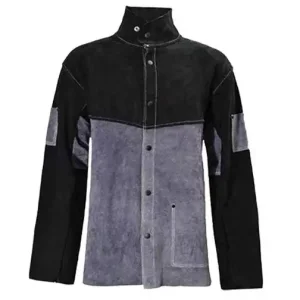
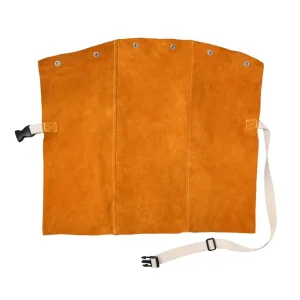
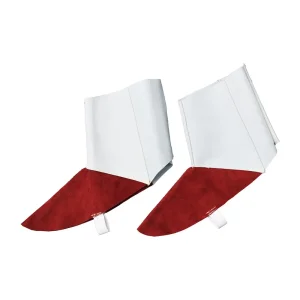
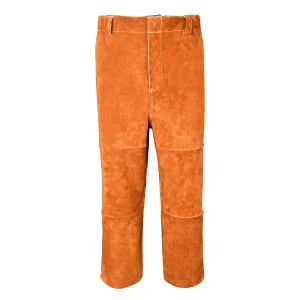
Combining heavy split cowhide craftsmanship and flame-retardant textiles to safeguard fabrication crews across the Asia-Pacific region.
In-depth responses covering international certifications, shipping durations, custom sizing, and environmental resistance.
Connect with our technical export engineers. Receive customized roll dimension quotations, certified test reports, and factory-direct pricing for Thailand distribution and major industrial tenders.
Send Inquiry Now