Engineered to mitigate thermal risks and splatter projection in automated and manual hot-work operations across Ulsan, Geoje, and Pohang industrial belts.
A deep analysis of protective demand patterns driven by South Korea's high-density maritime, automotive, and semiconductor equipment manufacturing clusters.
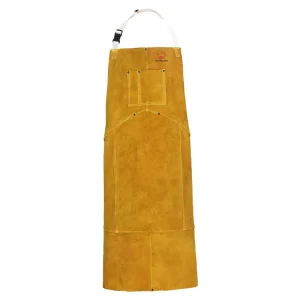
Naval architecture projects such as LNG carriers, FPSOs, and ultra-large container vessels subject structural weldors to intense radiant heat, extreme slag splatter, and overhead multi-pass welding. Standard flame-retardant textiles degrade rapidly under these conditions; procurement specifications mandate grade-A split cowhide aprons and protective split-leg chaps that survive repetitive abrasion against ballast tank steel ribs and structural bulkheads.
Korea’s automated assembly complexes in Ulsan and Hwaseong deploy hundreds of robotic spot-welding cells. Maintenance specialists, tooling engineers, and manual re-work operators require lightweight split leather bibs and ergonomic split chaps that allow unrestricted movement during high-cycle shift intervals, offering barrier resistance to high-frequency projection sparks without imposing excessive thermal strain.
Continuous casting floors, pipe mills, and heavy beam fabrication facilities operate under constant thermal radiation. Here, KOSHA-compliant protective apparel must resist slag contact up to 1,200°C. Kevlar-stitched heavy leather aprons provide puncture integrity and shielding against direct molten metal bounce, safeguarding workers across prolonged multi-shift cycles.
Direct supply solutions for Korean industrial distributors, shipbuilders, and offshore contractors.
How stringent ESG standards, ergonomic redesigns, and hybrid thermal materials are reshaping protective wear specifications across international supply chains.
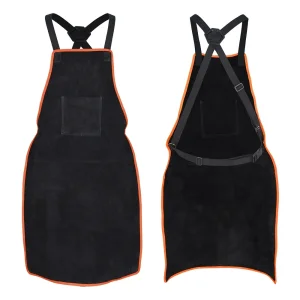
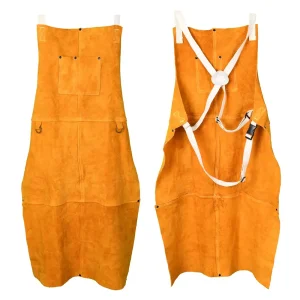
Traditional neck-hung aprons concentrate the 1.2kg to 1.8kg leather weight on the cervical spine, causing chronic musculoskeletal strain over an 8-hour shift. Modern procurement frameworks across North America, Europe, and Northeast Asia now mandate dynamic X-back cross-harness systems and quick-release acetal buckles that transfer load directly to the shoulders and core, cutting fatigue by over 38%.
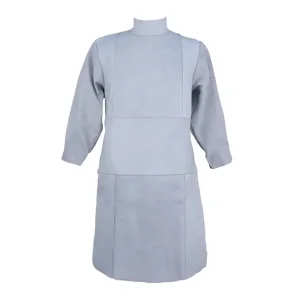
To balance thermal endurance with operator agility, next-generation PPE incorporates hybrid constructions. Strategic impact zones (chest, thighs, groin) employ premium Grade-A split cowhide, while peripheral sections (upper back, sides) use 9 oz to 11 oz flame-retardant treated cotton. This composite design enhances thermal breathability without sacrificing Class 2 EN ISO 11611 protective thresholds.
Tightened European REACH standards and Korean hazardous chemical handling regulations demand zero-detectable Chromium VI in split leather apparel. Leading global buyers verify REACH Annex XVII certification, requiring documented environmental stewardship in chemical soaking, retanning, and effluent treatment cycles directly at the tanneries.
Vertical raw material integration, automated CAD hide-nesting, and rapid OEM/ODM prototyping for overseas supply chain security.
| Evaluation Parameter | Guangdong Ming Shun Labour Protective Products | Traditional Trading Intermediaries | Tier-3 Regional Assemblers |
|---|---|---|---|
| Raw Material Integration | In-house beamhouse, splitting, and chrome tanning facility in Gaozhou with direct batch tracking. | Open market hide sourcing; variable thickness, grain variation, and fluctuating chemical odor. | Fragmented scrap leather piecing with inconsistent tensile and flame limits. |
| Cutting Precision | CNC multi-ply laser & digital reciprocating knife nesting; structural accuracy to ±0.5mm. | Manual clicker presses prone to pattern distortion and irregular edge bevels. | Hand scissor/blade template cutting without seam tension calibration. |
| Seam Reinforcement | Continuous bonded 3-ply Kevlar® thread with bar-tacked stress nodes and insulated brass rivets. | Spun polyester or low-grade nylon seams vulnerable to spark melt-through within 15 days. | Single-row lockstitching using generic synthetic threads with unsealed rivet backs. |
| OEM/ODM Turnaround | CAD tech-pack digitization, rapid tooling, and approved golden counter-samples dispatched in 5-7 days. | Third-party vendor delays; sampling cycles exceed 25-35 business days. | No internal prototyping team; unable to iterate custom size grading or logo debossing. |
| Batch Compliance Tracking | Lot-specific tensile tests, tear strength reports, pH checks, and REACH Chromium-VI verification. | Secondary generic certificates borrowed from non-affiliated factories. | No in-house QA lab equipment or systematic lot serialization. |
Specific protective gear mapping designed for intense heat exposure, heavy mechanical abrasion, and prolonged physical strain.
Work Environment: Pre-erection ship blocks at Okpo and Geoje shipyards; double hull bottoms with limited air ventilation.
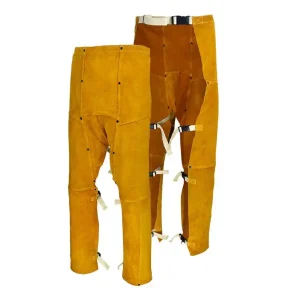
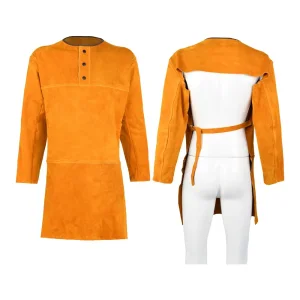
Gear Selected: MS-491 Leather Welding Apron with Integrated Sleeves + MS-241 Split Cowhide Welding Chaps.
Functional Benefit: Full upper-torso and leg shielding against rebound sparks from overhead flux-cored arc welding (FCAW), preventing dermal burns inside restrictive enclosed steel compartments.
Work Environment: Incheon and Gyeonggi heavy infrastructure steel fabrication facilities.
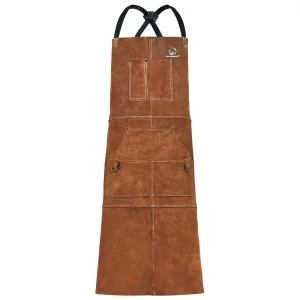
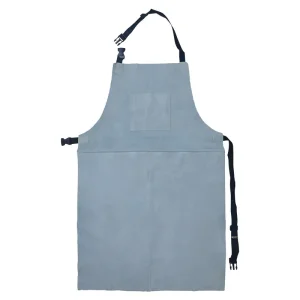
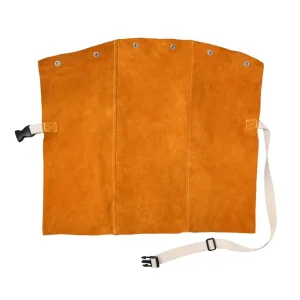
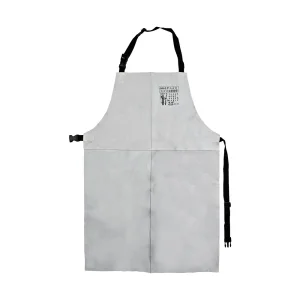
Gear Selected: MS-480 Heavy-Duty Split Cowhide Bib Apron (1.3mm - 1.5mm uniform substance).
Functional Benefit: Resists continuous spray from multi-torch CNC oxy-fuel and plasma cutting tables. Heavy leather density deflects molten metal slag without heat penetration or surface charring.
Work Environment: High-precision fabrication lines in Changwon and Daegu machine tool industrial zones.
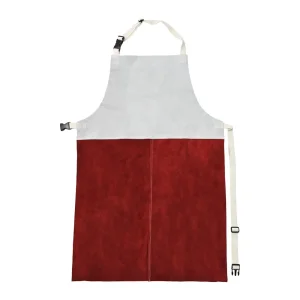
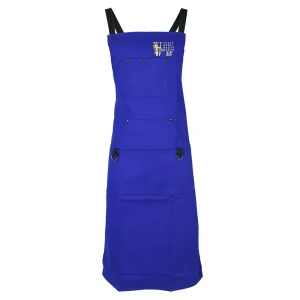
Gear Selected: MS-F7080 FR Cotton Welding Bib Apron with Quick-Release Harness.
Functional Benefit: Provides flexible, unhindered articulation during intricate TIG welding and machine alignment tasks. Offers breathable protection where heavy split cowhide is overly rigid.
Essential guidance for purchasing agents, procurement engineers, and commercial safety distributors.
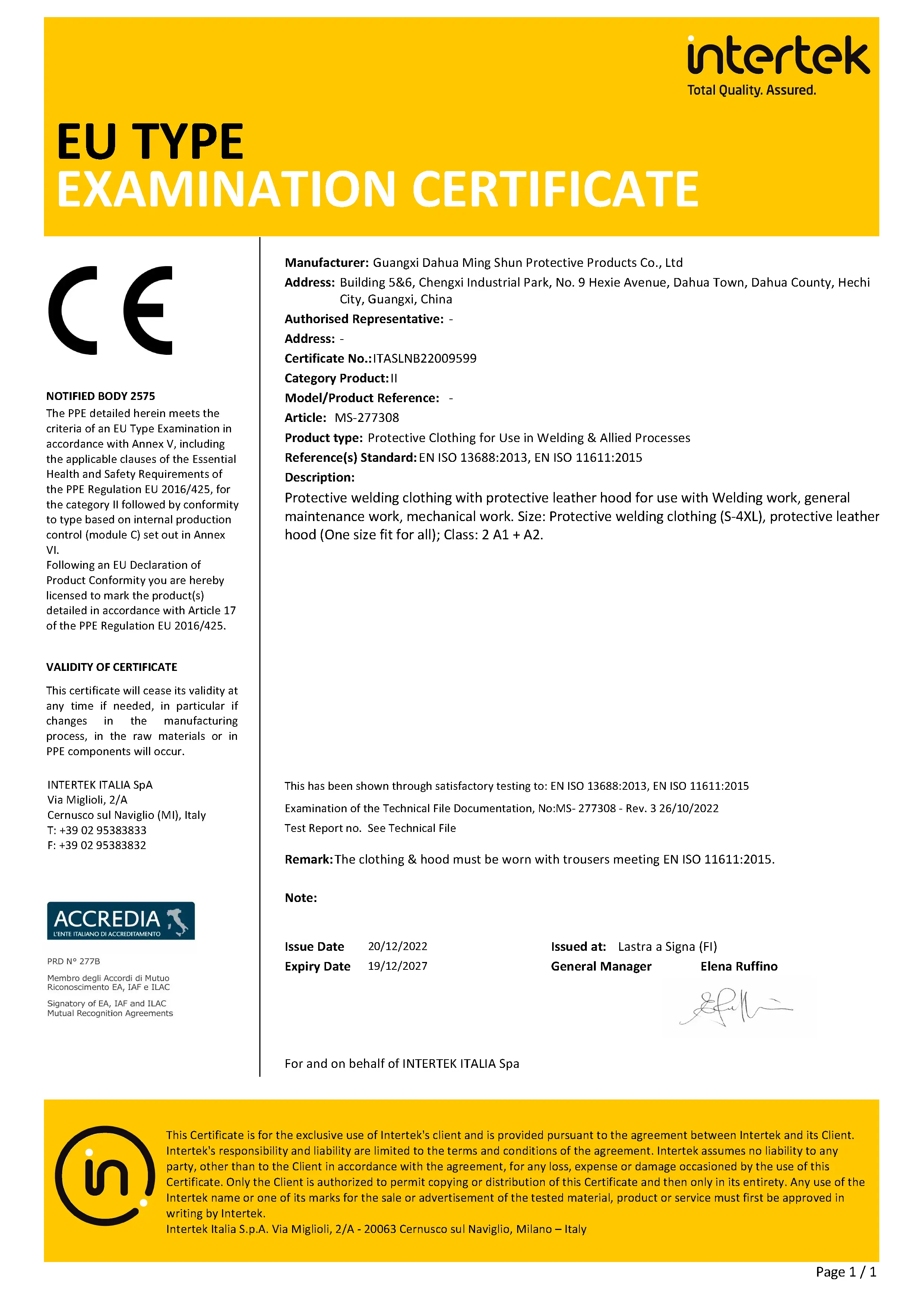
Our heavy split leather and flame-retardant protective garments are engineered to meet and exceed EN ISO 11611 (Class 1 & Class 2) protective standards, which form the technical evaluation benchmark referenced by major Korean shipbuilders and Korean Occupational Safety and Health Agency (KOSHA) audits. We supply complete technical files, stitch-strength test certificates, and flammability reports directly to our Korean importing partners.
We process pure split cowhide from select cattle hides in our Gaozhou tannery. Using computerized splitting machines, we control leather substance to precise tolerances: 1.2mm–1.4mm for flexible aprons and chaps, and 1.4mm–1.6mm for heavy-duty ship-rigging garments. Every hide is inspected for tensile fiber integrity, zero loose flank cuts, and uniform oil/moisture balance.
Yes. As a true factory direct manufacturer, we offer comprehensive OEM and ODM support. We provide deep hot-stamp leather debossing, woven labeling, custom silk-screen printing on FR fabrics, extra-large sizing (up to 4XL/5XL for winter garment layering), and customized harness hardware such as heavy-duty steel snaps, non-conductive plastic buckles, or magnetic latches.
Standard OEM container shipments typically ship within 30 to 45 calendar days following pre-production sample sign-off. Given our strategic coastal location in Guangdong, ocean freight transit to Busan, Incheon, or Gwangyang ports requires only 4 to 6 days on direct regional vessels, giving Korean buyers exceptional lead time stability and low pipeline inventory holding costs.
Standard synthetic threads melt at temperatures as low as 160°C–210°C, leading to structural seam burst when exposed to molten slag splatter. We utilize genuine DuPont™ Kevlar® continuous filament thread, which chars only above 425°C and resists direct spark penetration. All perimeter pockets, chest bib joins, and strap junctions are further reinforced with steel or copper rivets to prevent tear failures under heavy tool loads.
Browse our complete range of certified split leather, hybrid FR, and quick-release personal protective workwear.
Request complete bulk container pricing, private-label branding catalogues, and test certification packs.