Enterprise-grade protective equipment manufactured with rigorous heat shielding, high-tensile Kevlar stitching, and ergonomic dexterity for extreme welding operations.
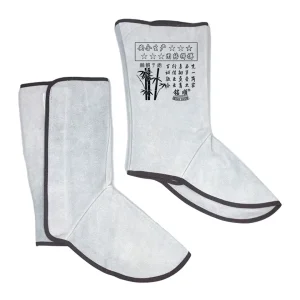
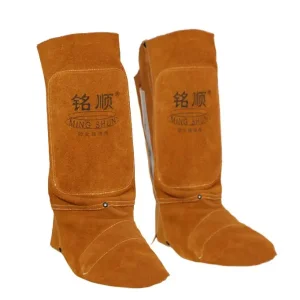
Navigating tier-one corporate purchasing demands across heavy fabrication, offshore oil and gas, shipbuilding, and industrial construction.
In modern industrial manufacturing environments, the specification and procurement of welding flame-resistant (FR) clothing have evolved far beyond transactional PPE purchasing. Today's global procurement officers, environmental health and safety (EHS) vice presidents, and EPC (Engineering, Procurement, and Construction) contractors evaluate protective apparel through a multi-dimensional matrix: life-cycle durability, absolute standard compliance, ergonomic heat mitigation, and upstream supply chain transparency.
Guangdong Ming Shun Labour Protective Products Co., Ltd. (operating from Pukang Industrial Park, Gaozhou City, Guangdong) has spent more than 25 years establishing an integrated manufacturing ecosystem that addresses the operational vulnerabilities enterprise buyers encounter when sourcing welding apparel from intermediaries or unverified trading vendors.
E-E-A-T Sourcing Metric: Enterprise contracts demand factory-direct traceability. Sourcing directly from an integrated manufacturer eliminates the 15%–28% middleman margin, secures direct access to batch-specific EN ISO 11611 test data, and guarantees uninterrupted production volume across multi-year frame agreements.
Global procurement teams must navigate cross-jurisdictional frameworks: European Union PPE Regulation (EU) 2016/425 (EN ISO 11611:2015 Class 1/Class 2, EN ISO 11612), OSHA 29 CFR 1910.252, and NFPA 2112/70E. Direct factory auditing ensures apparel complies with radiant heat resistance, drop-molten spatter thresholds, and dimensional stability through 50+ wash cycles.
Low-grade FR garments frequently fail within 30 to 45 shifts due to thread rot, seam rupture, or leather stiffening. By utilizing top-selection split cowhide tanned specifically for thermal pliability, combined with 100% Kevlar/Nomex aramid threading, our products reduce annual worker garment replacement frequencies by up to 40%.
Supply shocks, regional logistic gridlocks, and surging raw hide prices jeopardize plant operations. With more than 1,000 on-site personnel and in-house leather tanning and dye plants, Ming Shun shields corporate buyers from volatile commodity fluctuations with predictable container dispatch intervals.
Engineered protective systems configured for specific thermal loads, slag ejection patterns, and mobility restrictions.
Naval shipyard welding entails high-amperage flux-core arc welding (FCAW) and submerged arc operations within cramped, humid double-bottom compartments. Our Class 2 split cowhide welding jackets paired with moisture-repellent split spats and Kevlar-reinforced gauntlets provide uncompromised slag resistance without impeding welder mobility.
Cross-country oil and gas pipeline welders work in exposed environmental extremes while confronting hazardous hydrocarbon gas exposure risks. We engineer hybrid garments featuring 9 oz or 7 oz treated flame-resistant cotton torsos with cowhide leather arms, combining dual-hazard flame resistance with breathable heat dissipation.
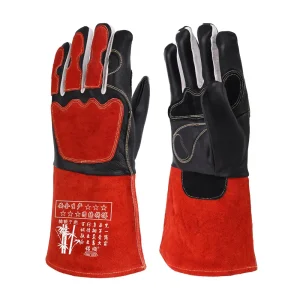
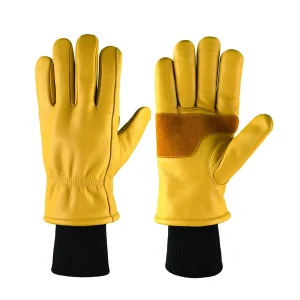
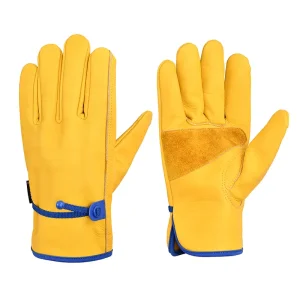
High-speed robotic and manual spot-welding lines require rapid cycle dexterity. For these precision tasks, Ming Shun manufactures specialized goatskin and grain cowhide TIG/MIG gloves that deliver tactile wire feeding sensitivity while shielding dorsal knuckles against intermittent arc radiation and sharp sheet metal stamping burs.
| Material Category | Thermal Spatter Resistance | Radiant Heat Protection | Mechanical Abrasion (EN 388) | Ergonomic Dexterity Index | Ideal Industrial Setting |
|---|---|---|---|---|---|
| Heavy Split Cowhide (1.2 - 1.4 mm) | Extreme (>40 Droplets) | Class 2 (RHTI 24 ≥ 16s) | Level 4 (High Durability) | Moderate (Structured Protection) | Heavy Fabrication, Stick/SMAW, Foundries |
| Hybrid FR Cotton / Cowhide | High (Zoned Leather Coverage) | Class 1 / Class 2 Composite | Level 3 (Reinforced Stress Points) | High (Breathable Torso Architecture) | Production Line MIG, Field Pipelines |
| 9 oz Proban-Treated FR Cotton | Moderate (Incidental Sparks) | Class 1 (RHTI 24 ≥ 7s) | Level 2 (Comfort Grade) | Superior (Unrestricted Articulation) | Overhead TIG, Inspection, Summer Plants |
| Full-Grain Premium Goatskin | High (Local Hand Protection) | Contact Heat Level 1-2 | Level 2-3 (High Tensile Grain) | Maximum (Precision Tactile Grip) | TIG Root Passes, Aerospace Tooling |
The transition from conventional passive protective leather to engineered, multi-threat responsive personal protective fabrics.
Unlike factories relying on open-market third-party wet-blue stock, our Gaozhou facilities control the chrome-free and vegetable re-tanning phases. By optimizing chromium and mineral penetration, our leather resists thermal shrinkage up to 210°C, remaining soft and flexible even after repetitive quench-cool cycles.
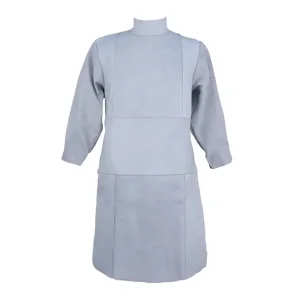
A welding garment's thermal integrity is defined by its weakest seam. Every Ming Shun jacket, bib apron, and welding glove is sewn using 3-ply or 4-ply 100% DuPont™ Kevlar® or high-grade meta-aramid threads. Welted seams protect stitch lines from molten metal bead cutting and direct flame ignition.
Looking toward Industry 4.0 job-site safety ecosystems, our R&D team is developing prototype garment integration channels for thermal stress tracking sensors and low-profile telemetry clips. These permit predictive core temperature alerts in heavy confined welding tasks without violating electrical non-conductivity standards.
Harmonizing international manufacturing precision with localized regulatory enforcement across North America, Europe, the Middle East, and Asia-Pacific.
Compliance across the US and Canada revolves around OSHA Title 29 CFR 1910.138, ANSI/ISEA 105 for cut and heat ratings, and ASTM F1506 for arc flash risk. We provide commercial buyers with fully documented cut-level documentation, flame burn distance ratings, and certified lot numbers for federal safety audits.
Under Category II and Category III PPE classifications, EU importers face stringent border customs and notified body audits. Ming Shun's welding apparel is tested by premier third-party accredited laboratories for EN ISO 11611 (protective clothing for welding), EN 12477 (protective gloves for welders), and EN 388 (mechanical risks).
Heavy energy capital expenditures in Saudi Arabia, UAE, Brazil, and Southeast Asia have elevated demand for dual-protection workwear capable of withstanding extreme ambient heat and abrasive offshore winds. We deliver customized tropicalized linings that prevent heat exhaustion while maintaining 100% spark resistance.
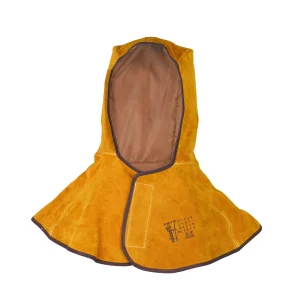
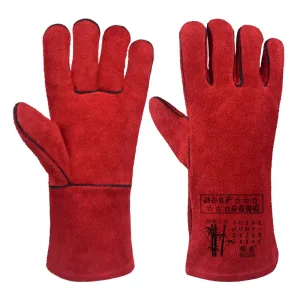
Comprehensive thermal protection systems: custom hybrid coats, fire-retardant hoods, slag blankets, and heavy-duty MIG gloves.
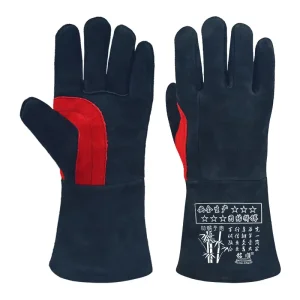
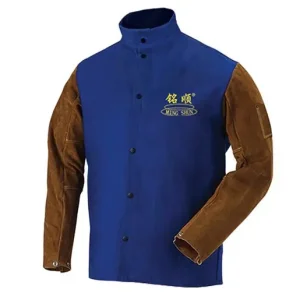
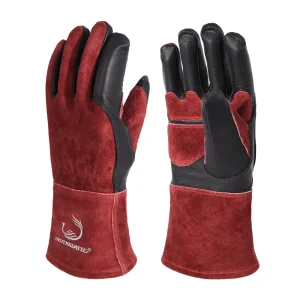
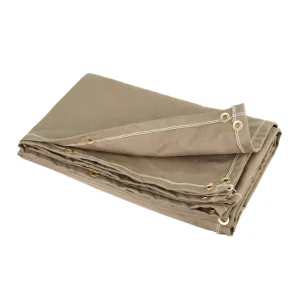
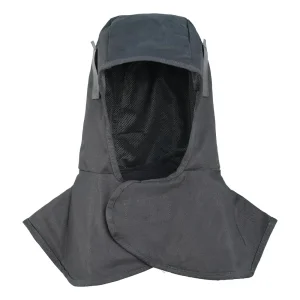
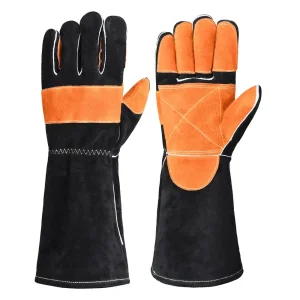
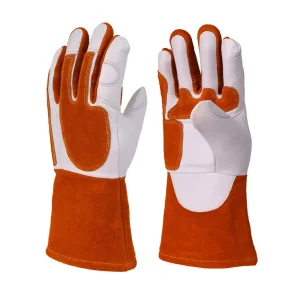
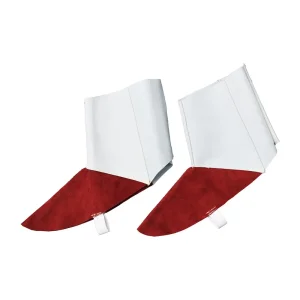
Eliminating defect propagation through a five-stage in-line validation framework across cutting, stitching, and finishing lines.
Upon hide arrival, our leather specialists inspect tensile elasticity, thickness calibrator tolerances (maintaining 1.2mm – 1.4mm standard for heavy split cowhide), and grease content. Textile rolls undergo random burn chamber tests to verify that FR flame-spread index complies with ASTM D6413 before laser pattern layout.
Garment ergonomics depend entirely on panel grain orientation. Computerized cutting beds ensure symmetry across front chest plackets and sleeves. Panels are matched for weight and softness so that finished jackets and aprons offer identical flexibility across both left and right articulated joints.
During sewing on dedicated production lines, every thumb crotch, underarm gusset, and placket intersection receives interior cowhide welting. Welts shield sewing threads from sparks and abrasion. A strict 7–8 stitches-per-inch density threshold is enforced to prevent thread pull-out under heavy mechanical loads.
All snap buttons, non-conductive heavy-duty zippers, and quick-release buckles undergo pull-force tension testing. Snaps must endure repeated high-cycle operations without detaching from leather substrates, preventing hazardous sudden openings during overhead flux-core arc welding.
Prior to polybag packing and sea-freight carton stacking, garments are measured against signed technical packs (AQL 1.5/2.5 standards). Carton sealing includes desiccant packs, anti-humidity liners, and barcoded traceability stickers configured for the importer’s automated distribution hub.
Comprehensive technical answers compiled by our chief materials engineers and international commercial export team.
EN ISO 11611 classifies welding apparel based on spark resistance and radiant heat insulation. Class 1 covers lower-risk manual techniques (such as TIG, micro-plasma, and light spot welding) that generate minimal spatter; garments must withstand at least 15 drops of molten metal and exhibit a Radiant Heat Transmission Index (RHTI 24) of at least 7 seconds. Class 2 covers heavy-spatter operations (MIG/MAG, flux-cored, overhead arc cutting); garments must withstand at least 25 drops of molten metal and deliver an RHTI 24 of at least 16 seconds. Ming Shun's heavy split cowhide jackets and reinforced hybrid aprons comfortably exceed Class 2 requirements (frequently resisting 40+ drops).
Split cowhide offers exceptional thickness-to-weight density (typically 1.2mm to 1.4mm) with an interlocking corium fiber structure. When slag or molten droplets strike split leather, the suede-like fibrous exterior disperses and cools the droplet before it can burn through. Full-grain leather, while durable, possesses a smooth grain that can scorch and harden more quickly when exposed to sustained spatter. Synthetic FR fabrics, although lighter and more breathable, can degrade under continuous, heavy molten slag contact. Split cowhide remains the undisputed industry standard for SMAW, GMAW, and heavy arc gouging.
Chrome tanning is critical for heat stabilization, but uncontrolled post-tanning pH conditions can cause residual trivalent chromium to oxidize into restricted Hexavalent Chromium (Cr VI). Ming Shun employs strictly calibrated antioxidant tanning agents, mild neutralizing baths, and chromium-free tanning protocols when specified. Every batch supplied to European buyers complies with REACH Annex XVII regulations, guaranteeing Chromium VI content below 3 mg/kg and zero detectable banned azo colorants.
For custom private-label projects (including bespoke sizing, hybrid material combinations, custom color dyes, embroidered branding, and embossed logos), initial counter-samples are typically produced within 7 to 10 working days from tech pack confirmation. Bulk container orders (20ft or 40ft HQ) for welding gloves maintain a reliable lead time of approximately 40 to 45 days. Production schedules for custom protective apparel collections are confirmed per style and total cut complexity.
Yes. Hybrid construction represents our fastest-growing export category. Models like the MS-287 and MS-1260 pair a breathable 9 oz or 11 oz Proban/Pyrovatex-treated flame-resistant cotton torso with heavy split cowhide sleeves and shoulder yokes. This hybrid configuration keeps welders cool during prolonged factory shifts while positioning heavy leather barriers exactly where slag rolls down the forearms and chest.
Split cowhide garments should never undergo conventional wet chemical laundering, which strips essential oils and causes leather to shrink or harden. Leather should be cleaned using soft bristle brushing and specialized conditioning oils. Conversely, treated FR cotton coveralls and hybrid cotton torsos should be washed at temperatures below 60°C using neutral non-ionic detergents. Chlorine bleaches and hydrogen peroxide must be avoided, as oxidizers degrade the chemical phosphorus flame-retardant bonds bonded within the cotton cellulose matrix.
Eliminate import broker markups, safeguard worker safety with fully audited compliance reports, and scale your brand with custom patterns, private labels, and guaranteed manufacturing output.