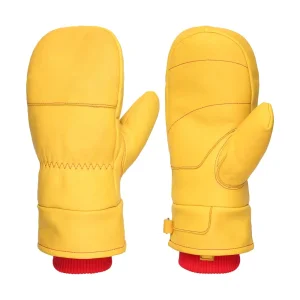
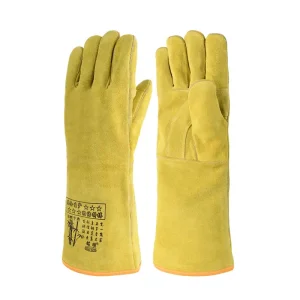
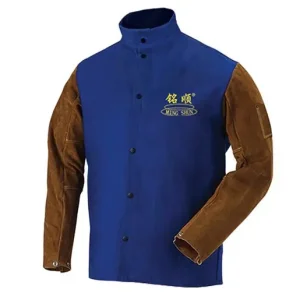
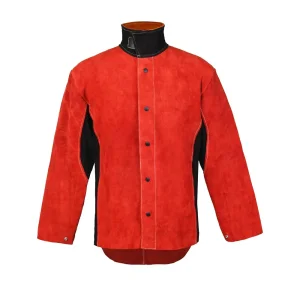
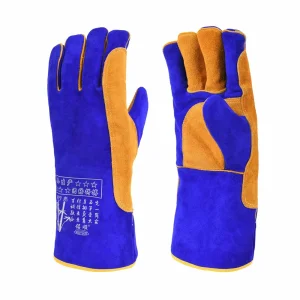
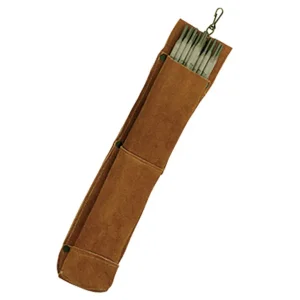
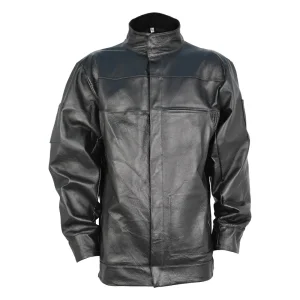
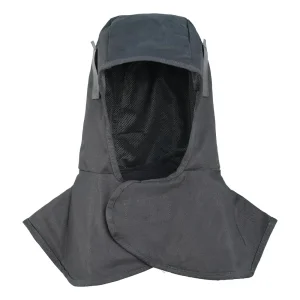
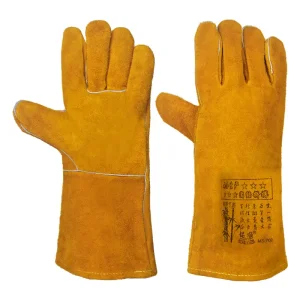
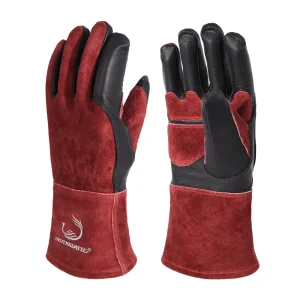
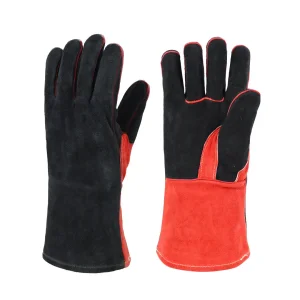
Precision-stitched with heat-resistant Kevlar® threading and selected grade-A cowhide and grain leather, these core protective items meet EN 12477 Type A/B and ANSI/ISEA standards for demanding fabrication.
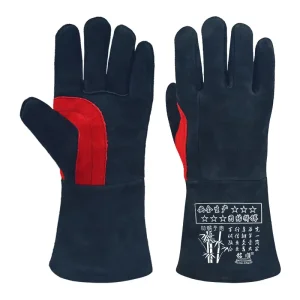
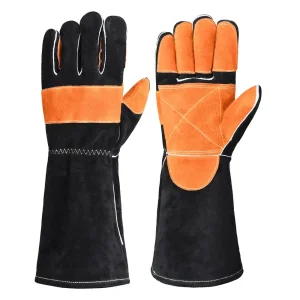
Thermal protection in industrial fabrication has evolved from an ad-hoc consumable purchase into a rigorously audited risk-mitigation discipline governed by international statutory frameworks.
Industrial bodies across the EU (EN ISO 11611:2015, EN 12477:2001/A1:2005) and North America (ANSI/ISEA 105, OSHA 29 CFR 1910.252) demand higher radiant heat reflectance and strict convective heat resistance limits. Secondary sub-standard PPE is increasingly exposed to insurance claim rejections and statutory liabilities.
Modern metalworking blends high-amperage Submerged Arc Welding (SAW), Shielded Metal Arc Welding (SMAW), gas-shielded Flux-Cored Arc Welding (FCAW), and automated robotic cell tending. Each process presents discrete thermal profiles ranging from high-velocity spatter droplets (>1,400°C) to sustained ultraviolet (UV) degradation.
With certified journeyman welders in structural steel, aerospace, and energy sectors facing structural labor shortages worldwide, operational facilities prioritize premium ergonomic PPE. Eliminating wrist fatigue, contact-burn downtime, and heat stress directly correlates with operational productivity and welder retention.
Historically, the procurement of protective apparel in heavy fabrication was treated as an elastic operating expense, characterized by fragmented sourcing of unbranded split-leather coats and bulky utility gloves. Today, enterprise procurement demands unified certifications where apparel, hand protection, and protective spats act as an interconnected barrier. Ming Shun operates at the nexus of these compliance realities, transforming raw metallurgical safety requirements into certified, repeatable industrial clothing.
How localized supply-chain density, in-house tannery chemistry, and automated cutting technologies drive significant cost and quality efficiencies for enterprise importers.
Guangdong Ming Shun Labour Protective Products Co., Ltd. is positioned in Gaozhou, Guangdong Province—the world's premier cluster for specialized industrial leather processing. This geographical ecosystem grants raw sourcing efficiencies unavailable to distributed international manufacturers. Unlike assemblers who purchase split leather on volatile spot markets, our 25-year operational footprint integrates direct hide grading, custom chromium and vegetable tanning solutions, and localized dye-house controls.
By managing the entire value stream from raw hide conditioning to final automated CAD nesting, Ming Shun dampens global leather market volatility for contract partners. High-yield precision die-cutting eliminates wasted margins, while our in-house test benches confirm pH balance (3.5 to 9.0 range), tear resistance (>25N), and chromium-VI absence before sewing lines ever receive panels.
| Operational Metric | Traditional Sourcing / Intermediary | Ming Shun Integrated Factory |
|---|---|---|
| Leather Tanning Source | Outsourced secondary wet-blue spot purchase | In-house controlled hide grading & tanning |
| Glove Production Capacity | 50,000 – 100,000 pairs / month | 500,000+ pairs / month stable capacity |
| Batch Color & Texture Variance | High variance (ΔE > 3.0 between batches) | Colorimetric control (ΔE < 1.0 repeatable) |
| Standard Mass Lead Time | 75 – 90 days with customs transit | ~45 days repeatable dispatch window |
| Seam Construction | Standard spun polyester or low-grade blend | 100% genuine Kevlar® / Nomex® FR thread |
Mapping specific PPE fiber compositions, leather tanning profiles, and closure reinforcements to target harsh industrial environments.
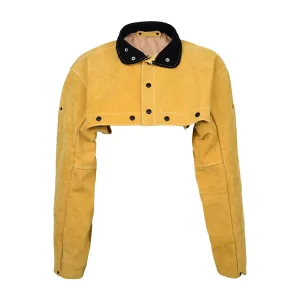
Field stick welding (SMAW) under variable atmospheric conditions demands Class 2 split cowhide coats (e.g., MS-393, MS-281) paired with Kevlar®-welted gloves to deflect heavy molten metal runoff while working on wind-exposed structural girders.
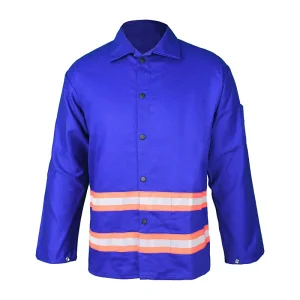
Confined hull spaces and continuous high-deposition flux-core operations generate dense heat buildup. Welders rely on hybrid garment systems (e.g., MS-287, MS-1260) featuring 9 oz FR breathable cotton torsos backed by rugged split-leather sleeves.
High-speed production cells involve repetitive MIG seam joining and laser-brazing spot monitoring. Dexterous goatskin gloves (e.g., MS-832, MS-829) with keystone thumbs provide tactile feedback for micro-wire feeding without skin blistering.
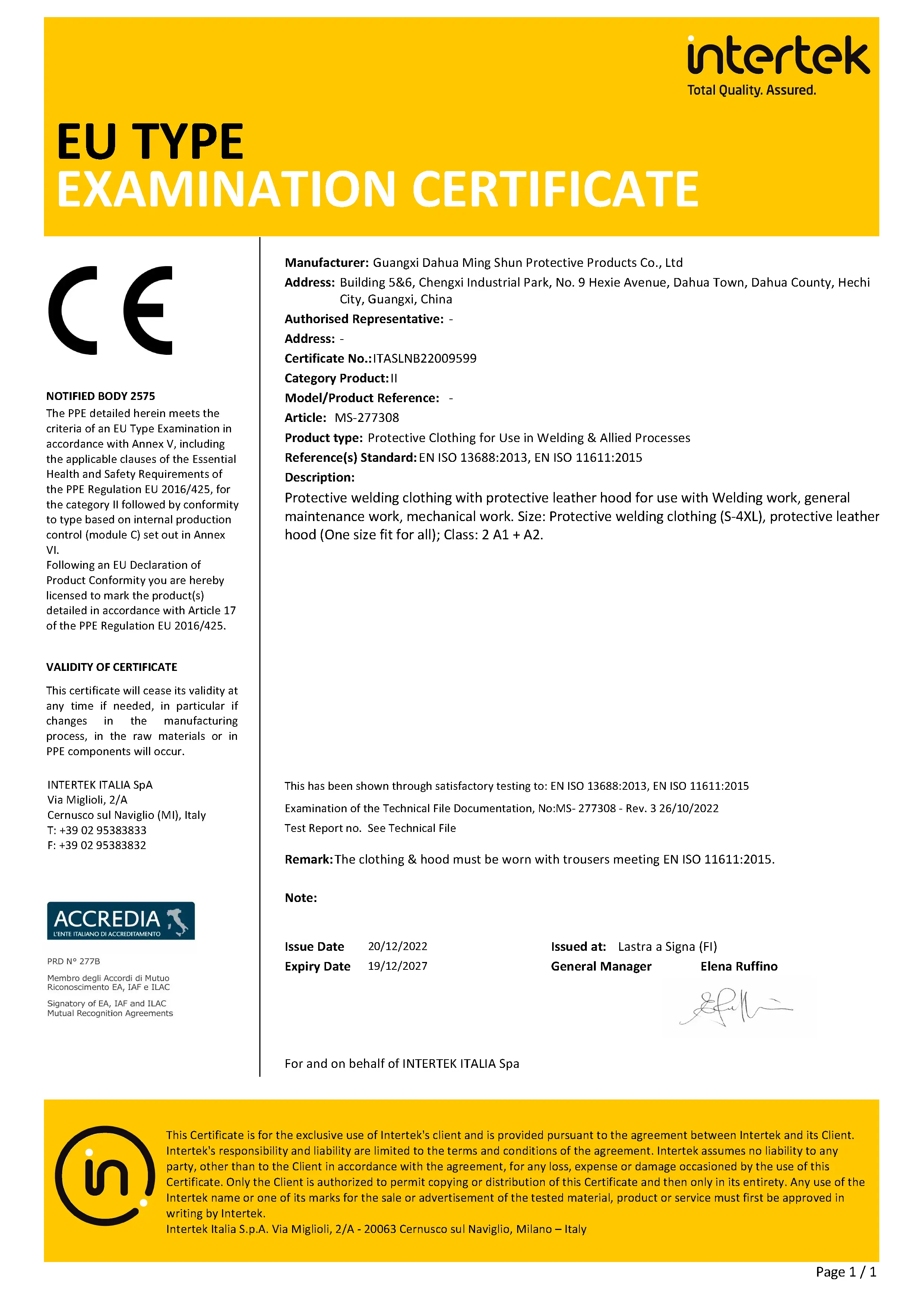
Overhead pipe welding in refineries exposes neck, boots, and forearms to vertical slag drainage. Specialized split cowhide spats (MS-113), leather hoods (MS-308N), and swivel-clip rod holders (MS-202) safeguard non-standard posture areas.
The future of welding safety PPE lies at the intersection of modified polymeric fire-retardant textiles, zero-waste laser cutting, and circular supply chains.
Global environmental guidelines are accelerating the transition away from heavy metal-concentrated effluent. Ming Shun's research focuses on water-recycling closed-loop tannery operations, organic vegetable-assisted retanning agents, and certified REACH-compliant dyes that lower total chemical oxygen demand (COD) by 35%.
Heavy 1.3mm leather is irreplaceable in zones receiving direct slag bombardment, but full-body leather induces thermal fatigue in tropical plants. The modern paradigm leverages anatomical zoning: integrating 305g/m² flame-retardant ripstop sateen cotton with cowhide chest and arm shields, delivering 40% total garment weight reduction.
The next generation of protective workwear accommodates integration with personal air-purifying respirators (PAPR) and auto-darkening helmet drapes (MS-303BL, MS-308N). Modular bib attachments, anti-glare leather matte finishes, and RF-welded FR pockets for digital inspection tools represent the emerging standard for smart industrial yards.
Balancing Total Cost of Ownership (TCO), multi-tier auditability, private-label branding, and customs compliance across North American and European ports of entry.
Ensures stable, high-capacity throughput across concurrent custom enterprise purchase orders.
Scalable volume buffering against seasonal supply crunches and sudden raw-material surges.
Continuous operational tenure refining pattern blocks, seam geometry, and thermal performance.
Corporate procurement teams evaluating offshore safety PPE suppliers face operational hazards that extend far beyond initial FOB piece rates. The true financial liability lies in batch-to-batch seam failures, improper sizing graduation that creates surplus stock of unwearable sizes, and sudden customs rejections caused by deficient CE Type Examination or lack of traceable laboratory documentation.
Ming Shun's OEM/ODM Industrial Program neutralizes these sourcing liabilities. Every production run is mapped to a frozen technical pack (Tech Pack) including exact seam welt thicknesses, reinforced thumb strap positioning, metal snap torque tolerances, and specified stitch counts (typically 8–10 stitches per inch using high-tensile 3-ply Kevlar® thread). Importers receive full factory-direct batch traceability from raw pelt lot numbers to export container seals.
Direct engineering and commercial answers to frequent compliance, design, and logistics questions submitted by industrial safety buyers.
EN ISO 11611 Class 1 protects against lower-risk welding techniques (TIG, micro-plasma, spot welding) causing lower spatter and radiant heat (at least 15 drops of molten metal, radiant heat transfer index RHTI 24 ≥ 7s). Class 2 applies to hazardous high-spatter techniques (MIG with heavy CO2 mix, SMAW, FCAW, gouging) requiring resistance to at least 25 drops of molten metal and RHTI 24 ≥ 16s. Ming Shun's all-leather models (e.g., MS-393, MS-281) meet Class 2 requirements, while our hybrid FR cotton jackets (e.g., MS-1200FR) address Class 1 ergonomic comfort.
Standard cotton or nylon sewing threads melt or carbonize at temperatures between 180°C and 250°C, causing sudden structural seam opening when struck by sparks, even if the surrounding leather remains intact. Genuine para-aramid DuPont™ Kevlar® thread decomposes only above 425°C (800°F), exhibits exceptional tensile modulus, and resists mechanical abrasion from sharp metal edges, ensuring the glove or jacket holds its structural envelope throughout its duty life.
Goatskin possesses high natural lanolin content and a tight, dense grain structure, conferring superior tensile strength at low material thicknesses (0.8mm–1.0mm). This makes it ideal for TIG welding gloves where sensitive wire feeding and finger dexterity are paramount. Split cowhide, derived from the fibrous lower corium layer of cattle hide (1.1mm–1.4mm), provides a rougher fibrous surface that excels at radiant heat absorption, mechanical puncture resistance, and heavy molten drop deflection in MIG and Stick operations.
We provide full-scope OEM private-label integration. This encompasses custom heat-embossed logos on gauntlets, woven satin or high-density damask collar labels, custom-dyed leather matching corporate pantones, barcoded retail hangtags, polybag graphic printing, and master carton customization with multilingual regulatory pictograms conforming precisely to your destination customs rules.
Standard glove production MOQs start at 1,200 to 2,400 pairs per style/size breakdown, while protective garments (leather jackets, FR coveralls) typically require 300 to 500 units per style to optimize hide cutting yields. Bulk container orders carry a stable ~45-day production cycle post-sample approval, backed by buffer material stocks at our Gaozhou facility.
Ocean transit through tropical sea routes presents mold risks for biological leather. Ming Shun uses controlled conditioning chambers before packing to ensure moisture content remains within a safe 12%–14% threshold. Garments and gloves are packed in perforated inner bags containing high-absorption clay desiccant sachets, sealed with heavy-duty outer carton liners, and container doors are fitted with industrial moisture-trap poles.
Expanded personal protective equipment including fleece-lined cold climate solutions, heavy gauntlets, split leather rod carriers, and specialized welder headgear coverage.