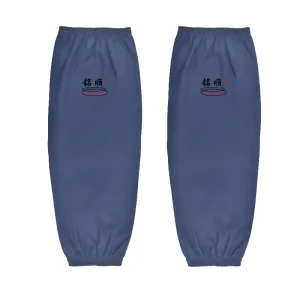
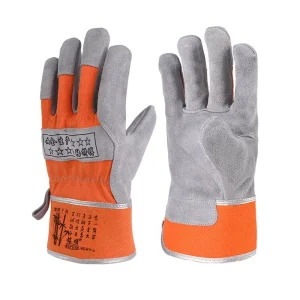
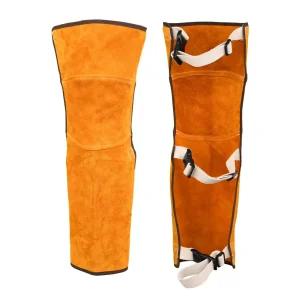
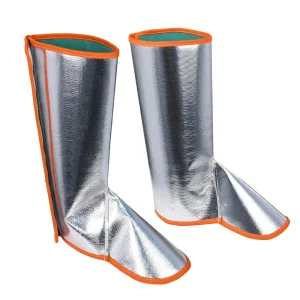
Heavy-duty leather wear gear, ergonomic TIG/MIG gloves, and heat-reflective spats developed for continuous extreme thermal cycles and rigorous shop conditions.
A rigorous examination of supply line migrations, technical barrier shifts, and workplace safety compliance mandates governing commercial protective equipment markets across continents.
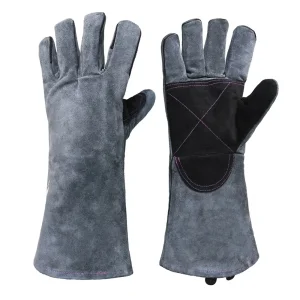
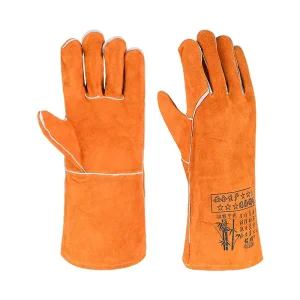
Industrial procurement in the United States and Canada is shaped by uncompromising OSHA enforcement and ANSI/ISEA 105 cut/puncture requirements. Buyers require heavy-duty split cowhide reinforced with aramid threading (Kevlar) capable of withstanding high-amperage stick and flux-cored operations without seam burn-through.
European Union directives place the onus of compliance squarely on distributors. Every welding jacket, hood, and pair of spats must hold verifiable CE Category II or Category III documentation. In-house chromium VI monitoring and eco-responsible leather processing are mandatory checkpoints for market clearance.
Massive civil infrastructure and shipyard investments in Southeast Asia, the Middle East, and Latin America are replacing lightweight personal gear with certified dual-layer hybrid safety solutions that protect operators while sustaining ergonomic breathability in tropical and high-humidity environments.
No two work zones present identical thermal or abrasive stress profiles. Review how Ming Shun engineered apparel operates across demanding industrial applications.
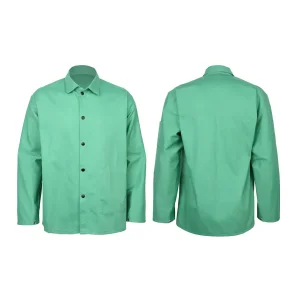
Shipyard welding exposes welders to vertical overhead spatter, corrosive salt-laden air, and confined hull chambers. We deploy 1.2–1.4mm chrome-free split cowhide jackets paired with flame-resistant (FR) cotton hybrid backing to maintain ventilation while defending against molten drop-through.
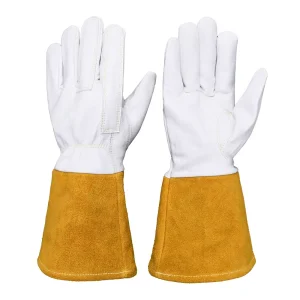
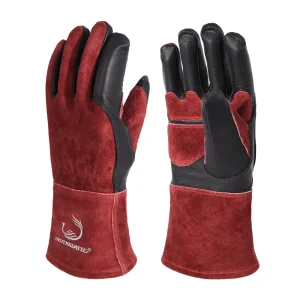
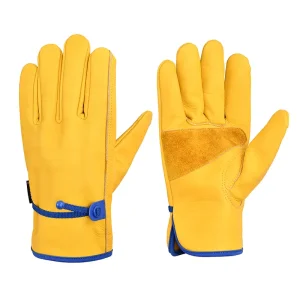
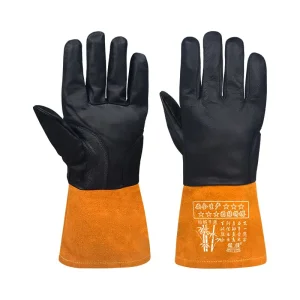
Cross-country oil, gas, and power infrastructure tasks require multi-position stick and TIG welding. Welders require buttery soft grain goatskin palms for rod manipulation, backed by high-durability cowhide cuffs and aluminized heat shields that repel massive radiant heat up to 1000°F.
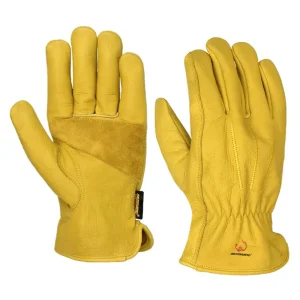
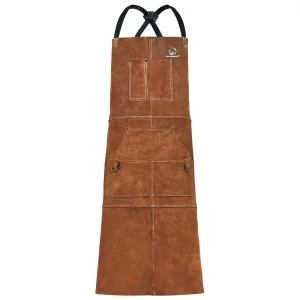
Fast-cycle robotic cells demand human operators to intervene in hot spot-welding inspection and heavy sheet metal stamping. Our engineered leather work gloves and split leather aprons safeguard operators against razor-sharp metal stamp burrs and localized arc flashes.
From chemical tanning to automated cut panels and finished container stuffing: how Ming Shun mitigates global procurement volatility through unified raw material ownership.
Most commercial PPE assembleurs buy third-party hides with fluctuating thickness, chemical odor, and unstable tensile values. Ming Shun controls hide sorting, splitting, tanning, and environmental dyeing in Gaozhou, Guangdong. This upstream integration eliminates hide intermediaries, cuts lead time by 18 days, and guarantees uniform hide density across 50,000-unit production runs.
Scalable production requires precision cutting tables and reinforced stitching lines. We utilize computerized hydraulic die punches and optical laser profiling to eliminate fraying, preserve pattern fidelity, and ensure that every left-hand and right-hand glove pattern mirrors perfectly.
Advancements in metallurgy, lightweight hybrid textiles, and ergonomic biometric monitoring are reshaping the next decade of personal protective equipment manufacturing.
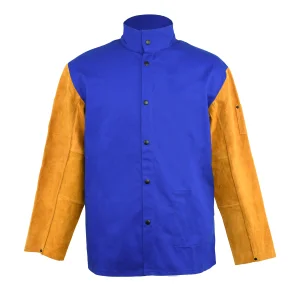
Blending high-tenacity 9 oz treated FR cotton body assemblies with top-grain pigskin or split cowhide arms. This architecture cuts total garment weight by 38% compared to traditional 100% cowhide jackets, lowering operator heat exhaustion without sacrificing spatter protection.
Treating raw hides during the retanning process with fluorocarbon-free hydrophobic polymers. The finished gloves and aprons repel hot industrial oils, hydraulic fluids, and slurry splashes while retaining complete flexibility and tensile breathability.
Prototypes integrating passive RFID tags and heat-reactive chromatic microfibers into gauntlet wristbands. These indicators shift color when ambient temperatures exceed safe thresholds, alerting safety personnel before skin burns occur.
Every commercial bulk container from Ming Shun carries verified quality assurance data designed to withstand customs inspections and strict audit boards.
Verified Class 1 and Class 2 flame spread resistance, radiant heat transfer, and small molten splash behavior for all protective garments.
Comprehensive Type A (high heat & heavy MIG/Stick) and Type B (high dexterity TIG) certifiable welding glove benchmarks.
Certified testing confirming low Chromium VI levels, zero azo dyes, and controlled leather acidity compliant with REACH protocols.
Independent AQL 2.5 / 4.0 inspection prior to container loading, paired with multi-layer waterproof master cartons and palletization.
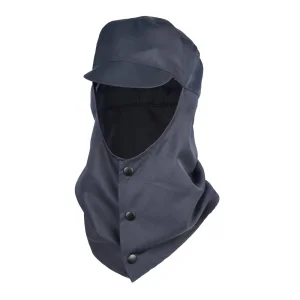
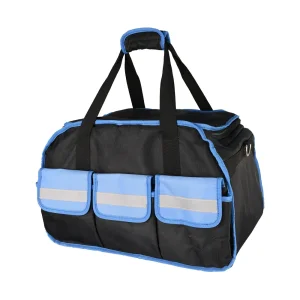
Premium aprons, reinforced heavy-duty MIG gloves, hybrid jackets, protective hoods, and tactical equipment transport systems for global contract supply.
Direct answers for purchasing heads, OEM product directors, and contract safety brand managers.
Unlike trading assemblers who purchase finished split crusts on open spot markets, Ming Shun operates in-house raw hide sorting, splitting, tanning, and dyeing at our Gaozhou facility. We calibrate hide thickness with computerized dial micrometers to a 1.2mm–1.4mm standard for heavy jackets and 0.8mm–1.0mm for high-dexterity gloves. This vertical control ensures identical weight, color fastness, and grain flexibility across 12-month supply contracts.
We provide comprehensive OEM and ODM support for industrial brands. Customization includes laser engraving, thermal debossing, woven brand labels, high-density silk screening, and multi-color heat transfers. For retail distributors, we supply barcoded hangtags, branded polybags, color-box packaging, and custom-stamped master export cartons ready for immediate palletized distribution.
Our protective equipment lines are engineered to meet global compliance benchmarks including CE Category II / Category III, EN ISO 11611 (protective clothing for welding), EN 12477 (welding hand protection), EN 388 (mechanical hazards), and ANSI/ISEA 105. Batch-specific test reports from notified third-party bodies (such as CTC, SGS, or Intertek) are provided prior to export dispatch.
With more than 1,000 skilled personnel and dedicated production lines, our manufacturing campus produces over 500,000 pairs of industrial gloves and over 80,000 protective garments each month. Standard turnaround for customized container-load (FCL) orders is approximately 40 to 45 days following formal sample sign-off.
Hybrid welding jackets (such as model MS-1260) utilize 9 oz flame-resistant cotton across the chest and back panel with split cowhide on the sleeves and shoulder yoke. This construction delivers critical thermal and spatter defense in high-exposure zones while dramatically improving air circulation and lowering garment weight, significantly reducing operator fatigue in warm manufacturing plants.