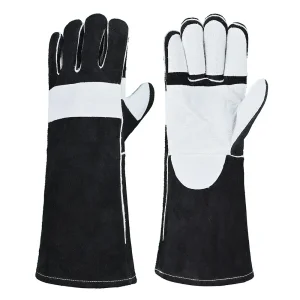
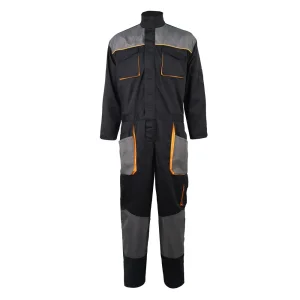
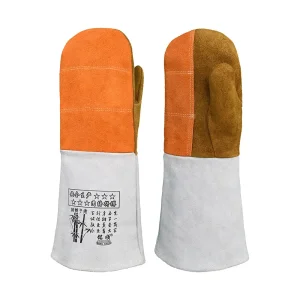
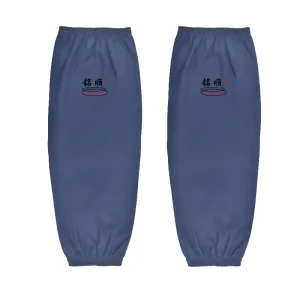
Engineered for high-amperage environments, foundry slag repulsion, and structural fabrications conforming to EN ISO 11611 and ANSI/ISEA standards.
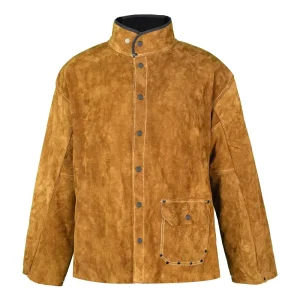
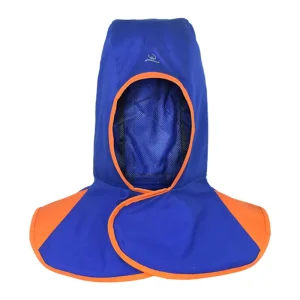
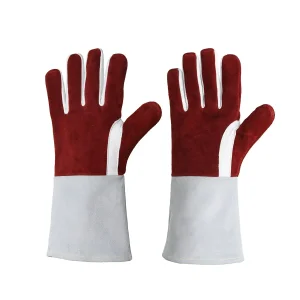
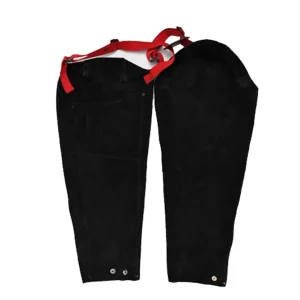
The convergence of tightened safety legislation, ergonomics, and advanced hybrid materials is redefining procurement criteria for tier-1 distributors.
Global regulatory bodies no longer accept single-risk PPE. High-performance welding clothing must simultaneously achieve EN ISO 11611 (Class 1 & 2), ASTM F1506 arc rating, and electrostatic dissipation (EN 1149-5). Ming Shun formulates treated cottons and composite hides that ensure multi-threat resilience on structural engineering and heavy industrial sites.
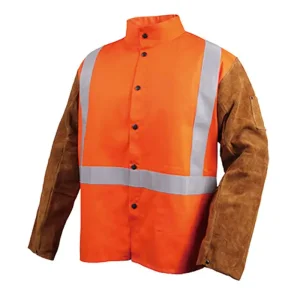
Traditional rigid all-leather weld coats lead to user fatigue and non-compliance during warm ambient operations. Current trends demand intelligent hybrid zones: 9 oz breathable treated FR cotton for torsos matched with high-grade split cowhide along sleeves, forearms, and shoulders, mitigating heat stress while maintaining Class 2 spark deflection.
Corporate procurement demands comprehensive chain-of-custody verification. Raw hide provenance, chrome-tanning effluent treatment, and zero-AZO dyeing standards are closely examined. Factories lacking vertical integration face severe compliance bottlenecks, whereas vertically integrated plants ensure seamless traceability from hide to box.
Operating inside Guangdong's specialized safety manufacturing hub, Ming Shun delivers uninterrupted capacity, raw material autonomy, and strict QA protocols.
Unlike assembly shops buying open-market scrap, we manage raw hide sorting, de-hairing, chroming, and split grading internally. This eliminates uneven thickness and prevents inconsistent tensile failure under extreme thermal exposures.
High-precision laser and hydraulic CNC die cutting optimize hide surface utilization by 18%, keeping pricing competitive while ensuring exact symmetry and seam alignment across large custom bulk production runs.
All load-bearing and spatter-contact junctions are double-stitched with 3-ply or 4-ply aramid threading. Stress points, snaps, and riveted pockets receive reinforcement welts to eliminate premature blowouts in field use.
With monthly outputs exceeding 500,000 pairs of gloves and hundreds of thousands of specialized garments, our lean production schedules maintain an average 45-day cycle time for standard repeat container dispatches.
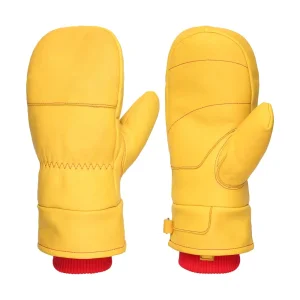
Calibrated gear profiles engineered specifically to counter distinct thermal, kinetic, and abrasion vectors across global industrial sectors.
Strategic purchasing managers evaluate safety gear not merely by piece price, but through cycle life, field compliance, and brand equity protection.
Low-grade split leather jackets often suffer from brittle splits and polyester thread degradation under sustained UV and spatter exposure, failing within 2–3 weeks. Ming Shun’s Kevlar-sewn, graded split jackets frequently exceed 3 to 4 months of heavy fabrication usage, reducing annualized replacement spend by up to 34%.
For industrial distributors, private-label branding builds long-term customer equity. We offer unified OEM programs encompassing debossed logos, custom color-matched leather piping, high-tenacity branded woven badges, and barcode-ready retail cartons that present a unified brand image across your entire catalog.
Managing global supply chains requires reliable lead time adherence. Our production model uses rolling safety reserves for standardized leathers and 9 oz FR treated twills, allowing recurring FCL/LCL orders to ship on schedule, preventing costly stockouts in regional distribution centers.
Detailed technical specifications, production capacities, and compliance verification for volume procurement professionals.
Ming Shun operates a 25+ year specialized facility in Pukang Industrial Park, Gaozhou City, Guangdong, employing over 1,000 workers. We oversee raw hide tanning, grading, precision die cutting, and final stitching under a unified ISO 9001 certified roof. Buyers negotiate directly with technical factory representatives, avoiding middleman markups, inconsistent leather sourcing, and communication delays.
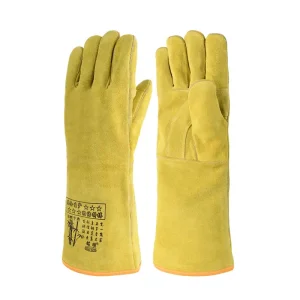
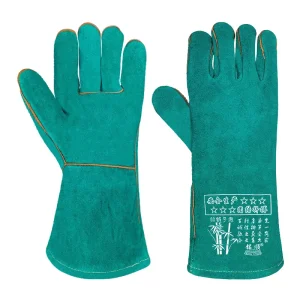
Our protective workwear lines are engineered to meet CE, EN ISO 11611 (Class 1 and Class 2 protective clothing for welding and allied processes), EN 12477 (Type A & B welders' gloves), EN 388 (mechanical risk resistance), and ANSI/ISEA 105. Test reports from accredited third-party laboratories are provided during technical reviews before bulk contract signing.
Color variation and thickness discrepancies are prevented by maintaining our own in-house tanning and dyeing operations. We sort hides into strict weight classes (1.1mm - 1.4mm for premium jackets and 1.0mm - 1.2mm for flexible gloves). Chemical formulations and dye baths follow precise digital recipes, ensuring that batch 20 matches batch 1 in flexibility, color shade, and flame retardancy.
Custom pattern prototypes and counter-samples developed from customer tech packs or sample jackets are typically completed within 7 to 10 working days. Commercial production MOQs are generally 500–1,000 units per garment style or 1,200–2,400 pairs for specialized gloves. Lead times for full 20ft/40ft containers typically average 45 calendar days following pre-production sample sign-off.
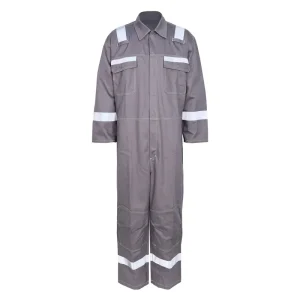
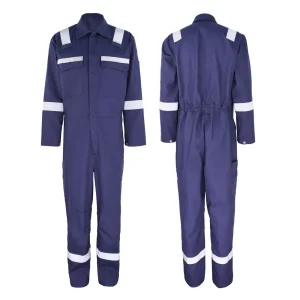
Yes. Our garment engineering lines combine split cowhide panels with 7 oz, 9 oz, or 12 oz flame-resistant cotton, incorporating conductive carbon grids for anti-static requirements (EN 1149). We integrate heat-resistant, high-visibility reflective bands that maintain chromaticity and retroreflection through industrial wash cycles.
Complete head-to-toe hot work personal protective gear built to handle high-amperage welding, torch cutting, and industrial maintenance.