Direct manufacturer supply featuring high-dexterity hide formulations, localized reinforcements, and flame-retardant thermal compositions.
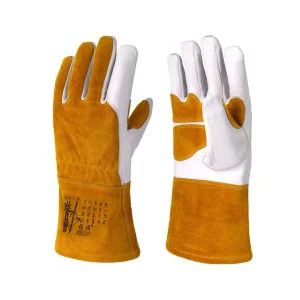
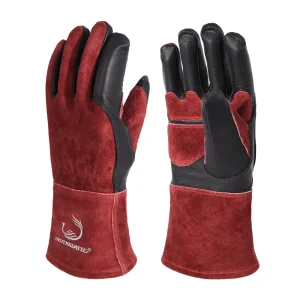
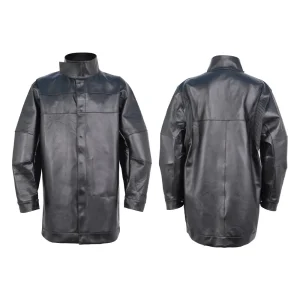
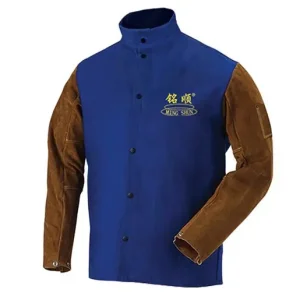
In-depth technical analysis for global safety directors, OEM brand buyers, and enterprise distributors addressing thermal and mechanical risks.
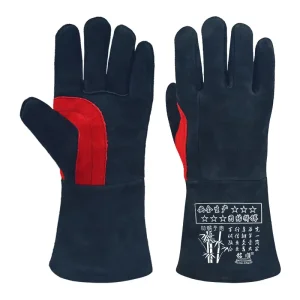
Modern industrial requirements have migrated beyond basic fleece linings. High-throughput operations require multi-tiered insulation systems integrating 3M Thinsulate, aerogel-infused batting, and non-woven aramid matrices. This allows insulated leather work gloves to sustain handling temperatures from -40°C in cryogenic cold chains up to 350°C in continuous foundry tapping without sacrificing finger dexterity.
Global procurement teams are shifting evaluations from upfront cost per pair to Lifecycle Unit Cost (LUC). Insulated leather gloves utilizing Grade-A grain cowhide and goatskin treated with fluorochemical barriers resist hydrocarbon saturation 3.8x longer than untreated variants. This reduces total annual inventory depletion rates across large fabrication yards by up to 28%.
Cross-border supply chains require absolute compliance alignment between North American (ANSI/ISEA 105) and European (EN 388 / EN 511 / EN 407) testing regimes. Insulated configurations must certify convective and contact cold ratings (EN 511 levels 1 through 4) while maintaining puncture level 3 or higher to prevent thermal-insulation breach from sharp metal debris.
Overcoming supply chain volatility through fully integrated raw hide procurement, chemical formulation, and precision cut-and-sew engineering.
Unlike assembly-only contractors, Ming Shun controls the entire chemical and physical tanning process in Gaozhou. This verticality guarantees precise chromium content regulation, pH balancing (neutral 3.5-4.5 to prevent contact dermatitis), and pre-shrunk fat-liquor infusions that keep insulated work gloves soft, pliable, and moisture-resistant after repeated thermal cycling.
We convert engineering schematics into volume manufacturing programs. From custom-engineered Gunn cut patterns with keystone thumbs to double-layer palm reinforcements stitched with Kevlar® thread, every seam tolerance is held within ±1.0 mm to prevent cold air bridging and maximize tensile mechanical durability under extreme torque loads.
By keeping raw hides and semi-processed wet-blue stock in our Gaozhou industrial facilities, we insulate overseas brand partners from global hide price fluctuations. Standardized bulk lead times remain strictly maintained around 45 days, supported by complete customs documentation, factory-direct consolidation, and private-label packaging configurations.
Bridging Chinese manufacturing scale with target-market regulatory frameworks and next-generation smart PPE technologies.
All insulated work glove lines are backed by third-party notified body certifications (including SATRA and CTC testing). We provide verified REACH chemical compliance, zero-azo dye certification, and chromium VI below detectable limits (<3 ppm), ensuring smooth customs clearance and strict compliance with North American and European industrial workplace mandates.
Our ongoing technical roadmap incorporates breathable, microporous hydrophobic membranes laminated between inner insulation cores and external leather outer shells. This composite prevents external moisture and chemical migration while enabling rapid vapor transmission (sweat evaporation), eliminating the chill effect experienced by outdoor technicians working in extreme environments.
Ming Shun's ongoing commitment aligns with closed-loop water treatment and eco-certified chromium recycling initiatives across our tannery divisions. We empower enterprise clients to hit scope 3 ESG sustainability targets through ethically audited raw material supply chains, vegetable-retanned grain options, and bio-degradable insulated thermal liners.
Comprehensive OEM/ODM bulk protective solutions including hybrid FR workwear, insulated heavy-duty cowhide gloves, and utility equipment.
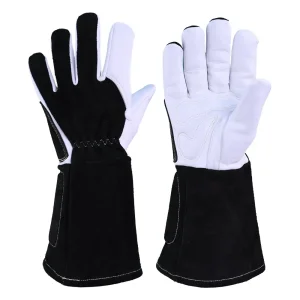
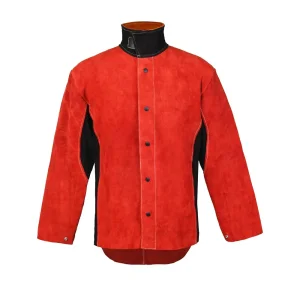
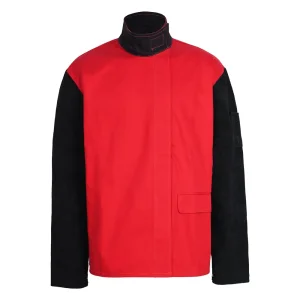
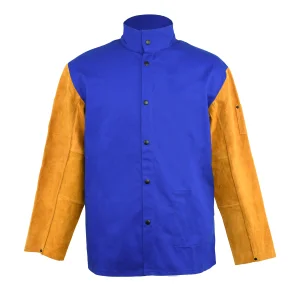
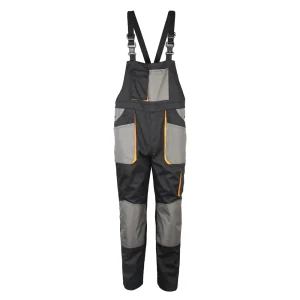
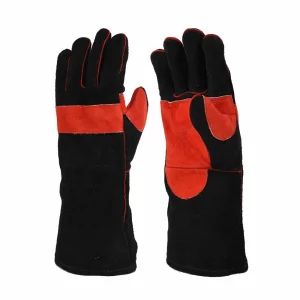
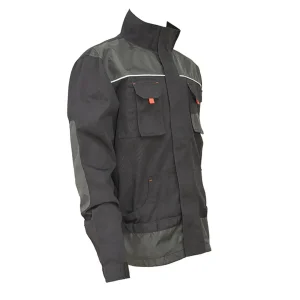
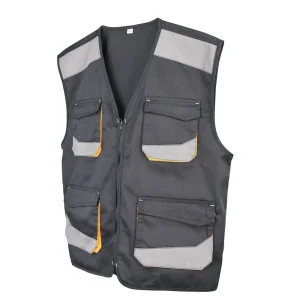
Verified technical clarifications covering leather selection, thermal liners, testing standards, and bulk OEM capabilities.
We deploy graded insulation architectures. For heavy cold or extreme radiant exposure, we utilize 100g to 150g micro-denier fleece or Thinsulate™ across the back of the hand where heat transfer and cold air penetration are greatest, while stepping down to an 80g or custom tricot/aramid composite across the palm and fingers. This zonal density profiling ensures total compliance with EN 511 cold ratings while retaining grip precision and trigger finger maneuverability on machinery and tools.
Grain cowhide utilizes the intact epidermis, preserving tight fiber density that resists moisture penetration, abrasion, and punctures. It is ideal for drivers, utilities, and exterior mechanical operators exposed to mixed wet-cold conditions. Split cowhide uses the fibrous corium layer, providing higher thermal resistance and friction tolerance against coarse structural steel, hot spatter, and slag. For heavy fabrication and welding applications, split cowhide is preferred, especially when backed with aluminized or fleece heat shields.
Every product line is engineered against strict target standards—principally ANSI/ISEA 105 for cut, puncture, and abrasion resistance in the US, and CE EN 388, EN 407 (thermal/welding), and EN 511 (convective/contact cold) for the European Union. Prior to sample signoff, model-specific certified laboratory reports (from institutions like SATRA or CTC) are linked to the bill of materials. Furthermore, random inline inspections inspect seam integrity, tensile thread yield, and dimensional stability before container release.
Standard OEM glove programs typically require an MOQ of 1,200 to 2,400 pairs per style depending on raw material customization (such as specialized leather tanning colors, specific water-resistant coatings, or custom heat-transfer branding). Once pattern revisions and pre-production samples receive client signoff, our Gaozhou plant maintains a predictable bulk production run of roughly 45 days, supported by our 500,000+ pair monthly capacity.
Yes. All thermal and welding-rated leather garments and gloves utilize 100% DuPont™ Kevlar® or aramid-core thread to ensure high-tensile resistance against seam burnout. Liners can be laminated directly using flame-resistant hot-melt adhesives or floating-suspended with reinforcement anchors at the fingertips to prevent the common defect of liner pull-out when sweaty hands are removed from the glove.

