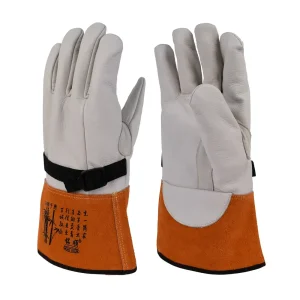
Precision-engineered leather and FR safety apparel for industrial fabricators, contract buyers, and bulk supply chains.
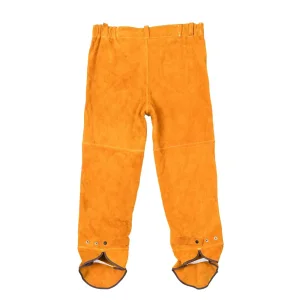
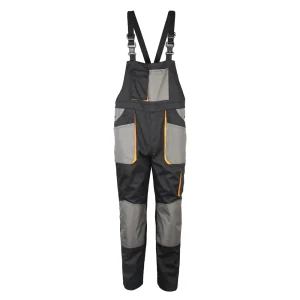
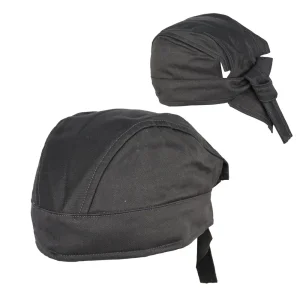
Cross-border supply chain dynamics, total cost of ownership (TCO) assessments, and thermal risk mitigation models.
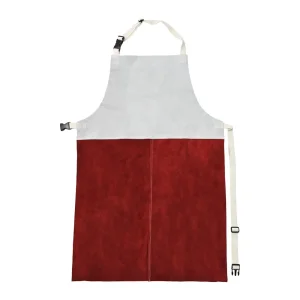
In modern industrial fabrication, heavy engineering, naval dry docks, and smelting infrastructure, the wholesale procurement of leather PPE aprons has migrated from a transactional commoditized purchase into a rigorous risk mitigation strategy. Industrial procurement directors and Environmental Health and Safety (EHS) committees face strict compliance mandates under OSHA (29 CFR 1910.132), European Directive PPE Regulation (EU) 2016/425, and ISO 11611 (protective clothing for welding and allied processes). Procuring sub-standard split cowhide aprons creates major liability risks, unexpected downtime, and worker compensation incidents caused by catastrophic burn-throughs, tear failures, or dermatological reactions from free aromatic amines and hexavalent chromium [Cr(VI)].
Procuring directly from integrated tanneries and manufacturing facilities ensures uniform batch-to-batch structural integrity. Enterprise B2B purchasers manage tier-1 contracts requiring verified chromium fixation, non-carcinogenic vegetable/chrome tanning, tensile strength verification exceeding 450N, and high-tenacity Kevlar® para-aramid structural seam stitching. The global market landscape requires suppliers capable of delivering containerized volumes while preserving micro-level quality across every piece.
Tannery-direct control over cowhide split cuts eliminates localized belly leather flaccidity, maintaining uniform density, dimensional stability, and consistent thermal resistance throughout the torso bib and lower extremities.
All load-bearing perimeters and pocket reinforcements are stitched using 3-ply or 4-ply Kevlar® continuous filament threads that withstand direct burn-through, mechanical friction, and industrial laundering cycles.
Integrated cross-back harness geometries distribute heavy leather apron dead-weight away from cervical vertebrae directly onto the thoracic trapezius, reducing physical fatigue and musculoskeletal worker strain.
Application-specific engineering across automotive assembly, automated welding lines, foundries, and structural metal fabrication.
Provides robust resistance against sharp metal stamping flash, secondary spot-welding splatter, and hot robotic adhesive purge lines, keeping assembly operators safe during fast line cycles.
Tailored for vertical-up and overhead stick/flux-core welding in confined marine compartments where intense spatter bounce and ambient salt-spray accelerate conventional garment breakdown.
Thick cow split leather aprons (1.4mm-1.6mm) act as a secondary thermal shield against high-temperature radiant heat fluxes and accidental drops of non-ferrous molten metal up to 900°C.
Engineered for sustained heavy grinding operations, heavy-plate thermal gouging, oxy-fuel cutting, and continuous abrasive contact encountered in civil infrastructure bridge fabrication.
Advancing thermal protective performance through next-generation chromium-free tanning, hybrid composites, and circular recycling.
| Performance Dimension | Standard Split Cowhide | Synthetically Treated Suede | Ming Shun Advanced Engineered Leather |
|---|---|---|---|
| Spatter Resistance (EN ISO 11611) | Class 1 (15-25 drops) | Class 1 (< 20 drops) | Class 2 (> 40 drops molten iron) |
| Tensile Strength (ISO 13934-1) | 350 N ± 25 | 280 N ± 40 | ≥ 550 N High-Strain Kevlar Core |
| Hexavalent Chromium [Cr(VI)] | Undetermined (< 10 ppm) | Not Applicable (Synthetic) | Non-Detectable (< 3 ppm ISO 17075) |
| Weight-to-Protection Factor | Moderate (1.4 kg/unit) | Lightweight (Poor Thermal Mass) | Optimal Balance (1.15 kg, Ergonomic) |
Our research roadmap integrates vegetable-syntan hybrid tanning techniques that lower water and chemical footprints by 38% compared to traditional beamhouse operations. By engineering a closed-loop tanning workflow, our Gaozhou manufacturing facility eliminates hazardous effluents, delivering leather hides with superior suppleness, enhanced flame resistance, and full compliance with strict European REACH limits and Californian Proposition 65 requirements.
Comprehensive factory certification, documented traceability, and batch testing from hide processing to container dispatch.
Direct ownership of leather processing, grading, splitting, and non-toxic pigment dying guarantees uniform leather thickness across every production lot, removing unexpected vendor batch-to-batch variations.
Every product line undergoes continuous test protocols by accredited third-party laboratories (SATRA, SGS, TUV) verifying adherence to EN ISO 11611:2015, EN ISO 11612, and mechanical resistance EN 388.
Our OEM workflows handle private labelling, custom pocket placements, branded heat transfers, split leather chaps, and custom retail packaging, backed by documented revision sheets for global brand accounts.
Detailed insights regarding manufacturing capabilities, split leather grading, order lead times, and international compliance standards.
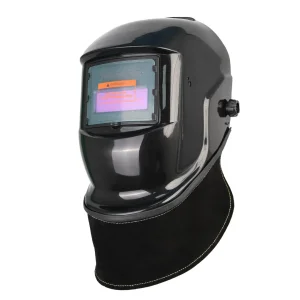
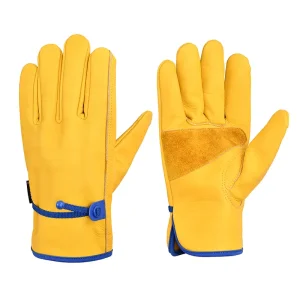
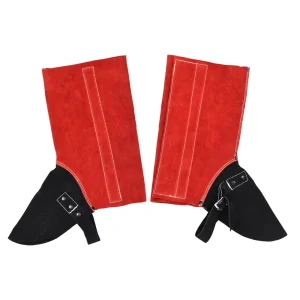
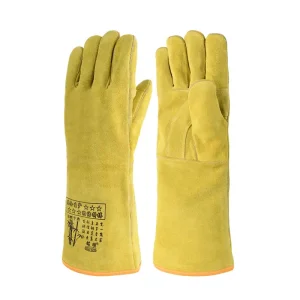
Explore our full line of specialized leather aprons, protective spats, helmet bibs, and industrial gauntlets.