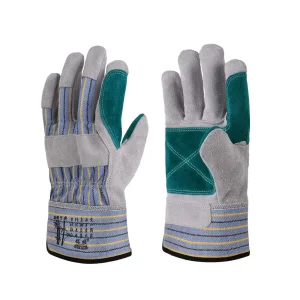
Procure factory-calibrated safety products directly from Gaozhou Mingshun's precision manufacturing workshops, engineered for severe thermal impact and high abrasion resistance.
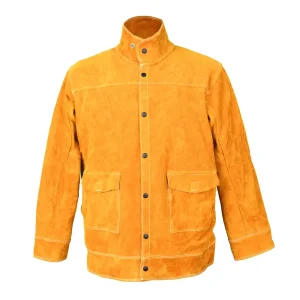
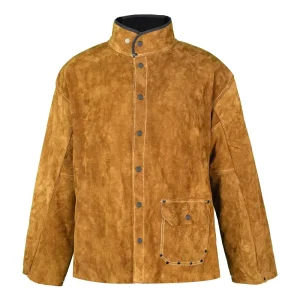
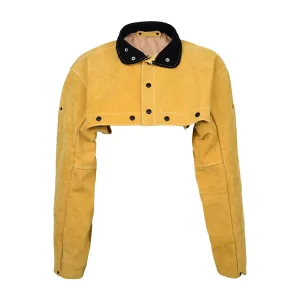
Modern industrial procurement teams in Europe, North America, and APAC are shifting from generic leather work wear to specialized aramid composite and Kevlar-reinforced personal protective solutions.
Heavy manufacturing, stamping lines, and automated glass handling environments encounter extreme shearing forces. Procuring ISO 13997 Level E/F or ANSI A4–A9 cut-resistant gloves woven with continuous-filament DuPont™ Kevlar® ensures zero-laceration metrics while retaining tactile operator precision during manual assembly.
Conventional synthetic fibers melt at elevated temperatures, producing severe secondary burn injuries. Kevlar cut-resistant gloves provide an inherent thermal barrier that carbonizes only above 427°C (800°F). They do not melt, drip, or support combustion, making them critical for combined cutting and welding fabrication environments.
Leading tier-1 contractors evaluate PPE through multi-cycle lifecycle metrics. Integrating premium split cowhide or goatskin reinforcement with unbroken para-aramid threading increases abrasion durability up to 300% over cotton canvas, slashing inventory burn rates and landfill waste for corporate ESG mandates.
Guangdong Ming Shun Labour Protective Products Co., Ltd. delivers customized ergonomic silhouettes tailored precisely to industrial stress points across major manufacturing operations.
Stamping panels possess razor-sharp stamped burrs. Our seamless 13-gauge or 10-gauge Kevlar® knit gloves with textured latex or polyurethane palm coatings deliver maximum dexterity while shielding vulnerable arterial wrist sectors via extended gauntlets.
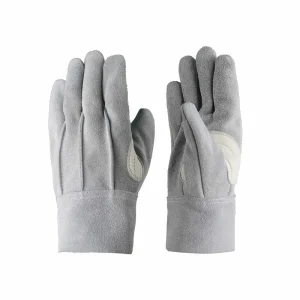
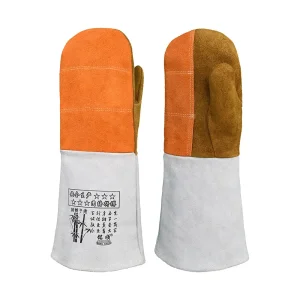
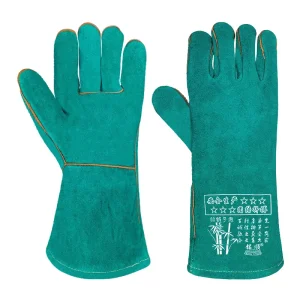
Combining heavy split cowhide with continuous Kevlar seam threading prevents catastrophic thermal degradation during intense MIG, TIG, and stick welding cycles where radiant energy and sharp metal corners converge continuously.
Raw flat glass edges create localized ultra-high contact pressure. Proprietary aramid-steel core wrapping coupled with micro-crinkle nitrile palms provides unshakeable surface friction and maximum resistance to mechanical penetration under oil-free dry conditions.
Machining titanium, carbon fiber prepregs, and specialized nickel alloys demands lint-free, silicone-free aramid gloves that meet stringent FOD (Foreign Object Debris) prevention standards alongside ANSI A6 blade cut resistance thresholds.
Ming Shun's in-house laboratory continues to invest in micro-filament engineering, hybrid aramid polymers, and sustainable circular textile technologies to define tomorrow's work gloves.
Enclosing surgical-grade stainless steel micro-wire with dual spiraled DuPont™ Kevlar® filaments creates ultra-thin 18-gauge knits achieving ANSI Cut Level A5 with zero operator skin irritation.
Infusing crystalline graphene into breathable polyurethane matrices increases puncture and abrasion thresholds by 40% while preserving ultra-low hand fatigue for repetitive eight-hour assembly shifts.
Embedding micro-encapsulated thermal buffer cells within cut-resistant gloves absorbs transient thermal surges during rapid metal handling, keeping interior hand temps within physiological comfort ranges.
Developing mechanical shredding and mechanical alignment protocols to recycle post-industrial Kevlar waste into secondary protective yarn with over 90% tensile property retention for zero-landfill goals.
Navigating global supply chain volatility requires establishing unmediated OEM partnerships with verified manufacturers possessing in-house raw material sourcing and vertical cutting lines.
Guangdong Ming Shun controls leather tanning, splitting, chemical dyeing, and automated sewing under one 1,000+ person roof. Eliminating trading agents removes 18–35% markups, guaranteeing factory-direct batch traceability from raw cowhide to packed export containers.
With monthly glove output exceeding 500,000 pairs, our OEM engineering division supports tech-pack rapid prototyping, customized Kevlar lining density (from 7-gauge loops to 18-gauge high-density knits), and private-label heat-transfer branding within 7-10 sampling days.
Substandard PPE exposes distributors to severe liability. Every batch of Kevlar cut-resistant gloves leaving our Gaozhou facility undergoes documented tensile, abrasion, and tear validation matching EU CE standards, EN 388:2016+A1:2018, and US ANSI requirements.
We deliver complete technical documentation packages, third-party inspection reports, and streamlined global export logistics for enterprise purchasing departments worldwide.
Comprehensive mechanical hazard verification covering abrasion resistance (Cycles 1-4), circular blade cut, tear propagation, and TDM-100 ISO 13997 straight blade cut testing protocols.
Multi-stage in-process QC check points across incoming fiber lot testing, automated pattern cutting precision, seam tensile retention, and individual pre-shipment carton inspections.
Strategic proximity to Shenzhen and Guangzhou ports guarantees rapid FOB, CIF, or DDP ocean and air freight routing, with export customs documentation processed via our English-fluent trade team.
Every shipment carries barcoded production identifiers linking final articles to initial hide split lots and raw aramid yarn batches, simplifying distributor compliance auditing.
Detailed answers to critical technical and logistical questions faced by enterprise purchasers, distributors, and safety supply directors.
While both materials provide exceptional blade cut resistance, DuPont™ Kevlar® is an aromatic polyamide with intrinsic thermal and flame resistance. Kevlar does not melt or support combustion and retains tensile stability up to 427°C (800°F). In contrast, HPPE begins softening and losing structural molecular stability around 130°C (266°F). In environments involving sparks, grinding, welding spatter, or radiant metal heat, Kevlar prevents catastrophic melting burns that HPPE gloves cannot withstand.
Yes. Guangdong Ming Shun operates specialized knitting machines capable of alternating 7, 10, 13, 15, and 18-gauge yarns. We engineer custom yarn core blends combining virgin para-aramid, high-tensile stainless steel wire, fiberglass, and basalt fibers. This allows us to target exact cut resistance criteria—from baseline ANSI A2 / EN Level B handling gloves up to extreme ANSI A8 / EN Level F heavy stamping solutions—balanced with your precise dexterity needs.
Standard bulk order MOQ is typically 1,200 to 3,000 pairs depending on the complexity of leather reinforcement, dipping chemistry, and custom packaging. For custom sample prototypes matched to your technical specifications or CAD drawings, our pattern development workshop completes physical test samples within 5 to 7 business days, accompanied by complete material spec documentation for your sign-off.
We stitch premium split cowhide or grain goatskin patches directly across high-friction contact points (palm, thumb crotch, and fingertips) using high-tensile, 3-ply Kevlar® sewing thread. This construction prevents seam blowout under extreme abrasive torque while providing an impenetrable physical barrier against sharp slivers, oily burrs, and molten welding droplets.
Absolutely. We provide end-to-end private label production, including high-frequency sonic welding labels, rubberized cuff logos, silicone palm printing, localized multi-language user instruction manuals (IFUs), barcode/UPC retail tags, and carton labeling formatted precisely for your 3PL distribution centers.
Each shipment is delivered with comprehensive compliance folders containing the Commercial Invoice, Packing List, Bill of Lading, Certificate of Origin (CO/Form A), Factory Internal Quality Inspection Reports, and accredited third-party test verification certs for EN 388:2016, EN 407, and ANSI/ISEA 105 to guarantee smooth customs clearance.
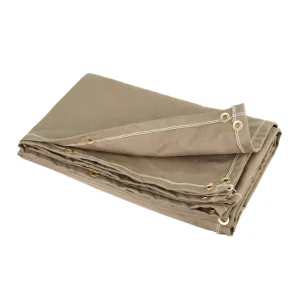
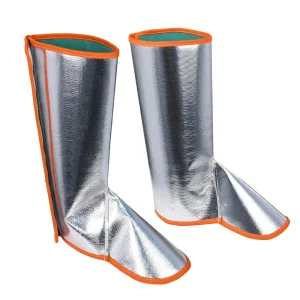
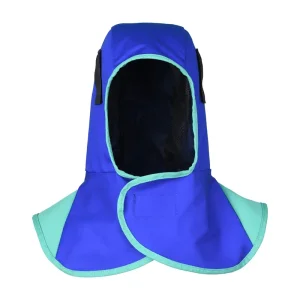
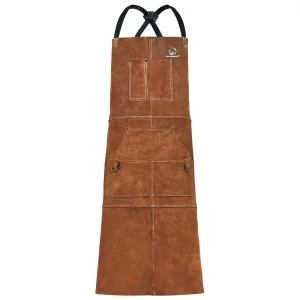
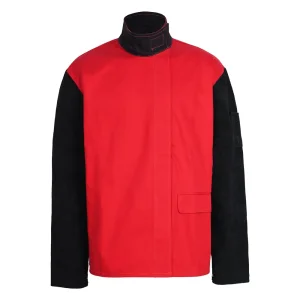
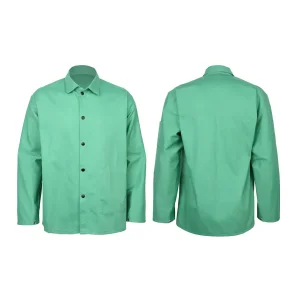
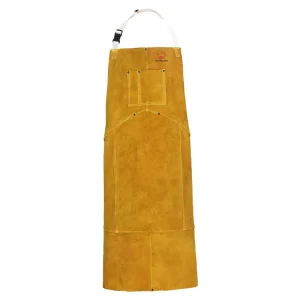
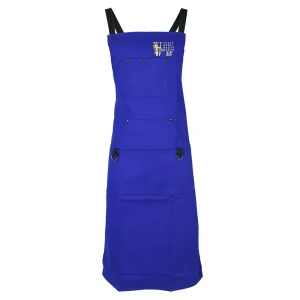
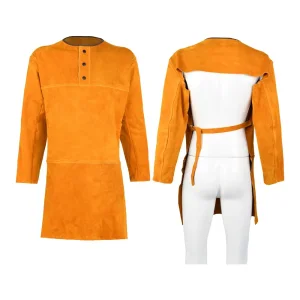
Broaden your worker protection program with Ming Shun's factory-manufactured FR clothing, aluminized thermal shields, and heavy cowhide welding accessories.