
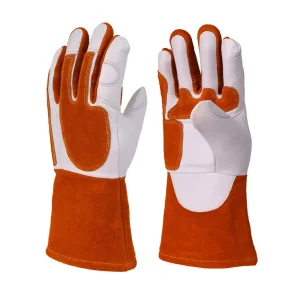
Comprehensive personal protective equipment deployed in heavy steel fabrication, multi-process field welding, and complex robotic lines.
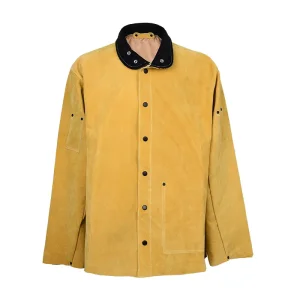
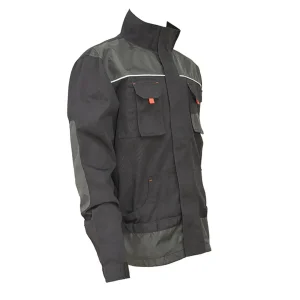
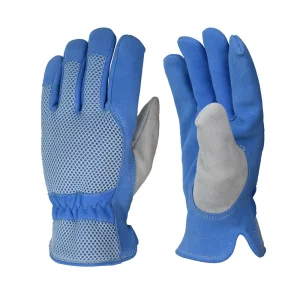
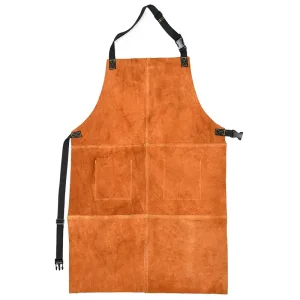
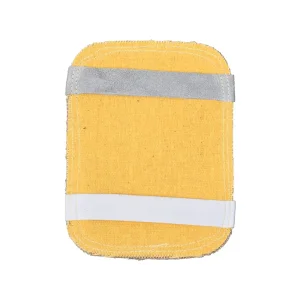
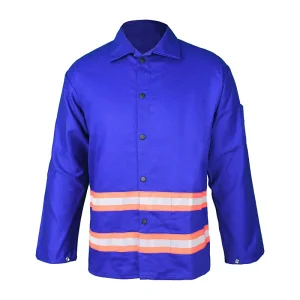
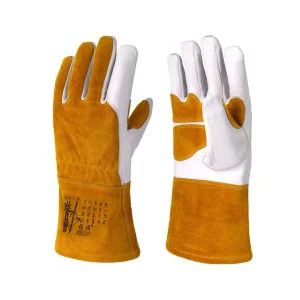
Analyzing cross-industry hot-work challenges: The shift from conventional single-hazard PPE to multi-norm High Visibility Flame-Resistant (FR) apparel.
Modern manufacturing environments such as infrastructure mega-projects, petrochemical plants, and marine shipyards place hot-work operators near automated guided vehicles (AGVs) and heavy transport machinery. Traditional brown cowhide jackets fail photometric conspicuity tests, causing catastrophic blind-spot collisions. High-visibility welding outerwear bridges this divide by delivering EN ISO 20471 Class 3 fluorescence paired with EN ISO 11611 welding protection.
Full-leather outerwear induces acute thermal distress in ambient operational temperatures exceeding 30°C, increasing workplace error rates by up to 34%. Tier-1 procurement agencies now mandate hybrid protective garments: structural split cowhide shields the direct splatter impact zones (sleeves, shoulders, chest), while high-visibility 305 g/m² (9 oz) breathable satin-weave flame-resistant cotton dissipates body heat across non-strike dorsal zones.
Industrial safety directors look beyond the initial purchase price, calculating the Total Cost of Ownership (TCO) across 50 industrial wash cycles. Inferior topical FR treatments dissolve after several cycles, exposing fibers to ignition. Ming Shun integrates chemically bonded polymers and Kevlar-reinforced composite seams to preserve certified flame suppression, tear strength, and retroreflective luminance throughout the life of the garment.
Translating metallurgical spatter dynamics into multi-layered textile defensive architectures.
Manufactured with our proprietary chrome-free tannage technology in Gaozhou. Premium cowhide is split to an exact 1.2mm–1.4mm thickness, eliminating localized density variations. This prevents molten spatter burn-through up to 1400°C while maintaining pliability down to -15°C ambient temperatures.
Ming Shun utilizes an advanced reactive phosphor-nitrogen polymer bath that chemically bonds within the amorphous regions of the cotton cellulose core. Even under prolonged exposure to high radiant electric arc discharges, the fabric chars cleanly without melting, dripping, or continuing to burn (LOI > 31.5%).
Rather than using stiff continuous bands that trap perspiration and restrict thoracic movement, we apply heat-fused flame-resistant segmented retroreflective film. Micro-glass beads return incoming incident beam vectors at >500 cd/(lx·m²), exceeding ANSI/ISEA Class 3 photometric specifications.
Engineering compliance: Comparative operational threshold parameters across top international industrial authorities.
| Standard / Regulation | Geographic Jurisdiction | Target Hazard Spectrum | Technical Threshold Benchmark | Ming Shun Engineering Execution |
|---|---|---|---|---|
| EN ISO 11611 Class 1 & 2 | European Union / UKCA | Manual welding, spatter, radiant heat & brief flame contact | Class 2: ≥ 25 drops molten metal; Radiant heat RHTI 24 ≥ 16s | Reinforced Kevlar Seams Dual-layer chest & forearm leather armor shields against concentrated spatter. |
| ANSI/ISEA 107-2020 | United States / North America | Worker conspicuity in low-visibility environments | Type R, Class 3: 1,240 in² background; 310 in² retroreflective tape | Fluorescent Hi-Vis Yellow/Orange Engineered dye stability ensures no flaking or fading after prolonged UV/radiant arc exposure. |
| NFPA 70E / ASTM F1506 | Global Heavy Power / Utility | Electrical arc flash discharge | Arc Thermal Performance Value (ATPV) assessment | Arc Rating ≥ 12 cal/cm² Non-conductive snap buttons and dielectric hook-and-loop closures protect the wearer from direct discharge. |
| EN ISO 20471:2013 + A1 | International Standard | High-visibility warning workwear | Minimum coefficient of retroreflection: R' > 330 cd/(lx·m²) | FR Reflective Segmenting Flexible, heat-sealed segments protect against flex-cracking and loss of visibility over time. |
| ISO 9001:2015 Audit | Internal Quality Control | Batch consistency & supply chain tracking | Full lot traceability from hide tanning to packed container dispatch | Documented QA/QC Every production batch includes tensile tear tests and seam burst analysis records. |
From initial CAD technical drawings to fully certified private-label container shipments, Ming Shun provides a seamless path to market.
Safety outerwear shouldn't restrict natural movement. Our pattern masters build seamless underarm gussets, bi-swing pleated action backs, and extended contour tails. This ensures that overhead stick or MIG work won't cause the jacket hem to pull up and expose the welder's lower torso.
Private-label programs can incorporate high-definition heat transfers, direct FR-thread embroidery, laser-etched split cowhide crests, and fully branded retail polybags and cartons. We customize all closures—from heavy-duty YKK® flame-resistant brass zippers to anodized non-reflective snaps.
With raw hides tanned on-site and over 1,000 skilled sewing specialists working across dedicated production cells, we maintain an on-time shipping rate above 99.2%. Standard sample iterations are shipped in 7–10 days, while regular 40-foot HQ container orders ship reliably in 35–45 days.
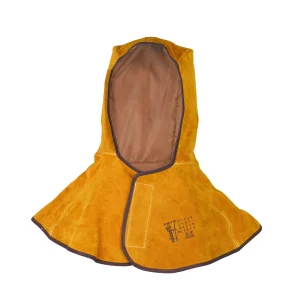
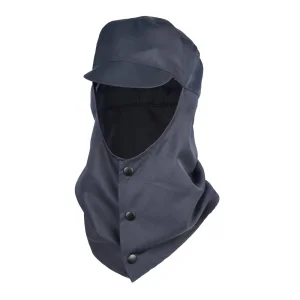
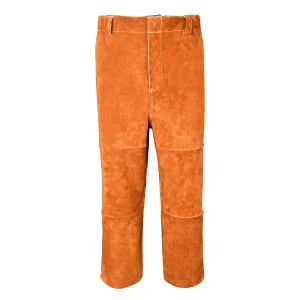
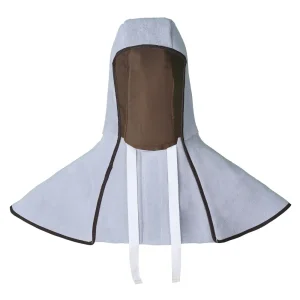
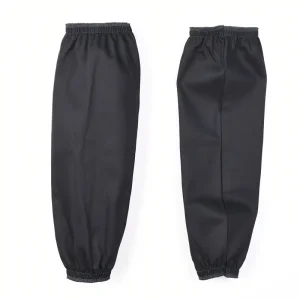
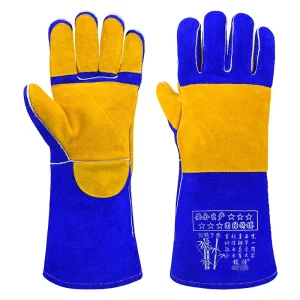
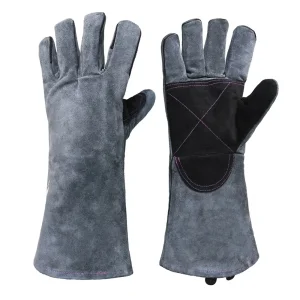
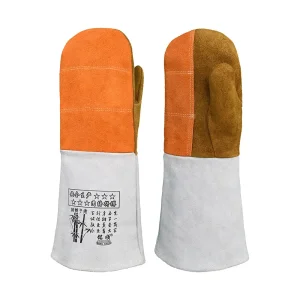
High-grade accessories, ergonomic safety trousers, and heat-resistant split leather PPE built to protect your team against severe thermal hazards.
Clear, direct answers for global sourcing directors, safety engineers, and commercial procurement teams.
