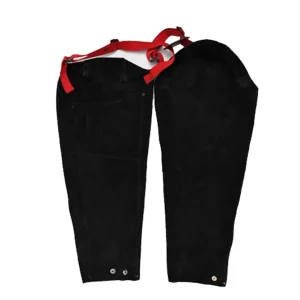
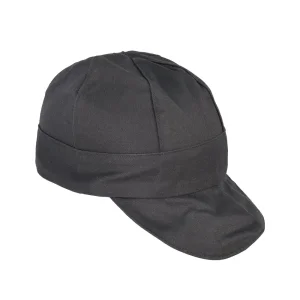
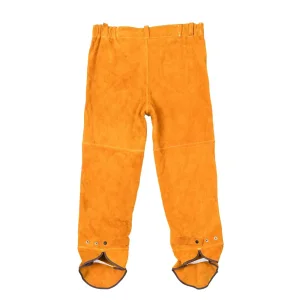
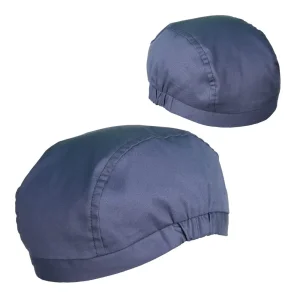
Engineered split-cowhide welding gear, high-performance protective jackets, ergonomic gloves, and accessories manufactured with strict source-level material traceability.
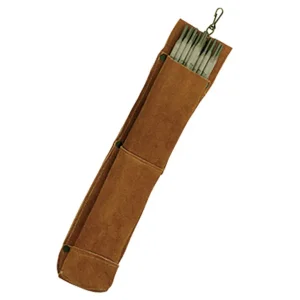
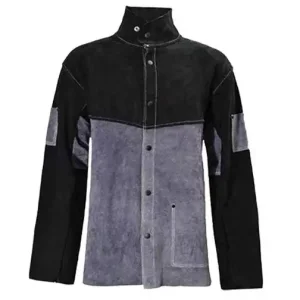
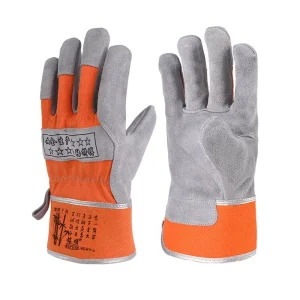
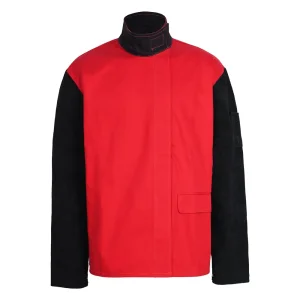
High Visibility Flame Resistant (Hi-Vis FR) clothing occupies a critical nexus within industrial PPE. While standard flame-resistant wear isolates operators from flash fires, electric arc events, and weld spatter, high-visibility attributes safeguard against heavy vehicle impacts and dark structural hazards.
Modern infrastructure, energy processing facilities, and high-voltage transmission sectors no longer permit single-threat garments. Statutory mandates across North America (OSHA 1910.269, NFPA 70E) and the European Union (EN ISO 20471 combined with EN ISO 11612) force engineering procurement teams to specify garments that concurrently satisfy high-lumen photometric reflectivity and self-extinguishing thermal thresholds.
Global industrial operations are operating across hotter micro-climates, from Middle Eastern petrochemical terminals to Australian mining basins. The critical engineering challenge is managing radiant heat protection without causing core thermal fatigue. Industrial buyers demand lighter, moisture-wicking modacrylic and FR treated cottons (7 oz to 9 oz) that maintain physical integrity under intense UV exposure and repetitive industrial laundering.
Tier-1 engineering contractors and safety distributors have transitioned away from fragmented third-party trading brokers. Supply chain resilience now hinges on tier-direct factory relationships with facilities maintaining integrated raw hide processing, certified dyehouses, automated laser cutting lines, and dedicated clean-room sewing divisions capable of fulfilling container-scale volume without quality drift.
How Guangdong Ming Shun leverages localized leather tanning, vertically consolidated FR textile weaving, and precision assembly lines to deliver unmatched price-performance ratios for global OEMs.
Unlike downstream apparel assemblers who purchase open-market splits, our Gaozhou facility operates dedicated tanning and leather finishing facilities. Split cowhide, pigskin, and grain goatskin are processed to calibrated thickness tolerances (1.1mm - 1.4mm) with proprietary chrome and chrome-free formulations that prevent heat embrittlement and stiffening under repetitive thermal washings.
Achieving compliant chromaticity coordinates for fluorescent yellow-green and fluorescent orange-red across natural cowhide and high-weight FR cotton requires chemical mastery. Our closed-loop dye laboratory balances bath temperatures and dye chemistry to achieve luminous reflectance targets while preventing flame-retardant salt washout over 50+ industrial cycles.
Our digital pattern department matches asymmetric leather hides using optical boundary scanners. Automatic nesting algorithms optimize split cowhide utilization, achieving yield rates above 88%. This structural scrap reduction yields significant per-unit cost savings on heavy-duty hybrid welding jackets, trousers, and aprons, which we pass directly to bulk wholesale distributors.
Quality control at Ming Shun operates as an active gate system rather than an end-of-line filter. Tear strength, char length, after-flame time, seam burst thresholds, and retroreflective coefficient performance are documented under ISO 9001 protocols. Each export carton is cross-referenced with raw material batch certificates for foolproof enterprise traceability.
From offshore platforms in the North Sea to open-pit mining operations in Western Australia, our PPE protects personnel facing compound hazards across distinct global environments.
Threat Profile: Volatile hydrocarbon vapor flashes, pressurized steam, static ignition risks.
Gear Configuration: Antistatic treated 9 oz FR cotton coveralls with 3M Scotchlite reflective stripes, double-needle Kevlar stitched seams, and concealed FR brass closures.
Threat Profile: Heavy flux-cored welding spatter, rail grinding spark showers, high-speed rail traffic.
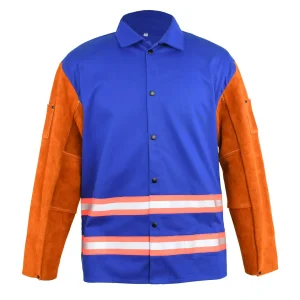
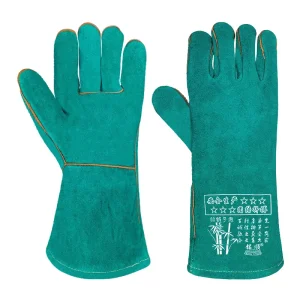
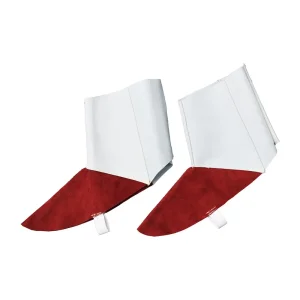
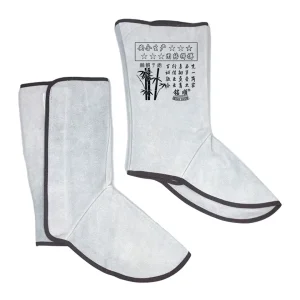
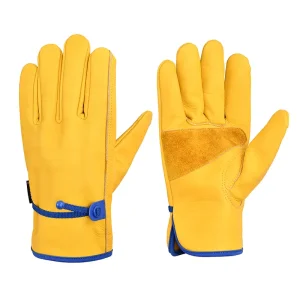
Gear Configuration: Hybrid split cowhide welding jackets paired with Hi-Vis orange FR bib pants, quick-release boot spats, and goatskin MIG gloves.
Threat Profile: High-energy electrical arcing, intense thermal radiation, low ambient light inside vaults.
Gear Configuration: Dual-hazard Category 2 / 4 AR/FR multi-norm apparel (cal/cm² rated), flame-resistant high-visibility vests, and reinforced dielectric gloves.
Threat Profile: Saline spray corrosion, confined hold welding, overhead cutting torch slag.
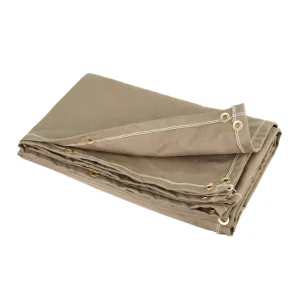
Gear Configuration: Specially tanned oil- and water-resistant leather aprons, cowhide welding sleeves, mesh-lined shoulder drape hoods, and fiberglass blankets.
Threat Profile: Molten slag splash, heavy industrial vehicle collisions in underground haul roads.
Gear Configuration: Class 3 Hi-Vis FR heavy coveralls with 360-degree segmented reflective tape, cowhide knee reinforcements, and fleece-lined winter mitts.
Key developments and engineering evolutions transforming protective workwear over the next five to ten years.
Solid sewn-on glass-bead retroreflective tapes create stiff, impermeable bands around the torso, restricting perspiration evaporation and worker mobility. The industry is moving rapidly toward laser-perforated and micro-segmented thermal adhesive tapes that stretch with ergonomic panels while maintaining ANSI Class 3 photometric compliance across 50 wash cycles.
While chemically treated FR cottons remain cost-effective for standard utility uniforms, high-demand procurement programs are turning to inherent fibers (Aramid, Nomex, Modacrylic). These fibers cannot have their thermal properties washed or abraded away. Our factory is expanding integrated weaving capacity for inherent yarns designed for high-risk offshore facilities.
Environmental criteria have become central to international procurement tenders. Ming Shun has eliminated fluorochemical (PFAS) finishes in our water- and oil-resistant coatings, transitioning to bio-based C0 water repellents. Our Gaozhou tanneries deploy chrome-recycling filter recovery loops and vegetable-based retanning agents to ensure strict compliance with EU REACH annexes.
Global supply chain leaders evaluate PPE manufacturers across four critical pillars to protect against brand liability, port delays, and field failure.
Enterprise buyers avoid generic laboratory summaries. They require verifiable, style-specific CE Module B and Module D documentation, SATRA / UL certification test reports, and registered Declaration of Conformity (DoC) certificates before shipping containers.
True OEM/ODM partners must follow regional anthropometric grading systems. Ming Shun adapts pattern blocks for North American tall, European continental, and Scandinavian sizing matrices, adjusting reach angles, drop shoulders, and gusseted crotches for unhindered mobility.
In industrial workwear, late container deliveries can trigger severe contract penalties. With over 1,000 factory technicians and stable monthly glove capacity exceeding 500,000 pairs, our ~45-day turnaround on standard production runs helps safety distributors maintain reliable buffer inventories.
From laser-etched cowhide logo patches and heat-stamped leather cuffs to barcode-integrated retail hangtags, polybags, and palletization schemes, Ming Shun provides a comprehensive private-label setup ready for global retail and distribution systems.
Direct, transparent answers regarding manufacturing capabilities, testing protocols, and OEM workflow.
We use certified high-visibility background fabrics (fluorescent yellow-green or orange-red) engineered with inherent or flame-retardant treated yarns that fulfill NFPA 2112 vertical flame parameters (char length under 100mm, zero after-flame melt/drip). These base fabrics are paired with flame-resistant retroreflective trims compliant with ANSI/ISEA 107 Class 2 or Class 3 photometric specifications.
Purchasing open-market split leather introduces wide variations in thickness, tensile resilience, and residual chemical odor. Because Ming Shun oversees split cowhide, goatskin, and pigskin tanning directly in Gaozhou, we standardize splitting depth, moisture content, and dye uniformity across bulk orders. This prevents stiff, mismatched panels across repeat container shipments.
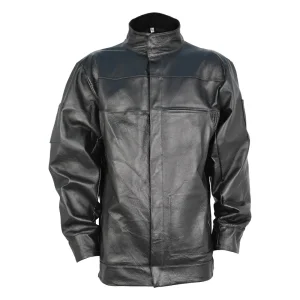
Yes. Hybrid garments like our MS-1260FR and MS-281B combine lightweight, breathable 9 oz FR cotton on the torso for body heat dispersion with heavy-duty split cowhide across the chest, forearms, and sleeves where molten spatter, grinding grit, and mechanical abrasion are concentrated.
Standard production runs start at 500 to 1,000 units for workwear garments (jackets, coveralls, trousers) and 1,200 to 2,400 pairs for specialized leather welding gloves. Standard bulk manufacturing cycles average approximately 45 days following formal sample sign-off, with fast-track scheduling available for established distribution partners.
Yes. We encourage engineering validation prior to production. Qualified corporate importers and distributors can request pre-production counter-samples fabricated to their exact tech packs, including custom branding, specific hardware, and choice of lining (mesh, FR cotton, or fleece).
Our lines use continuous in-process quality control checkpoints across cutting, assembly, buttoning, and ironing. We use high-tensile Kevlar or Aramid threads across all stress zones, reinforce key points with double-stitching or metal rivets, and perform random seam burst and pull tests before final packaging.
Browse our extended line of fiberglass spark barriers, hybrid welding coveralls, durable work gloves, spats, and specialized welder headwear for comprehensive personal protection.