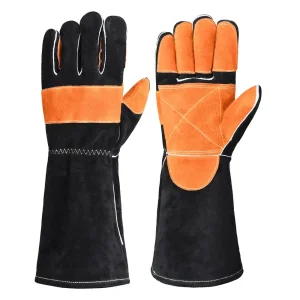
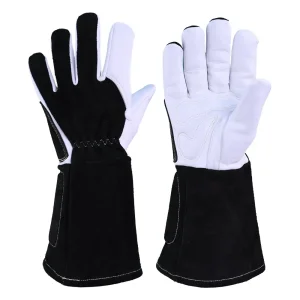
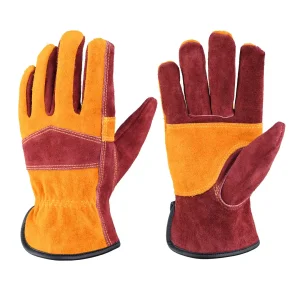
Precision-engineered split cowhide and goatskin solutions designed for high-stress manufacturing, hot-metal cutting, and fabrication assemblies.
Verified operational benchmarks driven by 25+ years of dedicated PPE design, vertically integrated leather processing, and lean manufacturing lines.
In-depth technical mapping of how tier-one industrial operations eliminate downtime and reduce recordable incidents through engineered hand protection.
Procurement directors prioritize lifecycle durability over initial unit costs. Low-grade leather cracks under heat fatigue, multiplying replacement overhead. Our in-house split cowhide delivers reinforced seam longevity, dropping annual procurement replacement rates by up to 34%.
Heavy manufacturing environments demand simultaneous defense against extreme contact heat (EN 407 Level 2-4), puncture resistance from metal flashings, and mechanical cut hazards (EN 388). We deploy reinforced Kevlar® stitching with integrated knuckle shielding.
Modern supply chains require documented supply audits. By centralizing raw hide processing, chrome-free options, and zero-subcontractor manufacturing under an ISO 14001/9001 certified roof, enterprise clients guarantee complete transparency for their cross-border audits.
Tailored protective gear configurations engineered to withstand the specialized hazards of high-output sectors.
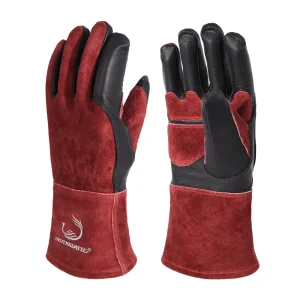
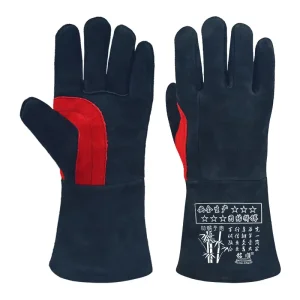
Continuous welding and robotic line attendance create repetitive abrasion and spatter risks. Our dual-layer cowhide palm patterns with aramid padding maintain flexibility while preventing leather hardening under elevated radiant heat.
Casting and forging operations risk thermal burns from liquid metal splashes. We utilize heavyweight split cowhide backed with aluminized insulations to reflect radiant energy up to 1000°C without transferring critical heat to operators' hands.
Field welding on deep-sea pipe lay barges and petrochemical refineries demands saltwater resistance, flame retardance, and flexible grip in wet-oil conditions. Treated oil-resistant grain cowhide delivers firm tool handling without structural degradation.
How our research department integrates composite fiber blends, smart ergonomics, and bio-circular processes to define the future of industrial hand safety.
Integrating UHMWPE (Ultra-High-Molecular-Weight Polyethylene) and tungsten-core threads inside cowhide palms to raise cut resistance to ANSI A7 without compromising tactile precision.
Transitioning to 100% vegetable-aldehyde hybrid tanning agents, eliminating chrome contamination risks, preventing worker skin sensitization, and complying with stringent REACH annexes.
Transitioning from flat patterns to biomechanical pre-curved keystones. Minimizes hand-muscle fatigue by 42% over an 8-hour shift, directly lowering musculoskeletal claim risks.
Piloting passive RFID tags and heat-threshold color indicators to give plant EHS managers real-time telemetry on glove heat saturation and mandatory replacement cycles.
Zero-risk cross-border distribution backed by fully auditable test certificates from accredited bodies like SATRA and CTC.
Mandatory certification under EN 388:2016+A1:2018 (Mechanical Risks) and EN 12477:2001+A1:2005 Type A & B (Welding PPE). Every production lot is cross-checked for chromium VI extraction and pH neutrality.
Compliance with ANSI/ISEA 105 criteria across abrasion (Levels 1-6), cut load resistance (A1-A9), and conductive heat resistance (Levels 1-5). Tailored packaging includes barcode synchronization for US distribution centers.
Complete harmonized tariff classification (HS Code 4203.29), fumigation protocols, and certificate of origin (Form A / Form E / RCEP) documentation, avoiding port customs delays in Hamburg, Rotterdam, Houston, or Sydney.
Immediate answers for commercial buyers, technical evaluators, and PPE import teams.
For custom OEM and private-label orders, typical lead times range between 35 to 45 business days post pre-production sample sign-off. Our standard glove MOQ is 1,200 pairs per specification, allowing full packaging customization, custom sizing, and private-label embossing.
We operate our own dedicated tanning and grading workshop. Every hide is mechanically split to exact specifications (e.g., 1.2mm - 1.4mm grade A split leather) and gauged through ultrasonic thickness sensors to eliminate thin spots that fail during abrasive work.
Yes. Every export model is backed by SATRA or CTC test reports covering EN 388, EN 407, and EN 12477. We also provide batch declarations of conformity, chemical safety verification, and lot numbers stitched inside each cuff for traceability.
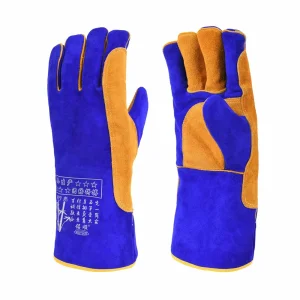
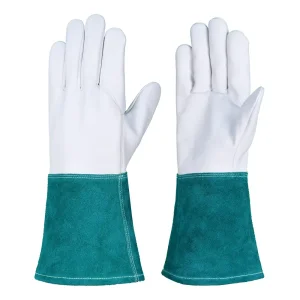
MIG gloves (such as our MS-826BH) utilize heavier split or grain cowhide (1.2-1.4mm) with insulated cotton lining to absorb high radiant heat and heavy spatter. TIG gloves (like our MS-W874G) use supple goatskin (0.7-0.9mm) without thick linings, maximizing tactile sensitivity for fine filler wire feed.
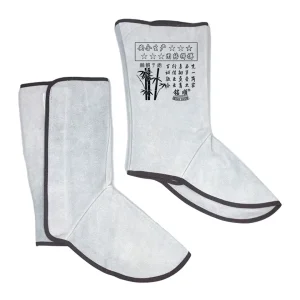
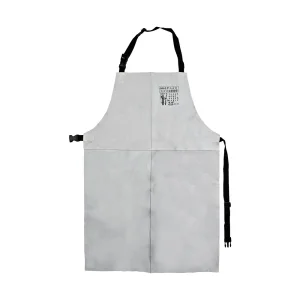
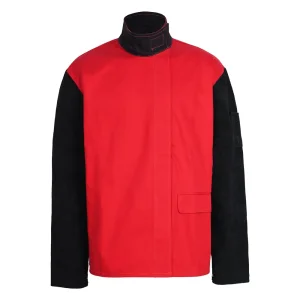
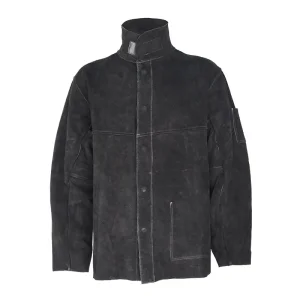
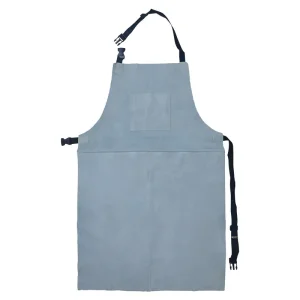
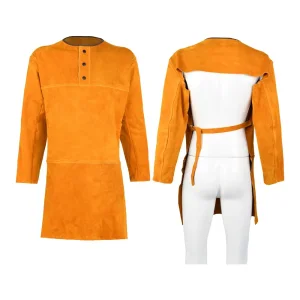
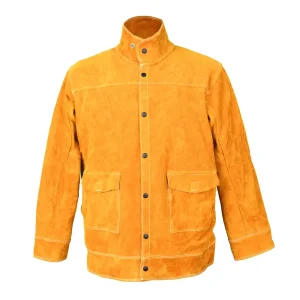
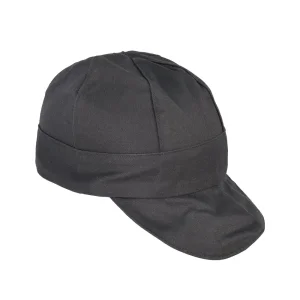
Engineered body aprons, jackets, and reinforced leather work gloves providing full thermal and mechanical coverage.