Precision-tailored industrial garments, welding leathers, and arc-rated workwear designed to meet rigorous international PPE standards.
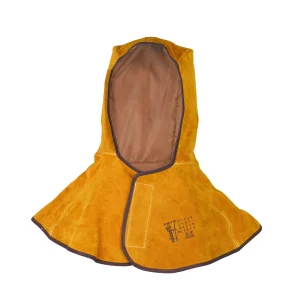
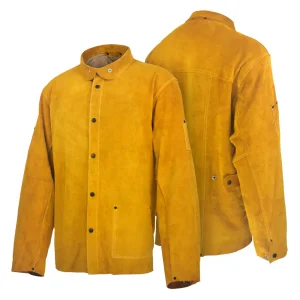
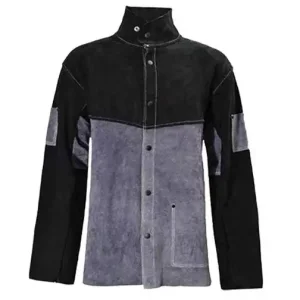
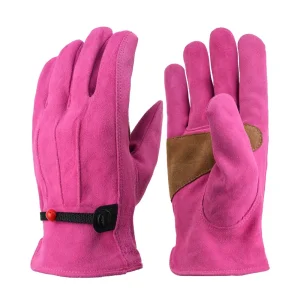
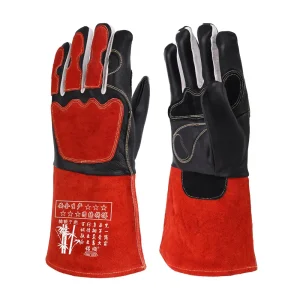
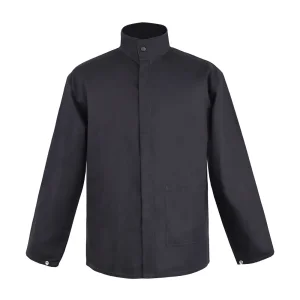
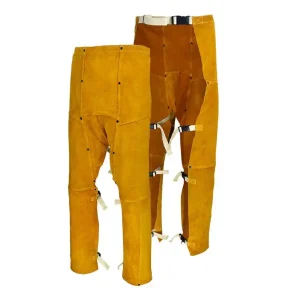
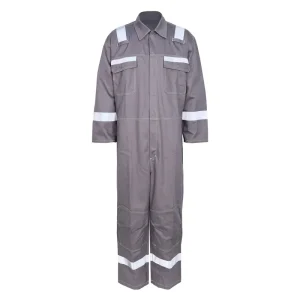
From basic flame-retardant dip finishes to molecular-level inherent fibres and ergonomic hybrid structural zoning.
Historically, workwear relied on topically applied ammonia-cure phosphorus compounds onto heavyweight 100% cotton fabrics. While budget-accessible, these treatments exhibited degrading arc thermal performance after 50 to 100 industrial wash cycles. The sector now embraces inherent aramid matrices (Nomex®, Kevlar®) and continuous-carbon antistatic filaments that never lose flammability protection regardless of laundering frequency.
Worker heat exhaustion represents one of the largest hidden liability costs in petrochemical and desert installations. Modern FR coverall engineering balances mandatory ATPV rating compliance with Total Heat Loss (THL) metrics. By introducing bio-based lyocell blends, micro-perforated FR mesh gussets, and pre-articulated bi-swing pleated backs, manufacturers reduce cardiac strain while sustaining high-velocity flash fire resistance.
Global enterprise projects require apparel meeting both European Norms (EN ISO 11611, EN ISO 11612, EN 1149-5) and North American frameworks (NFPA 2112, NFPA 70E, ASTM F1506). Modern tier-one production floors engineer universal pattern specs incorporating non-conductive concealed snaps, heavy-duty brass YKK FR zippers, and micro-encapsulated reflective bands rated up to 60 washes at 60°C.
How multinational energy corporations, shipyards, and safety distribution syndicates de-risk procurement bottlenecks.
Tier-one procurement directors calculate Cost-Per-Wear (CPW) over upfront garment price. A split-cowhide reinforced or 9 oz treated cotton coverall that survives 75 washes yields a 38% reduction in annual replacement capex compared to commodity imported alternatives.
Cross-border regulatory inspections demand verifiable test certificates per fabric dye lot. Ming Shun maintains internal batch-retention protocols, pairing ISO 17025 accredited vertical burn and tear test documentation with each bill of lading.
Managing seasonal shutdowns in mining and offshore drilling requires agile line configuration. With 1,000+ factory specialists in Gaozhou, our facility scales from 2,000-unit pilot samples to 50,000-unit monthly corporate drop-shipments seamlessly.
Private-label distributors preserve brand prestige through custom colour matching (Pantone matching system), embroidery positioning behind heat-shield backing, bespoke barcoding, and retail-ready carton serialization.
Formulating optimal textile-to-leather composite architectures across critical global hazard disciplines.
| Industrial Sector | Primary Hazards | Recommended Fabric / Construction | Mandatory Certification | Key Performance Attribute |
|---|---|---|---|---|
| Oil, Gas & Petrochemical | Hydrocarbon Flash Fire, Static Discharge, Oil Slick | 7 oz – 9 oz AR/FR Cotton with 1% Carbon Grid | NFPA 2112, EN 1149-5, ASTM F1930 | Body burn injury under 15% during 3-sec instrumented manikin test. |
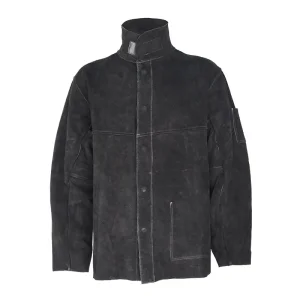
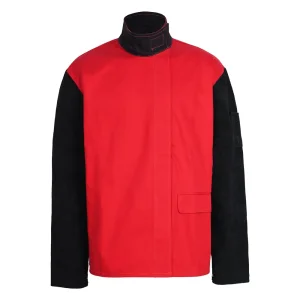
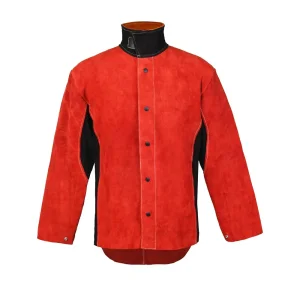
| Heavy Welding & Metallurgy | Molten Slag, Radiant Heat, Severe Abrasion | Hybrid: 9 oz FR Cotton + A-Grade Split Cowhide Panels | EN ISO 11611 Class 2, EN ISO 11612 A1+A2 | Complete resistance to 40 drops of molten metal spatter. |
| Electrical Utility & Substation | Arc Flash Energy Explosion, Intense Thermal Radiation | Inherent Modacrylic / Aramid Blends (ATPV ≥ 8.0 cal/cm²) | NFPA 70E PPE Cat 2, ASTM F1506, IEC 61482 | Elimination of secondary molten fabric melt/drip against dermis. |
| Offshore Marine & Pipeline Rig | Saltwater Corrosion, Low Visibility, Confined Fire | 9 oz FR Cotton Drill + 2-Inch FR Industrial Silver Tape | ISO 20471 Class 3, EN ISO 11612, SOLAS Standard | High-contrast 360-degree reflectivity under extreme marine weather. |
| Heavy Equipment & Mining | Hydraulic Fire Risk, Puncture, Kneeling Friction | Reinforced 11 oz Heavy Cotton FR with 1000D Cordura Knees | EN 388 (Abrasion), EN ISO 11611, AS/NZS 4824 | Articulated dual-layer knee armor compartments with drainage rivets. |
Pioneering sustainable, intelligent personal protective equipment for the next decade of heavy industrial operations.
Adapting global OEKO-TEX® 100 Class II standards across all 7 oz and 9 oz cotton textiles, replacing traditional fluorinated water-and-oil repellent chemistries with bio-derived silicon barrier coatings.
Integrating non-conductive, washable biometric micro-ribbons along inner spine lines to register core skin temperature and ambient ambient humidity, transmitting alert signals to safety managers on high-risk worksites.
Introducing volcanic basalt mineral fibres intertwined with conductive graphene threads to elevate thermal burst protection upwards of 1,200°C without adding mass or sacrificing breathability.
Implementing molecular fiber reclamation programs allowing spent enterprise coveralls to be mechanically depolymerized and re-spun into secondary flame-resistant utility workwear yarn.
Direct answers addressing certification thresholds, minimum volume parameters, laundering protocols, and custom prototyping.
NFPA 2112 is the primary North American benchmark governing industrial flash fire protection, mandating that garments exhibit no more than 50% predicted second- and third-degree body burns during a 3-second instrumented manikin flash test at 2.0 cal/cm²/sec (ASTM F1930). In contrast, EN ISO 11612 evaluates European performance classifications across varied heat vectors: convective heat (Code B), radiant heat (Code C), molten aluminum/iron splash (Codes D & E), and contact heat (Code F), requiring individual parameter testing.
Unlike trading middlemen who outsource wet processing to disconnected tanneries, Guangdong Ming Shun operates self-owned, fully integrated leather preparation and dyeing drums in Pukang Industrial Park. Raw hides are sorted into five strict thickness and density categories before undergoing computerized dye liquor injection. This closed loop ensures that repeat production runs match the approved master Pantone standard with zero delta-E discoloration.
Our 100% FR Cotton and AR/FR fabrics must be laundered at water temperatures not exceeding 60°C (140°F) using non-ionic detergents. The introduction of chlorine bleach, hydrogen peroxide oxidizers, or fabric softeners is strictly prohibited, as these chemical agents strip flame-resistant molecular treatments or coat fibres with flammable fatty esters. Coveralls should be tumble dried at moderate heat settings below 65°C with a residual moisture level around 3% to prevent excessive shrinkage.
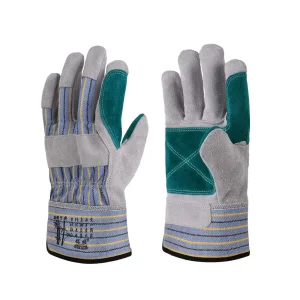
For customized patterns requiring digitized CAD adjustments, sample prototypes are delivered within 7 to 10 working days after tech pack sign-off. Standard production MOQs start at 500 units for workwear coveralls and 1,000 pairs for specialized leather welding gloves. Standard bulk container orders (20GP/40HQ) typically ship within 35 to 45 calendar days following lab-dip approval.
Yes. Ming Shun routinely passes rigorous social and technical compliance audits from global inspection bureaus. We hold active ISO 9001:2015 quality management documentation, BSCI social compliance certifications, and comprehensive third-party test reports (SGS, TUV, SATRA) covering physical tensile strength, pH value neutral safety, chromium VI non-detection, and flame propagation indices.
We supply extensive brand embellishment configurations including fire-retardant Aramid embroidery stitching, silicone high-temperature badges, high-frequency leather debossing on collar patches, custom branded inner care loops, barcoded polybag sleeves, and reinforced outer export shipping cartons pre-printed to your logistics matrix.
Expanding your frontline catalog with heavy-duty overalls, aluminized thermal buffers, and precision-dexterity safety gloves.
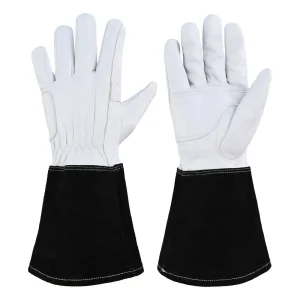
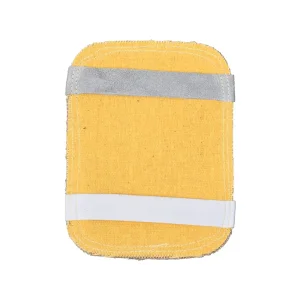
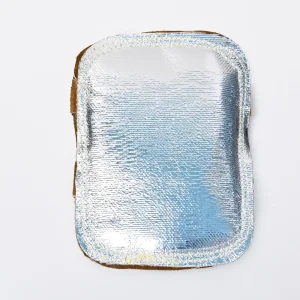
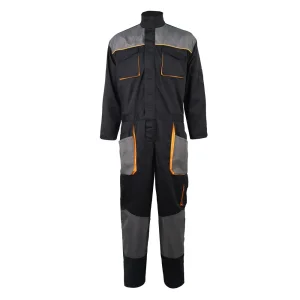
Speak directly with technical pattern designers and certified PPE production managers. We provide complimentary tech pack evaluations and physical sample verification within 7 business days.

