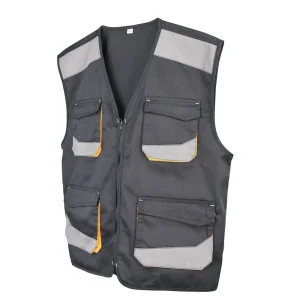
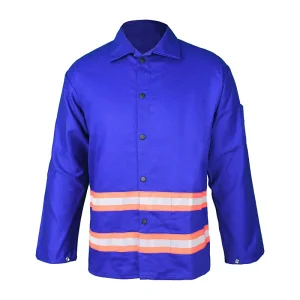
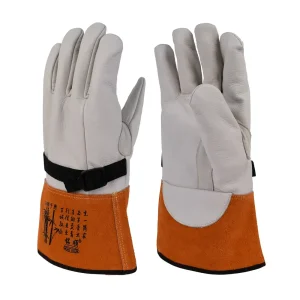
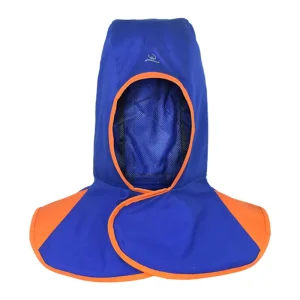
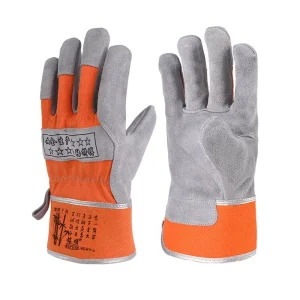
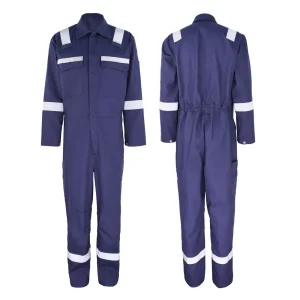
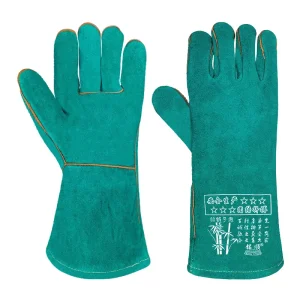
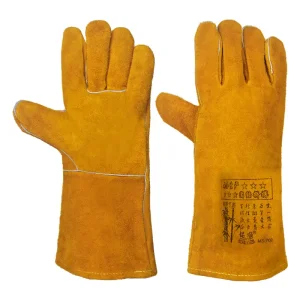
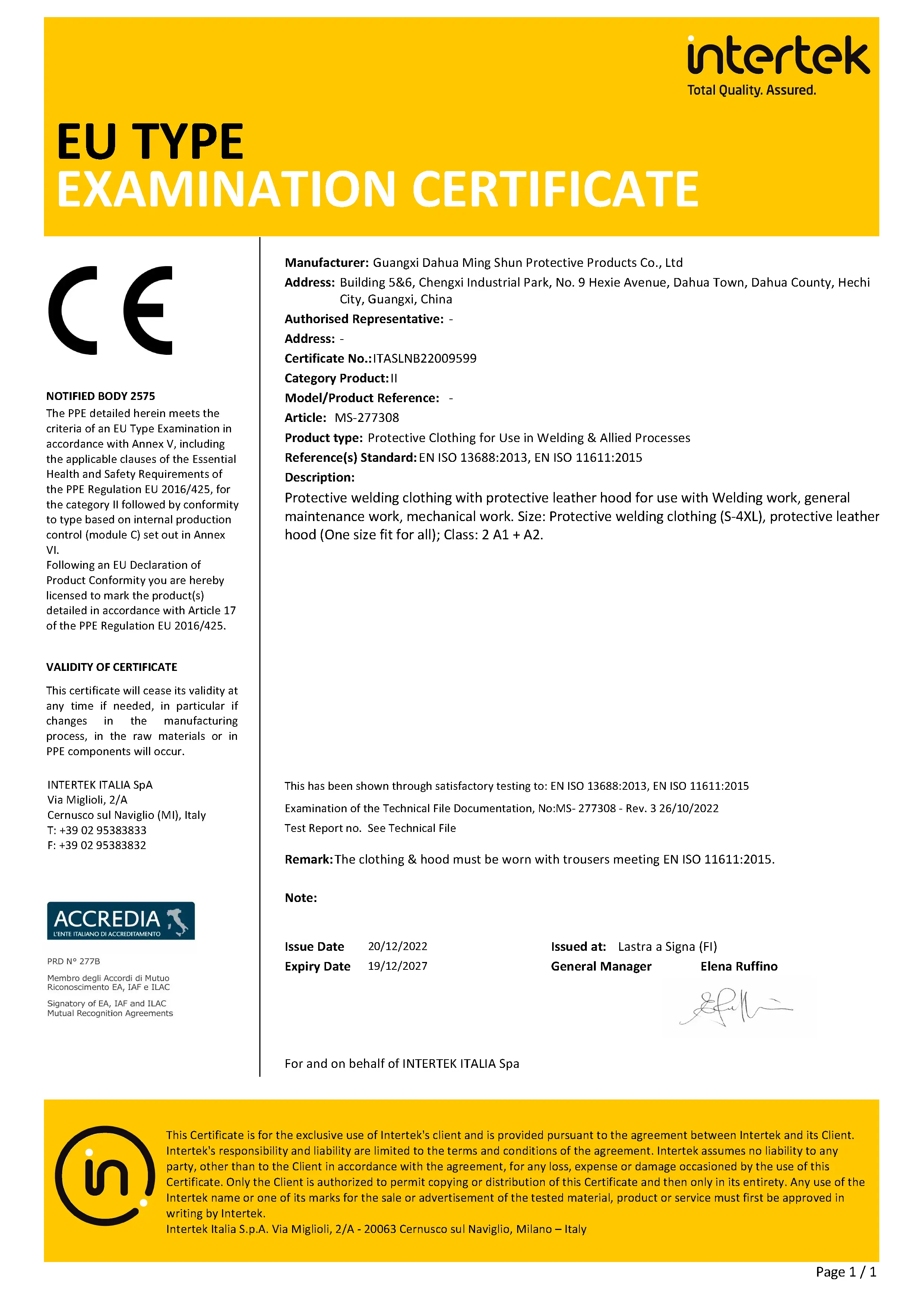
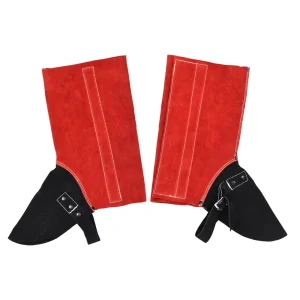
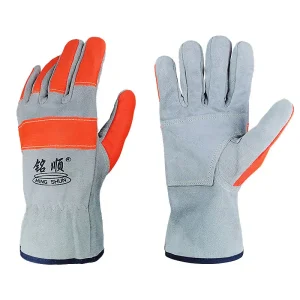
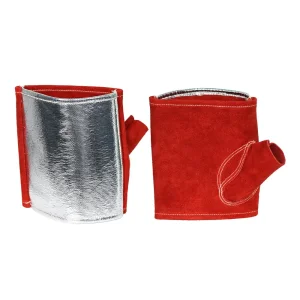
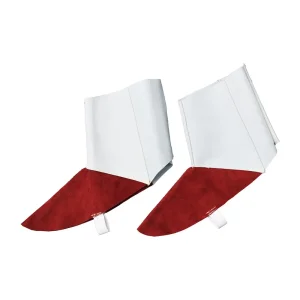
Explore our premium factory-manufactured flame-retardant welding spats, glove savers, arc cushions, and split cowhide hand protection precision-crafted for industrial fabricators.
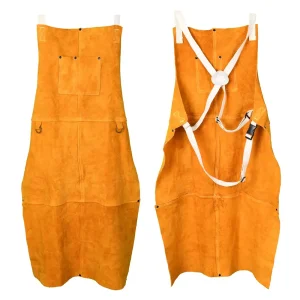
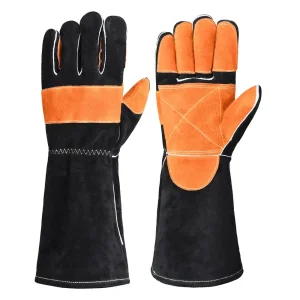
The global demand for certified flame-retardant (FR) workwear and arc-rated (AR) PPE is undergoing a structural transformation. Heavy industrial expansion, rigorous occupational health protocols, and severe liability penalties have elevated protective workwear from generic utility uniforms to engineered, life-saving technical barriers.
Global regulatory bodies like OSHA, EU-OSHA, and ISO enforce strict compliance. Failure to equip staff with NFPA 2112, NFPA 70E, or EN ISO 11611/11612 certified protective clothing invites crippling operational stoppages, exorbitant statutory fines, and uninsurable employer liabilities in heavy sectors.
Modern industrial worksites rarely present isolated hazards. Operators face overlapping perils: radiant thermal bursts in boiler rooms, unpredictable arc flashes in power distribution cabinets, and continuous hot slag spatter on automated assembly lines, necessitating integrated protective matrices.
Heavy, stiff, non-breathable protective wear causes thermal exhaustion, heat strokes, and reduced operational mobility. Today's industrial procurement leads demand lightweight 7 oz to 9 oz treated FR cotton, ergonomic articulated knees, and breathable gussets to safeguard productivity.
| Standard / Regulation | Geographical Scope | Primary Hazard Protected | Key Testing Parameters | Ming Shun Engineering Execution |
|---|---|---|---|---|
| NFPA 2112 | North America / Global Petrochem | Industrial Flash Fire (Hydrocarbon) | ASTM F1930 Instrumented Manikin Test ≤ 50% Body Burn; 3-second direct exposure | Pre-shrunk, fire-retardant treated long-staple cotton & aramid seam threads. |
| NFPA 70E / ASTM F1506 | North America / Utility Sector | Electrical Arc Flash Hazards | Arc Thermal Performance Value (ATPV) / EBT rating, HRC Level 1 to 4 | Multi-layer AR/FR cotton compositions reaching CAT 2 (≥ 8 cal/cm²) protection. |
| EN ISO 11611 (Class 1 & 2) | European Union / International | Welding & Allied Hot Processes | Impact of spatter drops, radiant heat transfer, tear strength, flame spread | Heavy split cowhide leather front combined with Class 2 FR cotton backings. |
| EN ISO 11612 (A, B, C, E) | European Union / Industrial Plants | Convective, Radiant & Contact Heat | Code A (flame spread), Code B (convective heat), Code C (radiant heat), Code E (molten iron) | Aluminised backing layers, heat-isolated button snaps, shielded inner seams. |
Operating from Gaozhou City, Guangdong—widely recognized as China's preeminent leather tanning and protective PPE manufacturing hub—Guangdong Ming Shun Labour Protective Products Co., Ltd. delivers deep cost efficiencies and unmatched production agility.
By executing raw hide sorting, specialized chrome-free or mineral tanning, split skiving, and dyeing within our own facility, we eliminate third-party markup, assure strict thickness uniformities (±0.1mm), and eliminate noxious odor emissions.
Our localized industrial cluster gives direct access to certified fire-retardant cotton mills, Kevlar aramid spinning facilities, and certified hardware manufacturers. Sourcing lead times drop by 60% compared to fragmented western supply chains.
With over 1,000 skilled garment machinists, leather cutters, and QC technicians on-site, our manufacturing lines process over 500,000 pairs of welding gloves and 80,000 technical FR garments monthly, easily servicing global retail brands.
Every dye run and raw material intake undergo in-house vertical flammability tests (ASTM D6413), seam slippage checks, and tear resistance verifications before entering cutting beds. Defect rates stay consistently below 0.15% across full container loads.
Protective clothing must align with the thermodynamic and mechanical profiles of specific work environments. Ming Shun designs tailored fabric-leather hybrids for five core industrial domains.
Hydrocarbon extraction and cracking units require NFPA 2112 certified 7 oz or 9 oz treated FR cotton coveralls with non-conductive, covered two-way brass zippers that prevent static sparks and withstand flash fire bursts.
High-voltage substations demand arc-rated clothing meeting NFPA 70E PPE Category 2 or 4. We deploy multi-layer FR assemblies and dielectric leather protector gloves that resist plasma explosions exceeding 40 cal/cm².
Shipbuilding yards and structural beam welding expose welders to severe molten droplet spatter. Our split cowhide jackets with DuPont™ Kevlar® thread stitching prevent burn-throughs while FR backings provide ventilation.
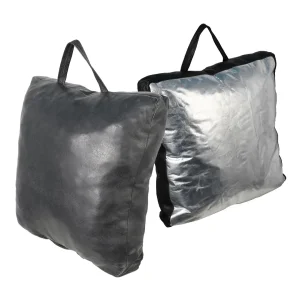
Pyrometallurgical processing involves direct contact with molten splash up to 1400°C. We engineer aluminised leather aprons, welder cushions, and spats that bounce slag away without adhering to fabric substrates.
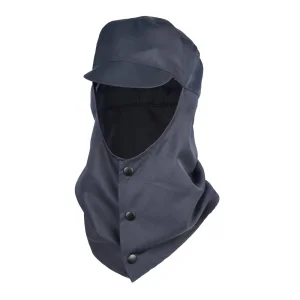
Confined pipe welding demands fine tactile sensitivity without sacrificing arc burn security. We supply supple goatskin TIG gloves and lightweight extended FR cotton hoods covering the neck and shoulders seamlessly.
The protective work clothing sector is moving beyond basic treated fabrics toward high-performance hybrid systems. Global buyers must recognize these pivotal shifts to keep their product lines competitive and compliant.
While chemically treated cotton (such as Proban® or Pyrovatex® finishes) delivers cost-effective thermal defense good for 50 to 100 industrial washes, inherent fibers (meta-aramid, para-aramid, modacrylic blends) never lose flame protection. Ming Shun supports both paradigms based on our clients' cost targets and duty cycle requirements.
Regulatory updates in North America and the EU (REACH) are phasing out fluorinated water and oil repellents (PFAS/PFOS). Ming Shun is pioneering bio-based, fluorochemical-free DWR finishes paired with non-toxic phosphorus-based flame-retardant chemistry to ensure zero environmental or skin toxicity hazards.
To reduce fatigue, our modern welding jackets feature targeted weight mapping: durable 1.2mm split cowhide leather shielding high-exposure zones (chest, forearms, shoulders), paired with breathable 9 oz FR stretch satin on the back and torso. This delivers 35% overall weight savings while maintaining complete EN Class 2 compliance.
Enterprise procurement managers, safety distributors, and private-label PPE brands evaluate suppliers on systemic capabilities rather than catalog price alone. Here is how Ming Shun de-risks cross-border procurement.
Our in-house CAD patterning department translates customer tech packs into digital grading sheets within 48 hours. We adjust armpit gusset depths, collar stands, and Kevlar thread counts to match regional body anthropometrics (North American relaxed vs. European slim fits).
We provide full model-specific documentation including certified laboratory test results from SGS, TUV, and SATRA. Every batch carries raw material lot numbers, tensile tear records, and thermal exposure charts to guarantee smooth customs clearance and audit acceptance.
We provide comprehensive OEM branding: heat-transfer FR logos, high-definition woven wash labels compliant with international laundering symbols, debossed leather emblems, and barcoded retail cartons for automated distribution centers.
Typical bulk lead time is maintained within 35 to 45 days after pre-production sign-off. We support FOB Shenzhen/Guangzhou as well as full CIF and DDP terms, handling ocean transit, customs bonding, and port logistics effortlessly.
Authoritative answers addressing compliance standards, testing parameters, wash lifespans, custom manufacturing thresholds, and logistical execution.
Treated FR cotton is natural cellulose fiber chemically modified with flame-retardant polymers (such as Proban® or Pyrovatex®). It offers exceptional softness, breathability, and cost advantages, guaranteed for 50-100 industrial wash cycles. Inherent FR fabrics (e.g., Nomex®, Kevlar®, Modacrylic) have thermal resistance engineered directly into their molecular polymer chains, providing permanent fire protection that cannot be washed out, albeit at a higher unit cost.
Under ASTM F1930 instrumented manikin testing, NFPA 2112 mandates predicted body burn of ≤ 50% after a 3-second direct flame exposure at 2 cal/cm²·s. Ming Shun's certified FR cotton coveralls and hybrid jackets consistently register below 18-24% total body burn. This is achieved through premium char-forming fabric weaves, high-tensile aramid stitching, and heat-resistant hardware that stays shut under intense thermal load.
We utilize Grade-A and Premium Split Cowhide leather derived from the shoulder and back sections of cowhides, calibrated to a uniform thickness of 1.2mm - 1.4mm. This leather zone features dense fiber cross-linking, providing exceptional puncture resistance, tear strength, and high thermal insulation against molten metal spatter without stiffening or curling under heat.
Yes. We maintain separate grading libraries for American relaxed fits (ANSI/ISEA), European sizing (EN ISO 13688), and Asian builds. Our pattern team customizes inseam drops, chest girths, sleeve clearances, and high-motion back gussets based on your exact regional technical dossier.
Standard MOQs for custom-branded FR garments (custom dyeing, embroidery, private labeling) typically start at 500 to 1,000 pieces per style depending on fabric specification. For welding gloves and leather protective accessories, standard production MOQs range from 1,200 to 2,400 pairs. We offer flexible trial batches for certified corporate sampling and tender trials.
Because we control raw hide tanning and fatliquoring internally, we adjust proprietary oil-emulsion ratios according to destination climate requirements. Hides bound for cold sub-zero pipeline worksites in Canada or Northern Europe receive enhanced plasticizing fats to guarantee supple dexterity down to -20°C without leather hardening or micro-cracking.
All Ming Shun welding and FR protective apparel is sewn exclusively with 100% DuPont™ Kevlar® or high-tenacity aramid thread. These threads will not melt, burn, or support combustion at temperatures exceeding 425°C (800°F), eliminating seam unraveling when hit by high-velocity grinder sparks or molten metal slag.
We enforce a 4-tier QC gateway: (1) Raw hide and fabric physical validation (weight, thickness, vertical burn test), (2) In-line cutting precision verification, (3) Seam slippage, rivet tension, and zipper cycle stress testing, and (4) Final AQL 2.5/4.0 pre-shipment inspection. Detailed inspection dossiers and video records are shared prior to release.
Review our specialized multi-pocket vests, flame-retardant welding jackets, electrician protective gloves, and full-coverage coveralls built for reliable global field deployment.