Engineered to mitigate molten metallurgy adherence, intense UV arc radiant loads, and dynamic abrasion profiles across industrial worksites.
Analyzing cross-industry occupational safety demands and the thermal mitigation capabilities of modern fire-resistant personal protective apparel.
Shifting procurement paradigms from cheap disposable split-hide to durable, multi-cycle washable FR cotton-aramid hybrids drastically optimizes long-term lifecycle expenditures. Premium thread stitching and tensile reinforcement reduce scrap rates by over 38% annually.
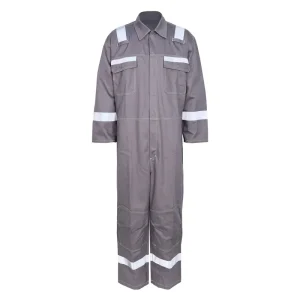
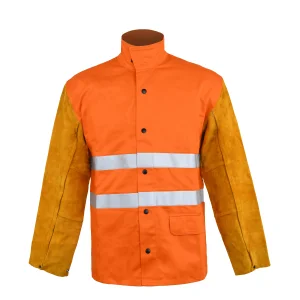
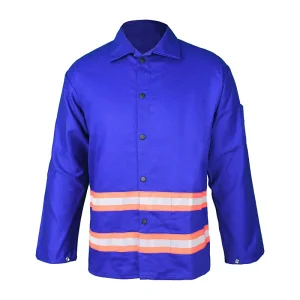
Modern worksites intersect arc-flash hazards, spatter burns, and high-visibility requirements. Factory manufacturing lines combine flame-retardant treated cotton substrates with high-visibility silver retroreflective strips complying concurrently with ANSI/ISEA 107 and NFPA 70E.
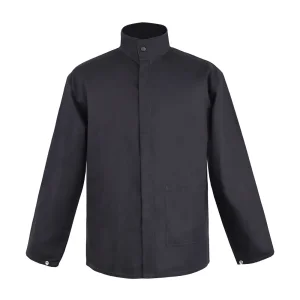
Heat stress constitutes one of the largest vectors of industrial worker fatigue. Hybrid design garments combine cowhide leather sleeves for mechanical spatter resistance with 9 oz breathable satin-weave FR back and torso fabrics, stabilizing core thermal equilibrium.
"Integrating source-level material chemistry with rigorous structural seam engineering ensures that welding protective clothing functions not merely as passive shields, but as active enablers of operator endurance, compliance, and procedural safety."
Navigating changing geopolitical standards, tier-1 raw hide allocations, and high-throughput production capacities.
The international supply chain for high-performance welding PPE is undergoing a critical rationalization. Importers, tier-1 distributors, and brand owners can no longer rely on unverified intermediary trading operations. Rising compliance standards under the EU PPE Regulation (EU) 2016/425 (Category II and III certifications) alongside evolving North American OSHA standards have necessitated deep, vertically integrated manufacturing setups.
Operating from Gaozhou City, Guangdong Province—a historic center of global leather tanning and protective fabrication—our direct-mill setup incorporates raw hide curation, environmentally regulated chrome-free and vegetable re-tanning, automated die-cutting, and computerized sewing lines. By anchoring production under comprehensive internal oversight, global buyers secure uncompromised lot-to-lot continuity and verifiable regulatory traceability.
Engineered to satisfy stringent physical, chemical, and arc testing protocols for North American, European, and Australasian industrial frameworks.
| Standard / Regulation | Geographic Region | Protective Scope | Manufacturing Protocol Response |
|---|---|---|---|
| EN ISO 11611:2015 (Class 1 & 2) |
European Union / UKCA | Protective clothing for use in welding and allied processes. Drop of molten metal, radiant heat, flame spread. | Calibrated drop tests exceeding 25 drops (Class 2); Kevlar® 3-ply para-aramid stitching; flame-retardant neck drapes. |
| NFPA 70E / ASTM F1506 | North America (USA/CA) | Arc Flash Electrical Safety; arc thermal performance value (ATPV / EBT rating). | Certified treated long-staple cotton twill fabrics; non-conductive, dielectric snap buttons; insulated front plackets. |
| EN 12477:2001+A1:2005 (Type A & B) |
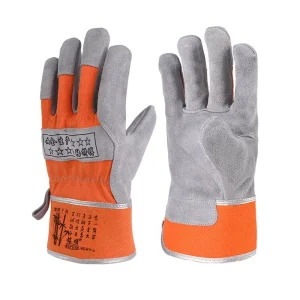
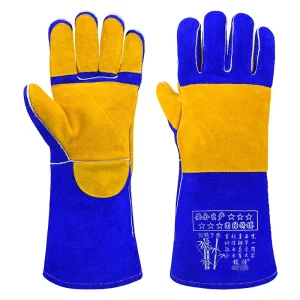
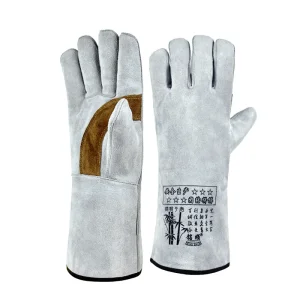
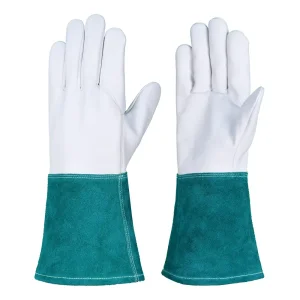
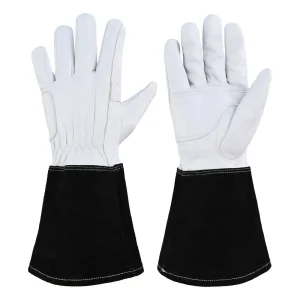
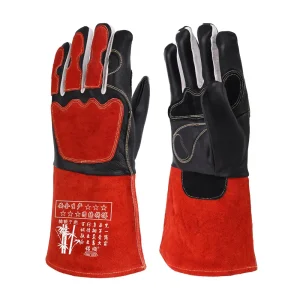
Global / European CE | Protective gloves for welders; covers burn behavior, contact heat, convective heat, mechanical tear. | Dual leather integration: premium goat grain palms for Type B precision control; heavy split cowhide for Type A MIG thermal shielding. |
| AS/NZS 4824:2006 | Australia / New Zealand | Protective clothing for wildland fire fighting and industrial high-temperature hot-work environments. | High colorfastness post-wash, cross-directional tear reinforcement, specialized reflective tape placement for harsh UV conditions. |
Targeted protection systems calibrated for extreme maritime, energy generation, and fabrication environments.
Naval dry docks require constant overhead stick (SMAW) and flux-cored arc welding (FCAW). High-velocity molten slag drops directly challenge standard cotton shirts. The deployment of heavy-grade cowhide hybrid jackets equipped with raised stand-up collars, velcro throat cinches, and leather shoulder capes effectively eliminates dermal burn incidents in confined vessel hull sectors.
Cross-country pipeline construction involves relentless exposure to ambient extremes, mud, and continuous downhill pipe welding passes. Garments featuring breathable 9 oz FR cotton torsos with reinforced split-leather sleeves deliver both the mobility needed for precision root-pass maneuvering and the rugged abrasion resistance to handle coarse steel pipes and rocky terrain.
Maintenance technicians working inside robotic weld cells face confined-space hazards and sharp stamping dies. Integrated FR cotton coveralls with articulated knee pad inserts, reinforced crotch gussets, and high-flex underarm panels maintain uncompromised range of motion while safeguarding against random automated weld spatters and high-temperature arc flashes.
Pioneering the next era of industrial PPE through circular sustainability, nano-ceramic coatings, and integrated operator health analytics.
Transitioning to 100% bio-based tanning agents eliminating hexavalent chromium (Cr VI) generation, combined with fluorochemical-free DWR finishes for high repellency against liquid slags, chemicals, and industrial oils.
Infusing aramid-cotton matrices with ultra-thin ceramic particle laminates. This achieves Class 2 thermal drop resistance while reducing overall fabric weight by up to 26%, drastically lowering physical fatigue in hot seasons.
Collaborating with global distributors to trial wash-durable, passive heat-stress and gas-detecting RFID sensor badges integrated directly into the chest pocket welt of fire-resistant welding jackets.
Establishing scrap leather re-granulation processes to formulate composite heat-insulating palm inserts and developing dedicated recycling programs for flame-retardant garment cotton substrates.
In-depth insights into custom specifications, minimum lot requirements, and quality assurance workflows for procurement directors.
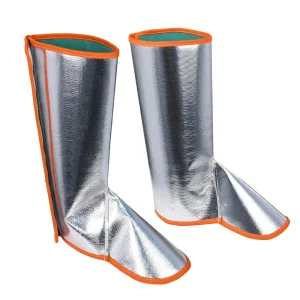
Complete protective apparel ensembles: from aluminized thermal reflection to high-articulation welding coveralls and protective spats.