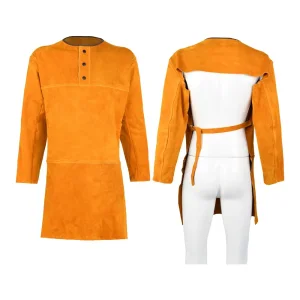
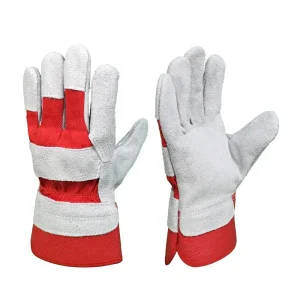
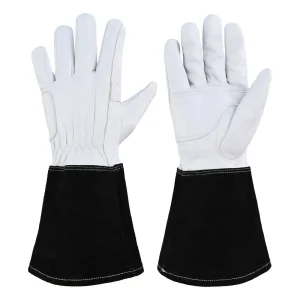
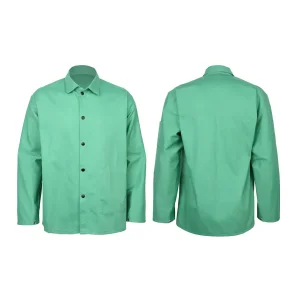
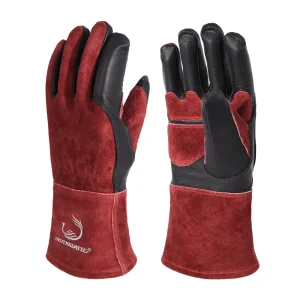
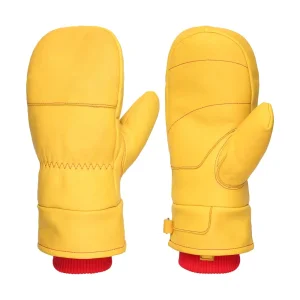
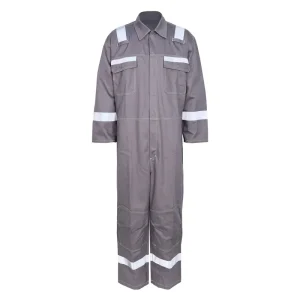
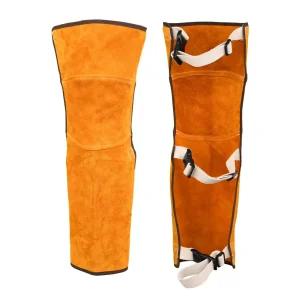
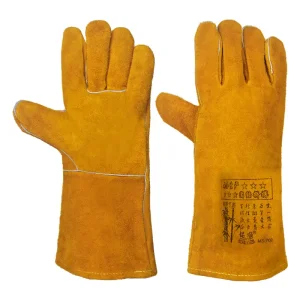
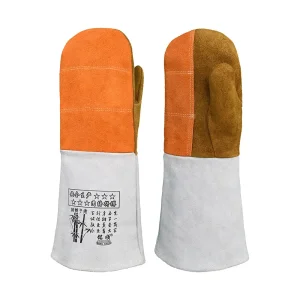
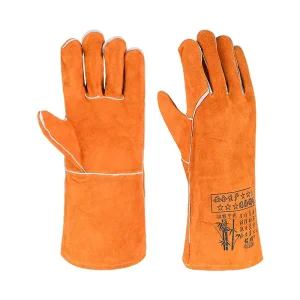
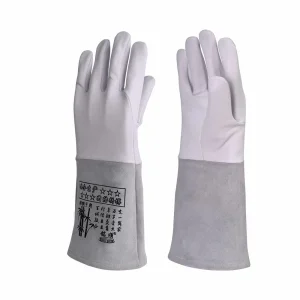
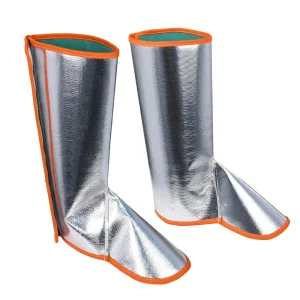
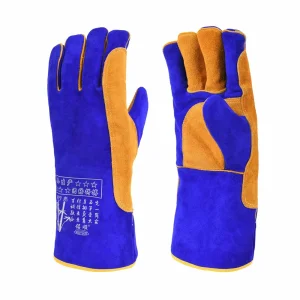
Explore our premium-engineered split cowhide PPE series, precision-crafted for intense slag deflection, thermal insulation, and multi-shift endurance.
A data-backed evaluation of global supply volatility, total cost of ownership (TCO), and stringent safety benchmarks reshaping cross-border enterprise sourcing.
Global procurement departments are phasing out low-density, unbranded weld protection in favor of premium Grade-A split cowhide. Studies show that heat-hardened cow split gloves stitched with aramid fiber last up to 3.8 times longer in high-amperage flux-cored arc welding (FCAW) environments, slashing per-operator annual PPE expenditure by 42%.
Supply continuity requires direct integration from the raw hide to finished pallet. By controlling automated tanning, chromium-free fat-liquoring, and automated knife cutting, we insulate enterprise buyers from third-party vendor markups, currency fluctuations, and localized labor disruptions.
European REACH Regulation (EC No 1907/2006) and North American OSHA mandates require leather PPE to demonstrate non-detectable levels of Hexavalent Chromium (Cr VI < 3 mg/kg). Our proprietary tanning stabilization ensures absolute chemical neutrality under intense welding heat cycles.
"In heavy metal fabrication, a failure in PPE seam integrity or leather calcification can result in costly medical claims, lost time injuries, and shutdown penalties. Enterprise buyers must prioritize structural hide density and thermo-resistant stitching over base-unit spot pricing."
Understanding leather cross-sections, tensile elongation, and chemical preservation ensures procurement managers select the exact protective tier required for high-risk workstations.
| Hide Anatomical Cut | Fiber Bundle Density | Abrasion Resistance (Cycles) | Tensile Strength (N/mm²) | Thermal Shrinkage Point | Optimal Application Tier |
|---|---|---|---|---|---|
| Shoulder Split (Grade A) | Uniform, high intertwined collagen | > 8,000 cycles (EN 388 Level 4) | ≥ 18.5 N/mm² | 185°C (dry contact) | Heavy MIG / Flux-Core |
| Side Split (Grade A/B) | High density, slightly directional | > 6,000 cycles (EN 388 Level 3) | ≥ 15.0 N/mm² | 175°C (dry contact) | Stick (SMAW) / Metal Fab |
| Belly Split (Grade B/C) | Loose, porous, variable grain | < 2,500 cycles (EN 388 Level 1-2) | ≤ 10.5 N/mm² | 150°C (rapid hardening) | Light Assembly / Secondary Handling |
| Split + Foil Lamination | Composite heat barrier shield | > 7,000 cycles | ≥ 16.0 N/mm² | 450°C (Radiant Heat) | Foundry, Smelting, Extreme Arc |
Consistently skived split hides ensure no weak spots across the palm, thumb crotch, or knuckles, preventing premature burn-through under continuous 300A+ welding arcs.
Sewn exclusively with 4-ply or 5-ply aramid thread capable of resisting temperatures up to 425°C without carbonization, preventing seam burst caused by spatter accumulation.
Every structural seam integrates leather welts that deflect hot metal droplets, while double-layered cowhide reinforcements protect the critical metacarpal thumb apex.
Multi-layer composite insulating liners absorb hand perspiration, prevent radiant heat conductivity, and deliver ergonomic cushioning during continuous multi-hour shifts.
Custom-tailored protective programs serving global leaders in marine engineering, aerospace, petrochemicals, and renewable infrastructure.
Subsea hull welding and drydock plate joining generate massive convective heat and concentrated vertical molten spatter. Our extended 16-inch split cowhide gauntlets protect forearms from overhead sparks while maintaining salt-air dimensional stability.
High-pressure transmission pipeline welding demands flawless root and hot-pass stick execution. Operators require gloves that provide maximum radiant deflection without sacrificing torch manipulation in tight bell-hole excavations.
High-speed robotic weld cells require manual spot touch-ups, jig loading, and plasma cut trimming. Operators need high-cut-resistance cowhide capable of withstanding stamped steel burrs and continuous high-repetition handling.
Bridging traditional metallurgical defense with digital intelligence, green chemistry, and advanced robotic manufacturing lines.
Transitioning 100% of our cowhide lines to aldehyde and bio-based enzyme tanning. This slashes water pollution by 68%, eliminates hazardous heavy metals entirely, and yields a softer, more pliable cow split with a 20% higher contact-burn resistance.
R&D prototyping of RFID and thermo-chromic visual sensors woven into the cuff binding. These indicators inform safety managers when excessive cumulative radiant heat has degraded internal tensile fibers, signaling timely equipment replacement.
Deploying AI-driven optical scanning tables that map individual hide grain anomalies in real time, automatically nesting glove pattern pieces to guarantee 100% tensile uniformity across every OEM consignment.
Enterprise procurement requires verifiable third-party certification. Below are the mandatory technical specifications our split leather products meet or exceed.
| Testing Standard | Parameter Evaluated | EN 12477 Standard Type A (Heavy) | EN 12477 Standard Type B (High Dexterity) | Our Split Cowhide Metric |
|---|---|---|---|---|
| EN 388: Abrasion | Martindale Rub Cycles | Level 2 (500 Cycles) | Level 1 (100 Cycles) | Level 3-4 (> 2000 - 8000 Cycles) |
| EN 388: Blade Cut | Coup Test Index | Level 1 (Index 1.2) | Level 1 (Index 1.2) | Level 2-3 (Up to Level 5 with liner) |
| EN 388: Tear Resistance | Newton Force (N) | Level 2 (25 N) | Level 1 (10 N) | Level 4 (> 75 N) |
| EN 388: Puncture | Pin Penetration Force (N) | Level 2 (60 N) | Level 1 (20 N) | Level 3-4 (> 100 - 150 N) |
| EN 407: Burning Behavior | After-Flame / After-Glow Time | ≤ 2s / ≤ 5s | ≤ 3s / ≤ 25s | 0s / ≤ 1s (Self-extinguishing) |
| EN 407: Contact Heat | Threshold time at 100°C | t ≥ 15s | t ≥ 15s | t ≥ 25s at 100°C / t ≥ 15s at 250°C |
| EN 407: Small Splashes | Number of Molten Droplets | ≥ 25 Droplets | ≥ 15 Droplets | ≥ 35 - 40 Droplets |
| ISO 21420: Dexterity | Smallest Pin Picked (mm) | Level 1 (≤ 11mm pin) | Level 4 (≤ 6.5mm pin) | Level 2-3 (Ergonomic Curved Keystones) |
In-depth responses covering material properties, international trade terms, customization parameters, and supply chain logistics.
Shoulder split cowhide is derived from the upper back and neck of the hide, featuring a tightly interlocked, multidirectional collagen fiber matrix. This yields outstanding uniform thickness (1.2–1.4mm), superior abrasion resistance, and dimensional stability when exposed to extreme radiant heat. Belly split leather comes from the animal’s underside, where fibers are loose, spongy, and irregular. Belly leather tends to stretch, warp, and calcify quickly under heat cycles, making it unsuitable for EN 12477 Type A heavy welding.
Standard polyester or nylon sewing threads melt between 210°C and 250°C. In high-amperage welding (MIG/FCAW/Stick), sparks and molten droplets quickly burn through synthetic threads, leading to seam unraveling and catastrophic hand exposure. Para-aramid Kevlar® threads do not melt; they decompose only above 425°C. Combined with genuine split-leather welted seams, Kevlar® stitching preserves total glove integrity across extended thermal exposure.
Chromium VI is a toxic carcinogen formed when trivalent chromium (Cr III) oxidizes during unbuffered storage or excessive UV/heat exposure. We use an automated fat-liquoring process infused with phenolic synthetic antioxidants and vegetable tannins that maintain leather pH between 3.5 and 4.0. Batch-level GC-MS testing certifies Cr VI levels remain below detection limits (< 3 mg/kg) in full compliance with ISO 17075-1 and European REACH Annex XVII regulations.
We offer turnkey OEM and ODM services for global safety distributors, tool manufacturers, and retail brands. Options include deep leather heat-embossing, customized woven hangtags, multilingual compliance inserts (CE/UKCA/ANSI), barcode packaging, and bespoke leather color dyeing (e.g., golden yellow, royal blue, charcoal black). Standard production MOQ is 1,200 pairs per style/size, with pre-production samples delivered for sign-off within 7 to 10 working days.
Leather is inherently hygroscopic and vulnerable to mold blooms under humid ocean transits. Every dozen pairs are pre-conditioned at 20°C and 55% RH, banded, and sealed in micro-perforated moisture-barrier polybags containing food-grade calcium chloride desiccants. Outer master cartons are fabricated from heavy-duty 5-ply corrugated cardboard reinforced with water-resistant strapping tape, optimized for standard 20ft (35,000 pairs) and 40ft HQ (85,000 pairs) container cube efficiency.
We adhere to an AQL 1.5 critical / 2.5 major visual inspection standard according to ISO 2859-1. We guarantee our split leather gloves against material defects, stitching delamination, or dimensional deviations for 180 days post-discharge. In the rare event of batch discrepancies, our QA department cross-references retained production samples and issues rapid replacement stock or invoice credits within 5 business days.
Connect with our technical sales engineers to review tech packs, request batch test certificates, or order physical sample evaluation packages.
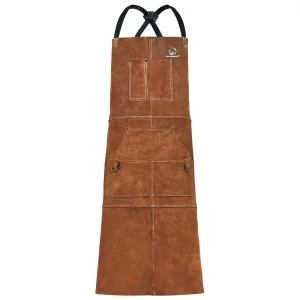
Explore our complete complementary range of split cowhide aprons, high-heat jackets, aluminized leggings, and precision TIG gear engineered for harsh industrial environments.