Engineered and manufactured within our certified Gaozhou facility. Available for custom OEM configuration, private-label branding, and international volume dispatch.
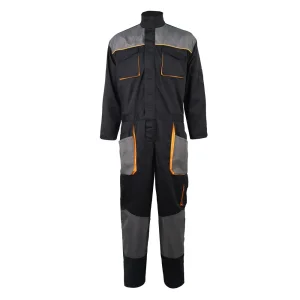
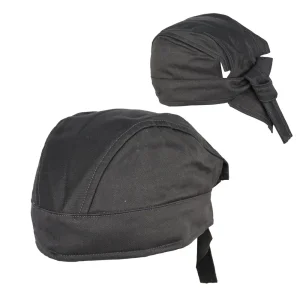
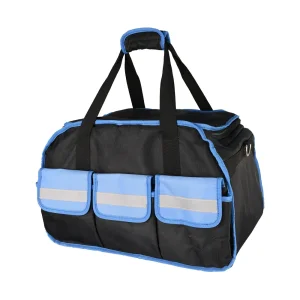
From unyielding, moisture-trapping canvas dungarees to engineered multi-laminate, climate-adaptive microclimates designed for the world's most unforgiving environments.
Traditional winter overalls relied on heavy oilskin or thick cotton duck canvas that absorbed ambient moisture, froze rigid under -15°C conditions, and impeded mechanical movement. Modern OEM engineering utilizes high-tenacity, rip-stop micro-rip fabrics bonded to breathable microporous PTFE/PU membranes. These maintain an impermeable barrier against wind and freezing drizzle while exhausting metabolic humidity.
Standard polyester battings degrade rapidly under industrial wash cycles and collapse when damp, completely compromising Clo values. Ming Shun incorporates advanced hollow-core, silanized hydrophobic microfibers. These synthetic matrices sustain high thermal resistance (0.35–0.48 m²·K/W) even during high-exertion manual labor, preventing localized sweat condensation and subsequent hypothermia risks.
Rigid thermal garments severely restrict operator dexterity, dramatically increasing fatigue and accident rates on high-risk job sites. Contemporary winter overall manufacturing leverages dynamic 3D articulation: pre-curved knee capsules, diamond-gusseted crotch panels, bi-swing accordion back pleats, and high-stretch shoulder yoke harnesses that seamlessly interface with fall-protection rigs.
Enterprise procurement officers are no longer sourcing basic cold-weather clothing. The contemporary mandate demands integrated multi-hazard performance: garments that combine EN 342 (Thermal Cold Protection) with EN ISO 11611 (Welding and Allied Processes), NFPA 2112 (Flash Fire), EN 1149-5 (Electrostatic Dissipation), and ANSI/ISEA 107 Class 3 high-visibility compliance in a cohesive, single-garment architecture.
Strategic buyers evaluate suppliers not merely on FOB unit pricing, but through rigorous lifecycle metrics, factory audibility, ESG compliance, and localized market adaptability.
Tier-1 engineering and mining conglomerates calculate wear-life per wash cycle rather than initial acquisition cost. Winter overalls engineered with 1000D Cordura® knee reinforcement pads, bar-tacked stress anchors, double-needle lockstitched seams with Kevlar® thread, and premium YKK® freeze-proof vislon zippers ensure a 3x field lifespan, slashing annualized PPE expenditure by up to 34%.
Commercial safety brands require rapid time-to-market. Ming Shun’s fully digitized pattern library enables expedited 5-day prototyping for custom bib and overall designs. We provide turnkey private-label solutions including laser-etched silicone badging, custom high-contrast reflective taping, bespoke corporate color-matching via in-house dyeing vats, and customized barcoding and retail packaging.
Enterprise buyers cannot risk compliance failures due to unverified subcontractor networks. Operating out of our 25-year-old Pukang Industrial Park campus with 1,000+ skilled personnel, Ming Shun controls the entire production chain: hide selection, tanning, dyeing, laser pattern-cutting, multi-line sewing, down-fill injection, and seam-sealing, backed by batch-coded mill test certificates.
| Performance Parameter | Standard Commercial Grade | Ming Shun Heavy Industrial OEM Spec | Compliance Reference / Standard |
|---|---|---|---|
| Outer Shell Tensile & Tear | Polyester Oxford 300D (< 800 N) | Reinforced 600D/1000D Cordura® Matrix (> 1850 N) | EN ISO 13934-1 / ASTM D5034 |
| Hydrostatic Water Column | 2,000 mm to 5,000 mm H₂O | 15,000 mm to 20,000 mm H₂O (Fully Taped Seams) | EN 343 Class 4 / ISO 811 |
| Moisture Vapor Transmission | < 2,500 g/m²/24h | > 7,000 g/m²/24h (Breathability Grade A) | EN ISO 11092 (Ret < 15 m²·Pa/W) |
| Thermal Insulation Index (Icler) | 0.220 m²·K/W (Sub-zero limited) | 0.385–0.490 m²·K/W (Rated to -50°C) | EN 342:2017 Clause 4.2 |
| Hardware Sub-Zero Resilience | Standard POM plastic (Cracks at -15°C) | Freeze-Impact Modified Nylon & Heavy Brass (-45°C) | Low-Temp Impact Mandrel Test |
| Flame & Spatter Protection | None / Flammable | Integrated FR Cotton / Split Cowhide Hybrid Layer | EN ISO 11611 Class 1 & 2 / NFPA 2112 |
Different operational sectors face radically divergent physical and environmental stresses. We configure technical men’s winter overalls tailored to specialized hazards.
Engineered for open-pit and underground iron ore and oil sand operations across Northern Canada, Scandinavia, and Kazakhstan. Overalls feature abrasion-armored knee and seat zones, high-density closed-cell foam kneepad inserts, double-insulated chest bibs to prevent thermal bridging against machine steering, and hi-vis reflective bands meeting CSA Z96 Class 2/3.
Designed for North Sea, Arctic, and deep-water platforms where workers face simultaneous threats of sub-zero wind chills, sea spray, and hydrocarbon flash fires. Utilizes inherently flame-resistant (IFR) aramid outer shells bonded with impermeable moisture barriers, antistatic grid carbon threads, and quick-release emergency harness escape cutouts.
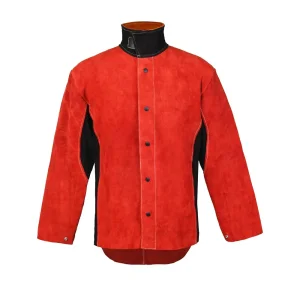
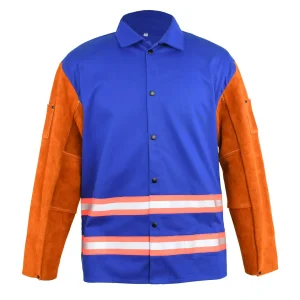
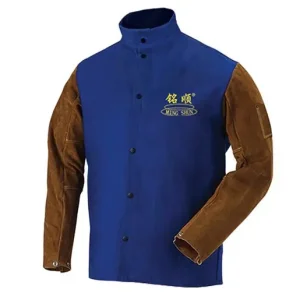
Conventional insulated winter overalls burn through immediately when contacted by slag and high-amperage welding sparks. Ming Shun’s proprietary hybrid design layers split cowhide leather and 9 oz flame-retardant treated cotton over high-loft quilted FR linings. This guarantees total weld-spatter resistance without sacrificing thermal containment.
For mechanized operators and workers in automated -30°C blast freezers and food processing centers. Engineered with ultra-lightweight aerodynamic insulation profiles that reduce bulk, side-leg two-way zip entry allowing fast donning over insulated boots, and micro-fleece kidney warmers integrated into high-back ergonomic bib suspenders.
Operating directly from Pukang Industrial Park in Gaozhou, we run an integrated industrial campus controlling every phase of workwear and PPE engineering.
Unlike downstream assembly shops that source outsourced dyed hides and off-the-shelf fabrics, our facility houses proprietary leather processing and specialized dyeing labs. This guarantees batch-to-batch color stability, consistent tensile thickness, and customized oil-, water-, and flame-resistant treatments across major annual production runs.
Our state-of-the-art cutting room utilizes high-speed automated CNC laser cutters driven by digitized Gerber CAD systems. This technology eliminates micro-variances across complex multi-layered overall shells, guarantees millimeter-exact seam margins, and maximizes textile efficiency to optimize containerized volume pricing.
Quality control is integrated at each production phase: incoming fabric hydrostatic testing, in-process seam burst audits, needle detection scans on fully quilted inner linings, low-temperature zipper tensile strain tests, dimension consistency verifications, and pre-shipment container-loading drop-tests.
Importing heavy workwear requires uncompromised conformity to regional health, safety, and environmental legal frameworks. We deliver complete documentation for international border release.
Full compliance with Regulation (EU) 2016/425 for Category II and III PPE. Certified under EN 342:2017 (Cold protective ensembles down to -50°C), EN 343:2019 (Water resistance & water vapor resistance Class 4:4), EN ISO 11611:2015 (Welding apparel Class 1 & 2), and EN 1149-5:2018 (Electrostatic properties). Complete technical files and EU Declarations of Conformity provided.
Engineered to exceed OSHA 1910.132 general PPE mandates. Third-party tested to ASTM F2732 (Standard practice for measuring temperature ratings of cold weather protective clothing), NFPA 2112 (Flame-resistant garments for industrial personnel), and ANSI/ISEA 107-2020 (High-visibility safety apparel). Sizing charts tailored precisely to US/Canadian occupational percentiles.
All dyed textiles, split cowhide leathers, synthetic linings, and metal hardware are strictly audited for restricted hazardous substances. We guarantee complete freedom from azo dyes, chromium VI, heavy metals, formaldehyde, and fluorinated PFC/PFAS finishing agents, protecting both user health and corporate brand accountability.
Our R&D team actively investigates and prototypes cutting-edge materials to revolutionize durability, user comfort, and sustainability for extreme-weather protective apparel.
Silica aerogels offer the lowest thermal conductivity of any known solid (0.015 W/m·K). Ming Shun is actively sampling flexible aerogel fleece composite blankets integrated into high-compression zones (knees, elbows, and lumbar regions). This completely eliminates thermal crushing when workers kneel on frozen steel or snow, maintaining 95% of insulation values under high pressure.
By weaving atomically thin graphene hexagonal lattices into overall interior liners, garments capture human metabolic body heat and re-radiate it back across far-infrared wavelengths. This technology enhances blood microcirculation, substantially reduces morning muscle stiffness in cold-weather workers, and eliminates up to 30% of total garment weight without reducing warmth.
As global regulations phase out long-chain PFAS water repellents, our R&D labs are pioneering plant-based dendrimer and bio-based silicone polymer coatings. These achieve 100-point spray ratings after 50 industrial wash cycles. Simultaneously, we are architecting mono-material polyester overall models that can be directly disassembled and mechanically recycled into new fiber at end-of-life.
Technical specifications, prototyping lead times, supply chain assurances, and private-label customization options answered directly by our factory engineering management.
Our standard OEM minimum order quantity is 500 units per style/colorway for custom-developed specs, which covers specialized textile dyeing and custom branding hardware. For distributor lines utilizing our standard in-stock performance shells and certified pattern blocks, we can accommodate trial runs starting at 200 units to support brand line rollouts.
Standard commercial polyacetal (POM) plastics become brittle and shatter below -15°C. For sub-zero winter overalls, we exclusively specify impact-modified DuPont™ Zytel® nylon composite buckles and freeze-tested YKK® Vislon® tooth zippers treated with low-temperature siliconized lubricants. Every hardware batch is certified via drop-dart impact tests in our on-site sub-zero freezer chambers.
Yes. A primary cause of returns for generic Asian workwear imports is inaccurate sizing. Ming Shun maintains dedicated Gerber CAD digitizing pattern libraries specifically tailored to both European (EN 13402) and North American (ANSI/ISEA) anatomical sizing percentiles, ensuring proper armhole clearance, torso length, and inseam ease for wearing over heavy mid-layers.
We utilize 3-ply pneumatic hot-air welded polyurethane (PU) seam tape matched to the chemical matrix of our laminate membrane. Unlike standard ironed single-layer tapes that delaminate after 5 washings, our automated seam-sealing process applies precise heat-pressure curves tested to retain complete waterproof integrity through at least 50 cycles of 60°C commercial industrial washing.
Upon receipt of your tech pack or reference physical sample, our pattern team completes first-round counter-samples within 5 to 7 business days. Following physical sample approval and spec sign-off, bulk factory production runs take approximately 45 to 60 days depending on raw material sourcing requirements, followed by full palletization and export dispatch via Guangzhou or Shenzhen ports.
Yes. We provide complete turnkey OEM brand programs. Customization includes high-definition woven damask labels, silicone rubber 3D badges, reflective heat-transfer logos, custom-molded zipper pulls, printed inner polybags with SKU barcodes, and heavy export cartons with customer-specific shipping marks ready for immediate distributor 3PL intake.
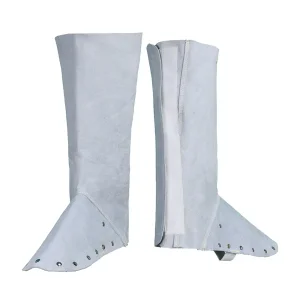
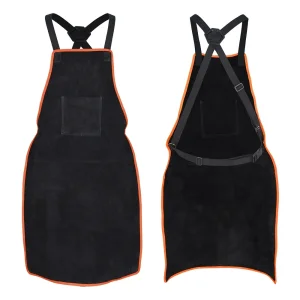
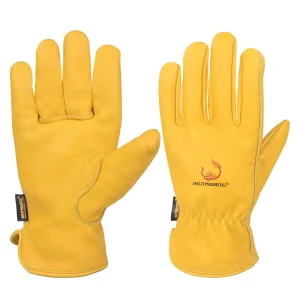
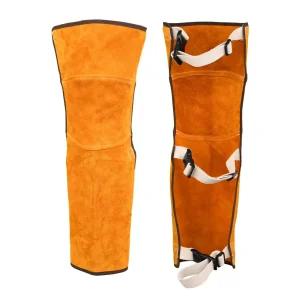
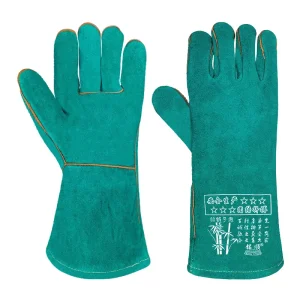
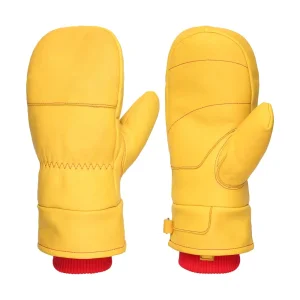
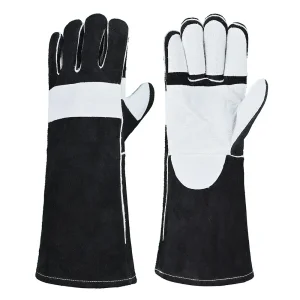
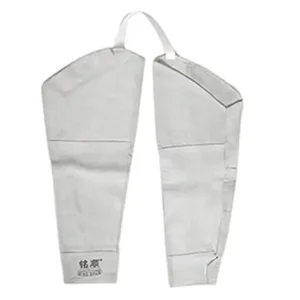
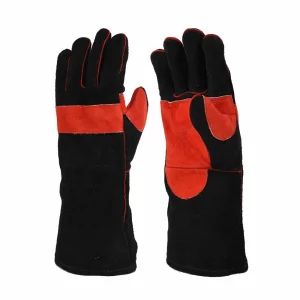
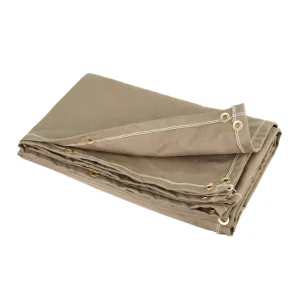
Complete full-body protective configurations by pairing our heavy winter overalls with matching leather protection, winterized work mittens, and industrial safety accessories.