Explore heavy-duty protective equipment fabricated directly on our automated production lines, serving industrial supply distributors across North America, Europe, and Asia-Pacific.
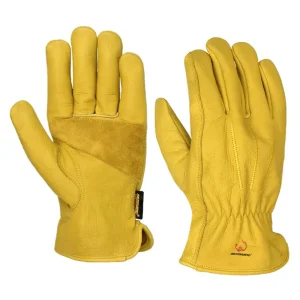
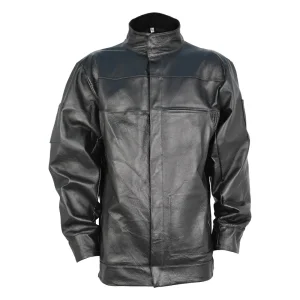
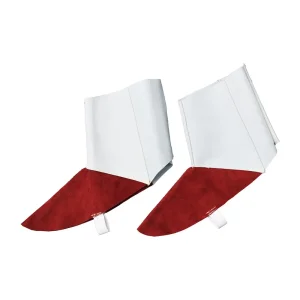
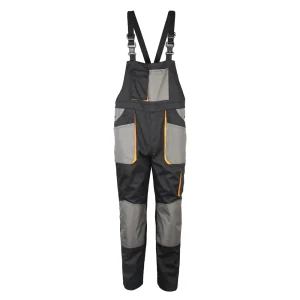
Analyzing thermal dissipation mechanics, kinetic arc-spatter resistance, and ergonomic adaptation in modern hot-work PPE manufacturing environments.
In high-amperage welding operations—spanning Flux-Cored Arc Welding (FCAW), Gas Metal Arc Welding (GMAW/MIG), Shielded Metal Arc Welding (SMAW/Stick), and Submerged Arc Welding (SAW)—the operator’s upper extremities and forearms sustain the most concentrated barrage of high-velocity molten spatter, radiant infrared emissions, and destructive ultraviolet flux. Historically, industrial facilities equipped operators with rigid, unarticulated cowhide sleeves that induced severe muscle fatigue, restricted circulatory return, and suffered from localized thermal burn-through along non-Kevlar seams. The modern protective landscape has transitioned decisively from simple passive covers to dynamically engineered welding sleeve guards designed with biomechanical articulation, zoned thermal barriers, and active moisture management.
Global manufacturing trends mandate that protective equipment must not impair worker dexterity or micro-motor control during precision welding beads. Industrial ergonomic assessments reveal that heavy, unventilated protective sleeves can increase forearm fatigue by up to 34%, leading to irregular torch manipulation and higher defect rates in structural seams. Modern OEM welding sleeve guards mitigate this through hybrid structural engineering: combining premium split cowhide or grain pigskin in high-exposure radial zones with high-density flame-retardant (FR) cotton, meta-aramid, or para-aramid textiles in flex regions.
Deploying specialized dense-grain cowhide treated with non-flammable silicone hydrophobic emulsions that prevent slag particles (up to 1,400°C) from adhering to outer fiber surfaces.
Strategically placed flame-retardant air release zones on the underarm dorsal regions reduce internal core microclimate temperatures without compromising frontal ballistic spatter integrity.
Every structural seam is locked with 3-ply to 5-ply para-aramid threading, eliminating burn-through failure, unraveling, and tensile degradation when exposed to direct molten droplet impacts.
Evaluating raw hide structural grading, flame-retardant fiber chemical density, and seam rupture thresholds across international procurement protocols.
| Substrate Material Class | Thickness / Fabric Weight | Tensile Strength (ISO 13934) | Contact Heat Threshold | Spatter Drop Resistance (EN 11611) | Target Industrial Application |
|---|---|---|---|---|---|
| Grade-A Split Cowhide | 1.2 mm – 1.4 mm Uniform | ≥ 450 N (Warp/Weft) | Up to 350°C for 15s | Class 2 (≥ 25 drops molten metal) | Heavy FCAW / Stick / Foundry Arc Welding |
| Premium Split Pigskin | 0.9 mm – 1.1 mm Supple | ≥ 320 N (Warp/Weft) | Up to 250°C for 12s | Class 1 (≥ 15 drops molten metal) | Overhead MIG / Automotive Production Lines |
| Hybrid FR Cotton (9 oz) + Leather | 305 g/m² + 1.2 mm Leather Pad | ≥ 680 N Tensile Tear | Up to 200°C Radiant Heat | Class 1 / Class 2 Zoned | Pipeline Maintenance & Confined Fabrication |
| Aramid Composite Fiber | 380 g/m² Heavy Weave | ≥ 1,200 N Extreme Tear | Up to 500°C Radiant Flash | Class 2 Equivalent Heavy | Automated Robot Cell Manual Override |
Procurement directors at tier-1 manufacturing corporations frequently discover that sub-grade, bargain-tier welding sleeves result in an alarming total expenditure footprint. Premature seam split, cuff elastic disintegration from thermal oxidation, and uneven leather tanning lead to replacement cycles averaging less than 14 operating days per unit. Ming Shun's vertical integration—encompassing raw hide sourcing, chrome-free tanning protocols, automated die cutting, and in-house assembly lines—reduces aggregate enterprise PPE expenditure by over 28% annually through extended mechanical lifespans and verified field durability.
Customizing sleeve dimensions, securing fixtures, and abrasion profiles to withstand sector-specific hazard combinations across extreme industrial environments.
Continuous robotic-assist stations requiring ultra-flexible grain leather guards that resist high-velocity localized MIG micro-spatter while preventing robot tool-chatter interference.
Engineered for saline atmosphere durability and high-moisture exposure. Features rust-proof brass hardware and mildew-resistant leather treatments for enclosed ballast tank welding.
Extended 23-inch sleeve models incorporating adjustable bi-directional bicep buckles and cowhide flame shields, preventing hot falling slag ingress during critical overhead welds.
Ergonomic contoured patterns that match the natural resting flex of the human forearm, reducing torque pull against high-amperage TIG welding torches in tight orbital assemblies.
Ensuring cross-border shipments strictly fulfill European Union, North American OSHA, and international safety directives prior to export clearance.
Rigorous test benchmarking verifying ignition delay, limited flame spread (Index 3), radiant heat transfer index (RHTI 24 ≥ 16s), and molten drop count (≥ 25 drops for Class 2 heavy hot work).
Engineered to comply with United States Department of Labor hot-work PPE protocols, featuring verified puncture level 3-5 ratings and abrasion cycle resistance exceeding 8,000 cycles.
Guaranteed non-detectable Hexavalent Chromium (Cr VI < 3 ppm) and azo dye compliance under EU Regulation 1907/2006, ensuring skin-contact safety and allergy mitigation.
Pioneering the convergence of advanced material chemistry, ergonomic biomechanics, and sustainable manufacturing practices for the future of industrial personal protection.
Integrating nano-scale fluorochemical coatings onto cowhide fibers that cause molten spatter beads to instantly skid off without surface thermal oxidation.
Micro-encapsulated organic phase-change materials (PCMs) woven into the interior sleeve lining that absorb body heat spikes and release cooling effects in high-ambient workshops.
CAD-modeled accordion flex segments over the olecranon process to eliminate sleeve pull-back and forearm exposure during extreme arm extensions.
Transitioning toward 100% bio-based, heavy-metal-free vegetable tanning processes that maintain mechanical flame deflection while lowering corporate carbon footprints.
Authoritative technical guidance compiled by our senior safety engineers and export project managers for international procurement teams.
Split cowhide is extracted from the fibrous inner flesh layer of the hide after the top grain is split off. It exhibits superior thermal resistance, higher surface friction, and excellent resistance to molten droplet adhesion compared to untreated grain leather. Its textured suede-like surface prevents sparks and hot slag from sliding directly into cuffs. Grain leather, however, provides superior oil and water repellency along with enhanced flexibility. For high-amperage stick or FCAW welding, heavy split cowhide (1.2–1.4 mm) remains the industry gold standard. For agile TIG operations, lightweight grain pigskin or goatskin offers enhanced dexterity without unnecessary arm fatigue.
Standard synthetic threads such as nylon or polyester soften at 180°C and melt completely between 210°C and 250°C. In contrast, arc welding spatter droplets often exceed 1,000°C upon kinetic impact. If standard thread melts, the sleeve seams rupture immediately, exposing the operator’s arm to direct burns and UV arc radiation. DuPont™ Kevlar® and equivalent para-aramid threads carbonize only above 425°C to 450°C without melting or sustaining combustion, ensuring seam structural integrity under severe thermal barrages.
Sleeve slippage is a primary ergonomic hazard in industrial environments. Ming Shun provides four tailored retention architectures for OEM clients: (1) Heavy-duty flame-retardant elastic cuffs on both wrist and bicep; (2) Adjustable hook-and-loop (Velcro FR) straps for custom bicep tensioning; (3) Alligator harness suspender clips that anchor the sleeve top directly to the operator’s welding jacket or apron harness; and (4) Quick-release acetal snap-buckle straps that link around the welder's upper back to distribute weight symmetrically across both shoulders.
Guangdong Ming Shun Labour Protective Products Co., Ltd. enforces strict tannery chemical controls. Hexavalent Chromium (Cr VI) forms when trivalent chromium oxidizes under improper heat or pH conditions. We utilize controlled vegetable-chrome synthetic tanning processes with continuous antioxidant conditioning agents to guarantee Cr VI levels remain strictly non-detectable (below the 3 mg/kg limit required by EN ISO 21420 and REACH Annex XVII). Every production batch is certified via accredited third-party test reports (SGS, TÜV, or CTC) prior to container stuffing.
For custom OEM/ODM welding sleeve guards, our standard minimum order quantity is 1,200 pairs per custom pattern or colorway. Prototype and counter-sampling are completed within 7 to 10 business days following tech pack review. Mass container production typically finishes within 40 to 45 calendar days. We also support multi-SKU consolidated container shipments, allowing distributors to combine sleeves, welding gloves, leather jackets, aprons, and spats into single 20GP or 40HQ containers to optimize maritime freight efficiency.
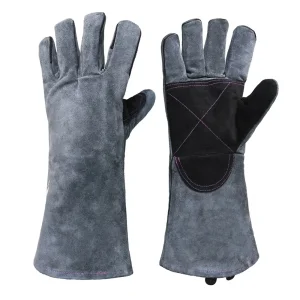
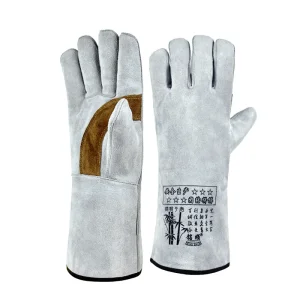
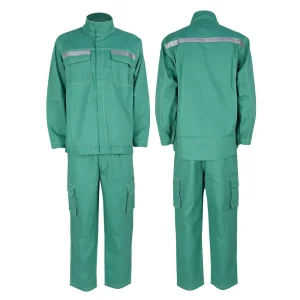
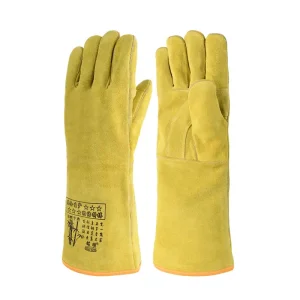
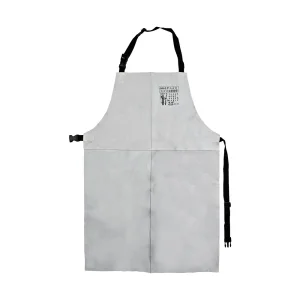
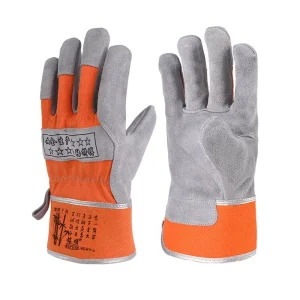
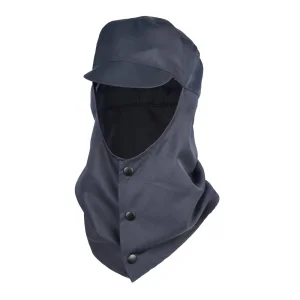
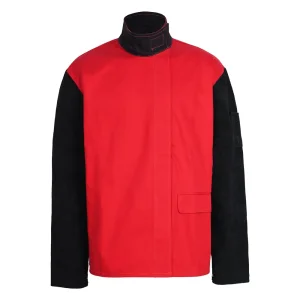
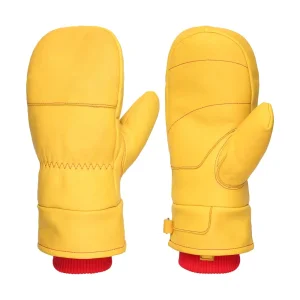
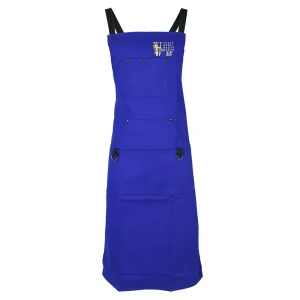
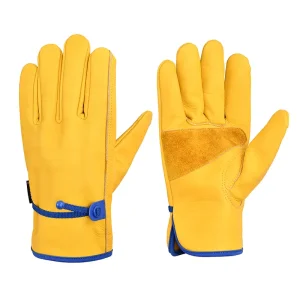
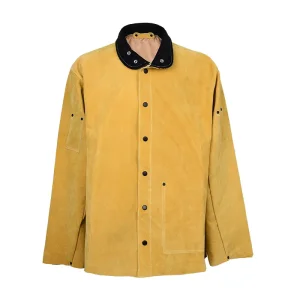
Complementary welding safety gear precision-engineered with matching leather stocks, Kevlar thread integrity, and uniform flame-retardant safety standards.