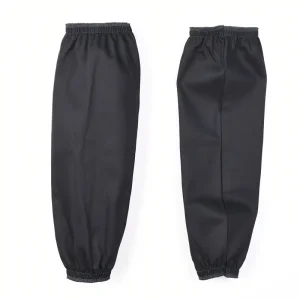
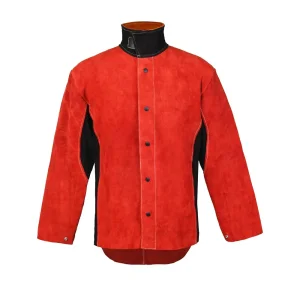
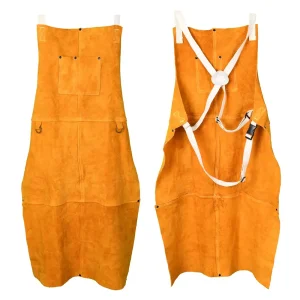
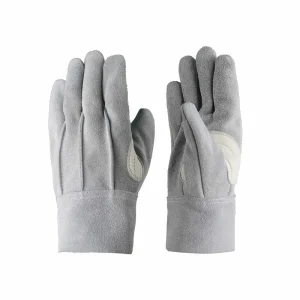
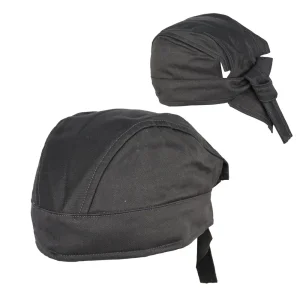
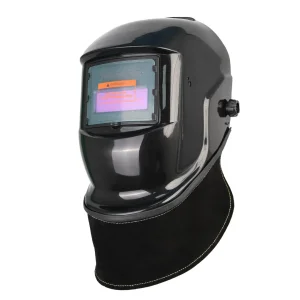
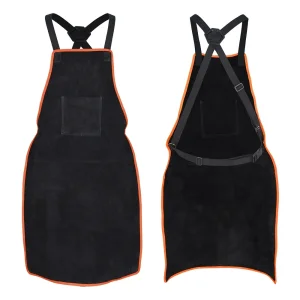
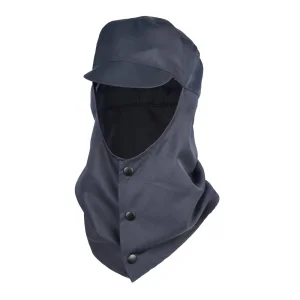
Core protective wear engineered directly within our integrated manufacturing facilities, validated for multi-hazard thermal risk, molten spatter deflection, and mechanical resilience.
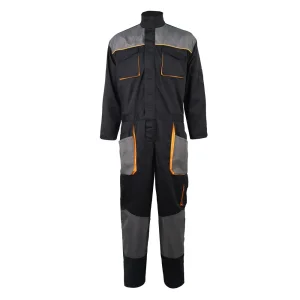
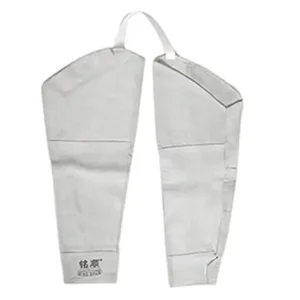
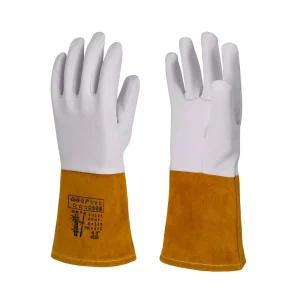
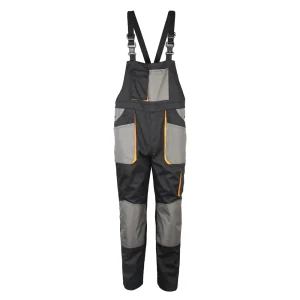
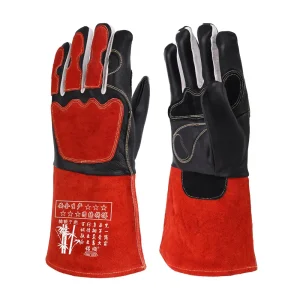
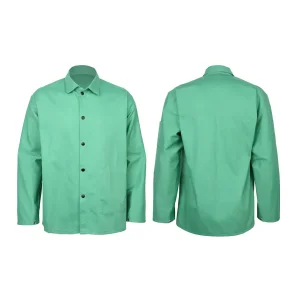
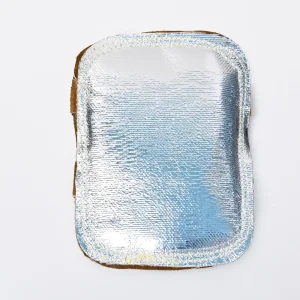
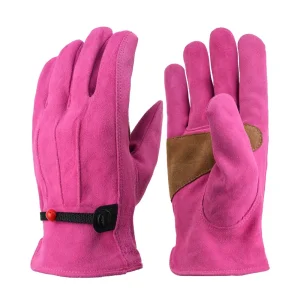
In hot-work protection, the distance between leather tanning, chemical treatment, and pattern cutting dictates production consistency. Our Gaozhou-based manufacturing hub eliminates supply friction.
Unlike assembly-only cut-and-sew workshops, our integrated facilities manage raw leather processing, chrome-free tanning formulations, and custom dye baths internally. This stabilizes split thickness, fiber density, and flame-retardant oils at the chemical stage.
Situated in the heart of the world's premier leather PPE industrial cluster, we draw upon multi-generational craftsmanship, unified logistics, and localized specialty component makers (FR Kevlar® threading, brass stud hardware, specialized split cowhide sorting).
All production frameworks are compliant with ISO 9001:2015. Every bulk production run is validated against EN ISO 11611 (Welding Garments), EN 12477 (Welder Protective Gloves), EN 388 mechanical ratings, and ANSI/ISEA 105 requirements prior to release.
Direct pattern digitizers, custom laser-cutting systems, and CAD technical teams allow full OEM/ODM brand programs: custom color schemes, debossed cowhide branding, high-visibility reflective piping, and multi-language retail packaging.
Macro shifts across global manufacturing, decarbonization projects, and stringent labor safety laws are redefining requirements from simple mechanical covers to ergonomic safety systems.
| Performance Vector | Traditional Industry Baseline | Next-Gen OEM Factory Standard | Compliance Verification |
|---|---|---|---|
| Thermal Fabric Hybridization | 100% Heavy Split Cowhide (High weight, heat fatigue) | Hybrid 9 oz FR Cotton torsos with A-grade Leather sleeves | EN ISO 11611 Class 1/2 |
| Dexterity vs. Thermal Threshold | Rigid cowhide gloves limiting precision control | High-tensile top-grain goatskin with Gunn-cut seamless palms | EN 12477 Type A & B |
| Seam Longevity & Integrity | Standard poly-cotton threading vulnerable to sparks | 100% DuPont™ Kevlar® heat-resistant filament threading | Zero Seam Burn-Through |
| Ergonomic Motion Architecture | Box-cut, standard flat-pattern tailoring | Underarm gussets, bi-swing pleated backs & articulated elbows | Repetitive Strain Prevention |
| Chemical & Heavy Metal Safety | High residual Chromium VI content in split leather | Eco-tanned cowhide with verified low hexavalent chromium | REACH & OEKO-TEX Standard |
Industrial welders confront widely divergent operational risks depending on process amperages, positional constraints, and ambient atmospheric factors.
Extreme duty MIG (GMAW) and submerged arc operations require full 1.2mm–1.4mm selected split cowhide coats, integrated split leather spats to prevent slag accumulation in boot eyelets, and Kevlar-lined heavy gauntlets with reinforced thumb saddles.
Continuous out-of-position root-pass pipe welding requires ergonomic split cowhide bibs, FR balaclavas with shoulder coverage, and ultra-flexible top-grain goatskin TIG gloves engineered with zero back-of-hand seams to maximize torch manipulation.
Maintenance technicians operating near spot-welding robots require breathable 9 oz FR cotton coveralls equipped with high-visibility silver reflective striping, anti-static carbon filaments, and quick-release non-conductive concealed zip systems.
High-abrasion mining fabrication plants require heavy-duty work overalls featuring cordura-reinforced kneepad pockets, leather-reinforced chest pockets, and aluminum-backed reflective radiant heat shields for back-of-hand protection.
Procuring protective equipment directly from the factory floor requires verifiable process controls at every stage of the production cycle.
Tensile stress verification, thickness calibration using digital micrometer probes, and chemical batch tracking ensure leather uniformity across large container orders.
Automated nesting systems cut pattern panels to exact geometric tolerances, maximizing material efficiency while preventing dimensional variances between sizing runs.
Pocket corners, suspender junctions, and sleeve joins receive targeted box-X bar-tacking and anti-corrosive brass rivets to withstand abrasive mechanical pull forces.
Finished goods undergo dimensional checks, stitching flaw isolation, burn tests on thread samples, and strict packaging compliance to guarantee smooth container releases.
Essential guidance on lead times, factory auditing, technical specifications, and custom OEM manufacturing.
An OEM manufacturer owns raw material transformation facilities (tannery, dyeing tanks, cutting tables, automated sewing assemblies). This ensures direct control over leather grading, material batch consistency, customized pattern adjustments, and immediate third-party audit access (BSCI, ISO 9001), eliminating intermediary markups and communication gaps.
Our lab protocols test raw materials and finished articles against radiant heat transfer (EN 367), small molten splash resistance (EN 348), and seam tear resistance. Model-specific test certificates issued by notified bodies (such as SATRA, SGS, or TUV) are maintained for rapid verification across European and North American customs clearing authorities.
Standard lead times for full container load (FCL) orders average 40 to 45 business days following final sample sign-off and lab dip approval. For custom OEM branding (private label debossing, woven labeling, custom packaging), our MOQs generally start at 1,000 to 2,000 units per style, with sample turnarounds completed within 7 to 10 days.
Yes. Our product development department specializes in hybrid garments (such as our MS-1260 and MS-280 series). These feature 9 oz or 7 oz breathable FR cotton on back and torso regions to minimize worker heat exhaustion, paired with Grade-A split cowhide on sleeves, chest, and shoulders where heavy spatter and ultraviolet radiation are most concentrated.
We source and process split cowhide (shoulder, belly, and side splits) for heavy-duty MIG and SMAW welding, flexible top-grain cowhide for all-purpose industrial fabrication, supple goatskin for high-dexterity TIG welding, and breathable pigskin for high-moisture operational environments.
Explore our extended series of flame-retardant accessories, split-leather jackets, protective aprons, and ergonomic headwear engineered for maximum shop-floor protection.