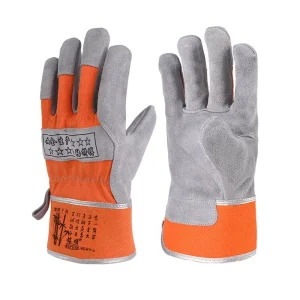
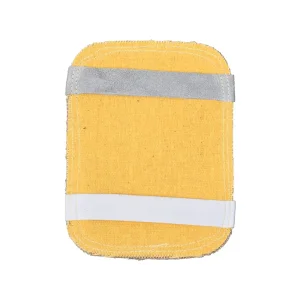
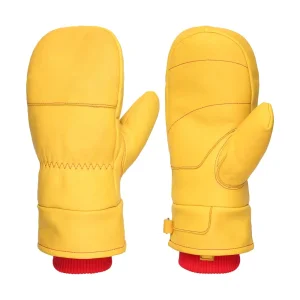
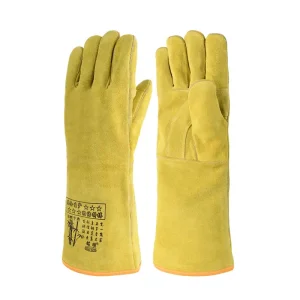
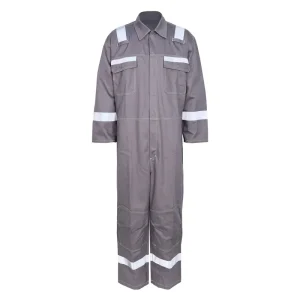
Engineered to mitigate sustained thermal fluxes up to 1,650°C (3,000°F), resisting extreme weld spatter, convective plume surges, and radiant hazards in high-duty cycle fabrication environments.
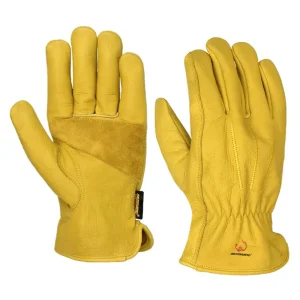
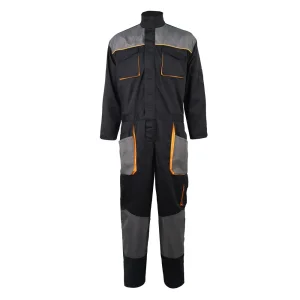
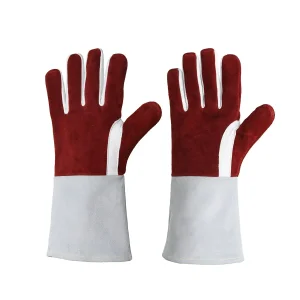
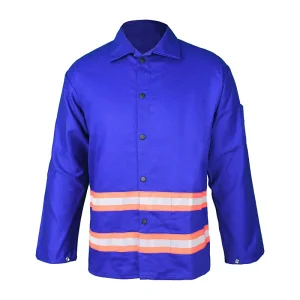
Navigating the transition toward high-density automated manufacturing, structural lightweighting, and uncompromising thermal protection across global industrial corridors.
The acceleration of robotic MIG, laser cladding, and tandem-wire submerged arc welding has dramatically altered the thermal paradigm. Today’s industrial heat shields must endure continuous-duty arcs generating relentless radiant heat without embrittlement or surface delamination.
Regulatory bodies across North America (OSHA/ANSI Z49.1) and the European Union (EN ISO 11611, Class 1/Class 2) are elevating baseline thresholds for thermal protective equipment. Enterprise buyers require third-party accredited heat shields demonstrating verifiable char-length minimums and zero molten metal adhesion.
Procurement directors are shifting away from fragmented trading intermediaries in favor of vertically integrated OEM partners. Consolidating raw material tanning, aluminized composite lamination, and precision stitching under one roof minimizes lead-time volatility and ensures batch consistency.
Comparative analysis of composite substrates utilized in industrial welding heat shields, back hand shields, and automated welding chamber curtains.
| Substrate Composite | Continuous Operating Temp | Peak Flash Resistance | Tensile Strength (Warp x Weft) | Spatter Deflection Profile | Primary Industrial OEM Application |
|---|---|---|---|---|---|
| Aluminized Para-Aramid / Carbon Blend | 550°C (1,022°F) | 1,650°C (3,000°F) | 3,200 N x 2,800 N | Class A: Repels molten steel drops >50g | High-Amperage Back Hand Shields, Robotic Cell Drapes |
| Vermiculite-Coated Structural E-Glass | 750°C (1,382°F) | 1,100°C (2,012°F) | 2,400 N x 1,900 N | Class B: Non-flammable, thermal soot dissipation | Heavy Fabrication Blankets, Pre-Weld Heat Retention |
| Silica Fabric (96% SiO2 Content) | 1,000°C (1,832°F) | 1,700°C (3,092°F) | 1,800 N x 1,400 N | Class A+: Zero burn-through during heavy torch cutting | Offshore Subsea Pipeline Hyperbaric Habitats |
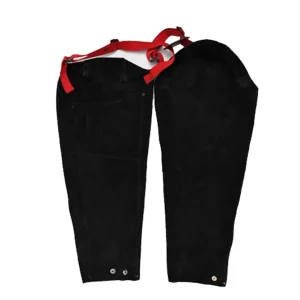
| Chrome-Tanned Heavy Split Cowhide (1.4-1.6mm) | 250°C (482°F) | 800°C (1,472°F) | 1,200 N x 1,100 N | Class A: Self-insulating char formation | Welders Torso Armor, Aprons, Articulated Sleeves |
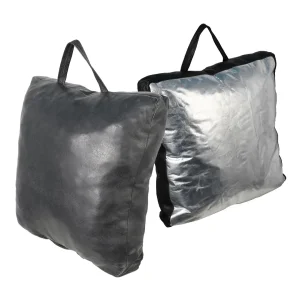
| Pre-Oxidized Carbon Fiber Felt (Panox) | 400°C (752°F) | 1,300°C (2,372°F) | 950 N x 850 N | Class B+: Resilient cushion barrier against hot slag | High-Flex Welder's Knee & Hip Ergonomic Cushions |
Our aluminized back hand pads and heat shields leverage vacuum-deposited aluminum film layered onto high-density fiberglass or Kevlar substrate matrices. This surface configuration reflects up to 95% of direct radiant infrared energy away from the operator's metacarpal zone, dropping internal palm temperatures by as much as 48°C during continuous 350-amp TIG and pulse MIG cycles.
A heat shield is only as resilient as its seaming matrix. Every Ming Shun OEM thermal barrier is bonded using 3-ply to 5-ply continuous filament DuPont™ Kevlar® thread, fortified with a secondary lock-stitch construction. In environments characterized by molten iron or aluminum spatter, our integrated leather welting completely encapsulates the seam line to eliminate stitch degradation.
From robotic automotive body shops to offshore hyperbaric habitat modules, explore how our custom OEM heat shields safeguard equipment, personnel, and structural assets.
Automated fiber-laser and high-speed resistance welding of electric vehicle battery enclosures generate ultra-fine, incandescent spatter. Our custom-tailored modular heat blankets protect optical sensor heads, linear actuators, and high-voltage wiring harnesses from thermal interference.
Marine fabrication and API 5L line pipe double-jointing involve multi-torch automated flux-cored arc welding under hyper-corrosive marine spray. Our dual-sided silicone-impregnated silica shields maintain thermal containment during pre-heat (PWHT) and slow-cooling operations.
Precision manual TIG and micro-plasma welding on Inconel, Monel, and titanium alloy turbine components necessitate surgical operator control without conductive heat transfer. Our lightweight aluminized goatskin and carbon-felt back hand pads eliminate wrist fatigue while blocking up to 98% radiant load.
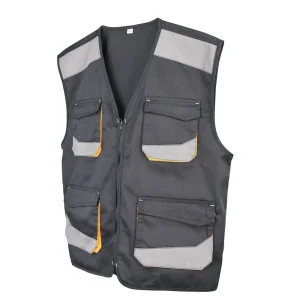
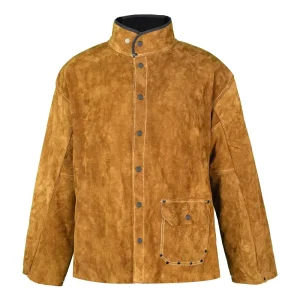
Erecting high-rise columns and bridge trusses involves out-of-position vertical-up and overhead welding. Molten slag runoff will rapidly destroy conventional workwear. Our premium split-leather heavy jackets, bibs, and snap-on heat shields defend ironworkers against pooling metal dross.
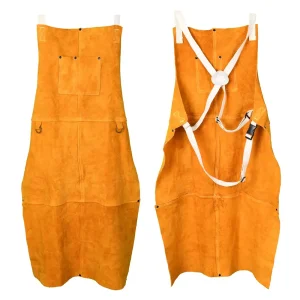
Operators handling electric arc furnaces (EAF) and slag skimming stations face thermal radiation in excess of 1,200°C. Ming Shun’s multi-ply aluminized aprons, full-body chaps, and thermal boots ensure that inadvertent molten metal contact results in instantaneous deflection with zero burn-through.
From custom tech-pack digitizing to certified batch release, our 25-year production campus in Gaozhou delivers complete supply chain transparency.
Our engineering department converts client CAD files and tech specs into precise 2D cutting dies within 48 hours. Rapid prototyping guarantees seam fit, ergonomic flexibility, and material optimization before tooling lock.
By operating internal beamhouse, retanning, and precision splitting mills, we enforce strict controls over chrome salt content, leather pH balance, moisture migration, and tensile modulus for flawless heat resistance.
Thermal adhesives used in our aluminized shields are formulated for zero outgassing and flame-quenching properties. Continuous roller lamination guarantees high peel strengths even after thousands of flex cycles.
Every lot undergoes stringent mechanical abrasion, cut resistance, tear strength, and limited flame spread testing under ISO 9001:2015 controls, aligning with CE, ANSI/ISEA 105, and EN ISO 11611 criteria.
Anticipating next-decade manufacturing challenges through advanced nanotechnology, phase-change materials, and circular sustainability.
Integration of aerogel microspheres and titanium-oxide ceramic nanolayers directly into flexible textiles. This drastically reduces overall shield weight by 35% while increasing convective thermal breakdown points above 1,800°C.
Embedding ultra-thin micro-thermocouple strips into localized hot-work drapes and welder pads. These arrays transmit real-time telemetry to industrial SCADA systems, warning operators of substrate saturation before heat penetrates the armor.
Pioneering circular economy pathways for end-of-life heat shielding. Development of modular, mechanically recyclable woven silica matrices and plant-based vegetable tanning agents with zero fossil chemical runoff.
Authoritative technical guidance for procurement officers, safety directors, and global industrial distributors.
A dedicated OEM welding heat shield is specifically engineered for localized high-temperature zones with directional radiant heat flux and heavy mechanical abrasion. Unlike standard multi-purpose fiberglass blankets, engineered heat shields utilize multi-layer composite technology (e.g., aluminized coatings, carbon felt cores, and split cowhide exteriors) secured with continuous filament Kevlar thread. This prevents delamination, reflective cracking, and slag penetration during heavy gouging, pulsed GMAW, and FCAW operations.
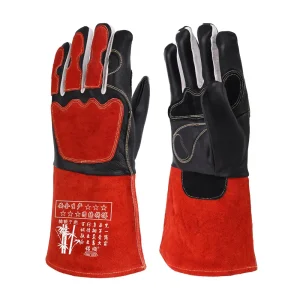
Solid cowhide operates on conductive dissipation and thermal mass; it absorbs heat until it reaches equilibrium, eventually conducting that heat to the welder's hand. In contrast, an aluminized back hand shield reflects up to 95% of infrared radiant energy at the boundary layer through optical reflection. By deflecting the thermal load before absorption occurs, radiant temperature spikes are deflected, keeping hand temperatures significantly lower and extending glove operational life by 300%.
Yes. We specialize in bespoke OEM and ODM manufacturing. We can customize dimensions, grommet positioning, magnetic mounting points, elastic retaining strap profiles, and multi-layer composites according to your technical drawings. Branding options include laser debossing, thermal transfer graphics, woven labels, and retail packaging built to client specification.
Depending on your regional requirements, we provide comprehensive third-party lab documentation from accredited bodies (SGS, TUV, Intertek). Certifications include CE mark under Regulation (EU) 2016/425, compliance with EN ISO 11611 (protective clothing for welding and allied processes), EN 12477 (welding gloves), EN 407 (thermal hazards), and ANSI/ISEA 105 puncture, tear, and heat resistance ratings.
Standard production MOQ for custom OEM heat shields, hand pads, and PPE garments ranges from 500 to 1,200 units depending on raw material sourcing parameters. Prototype sampling is completed in 7-10 working days, with mass production runs executed in roughly 35-45 days following final sign-off. Spot orders on standardized catalog products can be accommodated with lower minimum thresholds.
Explore additional specialized thermal solutions engineered in our Gaozhou facility for demanding industrial fabricators across the globe.