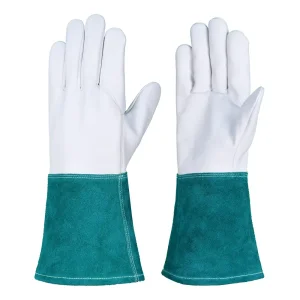
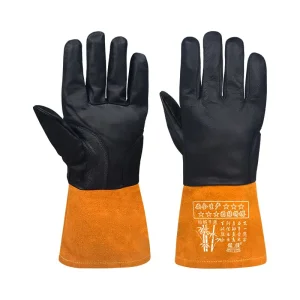
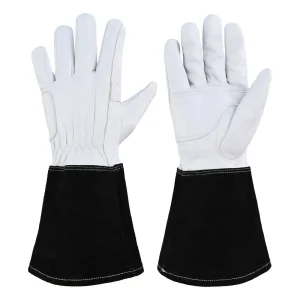
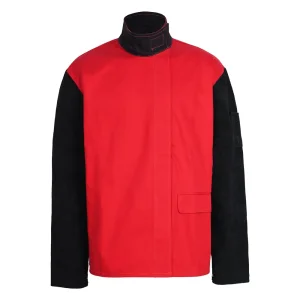
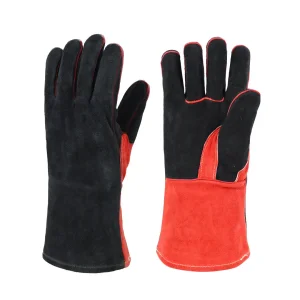
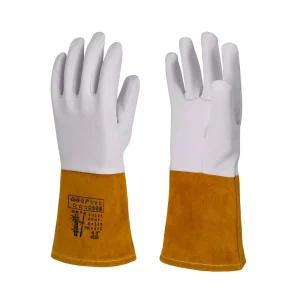
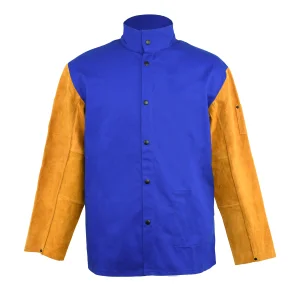
Direct from our integrated manufacturing floor in Gaozhou, Guangdong. Engineered for maximum spark deflection, contact thermal resistance, and exceptional cut barrier integrity.
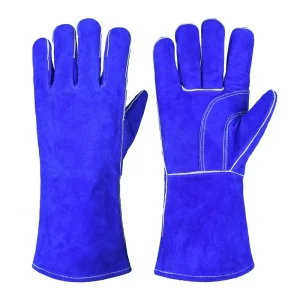
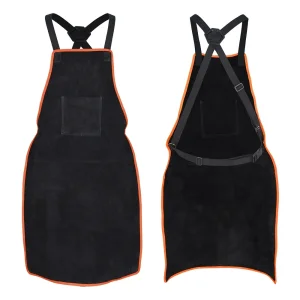
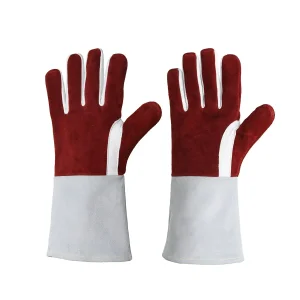
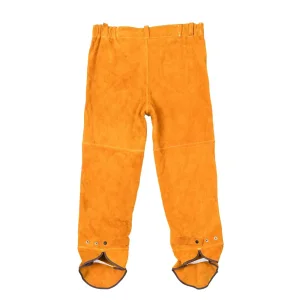
Industrial thermal hand protection has shifted from generic heavy cowhide to calibrated ergonomic PPE. Global procurement demands precise compliance, quantifiable tensile durability, and multi-tier hazard mitigation.
Modern welding applications—from heavy GMAW/FCAW to hyperbaric pipeline joining—generate localized thermal spikes up to 1650°C at the arc. Protective gloves must feature zoned insulation consisting of aerated aluminized fleece, split cowhide (1.2mm–1.4mm thickness), and Kevlar thread welted seams.
Navigating global compliance requires verifiable documentation. We differentiate rigorously between Type A (High Heat / Moderate Dexterity) for stick/flux-core work and Type B (High Dexterity / Moderate Heat) for precision GTAW, passing rigorous EN 407 contact heat tests.
Unlike trading intermediaries, our Gaozhou factory executes raw hide selection, chemical-monitored chrome/vegetable tanning, computerized pattern cutting, and stress-tested assembly within our own ISO-controlled facilities, eliminating supply chain variance.
A comprehensive assessment of structural developments altering global procurement matrices across marine, aerospace, and energy sectors.
Traditional single-layer split cowhide is being replaced by hybrid engineering. Combining supple top-grain goatskin on the palms for trigger articulation with aluminized Kevlar backings drastically cuts user fatigue while reflecting up to 95% of radiant heat.
Multinational industrial conglomerates now enforce strict ESG frameworks. Chromium VI formation thresholds (strictly <3 mg/kg under ISO 17075) require advanced chromium-free vegetable aldehyde tanning techniques and eco-friendly dye processes in baseline fabrication.
With the adoption of cobots and automated orbital welding systems, operators transition from brute slag chip management to tactile programming, digital wire-feed adjustment, and sporadic hot-pass inspections, accelerating demand for multi-dexterous protective gear.
| Substrate / Parameter | Split Cowhide (A/B Grade) | Full-Grain Goatskin | Aluminized Glass/Aramid | FR Cotton Composite |
|---|---|---|---|---|
| Thermal Contact Resistance | Class 2 (Up to 250°C, >15s) | Class 1 (Up to 100°C, >15s) | Class 4 (Up to 500°C Radiant) | Flash & Spark Repellent (<150°C) |
| Puncture & Cut Level (EN 388) | Level 3 - 4 Abrasion / Tear | Level 2 Abrasion / High Puncture | Reinforced with Core Yarn (A3-A6) | Moderate Abrasion Resistance |
| Tactile Dexterity Index | Moderate (Class 1-2) | Superior (Class 4-5) | Low (Designed for Deflection) | High Elastic Flexibility |
| Target Application | Stick, Heavy MIG, Foundry Work | TIG / Micro-Plasma Welding | High-Amp Radiant Flux / Smelting | Cape Sleeves, Body Spatter Covers |
Large-scale safety equipment distributors and industrial supply contractors face operational friction. Here is how our OEM infrastructure secures the global pipeline.
Challenge: International delivery bottlenecks and raw leather price swings disrupt quarterly inventory schedules.
Solution: Guaranteed buffer leather yards, a 45-day typical bulk container schedule, and predictable capacity reserving.
Challenge: Initial production samples pass inspection, but mass orders exhibit variable hide thickness or seam failure.
Solution: Standardized automated hide skiving and laser-guided grading with tensile stress logs per batch.
Challenge: Consignments held at destination ports due to mismatched lab tests, azo dyes, or labeling gaps.
Solution: End-to-end model-specific testing documentation (CE, EN 12477, EN 388, ANSI/ISEA 105) provided in advance.
Challenge: Generic items weaken brand equity in competitive bid processes for defense and energy projects.
Solution: Custom branding across welt embossment, woven labels, high-visibility stitching, and certified barcodes.
Industrial welders face varying combinations of high radiant energy, sharp steel burrs, spatter fallout, and prolonged grip tension. We tailor solutions for each operational environment.
Environment: Confined hull spaces, high humidity, position welding, heavy spatter.
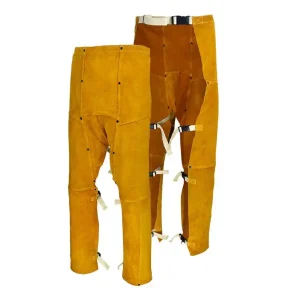
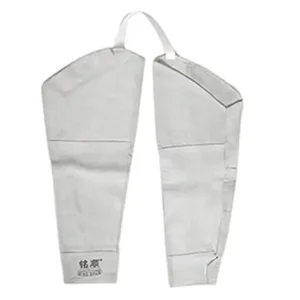
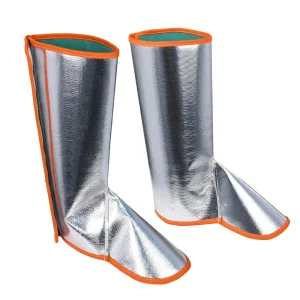
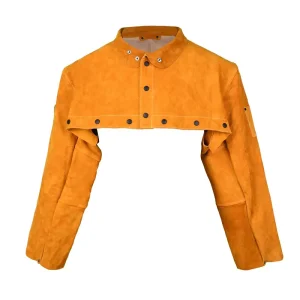
Engineered Solution: Heavy-gauge split cowhide gloves reinforced with Kevlar seam welting, paired with split cowhide cape sleeves and chaps for falling slag deflection.
Environment: Rapid resistance spot welding, automated cell loading, sheet metal handling.
Engineered Solution: Ergonomic goatskin / aramid composite styles providing Level 4 cut safety, arc-flash contact defense, and immediate tactile sensitivity.
Environment: Extreme outdoor climates, pipeline root-pass shielded metal arc welding (SMAW).
Engineered Solution: Fleece-insulated split cowhide systems with extended 6-inch cuffs, moisture barrier linings, and aluminized back hand pads for radiant deflection.
Direct manufacturer backing ensures documented quality inspections at every step—from incoming raw hides to container dispatch.
Incoming raw hides undergo pH balance verification, pentachlorophenol screening, and azo dye testing. Total chromium release levels strictly meet EU Regulation (EU) 2016/425, ensuring operator skin comfort during long shifts.
Equipped with Martindale abrasion testers and coupon seam pull rigs. Every batch of Kevlar stitching is tested to confirm seam integrity will not split when exposed to sudden contact with jagged metal burrs or spatter.
Global clients receive complete export documentation packages: Bills of Lading, Certificate of Origin (Form E, CO, etc.), formal Test Reports from accredited bodies, and custom carton markings aligned with regional warehouse standards.
Continuous investment in cutting-edge materials, ergonomic modeling, and circular manufacturing to stay ahead of international safety benchmarks.
Incorporating ultra-thin silica aerogel barrier sheets into critical palm and back-hand strike zones to prevent conductive heat transfer up to 500°C with 40% less bulk than traditional fleece.
Applying nanoscale graphene surface emulsions to outer split leather hides, delivering water, oil, and slag repellent properties without altering breathability or mechanical flexibility.
Embedding heat-shielded micro-RFID chips into cuff trims to assist industrial plants and shipyards with PPE lifecycle monitoring, compliance tracking, and replacement workflows.
Adopting sustainable zero-water tanning processes and organic tannins derived from olive leaf extracts, eliminating synthetic heavy metals and setting new environmental standards.
Key technical and commercial considerations for corporate procurement directors, supply chain managers, and distributors.
Ming Shun operates as a true manufacturer located in Pukang Industrial Park, Gaozhou, Guangdong. With over 25 years of dedicated production, 1,000+ skilled workers, and in-house leather tanning and dyeing, we maintain direct control over product quality and cost structures.
Initial technical spec alignment and prototype pattern cutting require 5–7 working days. Physical samples, customized with branded embossing, specific welt configurations, or tailored linings, are dispatched within 10–14 days for customer review.
Type A requires higher heat protection with lower dexterity requirements (ideal for Stick and MIG), validated by EN 407 testing. Type B demands greater dexterity (Class 4 or 5) for precise TIG feeding, which we achieve using top-grade full-grain goatskin.
Our glove facility produces over 500,000 pairs monthly. Standard full-container load (FCL) orders typically ship within 45 days of sample sign-off. We also support rolling scheduled containers for multi-depot distribution programs.
Yes. Our in-house tannery formulates custom Pantone-matched hues, specialized oil-resistant finishes, and unique split textures to match your brand's existing PPE collection across international markets.
All load-bearing thermal seams feature full cowhide welting to protect the internal thread from sparks. We use flame-retardant DuPont Kevlar or aramid-core thread to prevent seam degradation under sustained spatter exposure.
Engineered for exacting thermal protection, smooth filler-wire control, and rugged industrial job-site durability.