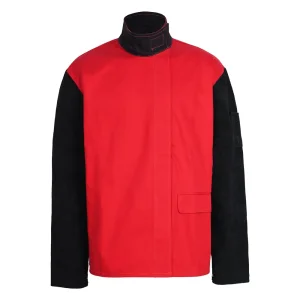
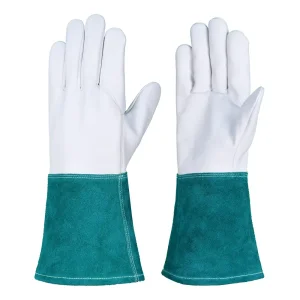
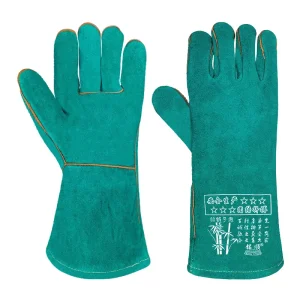
Manufactured under rigorous EN ISO 11611 and EN 12477 specifications, optimizing hand, arm, and core thermal safety across global heavy industrial deployments.
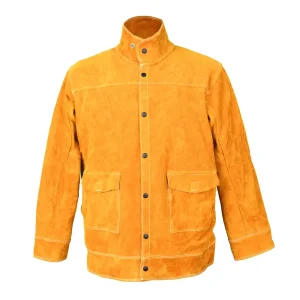
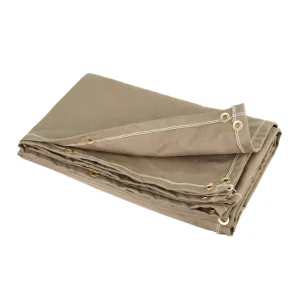
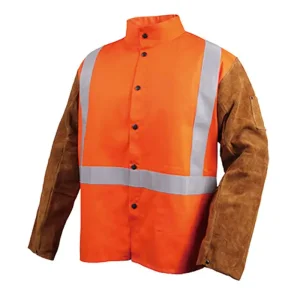
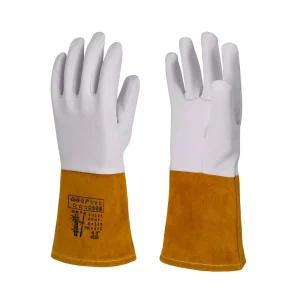
A deep analysis of evolving PPE safety directives, lightweight material innovations, and mechanical resilience standards required across international markets.
Traditional welding gauntlet gloves historically relied entirely on dense, heavy-ounce cowhide. Modern enterprise procurement programs increasingly mandate multi-layer hybrid construction. By engineering gauntlet cuffs that fuse select split cowhide with aluminized interior drapes, aramid felt, or Kevlar lining, fabricators achieve superior radiant heat deflection without inflating physical bulk or compromising the operator's range of motion.
Repetitive strain injuries (RSI) and cumulative hand fatigue remain leading causes of micro-errors during continuous TIG and MIG welding. Modern OEM gauntlet gloves utilize anatomical keystone or wing-thumb layouts, seamless palm construction, and articulated pre-curved fingers. This ergonomic calibration dramatically reduces muscular tension during prolonged electrode gripping, driving operational endurance and site-wide safety compliance.
International procurement frameworks no longer accept general claims of heat resistance. Major engineering EPCs enforce uncompromising compliance with EN 12477 (Type A & Type B), EN 388 (4244X mechanical resistance profiles), and ANSI/ISEA 105 cut/puncture requirements. Welding gauntlets must undergo documented flammability testing, contact heat verification at 100°C to 500°C, and rigorous seam tension assays.
Translating material performance into workplace safety across mission-critical energy, transport, and structural manufacturing environments.
In high-amperage MIG (GMAW) and submerged arc operations, operators face sustained spatter showers, heavy slag exposure, and rough steel edges. Heavy-duty cow split gauntlets with reinforced palm cushions and welted Kevlar seams are imperative to stop radiant heat transfer, seam burning, and edge abrasion.
Cross-country pipeline tie-ins and offshore platform maintenance require all-weather stability. Extended 14-inch to 18-inch gauntlet cuffs prevent hot slag from falling into protective sleeves, while specialized moisture-resistant tanning protects the leather from stiffening under outdoor humidity, rain, or maritime salt exposure.
Precision assembly environments demand thin, supple grain goatskin or premium pigskin gauntlets conforming to EN 12477 Type B. These gloves offer exceptional fingertip tactile feedback to manipulate lightweight filler rods, paired with a firm split cowhide forearm gauntlet cuff that resists accidental torch touches.
Integrating raw material processing, automated die-cutting, and computerized stitching to build an agile, cost-resilient international safety supply chain.
By operating internal leather tanning, splitting, and non-toxic dyeing operations in Gaozhou, Guangdong, Ming Shun achieves source-level quality control. We eliminate third-party leather markups, control hide thickness tolerances to ±0.1mm, and guarantee stable tensile density, oil content, and flame-retardant performance across million-unit purchase contracts.
Manual leather shearing causes dimensional variances that weaken seams. Our Industry 4.0 production floors deploy optical nesting algorithms, digital hydraulic clickers, and precision laser cutters. This guarantees identical panel dimensions, minimizes raw material waste, and reduces cutting defects to near zero before assembly lines begin sewing.
Our infrastructure exceeds 500,000 pairs monthly across dedicated lines. Each production batch undergoes strict, recorded gate checks: tensile testing, seam rupture evaluation, chrome VI screening, and thermal conductivity verification. Standard production lead times average 45 days, shielding global buyers from market supply volatility.
A structured strategic protocol for enterprise procurement teams to reduce returns, ensure local PPE compliance, and balance unit economics.
Specifying the right raw leather is the first technical step. Cow split leather (A/AB grade, 1.1mm–1.3mm) remains the benchmark for high-amperage stick and MIG welding gauntlet cuffs because of its high melting point and abrasion resistance. Grain goatskin or deer split, by contrast, is ideal for TIG applications where fingertip dexterity must remain under 0.8mm.
Gloves frequently fail when threads melt under sparks, exposing seams. Quality assurance requires genuine 3-ply or 4-ply Kevlar aramid threading paired with leather welting inside all critical high-wear points. Welted seams physically shield the thread from direct spatter exposure, significantly extending the working lifecycle of the glove.
Gauntlet lengths typically range from 14 to 18 inches. Selecting the right cuff depends on how operators interact with supplementary PPE, such as leather sleeves and welding jackets. Wide, rigid split-leather cuffs allow fast, one-handed removal during emergencies, while maintaining enough structural rigidity to stay open over bulky FR fabric sleeves.
All Ming Shun welding gauntlets undergo validated testing against internationally recognized safety standards to simplify regional import approval.
Classification into Type A (heavy-duty MIG/MMA operations requiring high thermal and physical resistance) and Type B (fine TIG operations requiring high flexibility and dexterity). Every glove is documented with full laboratory test reports covering contact heat, radiant heat, and small molten splash deflection.
Independent laboratory testing verifying resistance across four critical categories: Abrasion Resistance (Levels 1–4), Blade Cut Resistance (Levels 1–5), Tear Resistance (Levels 1–4), and Puncture Resistance (Levels 1–4), establishing benchmark protection against metal burrs, sharp plates, and heavy tools.
North American compliance documentation verifying flame ignition times, heat degradation thresholds, and mechanical puncture parameters. Production is audited under ISO 9001 quality management systems, guaranteeing comprehensive lot-by-lot raw material and finished-product traceability.
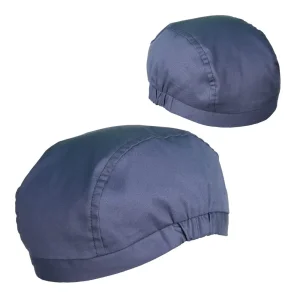
Engineered body and extremity protection built to survive demanding industrial shop floors, heavy maintenance shifts, and extreme thermal conditions.
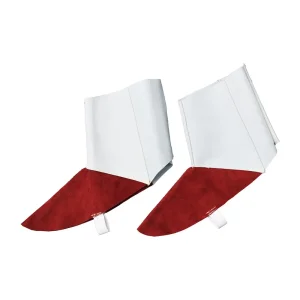
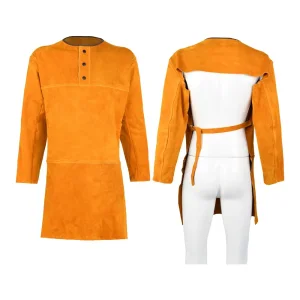
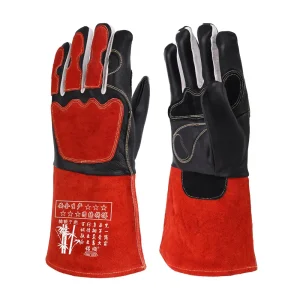
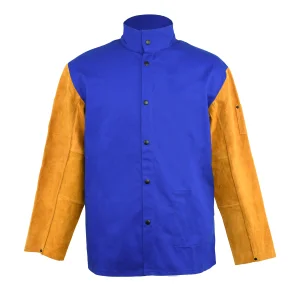
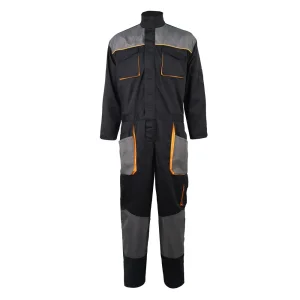
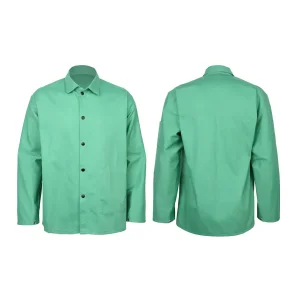
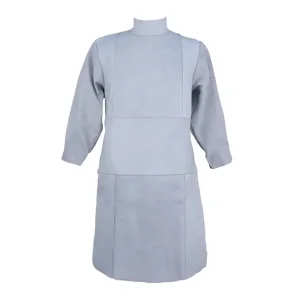
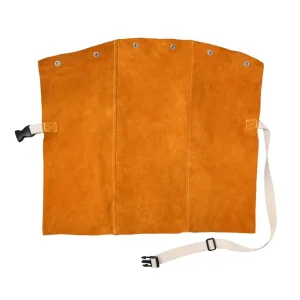
Clear, direct answers regarding factory capabilities, material grades, certification processes, and private-label customization.
EN 12477 governs protective gloves for welders and establishes two distinct classifications: Type A corresponds to heavy-duty welding processes (such as SMAW/MMA and heavy MIG) requiring superior thermal dissipation, burn resistance, and higher mechanical strength, though with lower finger flexibility. Type B designates gloves engineered for precision TIG (GTAW) welding, where high tactile sensitivity and dexterity are paramount, balancing adequate radiant protection with a softer, thinner grain leather (such as goatskin or deerskin).
Unlike factories that purchase random split leather scraps from open brokers, Guangdong Ming Shun operates its own raw leather splitting and treatment workshops in Gaozhou. We grade hides into structured AB quality brackets, calibrate hide thickness systematically across electronic rollers, and conduct internal assays on pH, chromium levels, and tensile strength before cutting. This closed-loop process ensures consistent hand-feel, color uniformity, and mechanical performance across repeat container orders.
Our standard manufacturing capacity exceeds 500,000 pairs of gloves per month. For OEM programs, standard MOQs typically start at 1,200 to 2,400 pairs per style/size run, depending on leather customization. Bulk manufacturing lead times generally conclude within 45 days after physical tech-pack sample sign-off. Initial rapid prototype samples can be patterned, stitched, and shipped for buyer verification within 5 to 7 working days.
Yes. We regularly supply distributors, importers, and safety equipment brands with complete technical documentation, including independent third-party laboratory test reports for CE (EN ISO 11611, EN 12477, EN 388, EN 407), ISO 9001 compliance, and ANSI/ISEA specifications. Detailed test files and technical construction sheets are provided during sample evaluation so you can complete your import registrations without delay.
We provide full-spectrum private-label packaging and branding services: heat-transfer logos, debossed and embossed leather stamps, high-density embroidered cuff patches, customized woven internal tracking labels, barcoded retail hangtags, polybag designs, and reinforced export cartons with localized regulatory markings.

