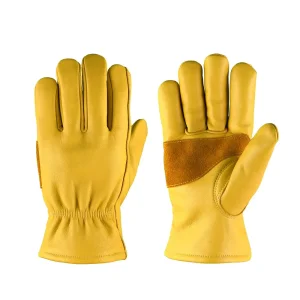
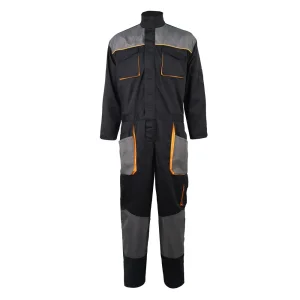
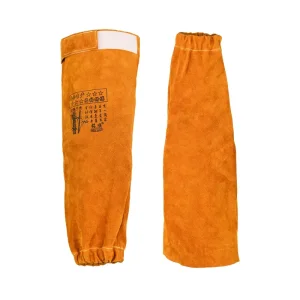
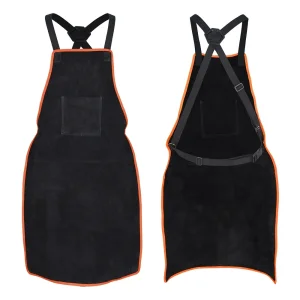
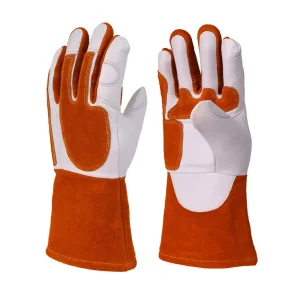
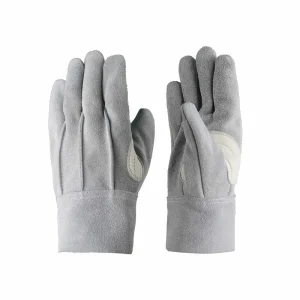
Explore heavy-duty split leather jackets, protective sleeves, ergonomic aprons, and thermal PPE engineered to withstand harsh hot-work environments.
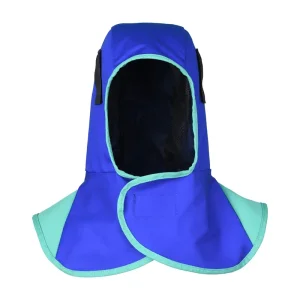
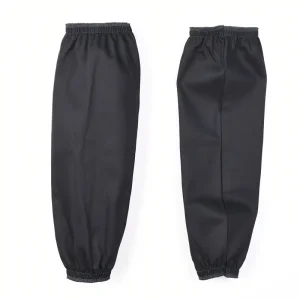
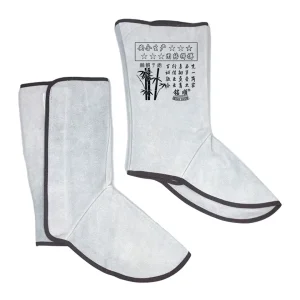
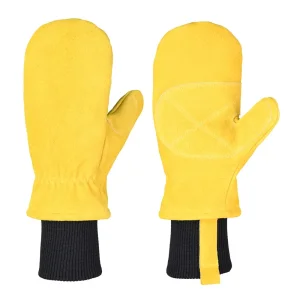
Why traditional welding jackets fail in outdoor maritime and pipeline environments, and how modern waterproof barrier technologies preserve both welder safety and productivity.
In modern industrial fabrication, the convergence of high-heat welding operations with wet, corrosive, and sub-zero outdoor climates represents one of the most demanding engineering challenges in occupational personal protective equipment (PPE). Historically, welding protection relied almost exclusively on heavy, chrome-tanned split cowhide leather or chemical-impregnated flame-retardant (FR) cotton fabrics. While these materials offer proven resistance against molten spatter, radiant heat, and mechanical abrasions, they exhibit fundamental vulnerabilities when exposed to precipitation, atmospheric condensation, and high humidity.
Once standard leather or FR cotton absorbs ambient water, two critical physical failure mechanisms occur simultaneously:
To solve these macro-level systemic issues, our OEM manufacturing facility combines multi-laminated microporous membranes, proprietary fluorochemical-free durable water repellent (DWR) surface finishes, and heat-resistant silicone tanning agents. This allows global brands to supply ergonomic garments that achieve dual compliance with EN ISO 11611 (Class 1 & Class 2 Hot Work) and EN 343 (Water Penetration Resistance Class 4 & Water Vapor Resistance Class 4) without compromising breathability or flexibility.
Polymeric silicone emulsions infused directly into cowhide collagen fibers prevent fiber swelling and water pickup while maintaining flame self-extinguishment.
Every structural seam is stitched with 100% genuine Kevlar® thread and back-sealed with high-temperature polyurethane seam-sealing tapes for zero liquid ingression.
Engineered moisture vapor transmission rate (MVTR > 5,000 g/m²/24h) expels perspiration, preventing interior condensation build-up and heat stress collapse.
Analyzing shifting supply chain economics, decarbonization infrastructure demands, and regional tariff impacts across key geographic hubs.
The global protective apparel market is undergoing an unprecedented restructuring. Traditionally, procurement directors in North America, Northern Europe, and Australasia treated hot-work garments as low-cost disposable commodities, frequently repurchasing basic unlined split-leather coats every 3 to 6 months. However, total cost of ownership (TCO) analytics and stricter occupational safety laws (such as OSHA 1910.132 in the US, EU Regulation 2016/425, and Safe Work Australia mandates) have radically shifted corporate purchasing habits toward durable, multi-norm technical workwear.
Furthermore, mega-infrastructure investments — including LNG export terminal expansions, offshore wind turbine jacket fabrication, cross-continental hydrogen pipeline networks, and deep-sea naval shipbuilding — mandate personal protective gear that operates flawlessly across humid sea-spray zones, continuous rain, and freezing winds. As tier-one contractors calculate downtime losses caused by worker hypothermia and burn injuries, the commercial demand for technical waterproof welding jackets has grown at an estimated CAGR of 7.4% across European and transatlantic markets.
Modern distributors and retail private labels cannot afford the quality drift typical of decentralized trading entities. Sourcing directly from an established factory equipped with internal hide sorting, chemical tanning, pattern grading, and automated stitching ensures absolute batch-to-batch repeatability. By removing intermediate broker markups, brand partners achieve gross margin stability while enjoying fully documented material provenance for ESG and corporate audit compliance.
| Evaluation Parameter | Traditional Split Leather | Standard FR Cotton Jacket | Next-Gen OEM Waterproof Hybrid |
|---|---|---|---|
| Hydrostatic Head (EN 20811) | < 500 mm H2O (Rapid Soaking) | < 300 mm H2O (Permeable) | > 12,000 mm H2O (Impervious) |
| Steam Burn Risk Factor | Extreme after 15 min exposure | Severe upon saturation | Zero (Continuous Dry Core) |
| Weight Under Wet Conditions | Increases 65% – 110% | Increases 80% – 140% | Increases < 4% (Repellent) |
| Flame Spread Classification | EN ISO 11611 Class 2 | EN ISO 11611 Class 1 | EN ISO 11611 Class 1 & 2 Certified |
| Dielectric Resistance | Unstable when damp | Severely compromised | > 100 MΩ Dry & Saturated |
| Breathability (Ret Value) | Poor (> 45 m²·Pa/W) | Good (< 8 m²·Pa/W) | Optimized (< 14 m²·Pa/W) |
How our factory empowers international importers to navigate stringent regional requirements, customs clearance, and third-party laboratory verifications.
Full technical documentation and EU Module B/Module C2/D surveillance certifications under EU PPE Regulation 2016/425 for high-risk thermal protective garments.
Engineered to exceed ANSI/ISEA 105 cut and abrasion ratings and NFPA 70E / 2112 flame resistance criteria for North American industrial distributors.
Rigorous pre-treatment hydrostatic head testing, ensuring water impermeability after repeated thermal exposure and industrial laundering cycles.
Complete laboratory tracking proving zero hexavalent chromium [Cr(VI)], azo dyes, or restricted fluorochemical coatings across all exported product lines.
From North Sea drilling platforms to arctic pipeline corridors, here is where our OEM waterproof welding jackets outperform conventional workwear.
Salt spray, high winds, and overhead pipe welding require Class 2 spatter resistance combined with an impenetrable marine-grade waterproof membrane that resists brine degradation.
Confined space work in humid double-bottom hull tanks demands lightweight FR hybrid sleeves with high breathability to eliminate thermal exhaustion during continuous flux-cored arc passes.
Unsheltered outdoor welding crews handling bridge girders face unpredicted rainstorms. Waterproof outer shells protect inner insulating layers, eliminating downtime during weather shifts.
A look at our factory R&D pipeline, integrating smart wearables, circular biomaterials, and advanced nanotech flame barriers.
As occupational safety demands accelerate, Guangdong Ming Shun Labour Protective Products Co., Ltd. continuously invests over 6.5% of annual revenue into advanced material science and ergonomic production machinery. Our five-year engineering roadmap focuses on three revolutionary milestones:
With global environmental agencies phasing out fluorinated chemistry (PTFE, PFOS, PFOA), our R&D lab has pioneered bio-derived dendritic polyurethane polymers. These compounds bond covalently with outer split leather and aramid filaments, achieving contact angles exceeding 135° against water droplets without emitting harmful halogens during hot-slag contact.
To reduce heat-related cardiac incidents among heavy fabrication welders, our next-generation prototypes feature PCM-embedded mesh linings. These active micro-capsules absorb excess body heat when ambient temperatures soar during heavy torch operations and release it gradually as conditions cool, maintaining a stable micro-climate next to the operator's skin.
Collaborating with leading sensor fabricators, we are developing non-intrusive flexible sensory strips embedded into jacket epaulets. These passive chips monitor cumulative UV exposure, outer shell temperature thresholds, and operator posture metrics, transmitting maintenance flags to facility safety managers before structural fabric failure occurs.
Full transition to non-toxic water-repellent molecular barriers ensuring compliant export to the European Union under upcoming REACH revisions.
Washable, heat-isolated sensory threads providing real-time telemetry on ambient radiant heat and vital sign telemetry for hazardous hot-box worksites.
Developing post-industrial scrap leather pulverization techniques to manufacture reinforced composite backing panels, reducing factory carbon footprint by 34%.
Key insights on minimum order quantities, manufacturing workflows, custom tech pack development, and compliance testing protocols.
We employ a hybrid structural architecture: the exterior sacrificial shell consists of heavy split cowhide or high-weight flame-retardant treated cotton that withstands molten slag exceeding 1400°C without igniting. Beneath this heat barrier lies an insulated microporous membrane that blocks moisture ingress while remaining protected from direct contact with molten sparks.
Upon receipt of your tech packs, dimensional patterns, or physical target samples, our in-house pattern-making room delivers first-stage prototypes within 7 to 10 business days. Once golden samples and test reports are formally approved, bulk production lead time typically ranges between 35 and 45 calendar days depending on order volume and specialized raw material availability.
Yes. We maintain computerized Gerber CAD pattern libraries customized for diverse regional anthropometric datasets. We readily manufacture garments from North American generous fits (chest sizes 38 to 64 inches with extended back lengths) to tapered athletic European configurations (sizes 46 through 66) including tall-length sleeve adjustments.
We operate a 5-tier AQL 1.5/2.5 quality assurance protocol: 1) Spectrophotometric leather color consistency & thickness grading at raw intake; 2) Fabric hydrostatic pressure head verification; 3) Mid-line tensile testing of Kevlar® seams; 4) Continuous non-destructive closure snap cycle stress testing; and 5) 100% pre-packaging dimensional and finishing inspections.
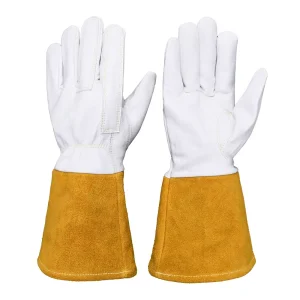
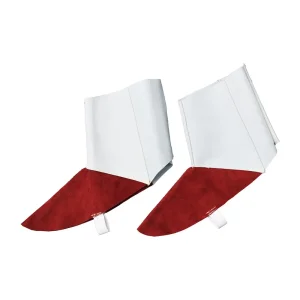
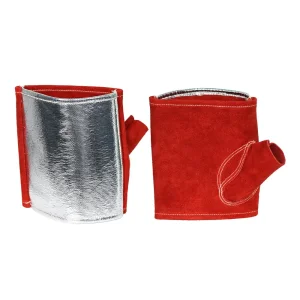
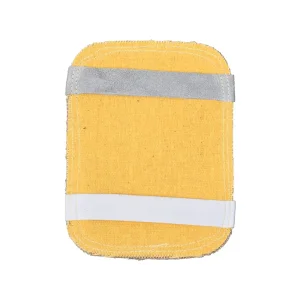
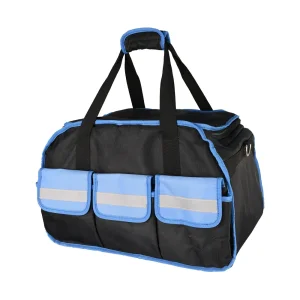
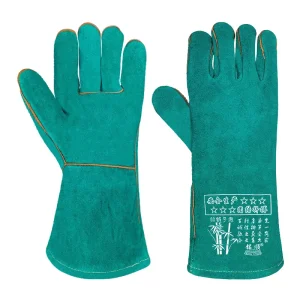
Complete worker safety kits with heavy-duty TIG/MIG gloves, flame-resistant bibs, spats, aluminized heat pads, and modular gear bags.