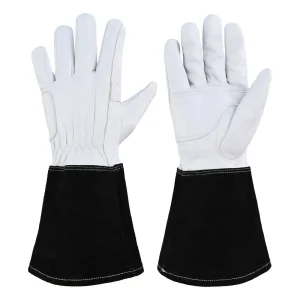
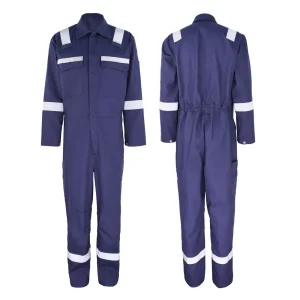
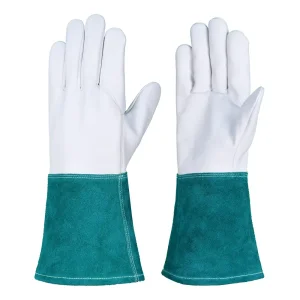
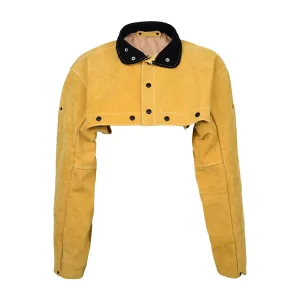
Direct-to-enterprise catalog solutions engineered for extreme spatter resistance, thermal insulation, and comprehensive multi-hazard hot-work environments.
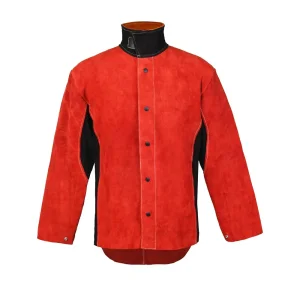
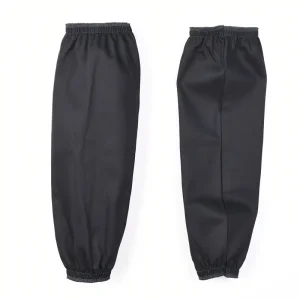
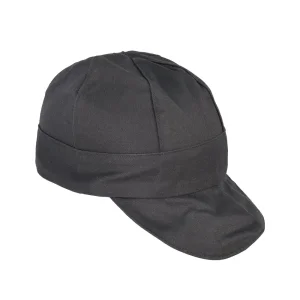
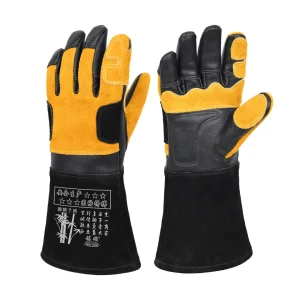
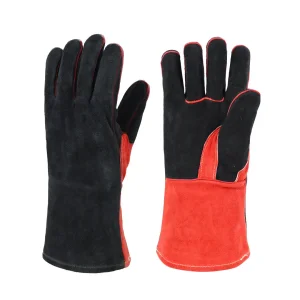
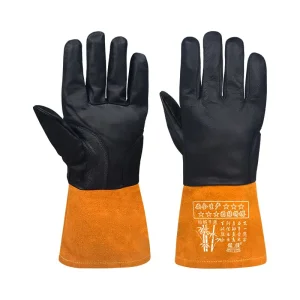
Bridging thermodynamic insulation with spark-impervious structural shielding across arctic engineering, offshore rigs, and severe cold-weather infrastructure operations.
Industrial welders operating in sub-zero regions (such as Northern Europe, Canada, and Northern Asia) face simultaneous exposure to severe radiant/convective arc heat and debilitating ambient hypothermia. Conventional cold workwear utilizes synthetic polyesters that melt upon spark contact. OEM warm welding jackets engineered by Guangdong Ming Shun combine ISO 11611 Class 2 bovine split leather with non-melting, inherently flame-retardant (IFR) quilted aramid and wool linings.
Freezing temperatures induce stiffness in standard chrome-tanned leathers, severely impairing welder wrist and thoracic agility. Our manufacturing process utilizes proprietary dry-drum vegetable oil re-tanning, yielding leather that maintains tensile elasticity down to -35°C. Pattern designs incorporate gusseted bi-swing backs and pre-curved armscyes to prevent jacket ride-up during overhead structural pipe welding.
Procurement directors within offshore marine yards and pipeline EPC consortiums prioritize lifecycle longevity over unit cost. Through high-density Kevlar® 4-ply lock-stitching, dielectric heavy-duty brass snaps shielded by insulated leather flaps, and stress-zone bar-tacking, our warm welding jackets endure continuous flux-cored arc welding (FCAW) spatter without seam blowouts or thermal bridging.
Comprehensive comparative analysis of structural layers configured for OEM custom manufacturing according to international safety and thermal metrics.
| Performance Parameter | Full Heavy Split Cowhide (Warm) | Hybrid FR Cotton + Leather Sleeves | Pigskin Grain Insulated Shell |
|---|---|---|---|
| Target Environment | Extreme Cold (-30°C to 0°C), Heavy FCAW/SMAW | Chilly Shop/Yard (0°C to 15°C), TIG/MIG | Sub-Zero Damp Climates, Overhead Grinding |
| Primary Shell Grammage | 1.3mm - 1.5mm Grade-A Cowhide Split | 9 oz. / 305 gsm FR Cotton Twill + 1.2mm Leather | 1.1mm - 1.3mm Premium Pigskin Leather |
| Insulation Composition | Quilted FR Meta-Aramid + 180gsm Modacrylic | Detachable Polar FR Fleece / Quilted Cotton | Bonded Synthetic Wool / FR Thinsulate™ Layer |
| Spatter & Slag Repellency | Maximum / Continuous Molten Droplet Shield | Moderate Torso / Maximum Arm Shield | High / Natural Breathability & Oil Resistance |
| Compliance Certification | EN ISO 11611 Class 2, EN 342, ASTM F1506 | EN ISO 11611 Class 1, EN 1149-5 | EN ISO 11611 Class 2, EN 388 (4232X) |
| Seam Construction | DuPont™ Kevlar® 4-Ply Reinforced Welted Seams | FR Spun Aramid Lock-Stitch + Riveted Points | Triple-Stitched Kevlar® with Internal Bindings |
From raw bovine hide sorting to final cold-weather barrier assembly in Gaozhou City, Guangdong. Direct supplier transparency with zero intermediary markups.
Hides are individually vetted for grain integrity, standardized tensile strength, and uniform split thickness (1.2mm-1.5mm), eliminating weak flank sections.
Closed-loop water-based drum dyeing guarantees lot-to-lot color match across corporate palettes, while maintaining low chromium salt residues.
Automated cutting beds ensure clean, dimensionally stable leather panels tailored precisely to ergonomic jackets, sleeves, and articulated armscyes.
Every batch undergoes hydrostatic spray tests, stitch tear resistance trials, and thermal transmission assessments before bulk container export.
Full alignment with regional personal protective apparel directives, ensuring audit-proof delivery for global EPC enterprises.
Class 2 (manual welding techniques with heavy formation of spatters and drops) and EN 342 (protective clothing against cold ensembles). Documentation includes Notified Body EU-Type Examination Certificates and Declarations of Conformity (DoC).
Tailored for US and Canadian yards needing Arc Thermal Performance Value (ATPV) ratings, NFPA 70E compliance for combined arc/flash shielding, and ANSI/ISEA puncture resistance for structural rig welders.
Our multilingual sales engineers provide direct technical specification packs, digital pre-production prototypes, batch traceability tracking, and flexible incoterms (FOB, CIF, DDP) straight to your regional logistics hubs.
Pioneering lightweight aerogel matrices, integrated sensor telemetry, and circular bio-leather alternatives for the 2026-2030 industrial equipment lifecycle.
Integrating 2mm ultra-thin silica aerogel internal interlinings to replace bulky fleece, reducing overall garment weight by 35% while doubling clo-rated thermal insulation for arctic pipelayers.
Embedding passive RFID tags and heat-stress sensors within internal jacket bibs to monitor real-time core body temperatures and trigger fatigue alerts in enclosed welding chambers.
Accelerating zero-discharge chrome-free tanning protocols that enhance thermal decomposition resistance up to 450°C, aligning with strict EU Corporate Sustainability Due Diligence Directives (CSDDD).
Authoritative operational answers addressing custom configurations, material selections, and private-label ordering processes.
The optimal configuration combines an exterior 1.3-1.5mm heavy split cowhide (or 1.2mm pigskin for wet cold) with an interior flame-retardant quilted lining (wool, modacrylic, or treated FR cotton). Unlike synthetic puffers, this stack prevents burn-through from hot spatter while retaining body heat down to -35°C.
We offer full-cycle ODM/OEM capabilities: customized tech pack development, laser-cut custom leather patches, high-heat debossing, screen printing, fire-resistant woven tags, custom metal snaps, and retail-ready barcode packaging matching your corporate identity.
Yes. We supply authentic model-specific certificates and test reports from accredited notified bodies (SGS, TÜV, SATRA) confirming compliance with EN ISO 11611, EN ISO 11612, EN 388, EN 342, and ASTM F1506 before bulk shipment dispatch.
Typical MOQ starts at 500-1,000 units per custom garment style. Sampling takes approximately 7-10 working days following tech pack lock-in, with mass production runs completing in 35-45 days supported by our 1,000+ factory workforce.
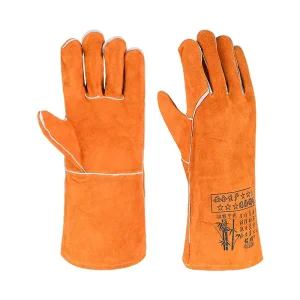
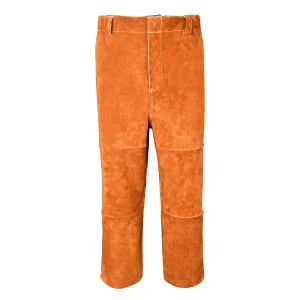
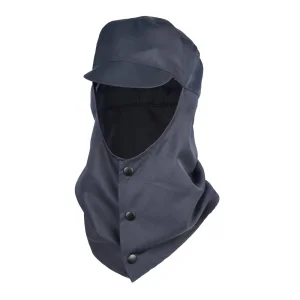
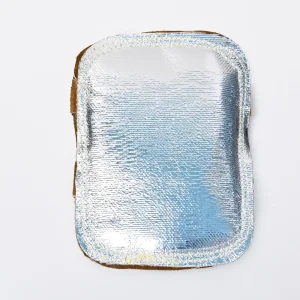
Complete workforce protection programs including specialized TIG dexterity gloves, heavy-gauge leather trousers, back pads, and protective headwear.