Industry 4.0 Advanced Manufacturing

OEM Technical Workwear Supplier & Suppliers

Engineered Industrial Personal Protective Equipment, Multi-Hazard FR Garments, and Full-Stack Smart OEM/ODM Manufacturing with Source-Level Leather Mastery.

Market Dynamics & Strategy

The Shift in Global Technical Workwear Procurement

Industrial workwear has transcended basic utility. Today's international enterprises require multi-norm compliance, high thermal endurance, ergonomic agility, and traceable material provenance.

Multi-Hazard Convergence

Modern workplaces combine thermal, mechanical, electrical, and chemical hazards. OEM technical workwear now integrates simultaneous flame-resistance (ISO 11611/11612), anti-static behavior (EN 1149), and electric arc flash suppression (IEC 61482) in a single unified fiber construct.

Stringent Regulatory Governance

Global regulatory bodies (OSHA in the US, EU PPE Regulation 2016/425, and AS/NZS in Australasia) enforce stringent traceability. Category III PPE demands unbroken batch-by-batch physical testing, certified audits, and verifiable technical documentation to ensure fail-safe duty compliance.

Ergonomics & Hybrid Blends

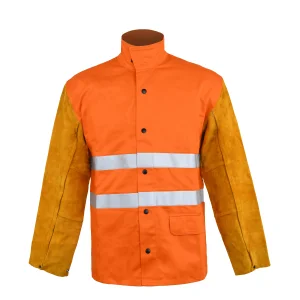
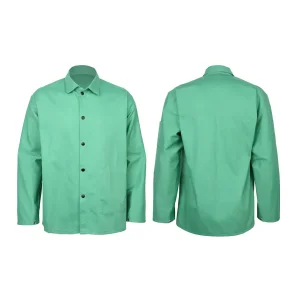
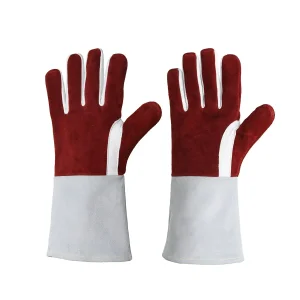
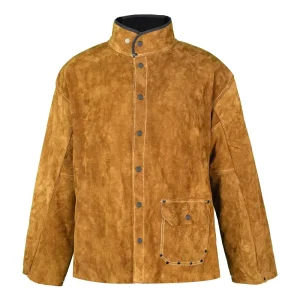
Heavy, rigid safety gear leads to operator exhaustion and unsafe non-compliance. Sourcing directors favor hybrid architectures: breathable flame-retardant treated cotton shells (7 oz to 9 oz) paired with precision-placed split cowhide or goatskin in primary spatter contact zones.

Manufacturing 4.0 Infrastructure

Factory 4.0: Supply Chain Resilience & Source Mastery

Operating from Gaozhou City, Guangdong, Guangdong Ming Shun Labour Protective Products Co., Ltd. blends 25+ years of craft mastery with intelligent production infrastructure to eliminate subcontracting variances.

25+
Years Continuous Manufacturing
1,000+
Skilled PPE Production Craftsmen
500K+
Monthly Glove Capacity (Pairs)
~45
Days Industry Benchmark Lead Time

Vertical In-House Tanning

Unlike third-party assembly shops, our factory commands dedicated hide selection, mechanical splitting, environmental chroming, and in-house drum dyeing. We control leather thickness, moisture levels, tensile strength, and color fastness directly at the origin.

Precision Computerized Cutting

Automated nesting systems and high-precision CAD die cutting maximize yield from cowhide, pigskin, and premium goatskin. Every component panel aligns perfectly with ergonomic patterns, eliminating stitching variances across massive production orders.

Full-Cycle QC & Traceability

Quality gates operate at raw hide arrival, intermediate post-dyeing inspection, seam burst stress verification, and final boxed audits. Each batch carries batch-indexed records matching EU CE, EN 388, EN 12477, and ANSI/ISEA 105 protocols.

Field-Tested Application Profiles

Localized Industrial Deployments & Performance

Custom-engineered technical PPE tailored to the unique operating stresses, thermal radiation levels, and mechanical abrasions of heavy industry worldwide.

Offshore Energy & Pipelines

  • High humidity & marine saline resistance
  • Heavy arc spatter & continuous weld protection
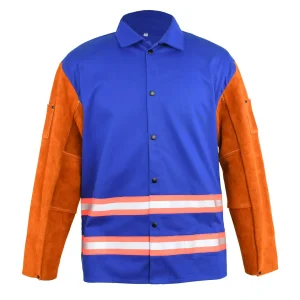
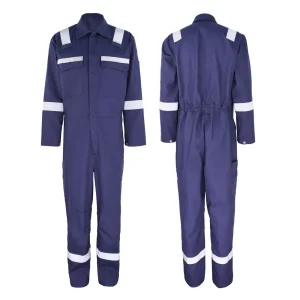
  • MS-1215 reflective FR coveralls & cable guards

Automotive & Precision Robotic Cells

  • High dexterity for TIG welding & wire feeding
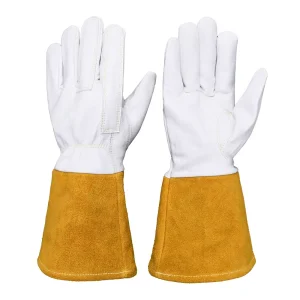
  • Supple goatskin palms preventing operator strain
  • Clean seams to prevent scratch damage on panels

Structural Steel & Heavy Fabrication

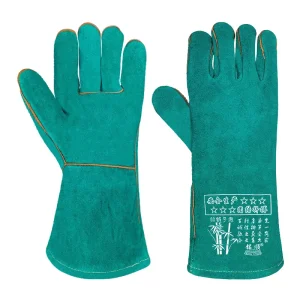
  • Heavy split cowhide (1.2–1.4 mm) abrasion resistance
  • Dupont Kevlar® heat-resistant stitch durability
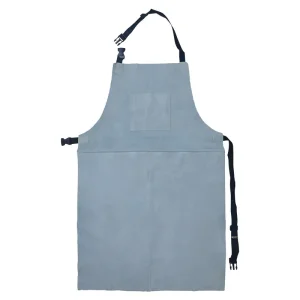
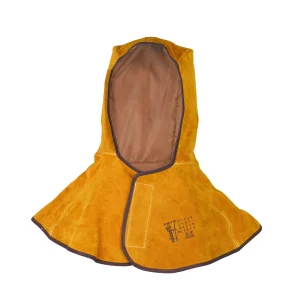
  • Integrated leather spats & under-helmet bibs
Procurement Knowledge Hub

Frequently Asked Questions on OEM Workwear

Critical insights for procurement teams, technical safety managers, and private-label buyers navigating technical specifications and compliance.

How does Ming Shun ensure leather consistency across large volume OEM runs?
Unlike trading entities that buy random market leather, we operate our own in-house tanning and processing facility in Gaozhou. We grade raw hides by caliper, density, and tensile strength, controlling the exact retanning chemical formulas and drum dyes. This ensures uniform hand-feel, spatter deflection, and color consistency across re-orders.
What is the technical threshold separating EN ISO 11611 Class 1 and Class 2 garments?
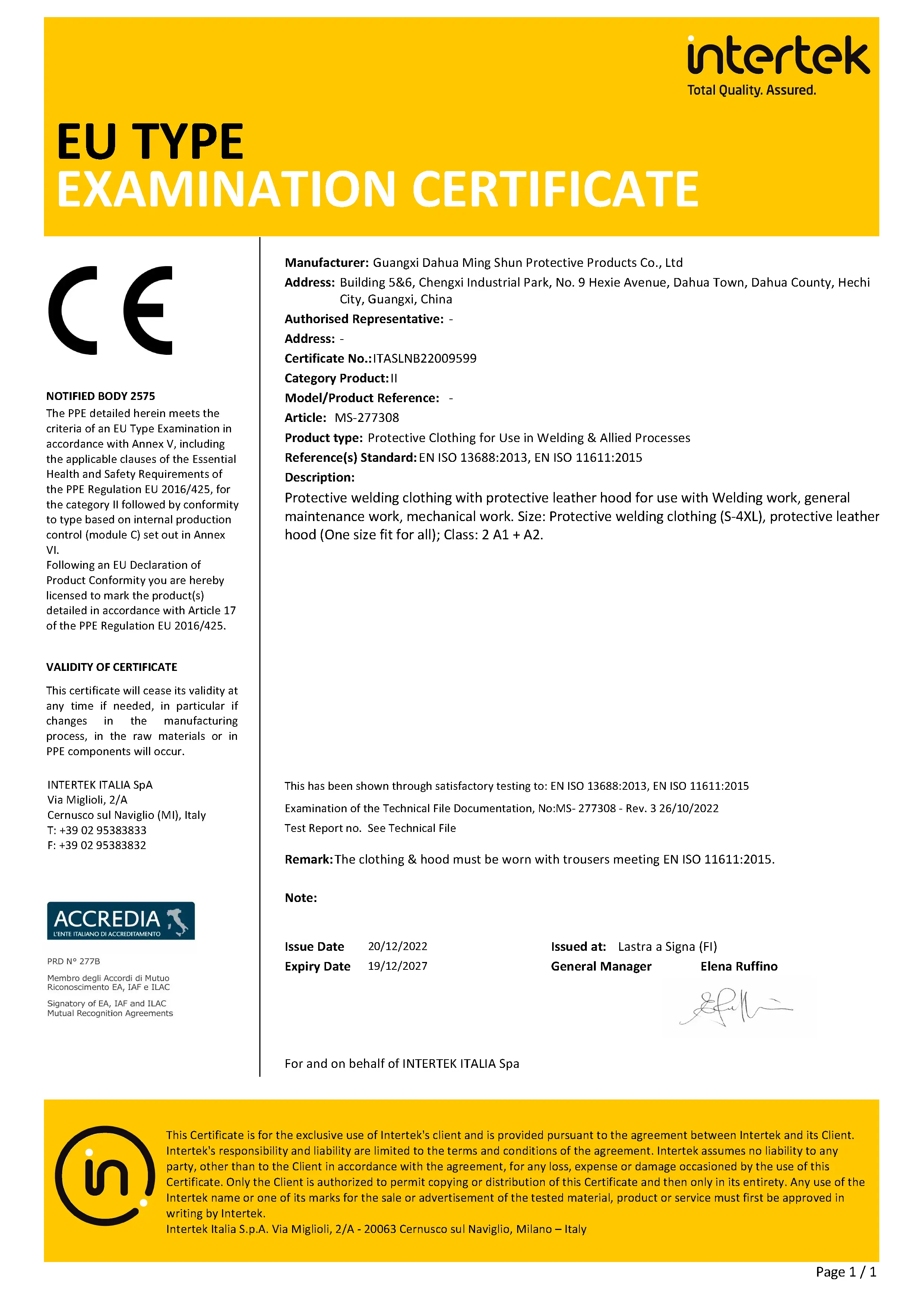
Class 1 shields against less hazardous welding techniques and situations, causing lower spatter and radiant heat (at least 15 drops of molten metal; radiant heat transfer index RHTI 24 ≥ 7s). Class 2 mandates resistance to at least 25 drops of molten metal and an RHTI 24 ≥ 16s, which typically requires heavy split cowhide or heavy multi-ply FR cotton composite builds.
Can you engineer private-label branding while maintaining certified status?
Yes. We provide complete OEM/ODM execution including custom embossed leather patches, non-conductive FR heat transfers, woven identity tags, and custom retail packaging. In addition, we coordinate with notified testing bodies to include private brand nomenclature under relevant CE Module B/C2 or D certification architectures.
What are the minimum lead times and sampling turnaround for custom tech packs?
Initial pattern generation and pre-production counter samples are normally delivered within 7 to 10 working days from tech pack approval. Bulk production cycles average approximately 45 days for full-container shipments (supporting monthly capacities exceeding 500,000 pairs of gloves and substantial garment volumes).

Scale Your Protective Workwear Portfolio with a Direct Manufacturer

Consult directly with our Gaozhou engineering facility. Request detailed material specifications, factory audit accreditations, or submit your tech pack for physical counter sampling.